
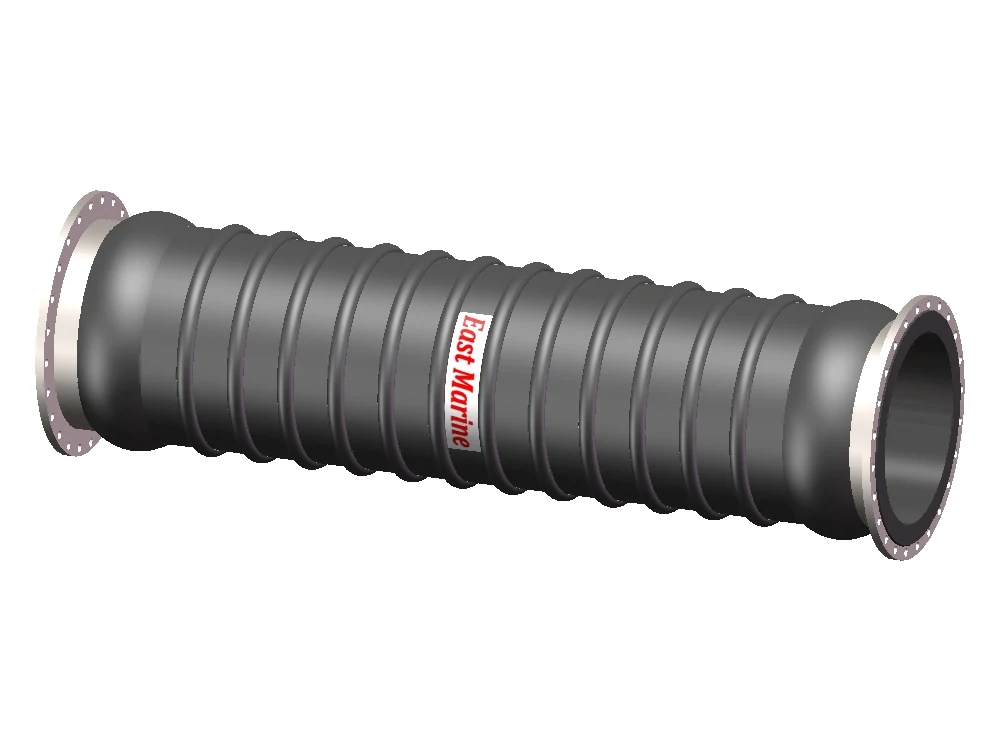
Suction Rubber Hose with Steel Flange
Vacuum-rated suction hose for TSHD drag arms and CSD cutter ladders, -0.1 to 1.0MPa, ID 100-1100mm.
| Product Name | Suction Rubber Hose with Steel Flange |
|---|---|
| Inner Diameter (ID) | 100-1100 mm |
| Length | 500-11800 mm |
| Working Pressure (WP) | -0.1 to 1.0 MPa |
| Burst Pressure (BP) | -0.3 to 3.0 MPa |
| Flange Type | Steel flange |
| Application | CSD/TSHD dredger suction and pump system |
| Origin | China |
Specifications are supplied per order within the ranges shown. Send the flange drawing or the details of the section being replaced and the connection is machined to match.
Overview
The suction hose sits on the vacuum side of the system, on the drag arm of a trailing suction hopper dredger or the cutter ladder of a cutter suction dredger. The problem there is not pressure but collapse: pull a vacuum on an unsupported rubber tube and it flattens. This hose is reinforced with a spiral steel wire structure or multi-layer reinforcement to hold the bore open under vacuum, with embedded HB 450+ wear rings in the NR/SBR lining for the abrasive load.
Who it is for
TSHD and CSD operators replacing drag arm or ladder suction sections, and dredge pump packagers specifying the inlet side.
Key benefits
- Spiral steel wire or multi-layer reinforcement prevents collapse under vacuum
- Rated from -0.1 MPa vacuum through to 1.0 MPa working pressure
- Embedded HB 450+ wear-resistant steel ring in the lining for abrasive slurry
- Internal steel rings damp pump vibration and pressure pulsation, protecting connected equipment
- Flanged ends allow the drag arm to be worked without fighting the hose
What goes wrong without it
A suction line that collapses under vacuum loses production immediately and is not always visible from the bridge until throughput drops.
The drag arm moves constantly with sea state; a rigid line transmits that movement into the pump and its mountings.
Dredge pump pulsation fatigues the whole suction side. The high-strength internal steel rings absorb vibration and pulsating pressure instead of passing it downstream.
Construction and technical features
- Inner lining: wear- and corrosion-resistant NR/SBR mix with embedded wear-resistant steel ring, hardness HB >= 450
- Reinforcement: high-tensile textile layer with steel rings or spring steel wire
- Outer cover: black weather- and abrasion-resistant natural rubber with warning layer
- Flanges: Q235 carbon steel with welded nipples
- Marking: East Dredging branding or customer logo
Quality control
- Raw material test on every batch of natural rubber, tensile textile and rubber additives before it enters the warehouse
- Hose dimension check on inner diameter, outer diameter, wall thickness and flange alignment against the design drawing
- Weight check on every hose to confirm it falls inside the agreed tolerance band
- Hydrostatic or vacuum pressure test to the specified working pressure when the order calls for it
- Third-party inspection can be arranged on request
Where it is used
- Drag arm section on a trailing suction hopper dredger
- Cutter ladder suction line on a cutter suction dredger
- Pump inlet connection where vibration is reaching the pump mountings
- Maintenance dredging campaigns with long continuous suction hours
Customisation
- Inner diameter 100-1100 mm, length 500-11800 mm
- Spiral steel wire or multi-layer reinforcement selected for the vacuum duty
- Steel or sandwich flange to your flange table
- Customer logo and section numbering in the marking layer
How it compares
Do not substitute a discharge hose here. Discharge hose is rated for positive pressure up to 4.2 MPa but is not built to resist collapse; the suction hose is rated from -0.1 MPa vacuum and reinforced specifically for it. Between the two suction versions, steel flange gives a hard sealing face for frequent changeouts, sandwich flange gives a rubber-lined wetted joint.
Selection and use notes
- Check the vacuum rating against the pump's actual suction duty, not just the diameter
- Allow the drag arm geometry its full range of movement without the hose reaching its bend limit
- Do not use a collapsed or ovalised section; reinforcement damage is not repairable in place
- Watch for pump vibration increasing, which can indicate a ring structure has failed
Questions buyers ask
What vacuum can the hose take?
It is rated from -0.1 MPa through to 1.0 MPa working pressure, with burst pressure from -0.3 to 3.0 MPa.
How is collapse prevented?
By a spiral steel wire structure or multi-layer reinforcement design, which gives the strength to hold the bore open under vacuum.
Where is it installed?
Mainly on the drag arm of a trailing suction hopper dredger or the cutter ladder of a cutter suction dredger.
Does it protect the dredge pump?
The internal high-strength steel rings absorb vibration and pulsating pressure from the pump and the flowing medium, which makes system operation smoother and protects connected equipment.
What diameters and lengths are available?
Inner diameter 100-1100 mm and length 500-11800 mm.
Can you match our existing flange drilling?
Yes. Provide the flange drawing or bolt circle details with the enquiry.
Related products
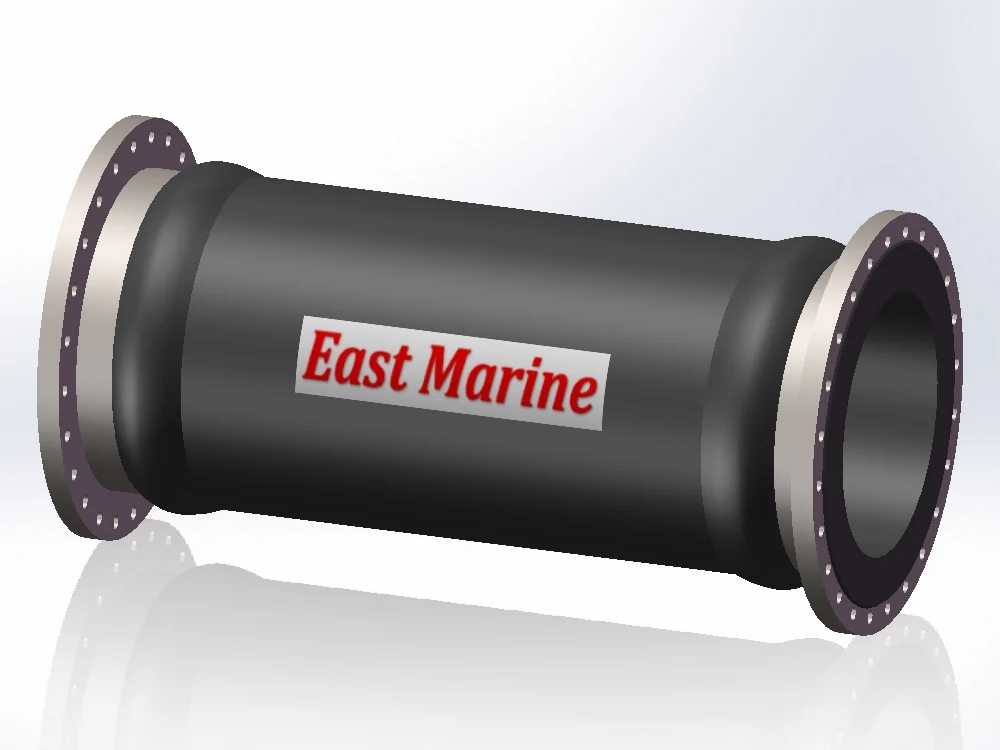
Discharge Rubber Hose with Steel Flange
Steel-flanged discharge hose for floating, onshore and submerged slurry lines, ID 100-1100mm at 0.5-4.2MPa working pressure.
View specifications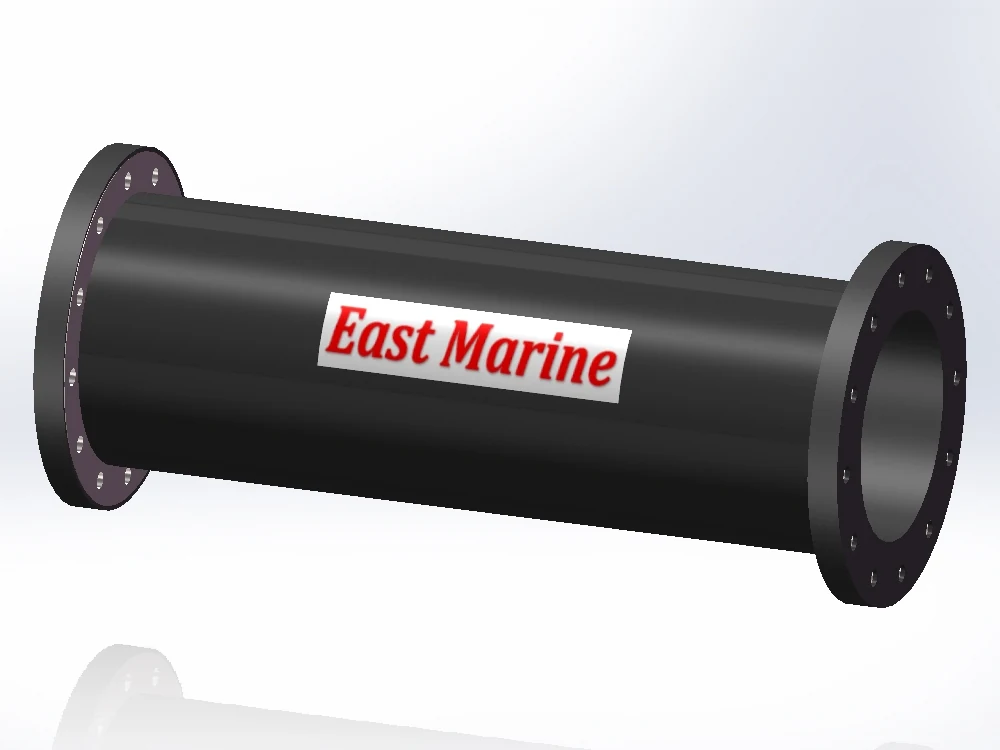
Discharge Rubber Hose with Sandwich Flange
Sandwich-flanged discharge hose with rubber-lined sealing face, ID 100-1100mm at 0.5-4.2MPa working pressure.
View specifications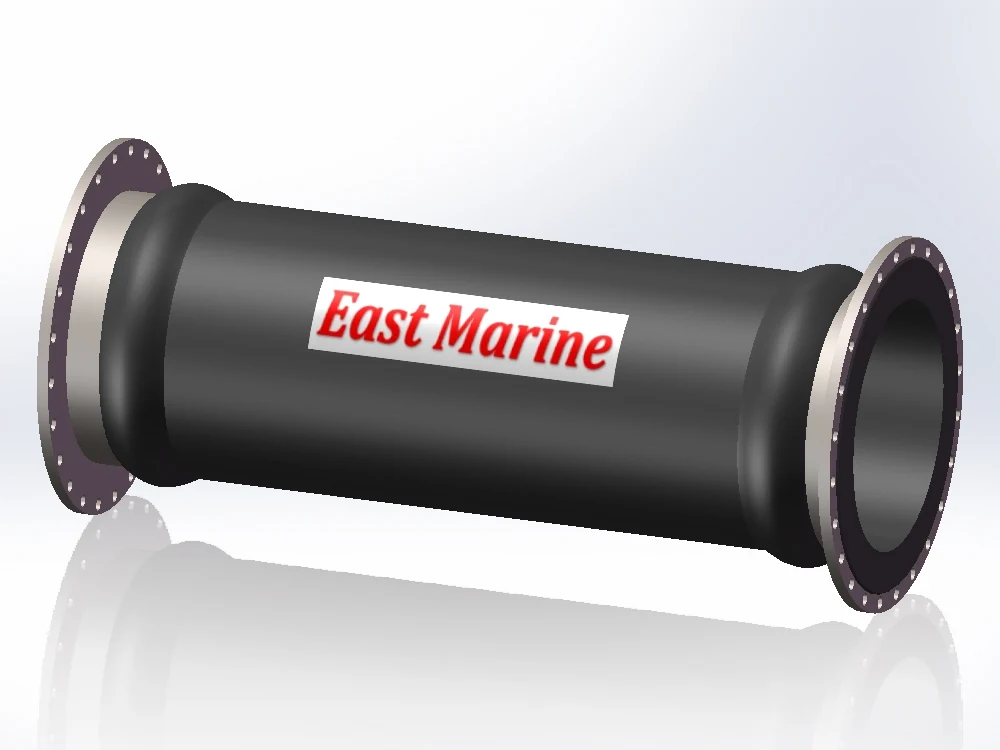
Armored Discharge Rubber Hose with Steel Flange
Steel-ring armored discharge hose for coral reef and weathered rock, HB>=450 wear rings, ID 100-1100mm.
View specificationsNeed this section to bolt into what you already run?
Send the flange drawing, the bore and the working pressure. We will confirm the specification and the lead time.