
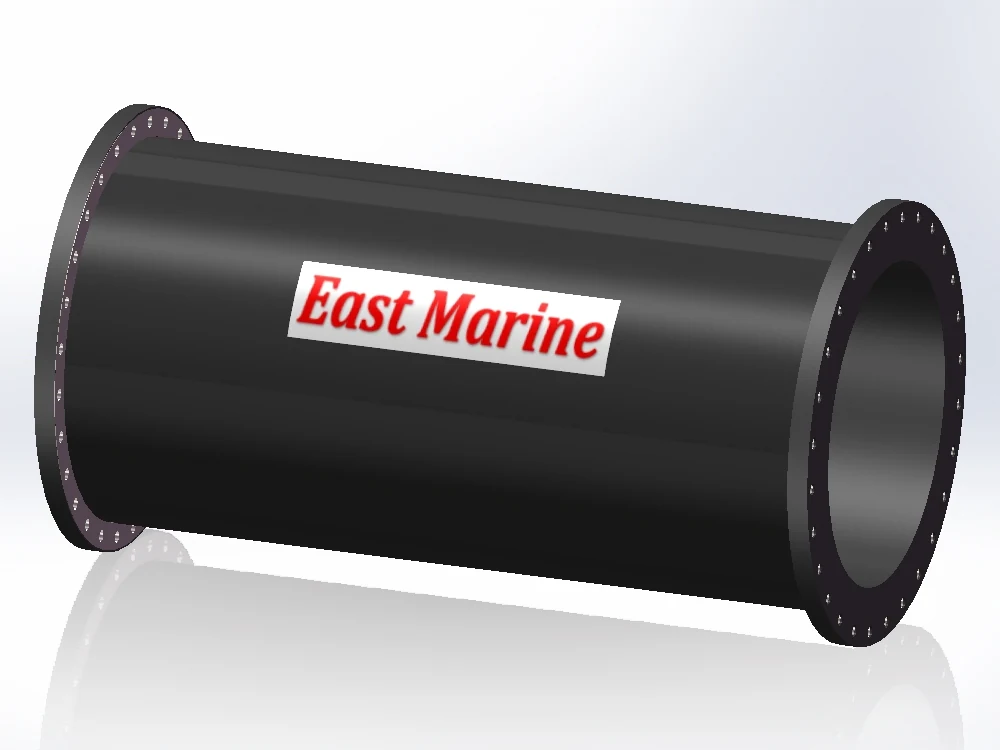
Armored Discharge Rubber Hose with Sandwich Flange
Steel-ring armored discharge hose with rubber-lined sandwich flange, for angular and high-hardness material.
| Product Name | Armored Discharge Rubber Hose with Sandwich Flange |
|---|---|
| Inner Diameter (ID) | 100-1100 mm |
| Length | 1000-11800 mm |
| Working Pressure (WP) | 0.5-4.2 MPa |
| Burst Pressure (BP) | 1.5-12.6 MPa |
| Flange Type | Sandwich flange |
| Application | CSD/TSHD dredger transporting hard and highly abrasive material |
| Lining Hardness | Embedded wear-resistant steel ring, HB >= 450 |
| Origin | China |
Specifications are supplied per order within the ranges shown. Send the flange drawing or the details of the section being replaced and the connection is machined to match.
Overview
This is the armored discharge hose built with heavy-duty sandwich flanges instead of bare steel ones. The lining still carries embedded wear-resistant steel rings at HB 450 or harder for coral reef and weathered rock duty, but the flange body is Q235 carbon steel with the sealing face and the inner bore surface in contact with the medium rubber lined. It goes on dredger discharge pipelines or straight onto the ladder structure of a cutter suction dredger.
Who it is for
Dredging contractors already running armored hose who want the wetted flange surfaces rubber lined rather than bare steel.
Key benefits
- Internal wear-resistant steel rings at HB 450 or harder for sharp, hard material
- Rubber-lined sealing face and bore protect the joint from the medium
- High pressure-bearing capability for continuous heavy-load work
- Excellent bending flexibility for complex pipeline layouts
- Heavy-duty sandwich flanges for secure connection and quick replacement
What goes wrong without it
Armored hose protects the body but a bare steel flange face still erodes; rubber lining the wetted flange surfaces removes that weak point.
Coarse angular material destroys conventional linings within a single campaign, turning section replacement into the main maintenance cost.
Heavy-duty flanges normally mean slow changeouts; the sandwich design is built for easy installation and quick replacement.
Construction and technical features
- Inner lining: wear- and corrosion-resistant NR/SBR mix with embedded wear-resistant steel ring, hardness HB >= 450
- Reinforcement: multiple layers of high-tensile textile
- Outer cover: black weather- and abrasion-resistant natural rubber with warning layer
- Flanges: Q235 carbon steel body, sealing face and inner bore surface rubber lined
- Marking: East Dredging branding or customer logo
Quality control
- Raw material test on every batch of natural rubber, tensile textile and rubber additives before it enters the warehouse
- Hose dimension check on inner diameter, outer diameter, wall thickness and flange alignment against the design drawing
- Weight check on every hose to confirm it falls inside the agreed tolerance band
- Hydrostatic or vacuum pressure test to the specified working pressure when the order calls for it
- Third-party inspection can be arranged on request
Where it is used
- Ladder-mounted discharge section on a cutter suction dredger in reef material
- Dredger discharge pipeline cutting weathered rock
- Port construction contracts with coarse, angular spoil
- Water conservancy works where joint erosion has been a recurring problem
Customisation
- Inner diameter 100-1100 mm, length 1000-11800 mm
- Flange drilling to the table in service on the vessel
- Working pressure specified within 0.5-4.2 MPa
- Customer logo moulded into the marking layer
How it compares
The armored steel-flange version gives a hard machined sealing face and suits lines broken down constantly. This sandwich-flange version keeps the wetted path rubber through the joint. Both carry the same HB 450+ ring lining; the choice is about the joint, not the hose body. On soft material neither is needed and the standard discharge hose is the right call.
Selection and use notes
- State the dredged material and particle size when requesting a quotation
- Torque the bolts evenly in a crossing pattern against the rubber-lined face
- Keep the bend radius within the rated range when lifting the section into place
- Check the wear warning layer at every shutdown
Questions buyers ask
What is the difference from the steel flange armored hose?
The hose body and the HB 450+ ring lining are the same. Here the flange sealing face and the inner bore surface in contact with the medium are rubber lined instead of bare steel.
Which dredgers is it used on?
CSD and TSHD vessels, installed on the discharge pipeline or mounted on the ladder structure of a cutter suction dredger.
What material is it designed for?
Sharp and abrasive material including coral reef and weathered rock, and angular high-hardness particles of large size.
What are the pressure ratings?
Working pressure 0.5-4.2 MPa, burst pressure 1.5-12.6 MPa.
Can the hose carry our fleet numbering?
Yes. Marking can carry East Dredging branding or your own customised logo and identification.
Is third-party inspection possible?
Yes, on request an independent inspection agency can be invited.
Related products
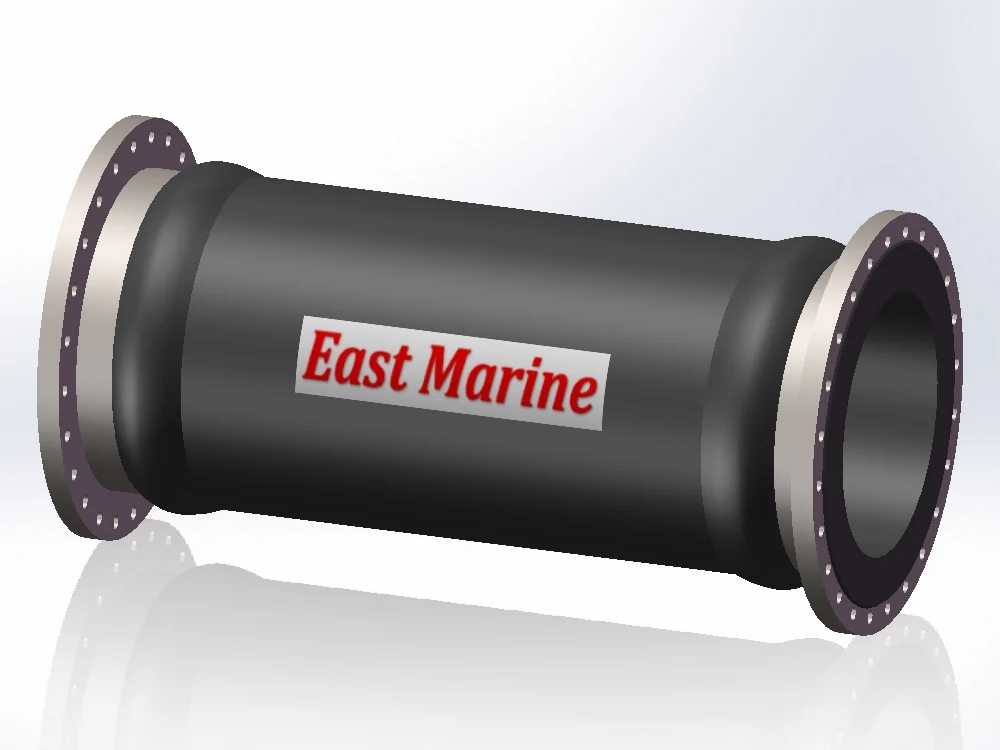
Discharge Rubber Hose with Steel Flange
Steel-flanged discharge hose for floating, onshore and submerged slurry lines, ID 100-1100mm at 0.5-4.2MPa working pressure.
View specifications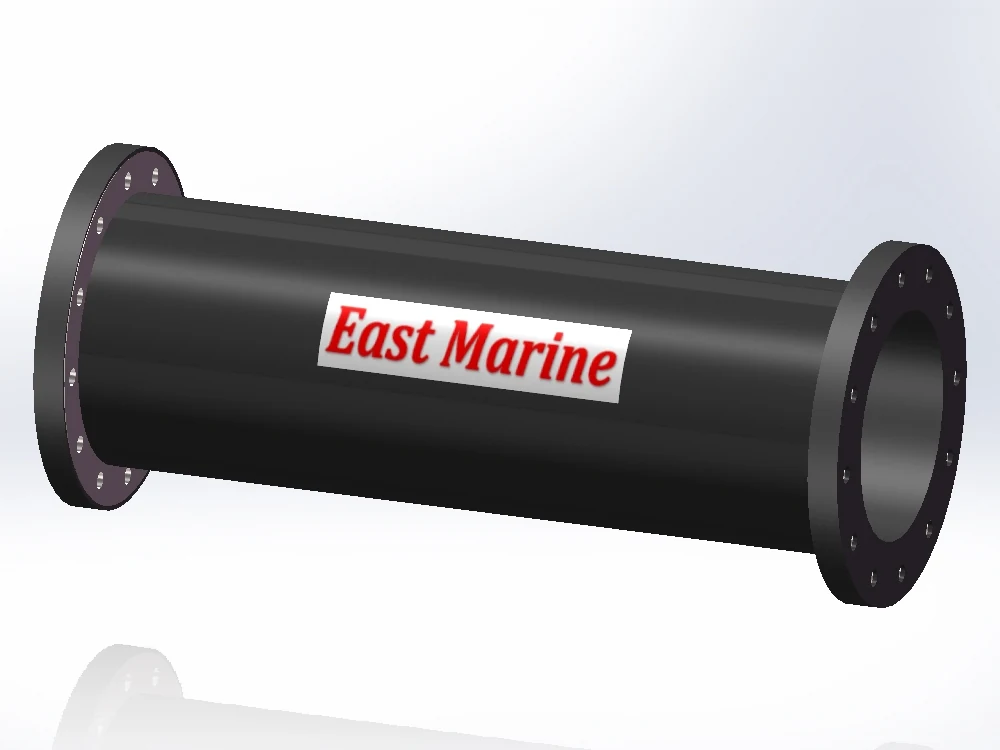
Discharge Rubber Hose with Sandwich Flange
Sandwich-flanged discharge hose with rubber-lined sealing face, ID 100-1100mm at 0.5-4.2MPa working pressure.
View specifications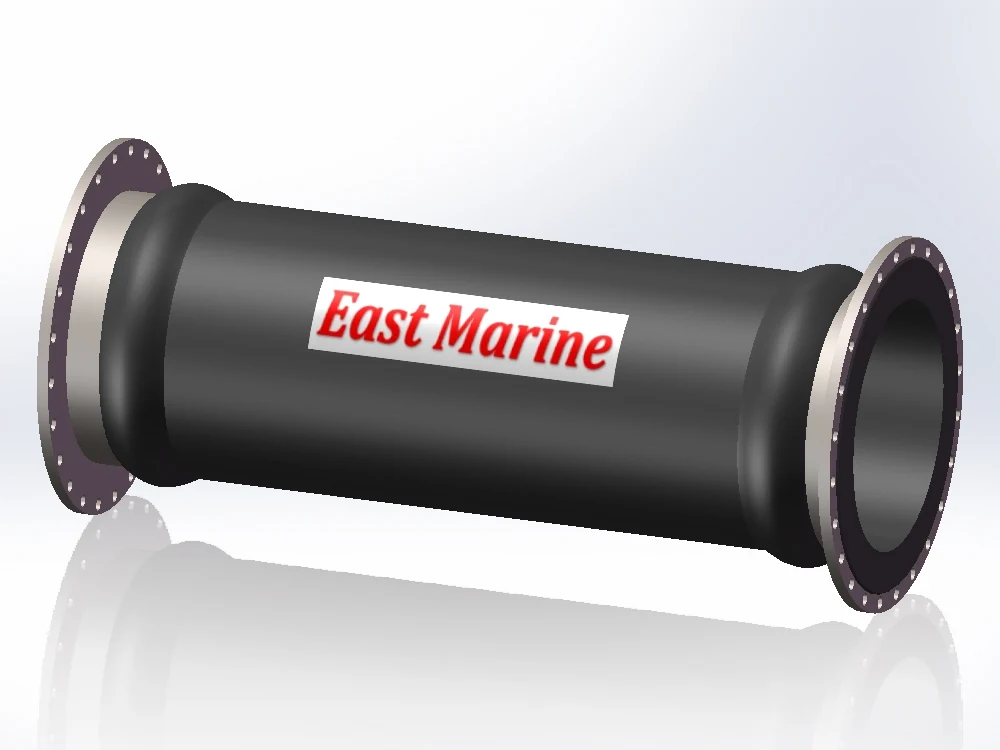
Armored Discharge Rubber Hose with Steel Flange
Steel-ring armored discharge hose for coral reef and weathered rock, HB>=450 wear rings, ID 100-1100mm.
View specificationsNeed this section to bolt into what you already run?
Send the flange drawing, the bore and the working pressure. We will confirm the specification and the lead time.