
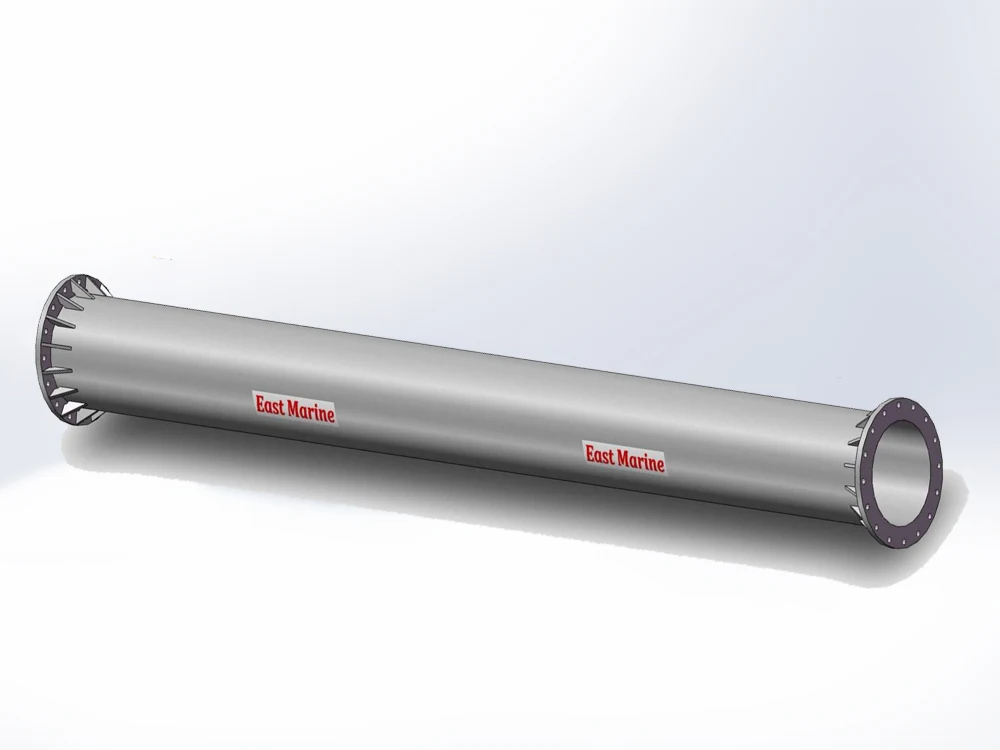
Dredging Steel Pipe for Slurry Pipelines
Land, floating and submerged steel pipe. ID 100-1100 mm, working pressure to 4.2 MPa.
What this group covers
Steel pipe carries the parts of a dredging line where pressure, wear and rigidity govern the choice. It connects dredgers, pump stations and discharge areas, holds its bore under load rather than flexing, and takes wall thickness increases or internal wear-resistant linings in the positions where wear concentrates.
How to choose within this group
Decide the configuration first. Land pipe runs onshore, floating pipe works with PE floats, submerged pipe is weighted and connects the floating line to the onshore system.
Specify extra wall thickness or an internal wear-resistant lining only where wear is concentrated, not uniformly down the line.
Match the standard flange drilling to the rubber hose and HDPE sections it will bolt to.
Where the line has to flex, with swell, tide or pump movement, use rubber hose instead; steel is for where it must not.
Related applications
Capital and Maintenance Dredging
Keeping channels at depth, where the line runs continuously and section rotation drives the maintenance plan.
Port and Channel Construction
Capital works in coarse and rock material, where armored construction decides the replacement interval.
Mining and Tailings Transport
Moving abrasive slurry and tailings where the duty is closer to mining than to dredging.
Send us the duty and we will specify the section
Bore size alone is not enough to select from this group. Tell us the position on the line, the material and the flange standard.