
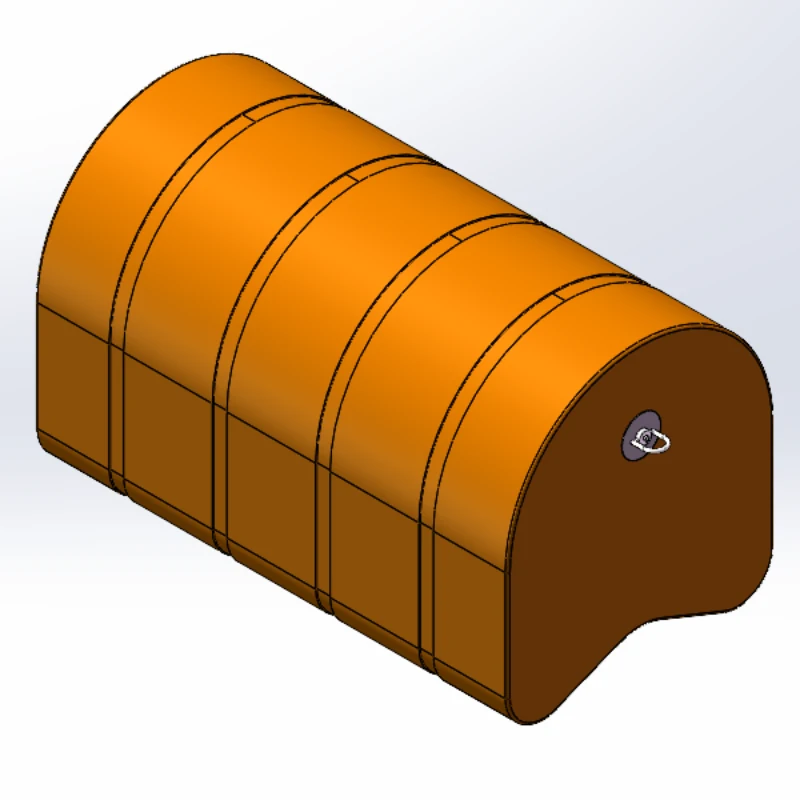
Pipe Laying Float
Pipeline foam buoys for offshore and subsea pipe laying, rated to 3000m seawater depth.
| Product Name | Pipe Laying Float (Pipeline Foam Buoy) |
|---|---|
| Operating Depth | Rated up to 3000 metres seawater |
| Configurations | One-piece and modular |
| Foam Core | Closed-cell foam, depth-optimised density |
| Outer Skin | HDPE skin or polyurethane elastomer coating |
| Reinforcement | Optional nylon filament reinforcement |
| Fastening | Integrated banding grooves |
| Origin | China |
Specifications are supplied per order within the ranges shown. Send the flange drawing or the details of the section being replaced and the connection is machined to match.
Overview
Pipe laying floats, also called pipeline foam buoys, are buoyancy modules used while a pipeline is being installed rather than while it is in service. During lay-down the pipeline's own weight and the tension in it are the controlling risks; the floats reduce both, holding the line at a controlled buoyancy so it can be positioned safely. They are rated for operational depths up to 3000 metres seawater and supplied as one-piece or modular configurations.
Who it is for
Offshore and subsea installation contractors handling pipeline weight and tension during lay-down, in both shallow and deep water.
Key benefits
- High buoyancy capacity for offshore pipeline installation
- Stable, controlled buoyancy during underwater pipe laying
- Strong, durable and impact-resistant construction
- Customisable for different pipe sizes and weights
- Corrosion resistance and seawater durability
- Reduces contact between pipeline and seabed, limiting disturbance to marine ecosystems
What goes wrong without it
An unsupported pipeline sinks uncontrolled during lay-down, which risks the line and the crew handling it.
Point loading during installation concentrates mechanical stress and can damage a pipeline before it ever carries product.
A pipeline dragged along the seabed during installation disturbs the benthic environment and can damage its own coating.
Construction and technical features
- Foam core: closed-cell foam with density selected for the required buoyancy and operating depth
- Outer skin options: high-density polyethylene (HDPE) skin or polyurethane elastomer coating
- Optional nylon filament reinforcement for added strength and abrasion resistance
- Integrated banding grooves in each module for secure fastening to the pipeline
- Customised end fittings available for handling, installation and recovery
Quality control
- Foam density verified against the specified buoyancy and operating depth
- Outer skin and coating inspected for integrity before despatch
- Banding groove dimensions and end fitting fit checked against the pipeline specification
- Third-party inspection can be arranged on request
Where it is used
- Offshore pipeline lay-down in shallow water
- Deep-water pipeline installation down to 3000 m seawater
- Subsea pipeline positioning where controlled descent is required
- Pipeline recovery operations needing temporary buoyancy
Customisation
- Foam density selected for the required buoyancy and the operating depth
- One-piece or modular buoyancy module configuration
- HDPE skin or polyurethane elastomer coating as the outer surface
- Nylon filament reinforcement where extra strength and abrasion resistance are needed
- Custom end fittings for handling, installation and recovery
How it compares
Pipe laying floats are installation equipment, not permanent line buoyancy. PE floats keep a dredging discharge pipeline on the surface throughout its working life; pipe laying floats control buoyancy and tension while an offshore or subsea line is being put in place, and are rated to 3000 m seawater rather than sized for a surface line.
Selection and use notes
- Give the pipeline weight, diameter and target operating depth when requesting a specification
- Choose modular configuration where floats must be fitted or removed at sea
- Use the integrated banding grooves rather than improvised strapping
- Specify end fittings up front if recovery is part of the operation
Questions buyers ask
What depth are these rated for?
Operational depths rated up to 3000 metres seawater, suitable for both shallow-water and deep-water pipeline installation.
What configurations are available?
One-piece pipe laying floats and modular pipe laying floats, to suit different project conditions, pipeline diameters and installation methods.
What is the float made of?
A closed-cell foam core with density selected for the required buoyancy and depth, with either an HDPE skin or a polyurethane elastomer coating, and optional nylon filament reinforcement.
How are they fastened to the pipeline?
Each module has integrated banding grooves that allow secure fastening. Customised end fittings can also be designed for handling, installation and recovery.
How do they differ from PE floats?
PE floats provide permanent buoyancy for a surface dredging pipeline. Pipe laying floats control buoyancy and tension during offshore and subsea installation.
Can they be sized for our pipeline?
Yes. Designs are customisable for different pipe sizes and weights; send the pipeline data and target depth with the enquiry.
Related products
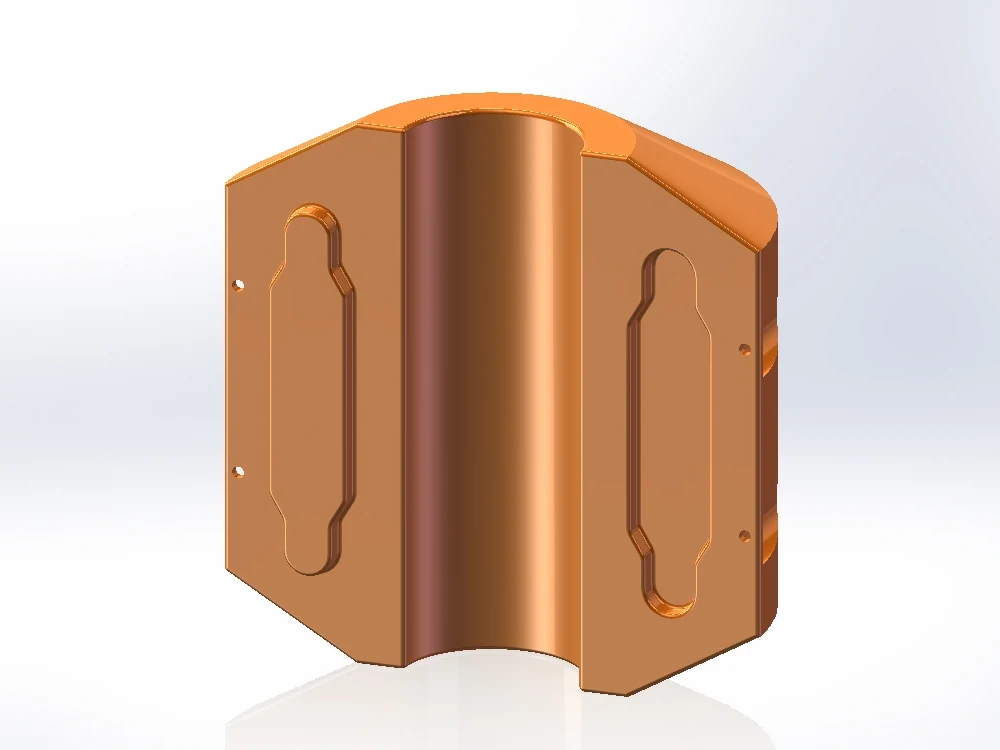
PE Float with Location Slot
PU-filled PE float with a location slot that grips the pipe, buoyancy 150-5000kg, ID 110-1200mm.
View specifications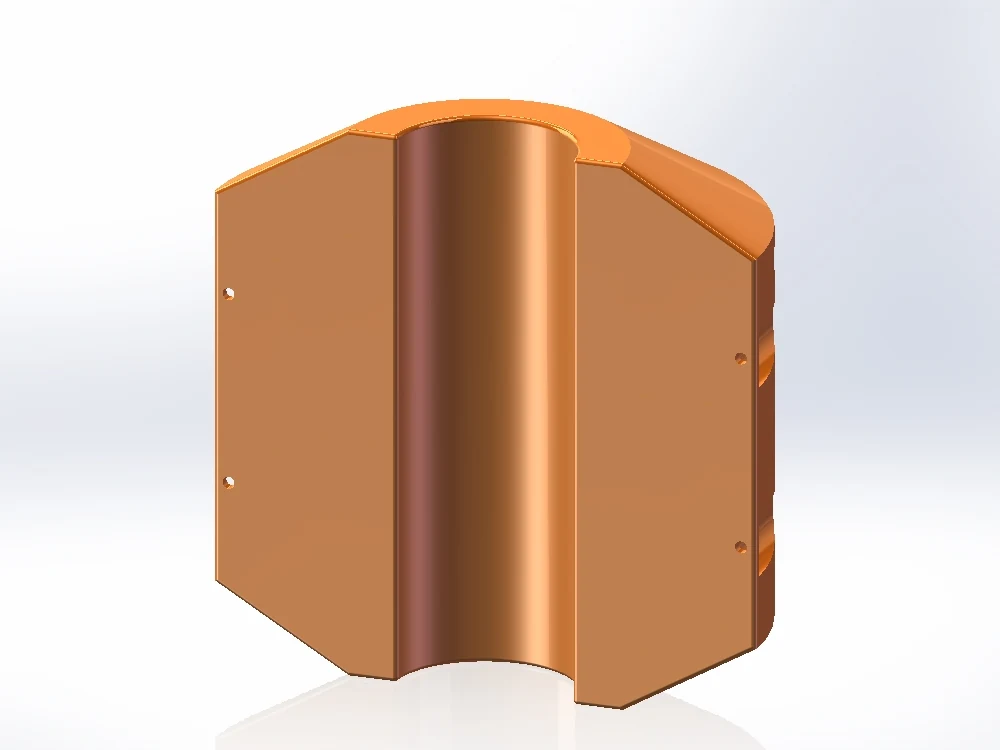
PE Float without Location Slot
PU-filled PE float with plain bore, buoyancy 150-5000kg, ID 110-1200mm, seamless shell.
View specifications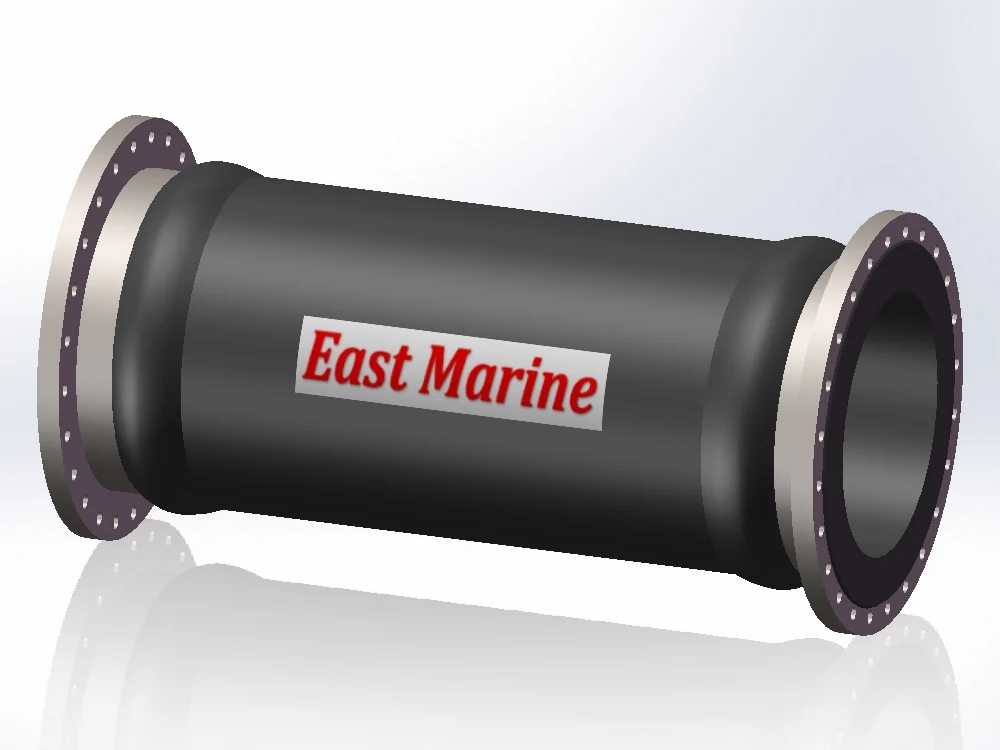
Discharge Rubber Hose with Steel Flange
Steel-flanged discharge hose for floating, onshore and submerged slurry lines, ID 100-1100mm at 0.5-4.2MPa working pressure.
View specificationsNeed this section to bolt into what you already run?
Send the flange drawing, the bore and the working pressure. We will confirm the specification and the lead time.