
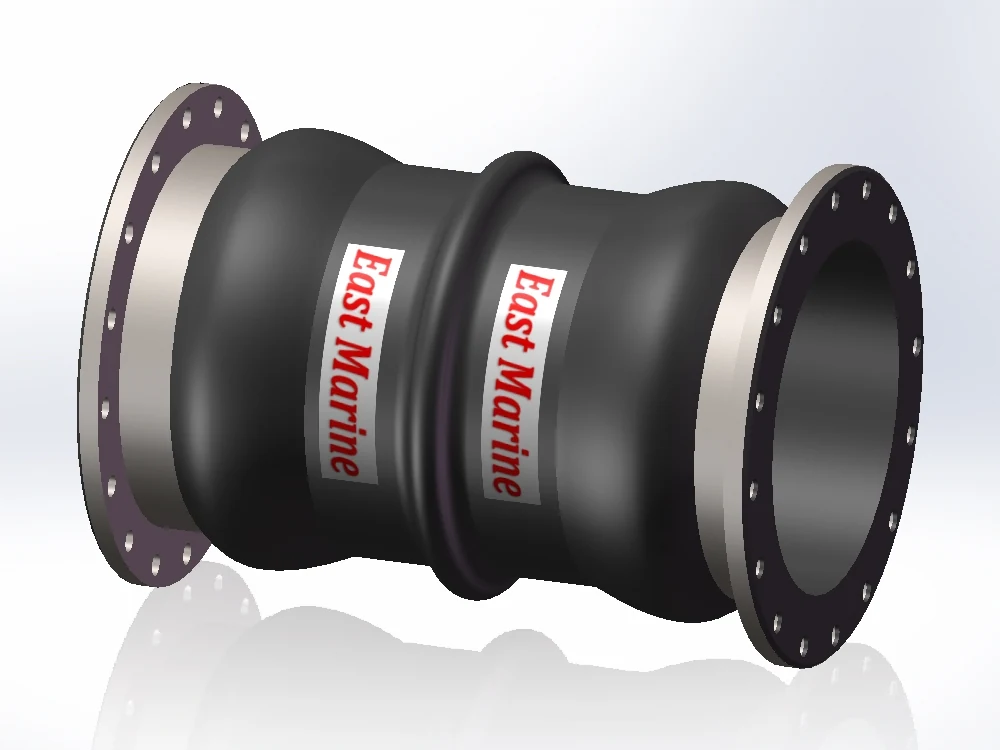
Expansion Joint with Steel Flange
Short flexible joint connecting dredge pump to pipeline, ID 100-1300mm, vacuum to 3MPa.
| Product Name | Expansion Joint with Steel Flange |
|---|---|
| Inner Diameter (ID) | 100-1300 mm |
| Length | 200-1000 mm |
| Working Pressure (WP) | -0.1 to 3 MPa |
| Flange Type | Steel flange |
| Application | Connects the dredge pump with the pipeline |
| Origin | China |
Specifications are supplied per order within the ranges shown. Send the flange drawing or the details of the section being replaced and the connection is machined to match.
Overview
An expansion joint is a short rubber hose that sits between the dredge pump and the pipeline, and between deck pipework runs. Its job is to take up the gap. Pipework never lines up perfectly, and once the pump is running it does not stay lined up either. The joint extends and compresses to absorb that, and damps the vibration the pump puts into the system before it reaches the rest of the line.
Who it is for
Dredger owners and pump packagers connecting a dredge pump to fixed pipework, on either the vacuum or the pressure side.
Key benefits
- Compensates for gaps between pipelines without field fabrication
- Damps vibration during operation, protecting connected equipment
- Can be designed for conditions from vacuum through to high pressure
- Short length simplifies both installation and maintenance access
- Steel flanges give a hard, repeatable sealing face
What goes wrong without it
Rigid pipework bolted straight to a dredge pump transmits every pulse into the pump mountings and the deck structure.
Small alignment gaps between pump and pipeline turn a routine installation into a fabrication job; the joint absorbs the mismatch instead.
Removing a pump for maintenance means breaking a rigid line. A flexible joint gives the clearance to pull the unit without cutting.
Construction and technical features
- Short-length flexible rubber hose body
- Provides extension and compression to compensate for pipeline gaps
- Vibration damping between pump and pipeline
- Designed for vacuum through to high-pressure conditions
- Steel flanges at both ends
Quality control
- Raw material inspection on rubber compounds and reinforcement before use
- Dimensional check on bore, length and flange alignment
- Pressure testing to the specified condition, vacuum or positive
- Third-party inspection can be arranged on request
Where it is used
- Dredge pump discharge connection on a cutter suction dredger
- Pump suction side where vacuum conditions apply
- Deck pipework runs needing movement take-up between fixed points
- Maintenance access points where the pump must be removable
Customisation
- Inner diameter 100-1300 mm, the widest bore range in the hose programme
- Length 200-1000 mm to suit the gap being bridged
- Specified for vacuum or pressure duty from -0.1 to 3 MPa
- Steel or sandwich flange, drilled to your table
How it compares
The steel-flange version gives a hard machined sealing face and is the usual choice where the joint is broken regularly for pump maintenance. The sandwich-flange version rubber lines the wetted joint surfaces. Both share the same bore range, length range and pressure band.
Selection and use notes
- Measure the installed gap and the expected movement, not just the pipe bore
- State whether the joint is on the vacuum or the pressure side when ordering
- Do not use the joint to correct a large permanent misalignment; it is for gaps and movement
- Check for cover cracking at each shutdown, since this section works continuously
Questions buyers ask
What bore sizes are available?
Inner diameter 100-1300 mm, with length from 200 to 1000 mm.
Can it be used under vacuum?
Yes. It can be designed to withstand conditions ranging from vacuum to high pressure, with a working pressure range of -0.1 to 3 MPa.
Where exactly is it fitted?
Primarily on dredgers to connect the dredge pump with the pipeline, and in pipelines on the deck.
Does it reduce vibration?
Yes. Vibration damping during operation is one of its main functions and helps protect connected equipment.
How much movement can it take up?
It provides a certain amount of extension and compression to compensate for pipeline gaps. Send the installed gap and expected movement with your enquiry so the joint is sized for it.
Can the flanges be drilled to our standard?
Yes. Provide the flange drawing or details of the connection it bolts to.
Related products
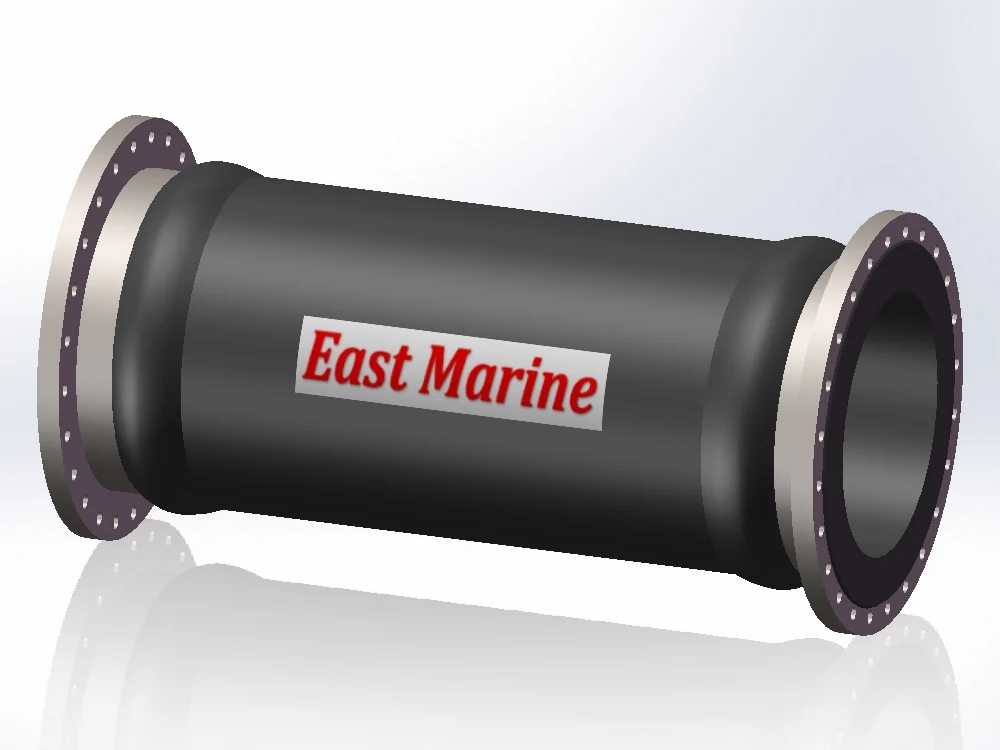
Discharge Rubber Hose with Steel Flange
Steel-flanged discharge hose for floating, onshore and submerged slurry lines, ID 100-1100mm at 0.5-4.2MPa working pressure.
View specifications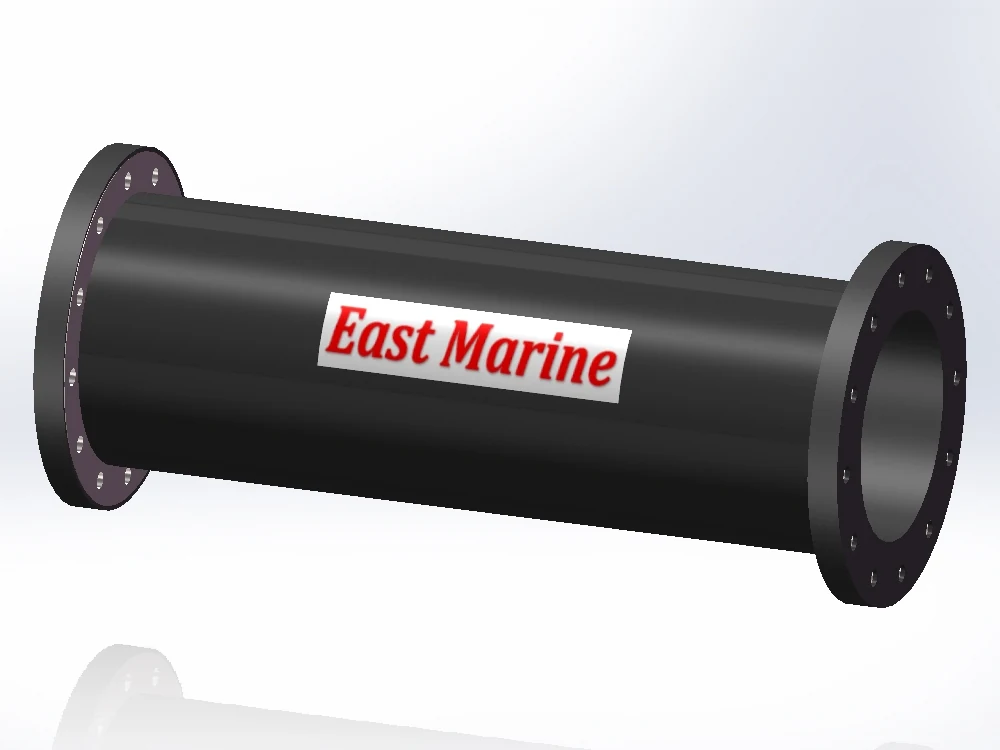
Discharge Rubber Hose with Sandwich Flange
Sandwich-flanged discharge hose with rubber-lined sealing face, ID 100-1100mm at 0.5-4.2MPa working pressure.
View specifications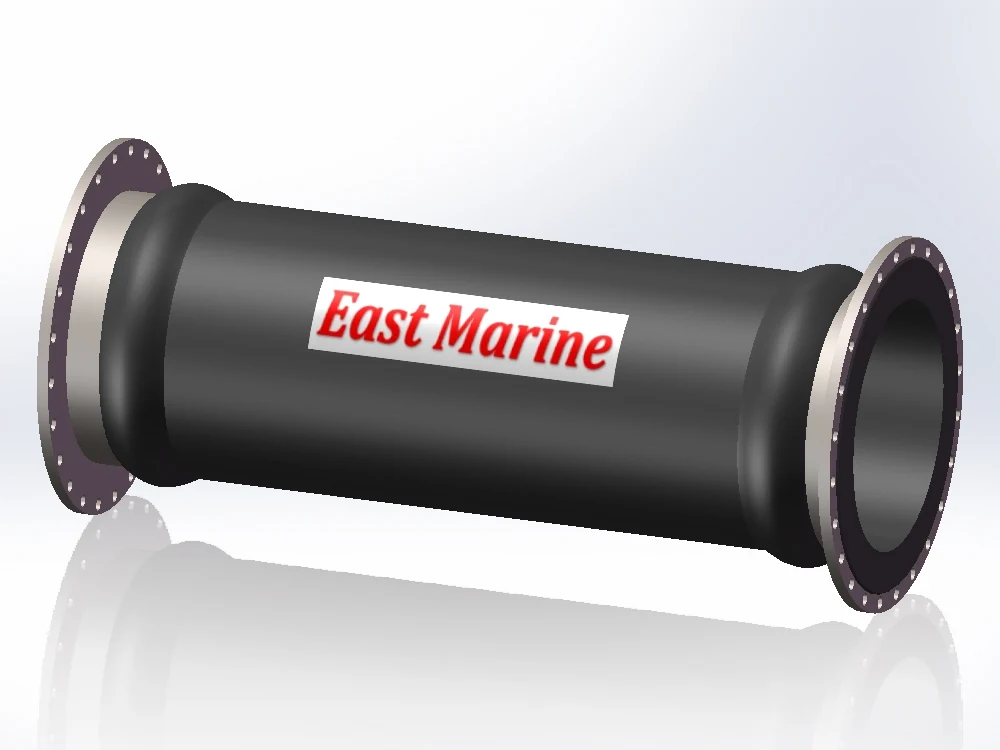
Armored Discharge Rubber Hose with Steel Flange
Steel-ring armored discharge hose for coral reef and weathered rock, HB>=450 wear rings, ID 100-1100mm.
View specificationsNeed this section to bolt into what you already run?
Send the flange drawing, the bore and the working pressure. We will confirm the specification and the lead time.