
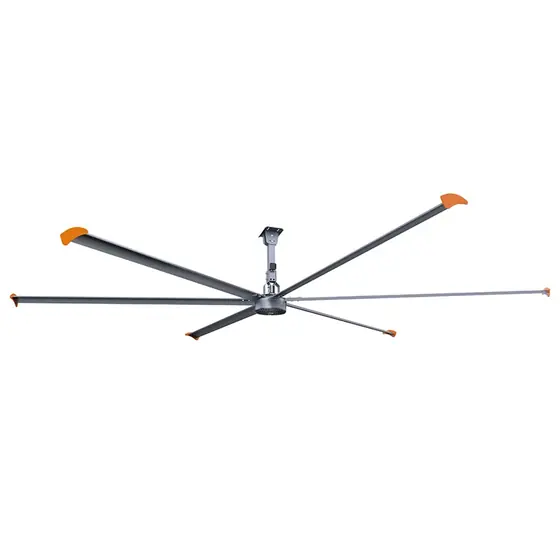
 HVLS Ceiling Fan
Industrial Ceiling Fan
A direct-drive IE5 fan that covers up to 1,700 m2 of high-bay floor on 1.5 kW, with no gearbox and no oil change for the life of the installation.
Products
HVLS Ceiling FanHVLS Floor FanWall FanHigh Temperature Axial FanDiesel GeneratorAll ProductsIndustries
Warehouse and LogisticsManufacturing WorkshopsCommercial and Public SpacesAgriculture and LivestockOne-piece formed housing with extra-thick zinc coating, automatic shutters and a bottom drain, for negative-pressure ventilation in hot, humid and smelly buildings.
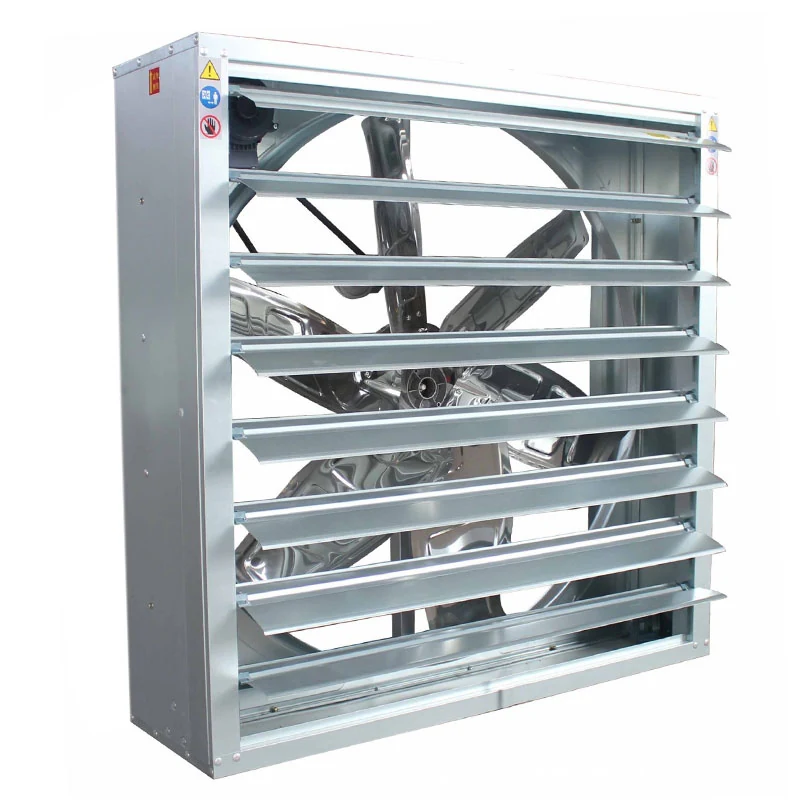
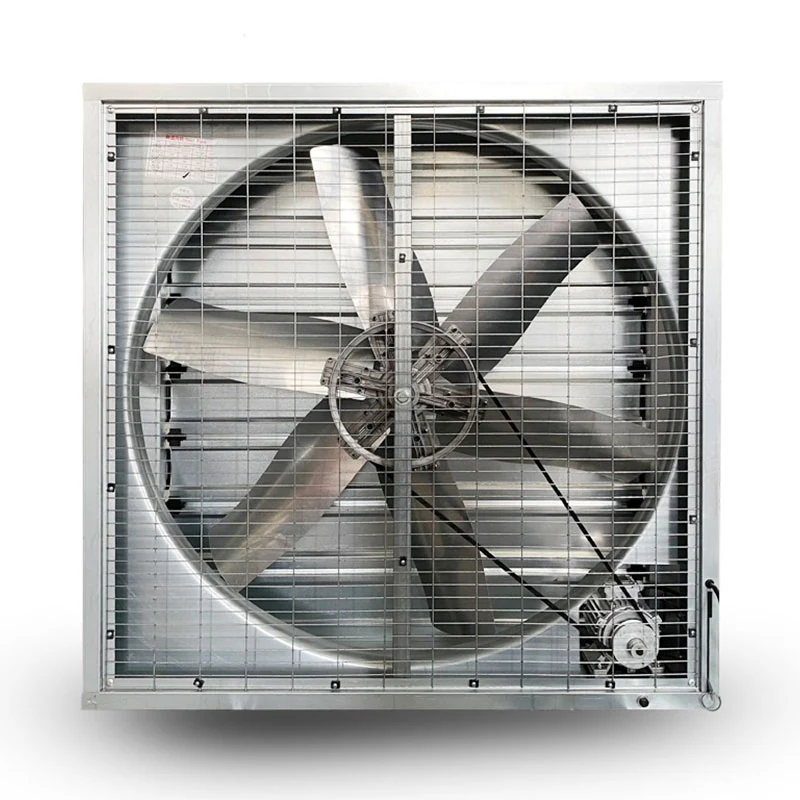
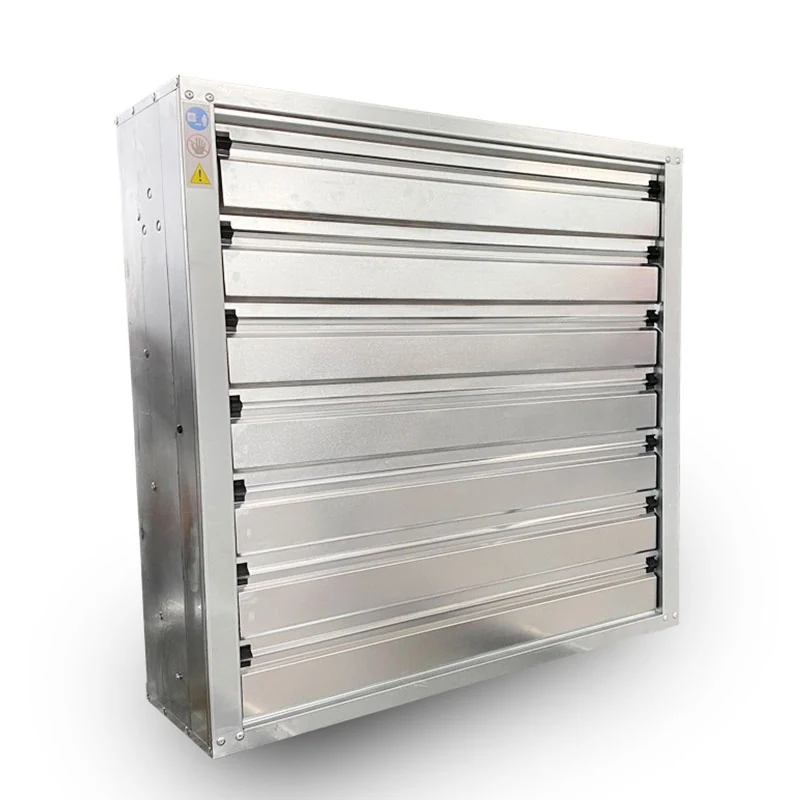
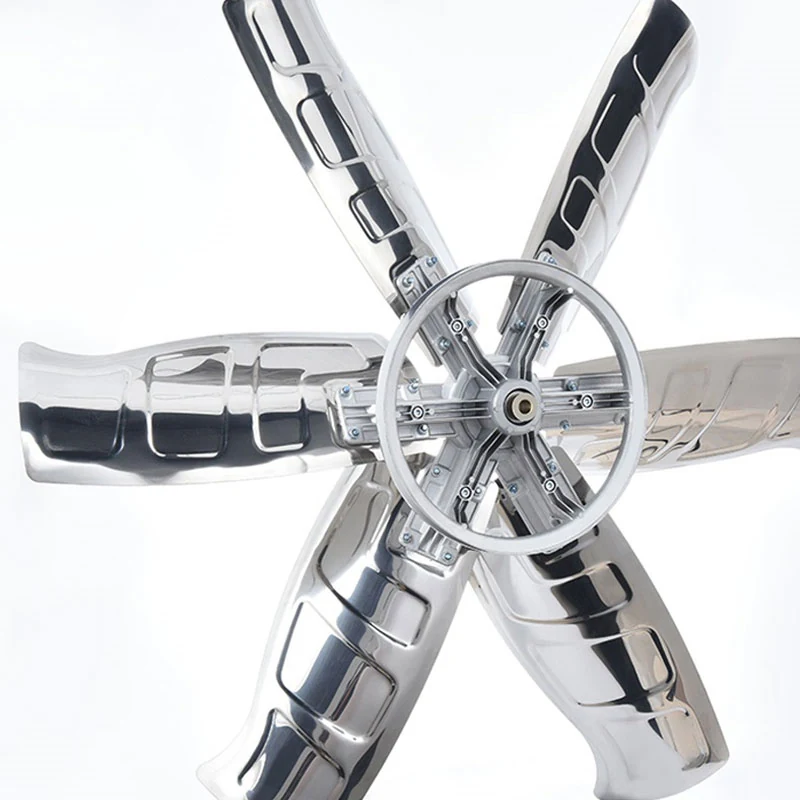
The industrial exhaust fan is a wall-mounted negative-pressure fan for high-temperature or smelly workshops: heat treatment plants, foundries, plastics factories, aluminium plants, shoe and leather factories, electroplating shops, printing and dyeing works and chemical plants. It is equally at home in labour-intensive buildings such as garment factories and assembly halls.
The housing is made with advanced automatic processing and formed in one operation, with an extra-thick zinc coating for corrosion resistance and a drain added at the bottom so condensate and washdown water leave rather than sit in the frame. The shutters open and close automatically, which keeps dust and rain out when the fan is off.
The design is CAD and CAM optimised for high total pressure, large air volume, low noise, low energy consumption, stable operation and long service life. It can blow as well as draw, which is what makes it the usual choice for greenhouses and workshops. It is particularly suited to hot and wet areas such as cotton, wool, flax, weaving, chemical fibre, warp knitting, elastic, knitting, silk and hosiery mills, as well as storage and logistics buildings, greenhouse ventilation and livestock farm cooling.
A circulating fan makes a hot building more bearable. An exhaust fan removes the hot air entirely and pulls cooler outside air in behind it, which is the only way to lower the temperature in a building with a process heat load.
One-piece formed housing, extra-thick zinc coating and a bottom drain. Dyeing houses, electroplating shops and livestock barns destroy fans that are merely painted.
Automatic shutters mean the building is dust-proof and waterproof whenever the fan is off, without anyone having to remember.
Enough of a range to match the air change rate to the building instead of installing four fans where two of the right size would do.
Furnaces, moulding machines, dye vats and plating tanks all put heat into the building. Only exhaust ventilation removes it.
Negative pressure pulls fumes out through the wall rather than letting them drift across the floor to the next workstation.
In textile, food and storage buildings the moisture is the problem as much as the heat. Continuous air change is what controls it.
In a wet or chemically aggressive building a standard painted fan does not last. The zinc coating and the drain are the specific answer to that.
Advanced automatic processing technology forms the housing in one operation, which removes the seams where corrosion usually starts.
Strong corrosion resistance for wet and chemically aggressive buildings, with a drain added at the bottom of the frame so water leaves the housing.
The louvres open and close with the fan, making the opening dust-proof and waterproof when the fan is idle.
High total pressure, large air volume, low noise, low energy consumption, stable operation and long service life.
Permanent magnet synchronous motors at 0.18 kW, 0.37 kW, 0.75 kW, 1.1 kW and 1.5 kW, matched to the fan size.
The fan can blow as well as draw, which is what makes one product work for both greenhouse supply and workshop extract.
Every figure below comes from our own specification. Where a value depends on the diameter or the duty it is written as TBC rather than invented, and it is confirmed on the specification sheet issued with your quotation.
| Fan size range | 480 mm, 600 mm, 800 mm, 1000 mm, 1100 mm, 1380 mm, 1530 mm |
|---|---|
| Motor power range | 0.18 kW, 0.37 kW, 0.75 kW, 1.1 kW, 1.5 kW |
| Motor type | Permanent magnet synchronous motor (PMSM) |
| Housing | One-piece formed, extra-thick zinc coating, drain at the bottom |
| Shutters | Automatic opening and closing, dust-proof and waterproof when closed |
| Airflow direction | Reversible, can blow or draw |
| Design method | CAD and CAM optimised |
| Air volume per size | TBC, confirm at quotation |
| Noise level | TBC per size, confirm at quotation |
| Protection class | TBC, confirm at quotation |
Exhaust ventilation against the alternatives, and against the other Diamond ranges.
| Against an HVLS ceiling fan | Different jobs. The ceiling fan circulates air inside the building; the exhaust fan replaces it. A workshop with a process heat load usually needs both. |
|---|---|
| Against a negative pressure fan used alone for cooling | The biggest function of exhaust ventilation is air change, smoke extraction and dust removal. For perceived cooling on the floor, pair it with circulating fans rather than adding more extract. |
| Against a water curtain or evaporative system | Water curtains add humidity, which excludes furniture coating, food processing and dry storage. Exhaust fans do not, and they need no water supply. |
| Against roof extract units | Wall mounting suits buildings where roof penetrations are not wanted, and the automatic shutters make a wall opening weather-tight when the fan is off. |
A negative pressure system only works if air can get in. Set the inlet openings on the opposite side of the building and size them for the extract rate.
Two correctly sized fans beat four undersized ones on noise, power and installation cost. Send the building volume and the required air changes per hour.
The bottom drain is what keeps water out of the frame in a wet building. Check it when the shutters are cleaned.
Dust and lint build up on the louvres in textile and livestock buildings and stop them closing fully, which loses the weather seal.
HVLS Ceiling Fan
A direct-drive IE5 fan that covers up to 1,700 m2 of high-bay floor on 1.5 kW, with no gearbox and no oil change for the life of the installation.
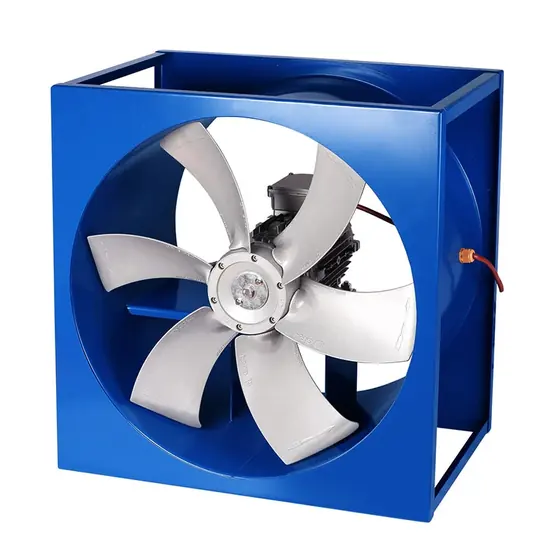 High Temperature Axial Fan
Rated for 130 C ambient and 98 percent humidity, in eleven diameters and four mounting types, for paint lines, tobacco, rubber, pharmaceutical and timber drying.
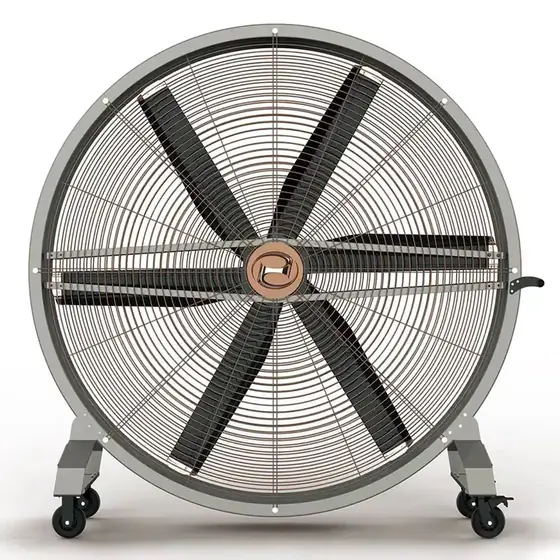 HVLS Floor Fan
A wheeled HVLS fan that throws air up to 28 m in open space, for bays where nothing can be hung from the roof and the cooling has to follow the work.
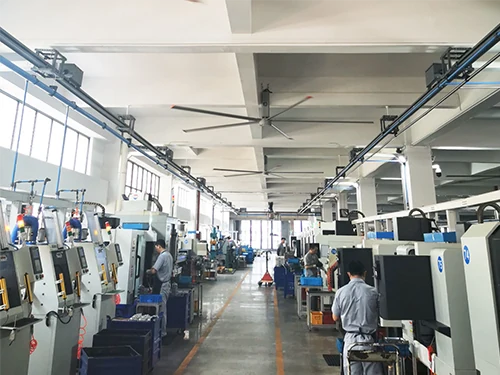 Comparison Article
Every workshop cooling method works somewhere. The useful question is where each one fails, and in a large open workshop the...
 Industry Article
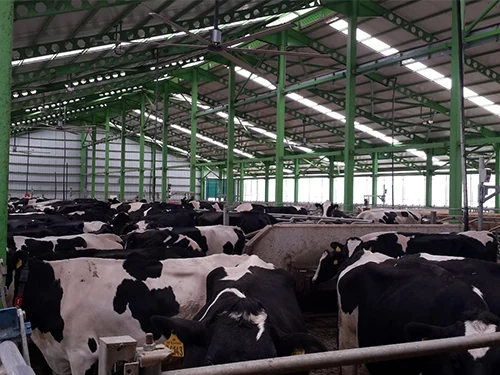
The large industrial HVLS fan was originally invented to ventilate and cool livestock. Working through the problems in a dairy, a...
Seven sizes: 1530 mm, 1380 mm, 1100 mm, 1000 mm, 800 mm, 600 mm and 480 mm, with PMSM motors at 0.18 kW, 0.37 kW, 0.75 kW, 1.1 kW and 1.5 kW to suit.
Yes. The fan can blow as well as draw, which is why the same product is used for greenhouse supply and workshop extract.
That is the environment it is built for. The housing is formed in one piece with an extra-thick zinc coating for corrosion resistance and a drain at the bottom, and the range is specifically listed for printing and dyeing works, electroplating shops and chemical plants.
It follows the building volume and the air change rate you need, not the floor area. Send the length, width, height and the target air changes per hour and we will return a size and a count.
No. The shutters open and close automatically with the fan, which is what keeps the opening dust-proof and waterproof when it is off.
In premium packing material specified to keep the housings and shutters safe in transit. Confirm the destination port with the enquiry and freight is quoted alongside the goods.
Tell us the duty, the quantity and the destination port. The first reply contains a model, a price and a freight figure.