
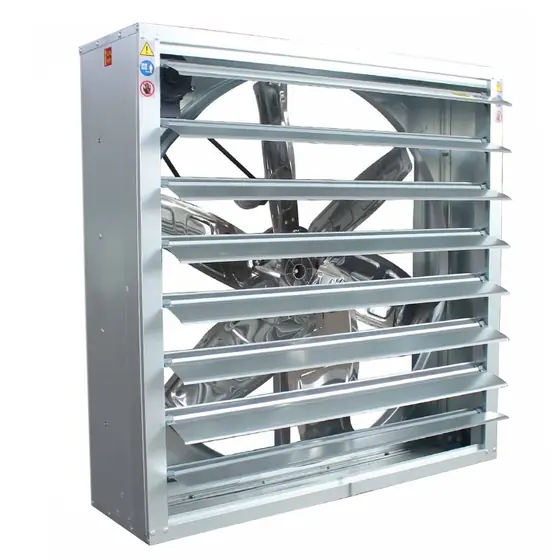
 Wall Fan
Industrial Exhaust Cooling Fan
One-piece formed housing with extra-thick zinc coating, automatic shutters and a bottom drain, for negative-pressure ventilation in hot, humid and smelly buildings.
Products
HVLS Ceiling FanHVLS Floor FanWall FanHigh Temperature Axial FanDiesel GeneratorAll ProductsIndustries
Warehouse and LogisticsManufacturing WorkshopsCommercial and Public SpacesAgriculture and Livestock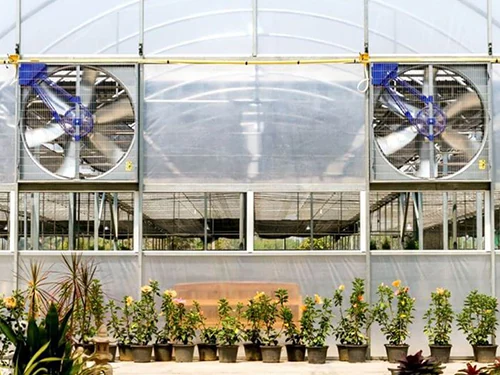
A negative pressure fan works by air convection: it draws fresh air in from the openings on the far side of the building and forces the hot indoor air out. Done properly it is the cheapest way to change the air in a large building. Done badly, with the extract sized and the inlets forgotten, it is an expensive way to make a noise.
Nothing here is a slogan. Each stage is a thing somebody has to do, and most delays on a fan project come from skipping one of them.
Building volume and the air changes per hour the process or the livestock requires. This is the number the whole design comes from, and it is not the floor area.
Seven fan sizes from 480 mm to 1530 mm with PMSM motors at 0.18 kW to 1.5 kW. Two correctly sized fans beat four undersized ones on noise, power and installation cost.
The step most often skipped. Inlet openings go on the opposite side of the building and are sized for the extract rate, otherwise the fans simply throttle themselves.
A dyeing house, a plating shop and a barn all attack a fan differently. The one-piece formed housing with extra-thick zinc coating and a bottom drain is the standard answer.
The fans can blow as well as draw, so a greenhouse supply arrangement and a workshop extract arrangement use the same product with different placement.
Exhaust removes the air; ceiling or floor fans make what remains feel cooler. Most buildings with a process heat load need both, and specifying only one is the usual mistake.
Fans packed in premium packing material to protect the housings and shutters, consolidated with other Diamond items into one shipment.
Keep the bottom drain clear and clean the shutters on a schedule, because lint and dust stop the louvres closing fully and lose the weather seal.
Wall Fan
One-piece formed housing with extra-thick zinc coating, automatic shutters and a bottom drain, for negative-pressure ventilation in hot, humid and smelly buildings.
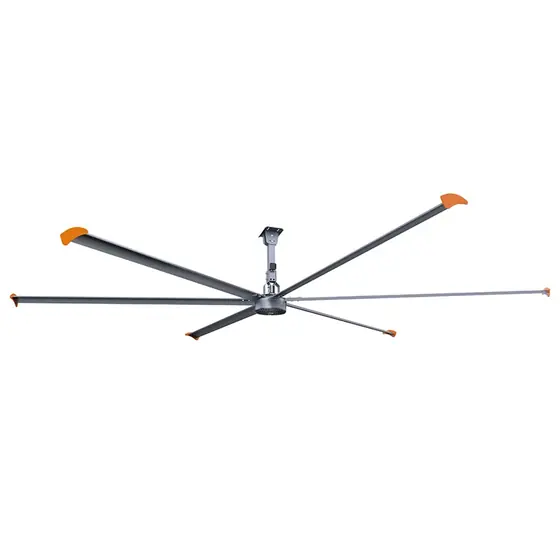 HVLS Ceiling Fan
A direct-drive IE5 fan that covers up to 1,700 m2 of high-bay floor on 1.5 kW, with no gearbox and no oil change for the life of the installation.
Because its biggest function is ventilation, smoke exhaust and dust removal rather than cooling. In a large building the extract alone is slow to change what people feel on the floor, so pair it with circulating fans.
It comes from building volume and target air changes per hour. Send length, width, height and the air change rate required and we will return a size and a count from the seven available diameters.
The fans throttle. They draw against a restriction, move less air than rated and consume power doing it. Inlet area is part of the design, not an afterthought.
Yes. The fan can blow as well as draw, which is why one product serves greenhouse supply and workshop extract.
Clean the shutters on a schedule so they close fully, and keep the bottom drain clear so water leaves the housing rather than standing in it.
Send what you already know about the building or the duty. We will tell you what is missing before you have to ask.