
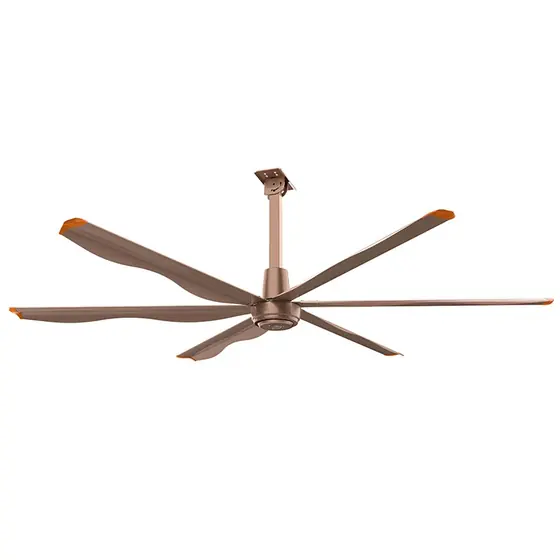
 HVLS Ceiling Fan
Commercial Ceiling Fan
For rooms under about 7 m where the fan is part of the interior: 330 m2 of coverage, under 38 dB, and a bronze airfoil blade that does not look like plant equipment.
Products
HVLS Ceiling FanHVLS Floor FanWall FanHigh Temperature Axial FanDiesel GeneratorAll ProductsIndustries
Warehouse and LogisticsManufacturing WorkshopsCommercial and Public SpacesAgriculture and LivestockA direct-drive IE5 fan that covers up to 1,700 m2 of high-bay floor on 1.5 kW, with no gearbox and no oil change for the life of the installation.
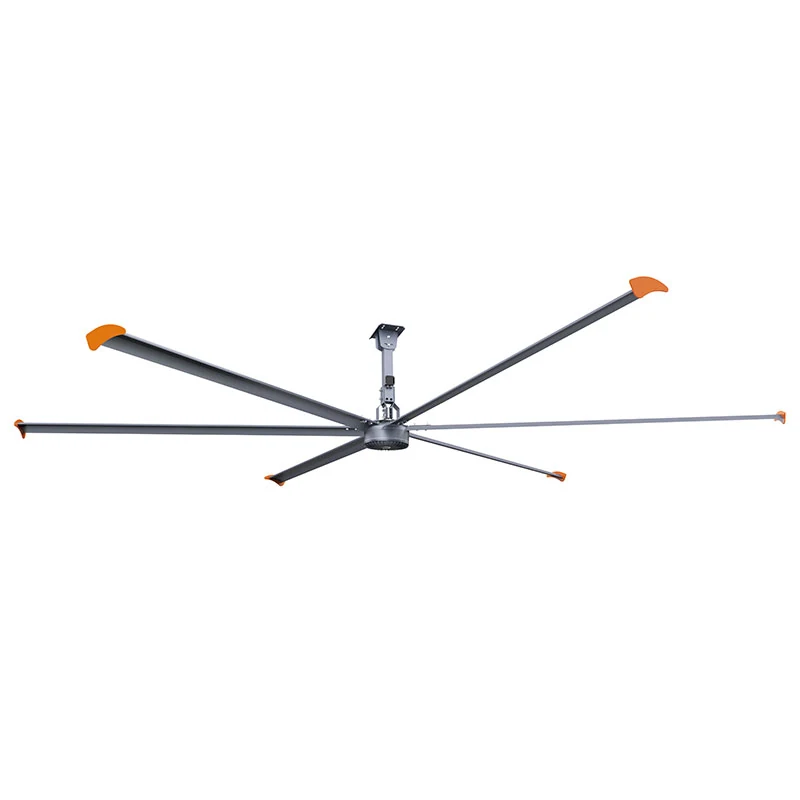
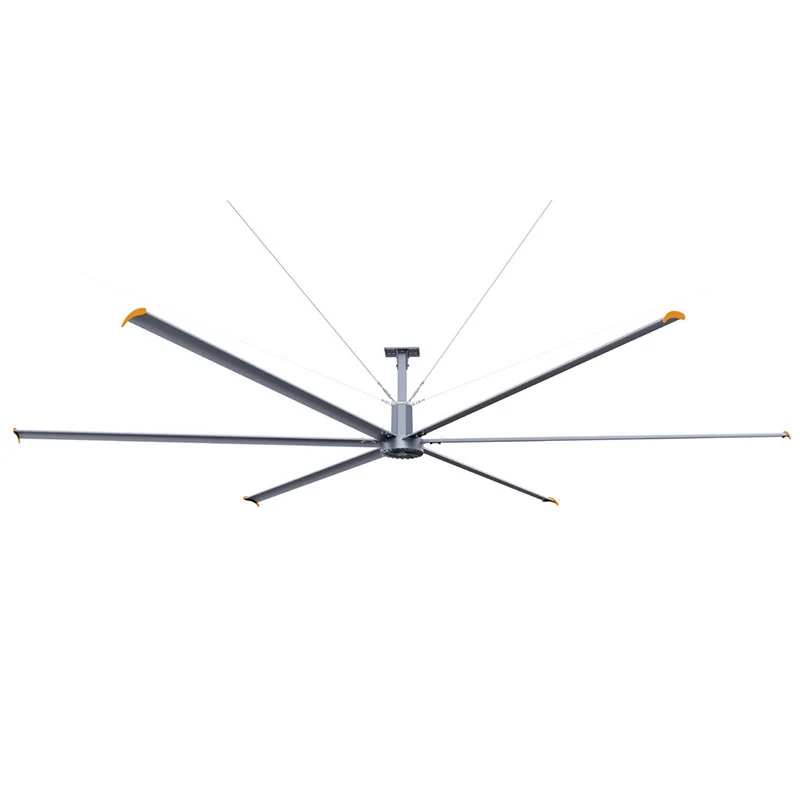
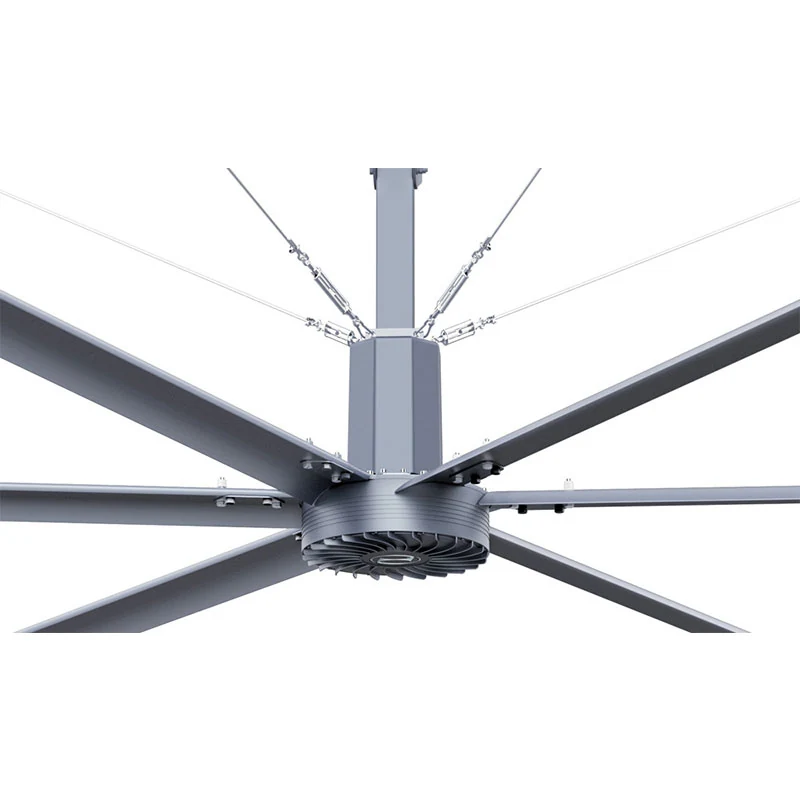
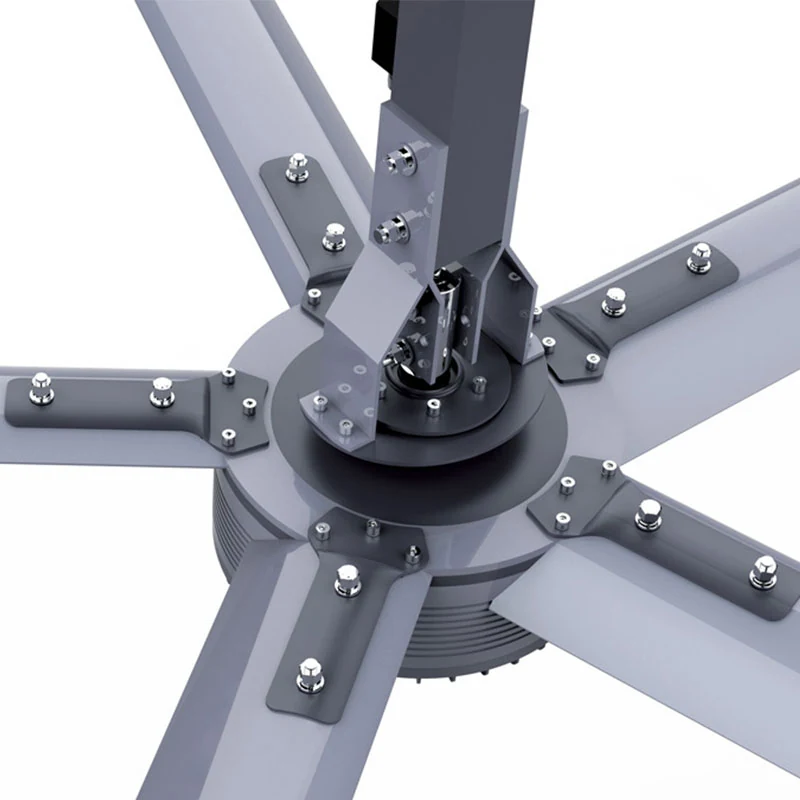
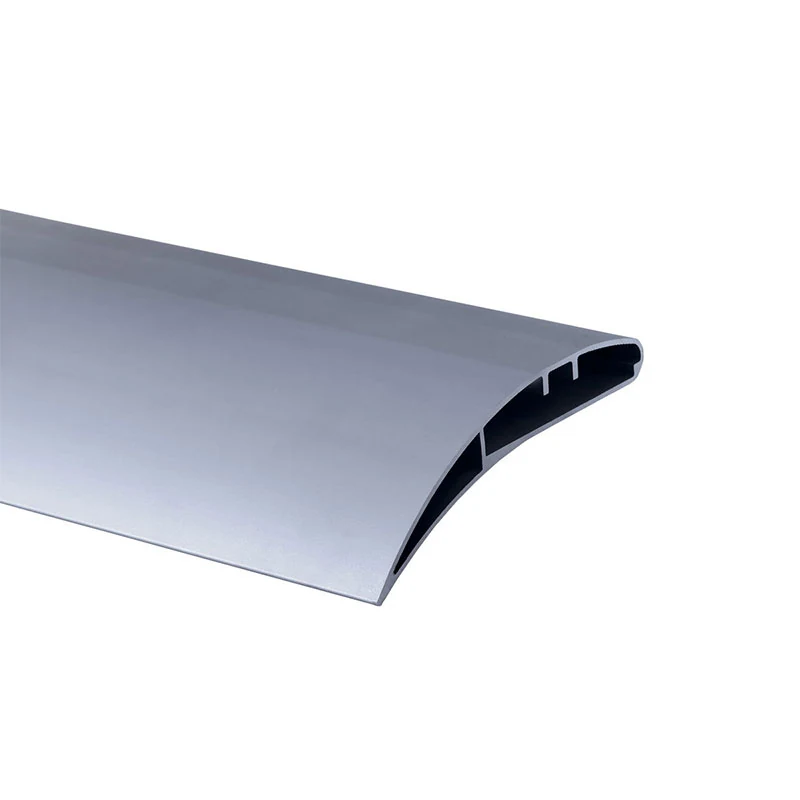
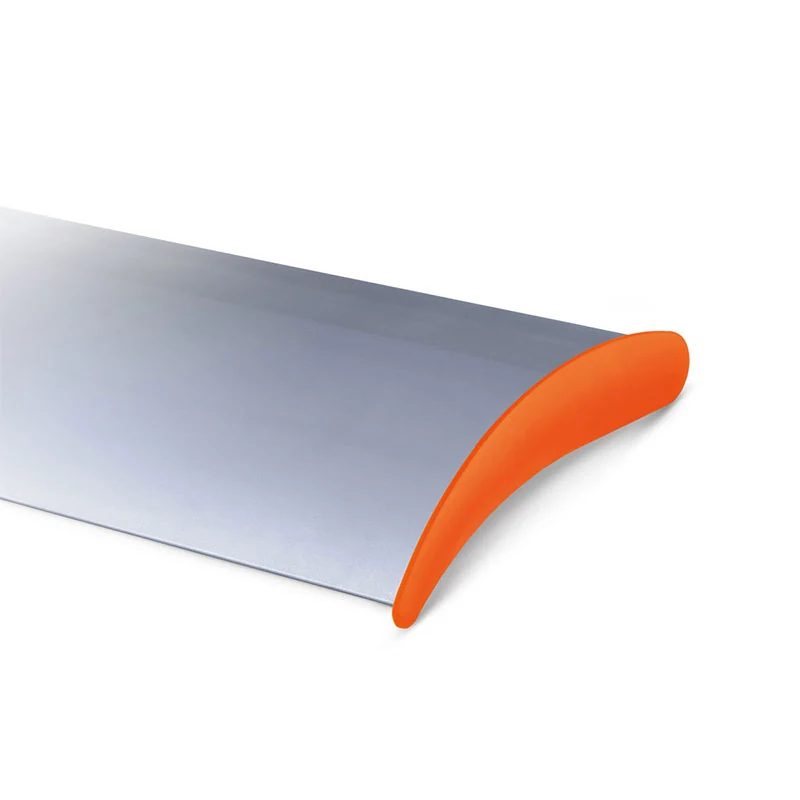
The Diamond industrial ceiling fan uses a permanent magnet external rotor motor driving high-strength aviation aluminium magnesium alloy blades, with a high-temperature resistant winglet at each blade tip. It is built for workshops, shopping malls, halls and cattle sheds, where the job is to organise the indoor airflow rather than to chill the air.
Drive is an IE5 standard efficiency permanent magnet synchronous motor. Rated torque is 260 N.m with a maximum of 468.8 N.m, which is what lets the fan turn a 7.3 m blade set slowly instead of turning a small blade set quickly, and is where the claim of more than 30 percent energy saving comes from. The fan covers up to 1,700 m2 at wind speeds between 1 and 5 m/s, runs below 38 dB and is quoted as free maintenance with a 20-year service life.
It mounts on cement beams, I-beams and square steel structures, which covers almost every industrial roof we are asked about.
Coverage of up to 1,700 m2 per fan means a plant that would need dozens of drum fans needs a handful of ceiling fans, with a fraction of the motors to power and clean.
The direct drive permanent magnet motor has no reduction gearbox, so there is no lubricating oil to change and no oil to drip onto product below. That is the basis of the free-maintenance and 20-year service life figures.
Under 38 dB at the fan, so tannoy announcements, machine alarms and conversation still work on the floor.
The same fan run slowly in the cold months mixes warm air trapped at the roof back down to the floor, which is where the heating savings come from rather than from the cooling effect.
In a high-bay building the warmest air is the air nobody is standing in. A wide slow column of air pushed to the floor and outward along it puts that air back into circulation.
Cooling the air in a 9 m high warehouse means cooling a huge volume that nothing occupies. Moving air instead changes what the body feels without changing the air temperature.
Every drum fan is a motor, a guard, a cable and a trip hazard. Consolidating into a few ceiling fans removes the floor clutter and the replacement cycle.
Continuous circulation stops pockets of stale, damp air forming behind racking and in bays with no cross draught, which matters in warehouses where humidity damages stock.
Direct drive with its own EMU configuration, giving 260 N.m of torque and a maximum of 468.8 N.m, with air volume increased by more than 30 percent against the previous generation.
Extruded and stretched airfoil blades with an energy saving tail, high strength and good toughness at low weight. The T5 plus bright surface oxidation treatment raises corrosion and oxidation resistance.
The tail eliminates the vortex that forms at the end of the airfoil, which stabilises the fan and keeps the airflow closer to the aerodynamic ideal.
No position vector control with centralised operation. Start, stop, speed up and slow down, anti-electromagnetic interference and anti-radiation, able to sit in a high-temperature harsh environment.
Over-voltage, under-voltage, voltage loss regulation, current, phase loss, overload, collision, overheating, lightning and abnormal protection are all handled by the controller.
Integrated motor bracket against falling, anti-off-plate break-off structure, tensile blade with internal reinforcement, wire rope traction device, and automatic power-off protection on accidental contact.
Every figure below comes from our own specification. Where a value depends on the diameter or the duty it is written as TBC rather than invented, and it is confirmed on the specification sheet issued with your quotation.
| Fan diameter | 3 m (10 ft), 3.7 m (12 ft), 4.3 m (14 ft), 5 m (16 ft), 6.1 m (18 ft), 6.7 m (20 ft), 7.3 m (24 ft) |
|---|---|
| Motor power | 0.37 kW, 0.75 kW, 1.1 kW, 1.5 kW |
| Motor type | IE5 permanent magnet synchronous motor, external rotor, direct drive |
| Rated torque | 260 N.m, maximum 468.8 N.m |
| Wind speed range | 1 to 5 m/s |
| Coverage area | Up to 1,700 m2 |
| Noise | Under 38 dB |
| Controller protection class | IP66 |
| Blade material | Extruded and stretched aluminium magnesium alloy, T5 plus bright surface oxidation |
| Mounting | Cement beam, I-beam, square steel structure |
| Service life | Quoted at 20 years, free maintenance |
| Energy saving | More than 30 percent stated against the previous generation |
| Blade count | TBC per diameter, confirm at quotation |
| Net weight | TBC per diameter, confirm at quotation |
Where the industrial ceiling fan sits against the other options a buyer is usually weighing.
| Against the commercial ceiling fan | Same motor principle, larger blades. Choose the industrial range above roughly 6 m clear height or where coverage per fan matters more than fan appearance. |
|---|---|
| Against drum and stand fans | The floor fan wins where nothing can be hung from the roof, or where one workstation needs a strong local draught. The ceiling fan wins on coverage, noise and floor space. |
| Against air conditioning | An air conditioner lowers air temperature in a sealed volume. An HVLS fan changes what people feel and costs a fraction of the power in a building too tall to seal economically. |
| Against evaporative cooling and water curtains | Evaporative systems add humidity, which rules them out for furniture coating, food processing and dry storage. The fan adds none. |
Fan spacing follows clear height and what breaks up the space. Racking, crane rails and partitions all cut the effective coverage, so a layout drawing beats a rule of thumb.
Installation normally takes one to two working days with a scissor lift and two or three people, but the supply connection should be made by a licensed electrician.
A low speed setting through the cold months mixes roof-level warm air back to the floor. That is where heating savings come from.
Dust on an airfoil changes its behaviour. In dusty plants clean the blades regularly and check the fixing bolts and the junction box wiring at the same time.
HVLS Ceiling Fan
For rooms under about 7 m where the fan is part of the interior: 330 m2 of coverage, under 38 dB, and a bronze airfoil blade that does not look like plant equipment.
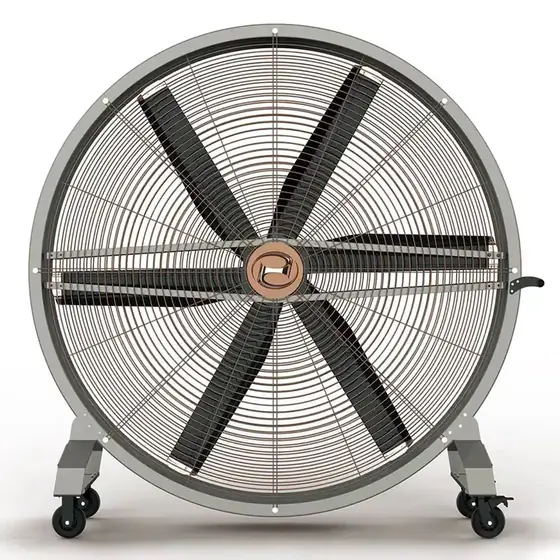 HVLS Floor Fan
A wheeled HVLS fan that throws air up to 28 m in open space, for bays where nothing can be hung from the roof and the cooling has to follow the work.
 Wall Fan
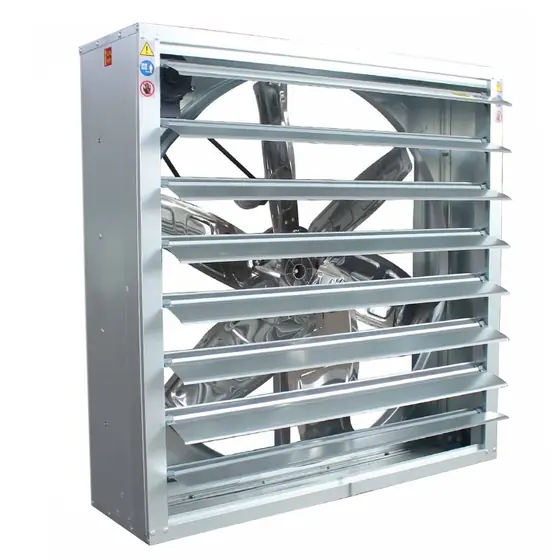
One-piece formed housing with extra-thick zinc coating, automatic shutters and a bottom drain, for negative-pressure ventilation in hot, humid and smelly buildings.
 Buying Guide
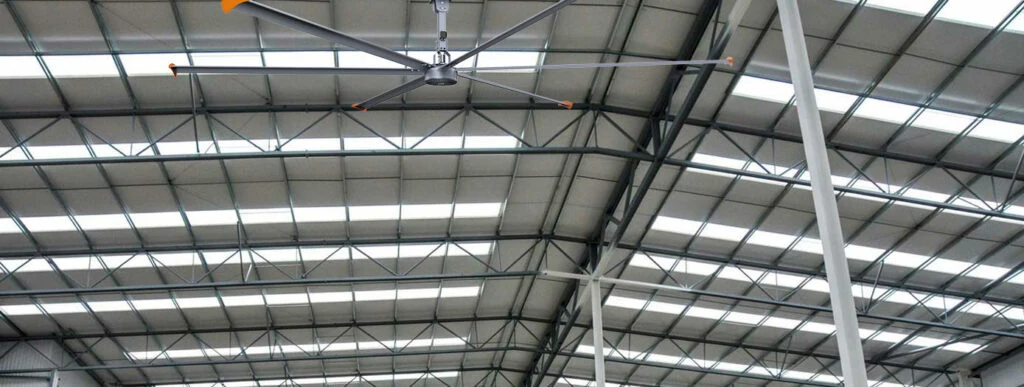
HVLS fans measure from roughly 2 m to 7.3 m across and move air by blade area rather than tip speed. This guide covers what they...
 Industry Article
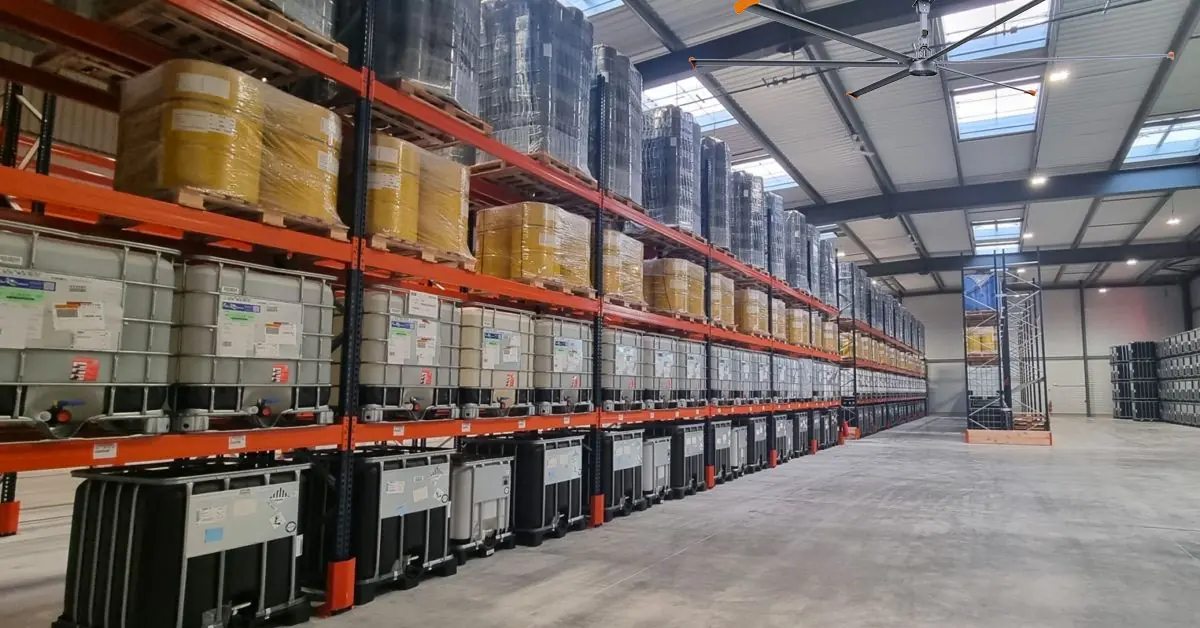
Warehouse ceiling fans are a simple and cost-effective way to improve air circulation and reduce the need for air conditioning,...
Maintenance Guide
Normal operation and monitoring are not enough on their own. Regular inspection is what catches faults early and keeps an...
Up to 1,700 m2 for the largest diameter in an open building. Racking, mezzanines, partitions and crane rails all reduce that, which is why we ask for the building layout before quoting a fan count rather than dividing floor area by a fixed number.
That depends on the clear height below the rail and on the crane travel. Send the clear height to the underside of the rail and the rail spacing and we will confirm which diameter can be hung and whether the fans need to sit between bays rather than centrally.
Tell us the grid voltage, phase and frequency on site and the fan is supplied to match. Do not order for a transformer if you can avoid it; a motor wound for your supply is the simpler installation.
Under 38 dB at the fan. The whole point of the low-speed high-volume principle is that air is moved by blade area rather than by tip speed, and tip speed is what makes noise.
There is no gearbox and no oil change, which is why it is sold as free maintenance across a 20-year service life. Ongoing work is cleaning the blades, checking the fixing screws and end cover screws, and inspecting the junction box wiring for loose or burnt terminals.
Lead time depends on the diameter mix and on whether the blades and housing are being sprayed in a custom colour, which adds a full spray cycle. Fans ship crated and consolidate with exhaust fans and spares into one container. Confirm the destination port with the enquiry and freight is quoted with the goods.
Yes. Single units are accepted and are the sensible way to test the coverage claim in your own building before committing to a full layout.
Tell us the duty, the quantity and the destination port. The first reply contains a model, a price and a freight figure.