
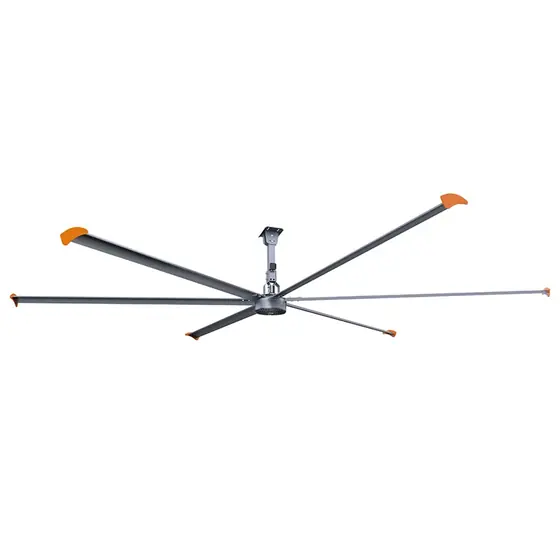
 HVLS Ceiling Fan
Industrial Ceiling Fan
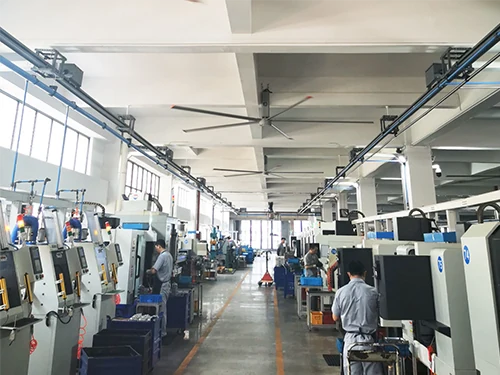
A direct-drive IE5 fan that covers up to 1,700 m2 of high-bay floor on 1.5 kW, with no gearbox and no oil change for the life of the installation.
Products
HVLS Ceiling FanHVLS Floor FanWall FanHigh Temperature Axial FanDiesel GeneratorAll ProductsIndustries
Warehouse and LogisticsManufacturing WorkshopsCommercial and Public SpacesAgriculture and Livestock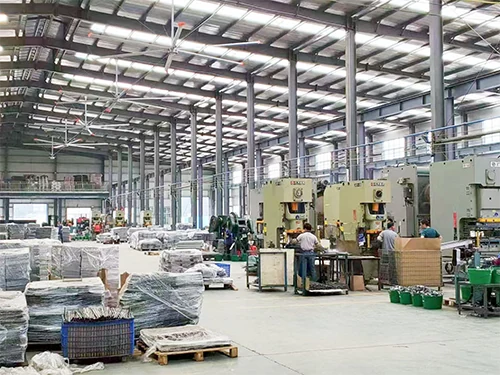
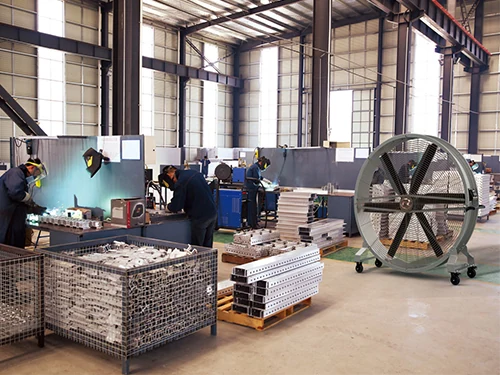
A workshop that runs too hot costs more than comfort. Above the normal range, people are prone to heat stroke, sweat secretion rises to the point of dehydration, concentration falls, and mistakes follow. Machinery has its own version of the same problem: heat generated in operation that is not discharged simply accumulates, wearing equipment and, in the worst case, causing fires.
For large-area open workshops, the investment and the maintenance cost of central air conditioning are relatively large. It suits dust-free rooms, not a press shop.
When large-scale cooling is required, a single air cooler is loud and the unit count is high. A large factory can get through dozens of tonnes of water a month on cooling fans alone.
The evaporative water curtain works, but it adds moisture. Furniture coating, food processing and dry storage warehouses are all ruled out on that basis.
Floor-standing horn fans occupy space, get knocked, fail often and each cover only tens of square metres. A large plant ends up with hundreds of them and a total power consumption and maintenance load to match.
 HVLS Ceiling Fan
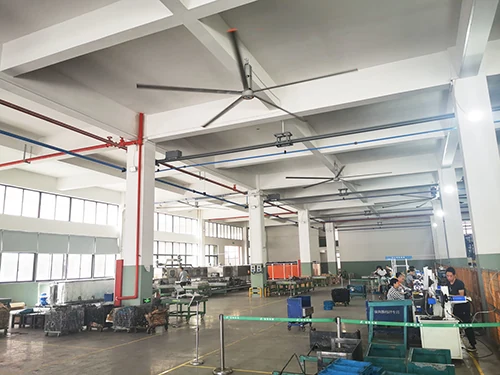
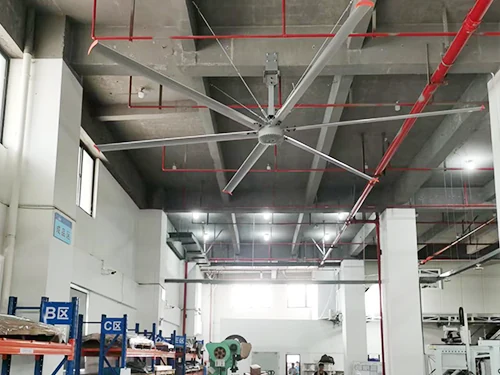
A direct-drive IE5 fan that covers up to 1,700 m2 of high-bay floor on 1.5 kW, with no gearbox and no oil change for the life of the installation.
 HVLS Floor Fan
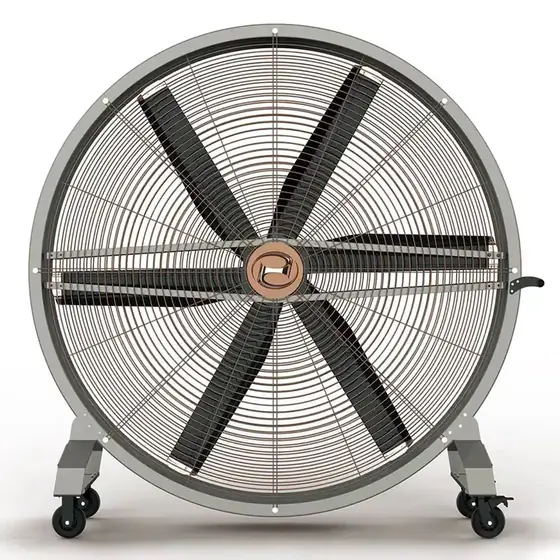
A wheeled HVLS fan that throws air up to 28 m in open space, for bays where nothing can be hung from the roof and the cooling has to follow the work.
 HVLS Floor Fan
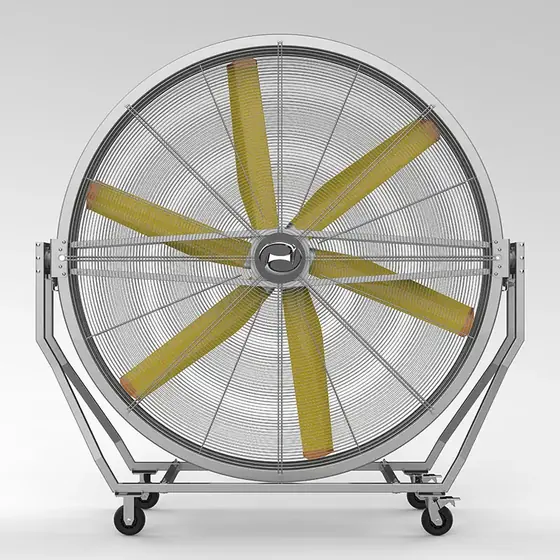
Three sizes, four wheels, IP55, and a pivot that puts the air where the work is rather than where the fan happens to point.
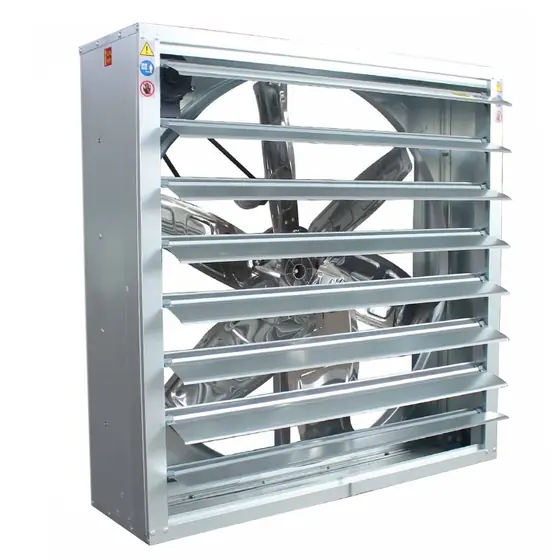 Wall Fan
One-piece formed housing with extra-thick zinc coating, automatic shutters and a bottom drain, for negative-pressure ventilation in hot, humid and smelly buildings.
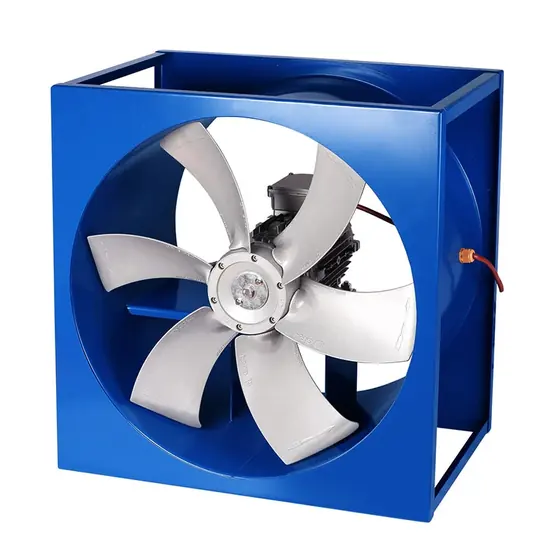 High Temperature Axial Fan
Rated for 130 C ambient and 98 percent humidity, in eleven diameters and four mounting types, for paint lines, tobacco, rubber, pharmaceutical and timber drying.
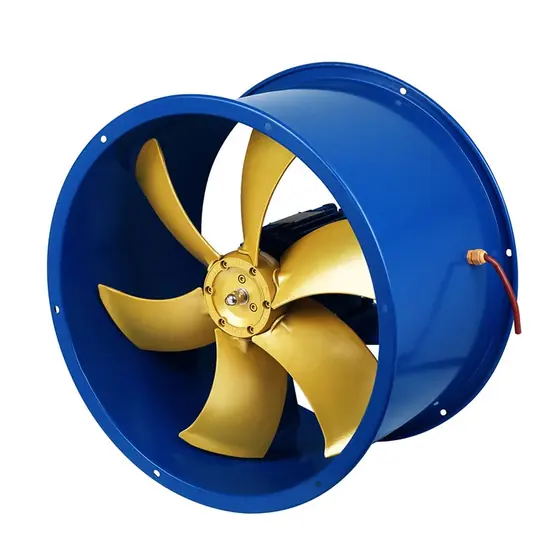 High Temperature Axial Fan
ExdIIBT4 marked to GB3836.2 and IEC 60079 for Zone 1 and Zone 2 areas, in four mounting types and six diameters.
Furnaces, moulding machines and coating ovens need extraction at the source. The rest of the building needs circulation. Treating them as one problem produces the wrong system.
Crane travel, low beams and leased-unit restrictions decide between ceiling fans and portable floor fans more often than budget does.
For drying, coating and curing, the applied conditions are what matter: ambient temperature, humidity, carried dust and whether combustible gas is present.
Ceiling fans, exhaust fans, drying fans and spares consolidate into one container with a single HS code for the axial items.
Project reference
Air movement across the whole hall rather than at the stations nearest a fan, the floor freed of the drum fans that had been...
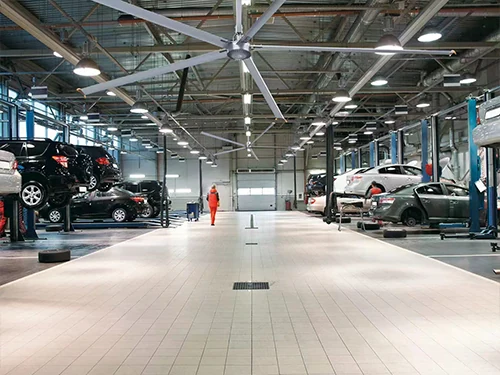 Project reference
Air movement at the working plane in the lift bays, a clear floor for vehicle handling, and portable units that can be rolled out...
The air volume that gives the best cooling sensation on human skin is in the 1 to 3 m/s range, and employees can feel a temperature difference effect of 5 to 8 degrees under a large industrial fan. That is a perceived difference, not a change in air temperature.
A large industrial fan up to 7.3 m in diameter covers a wide area, is easy to clean and has low energy consumption compared with the alternatives. Small fans have short service lives, are often damaged, occupy floor space and cover only tens of square metres each.
Circulation alone will not fix that. Wall exhaust fans running negative pressure remove the fume through the wall, with the inlet openings planned on the opposite side. Circulating fans then handle the comfort of the remaining air.
For the drying and curing side, the GKF GKT axial range at up to 130 C and 98 percent humidity, provided there is no combustible gas. Where flammable vapour is present, only the CBF explosion-proof range with ExdIIBT4 marking is appropriate.
Usually yes, positioned between bays or below the rail depending on the clear height. Send the clear height to the underside of the rail and the rail spacing and we will confirm the diameter that fits.
Building dimensions, clear height, obstructions and grid voltage. Four facts and we can return a layout.