
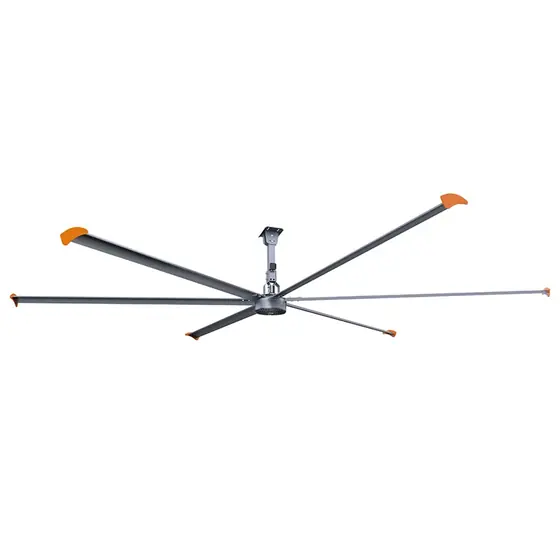
 HVLS Ceiling Fan
Industrial Ceiling Fan
A direct-drive IE5 fan that covers up to 1,700 m2 of high-bay floor on 1.5 kW, with no gearbox and no oil change for the life of the installation.
Products
HVLS Ceiling FanHVLS Floor FanWall FanHigh Temperature Axial FanDiesel GeneratorAll ProductsIndustries
Warehouse and LogisticsManufacturing WorkshopsCommercial and Public SpacesAgriculture and Livestock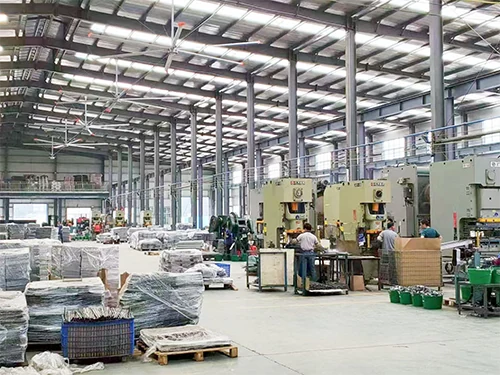
A metal pressing and fabrication plant. The client is not named at their request; the installation photographs are our own.
A high-bay pressing hall with mechanical presses running continuously, material stacked along the aisles and people working at fixed stations. Heat from the presses and from the building fabric collected at roof level, and the existing floor-standing fans covered only the stations nearest them while occupying floor space that material handling needed.
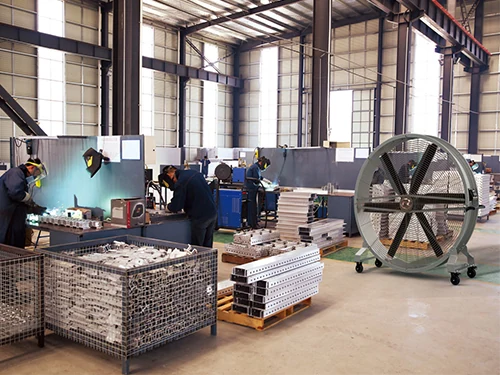
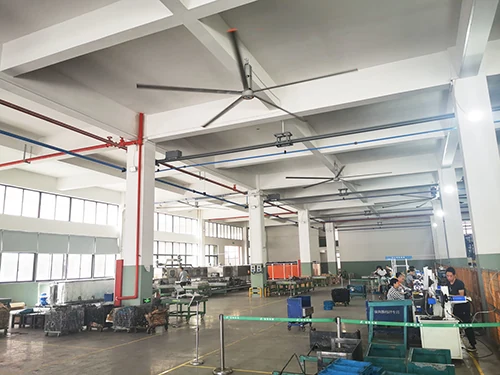
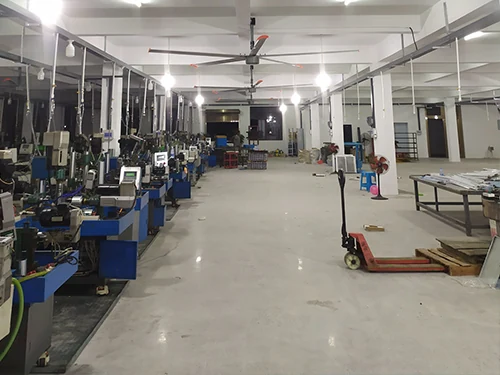
Industrial HVLS ceiling fans over the press lines and the machining rows, positioned to clear the crane and lighting runs, with big movable floor fans retained at the fabrication benches where the work moves between positions and a fixed installation would have been wrong within a month.
Positions were set against the roof structure and the crane travel rather than by dividing floor area, because that is what determines real coverage in a building with stacked material.
The press and machining rows are permanent, so the coverage per fan of the industrial range is the efficient answer and the floor stays clear.
At the fabrication benches the hot spot follows the job, which is exactly the case the wheeled HVLS format exists for.
Motors were wound for the grid voltage on site so the installation was a connection rather than a transformer job.
Air movement across the whole hall rather than at the stations nearest a fan, the floor freed of the drum fans that had been obstructing material handling, and a single controller type across the installation.
A workshop where air movement at the working plane is designed rather than improvised, with far fewer motors to clean, service and replace.
HVLS Ceiling Fan
A direct-drive IE5 fan that covers up to 1,700 m2 of high-bay floor on 1.5 kW, with no gearbox and no oil change for the life of the installation.
 HVLS Floor Fan
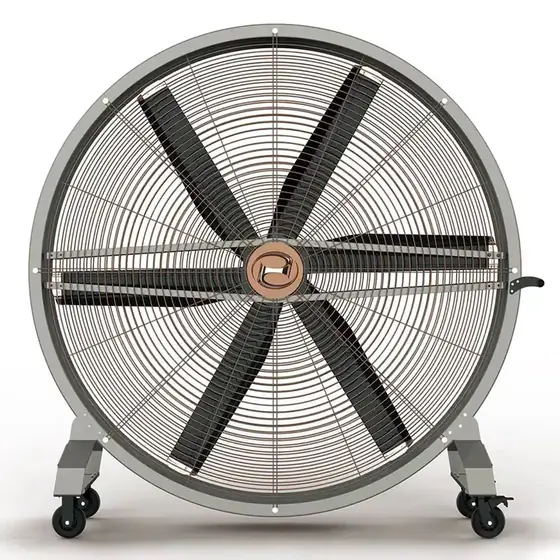
A wheeled HVLS fan that throws air up to 28 m in open space, for bays where nothing can be hung from the roof and the cooling has to follow the work.
 High Temperature Axial Fan
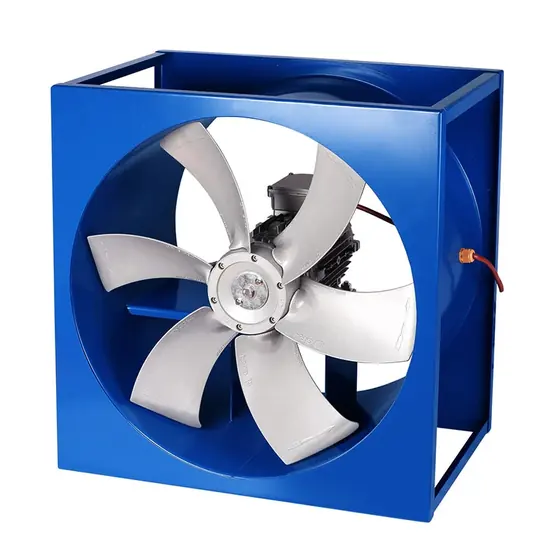
Rated for 130 C ambient and 98 percent humidity, in eleven diameters and four mounting types, for paint lines, tobacco, rubber, pharmaceutical and timber drying.
Yes, with the positions planned around the crane travel and the rail height. Send the clear height to the underside of the rail and the rail spacing and we will confirm which diameter can be hung and whether the fans sit between bays.
It reduces coverage, which is why the layout is drawn rather than calculated from floor area. Where material is stacked to height, portable fans at the aisle ends usually fill the gap better than another ceiling fan would.
Because the fabrication benches move. A wheeled fan follows the work; a ceiling fan does not. Most real workshops end up with a mix for exactly this reason.
HVLS fan installation is normally one to two working days per building using a scissor lift and two or three people, with the final connection made by a licensed electrician.
Send a photograph of the roof structure and the building dimensions. That is usually enough to start.