
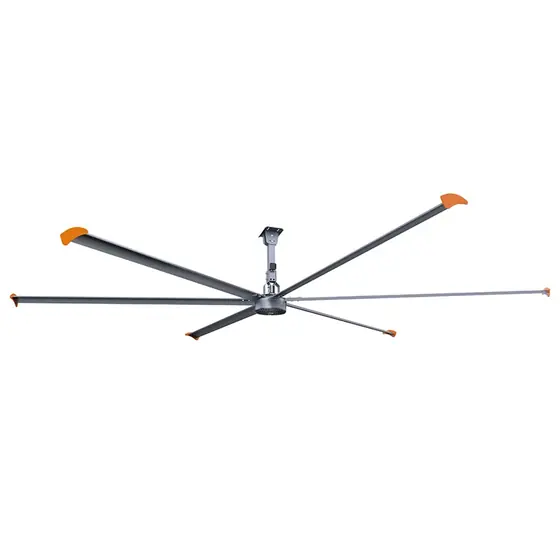
 HVLS Ceiling Fan
Industrial Ceiling Fan
A direct-drive IE5 fan that covers up to 1,700 m2 of high-bay floor on 1.5 kW, with no gearbox and no oil change for the life of the installation.
Products
HVLS Ceiling FanHVLS Floor FanWall FanHigh Temperature Axial FanDiesel GeneratorAll ProductsIndustries
Warehouse and LogisticsManufacturing WorkshopsCommercial and Public SpacesAgriculture and Livestock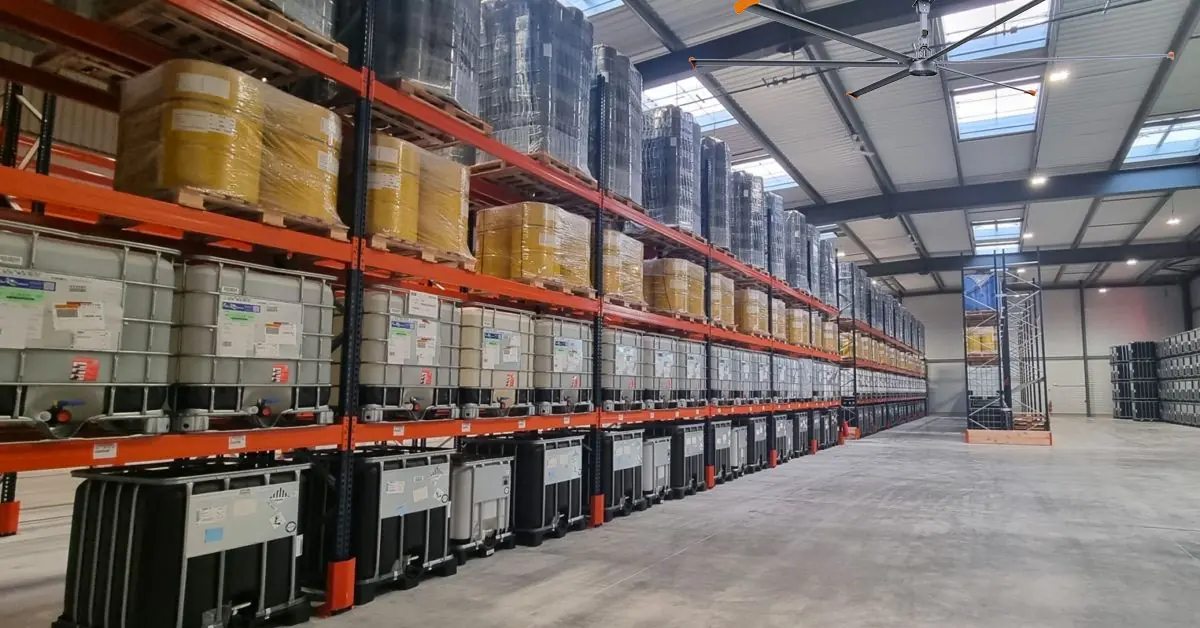
Direct-drive ceiling fans for buildings too tall for air conditioning to reach the floor.
High volume low speed means exactly what it says. A blade set between 2.4 m and 7.3 m across, turning slowly, moves a wide column of air to the floor and out along it. That column is what people feel, and it is why a building with a 9 m roof can be made comfortable without cooling the air above head height that nobody occupies.
HVLS Ceiling Fan
A direct-drive IE5 fan that covers up to 1,700 m2 of high-bay floor on 1.5 kW, with no gearbox and no oil change for the life of the installation.
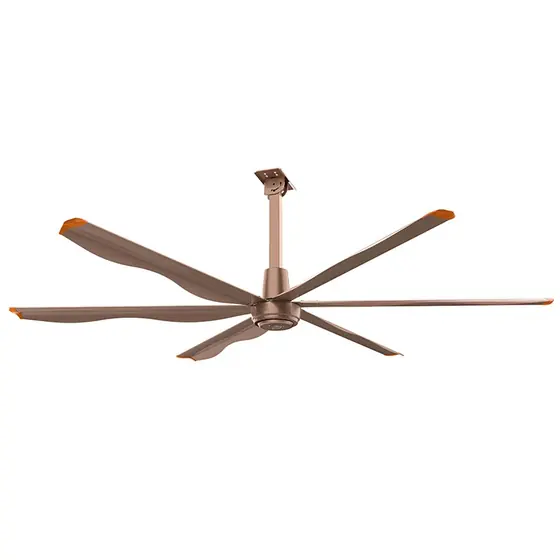 HVLS Ceiling Fan
For rooms under about 7 m where the fan is part of the interior: 330 m2 of coverage, under 38 dB, and a bronze airfoil blade that does not look like plant equipment.
The complaint that brings most buyers to this category is the same: the air conditioning runs all day, the bill is enormous, and the floor is still hot. In a high-bay building the cooled air stratifies. Moving air instead of chilling it is a different and much cheaper mechanism, and in winter the same fans run slowly to bring roof-level warm air back down.
No reduction gearbox in either range, so there is no oil change and nothing to drip on the floor below. That is what the free-maintenance and 20-year service life figures rest on.
Up to 1,700 m2 from an industrial fan and around 330 m2 from a commercial fan. A building that would take dozens of drum fans usually takes a handful of these.
Both ranges run below 38 dB at the fan. Air is moved by blade area rather than by tip speed, and tip speed is what makes the noise.
Aluminium magnesium alloy extruded and stretched, airfoil section, energy saving tail at the tip, T5 plus bright surface oxidation for corrosion resistance.
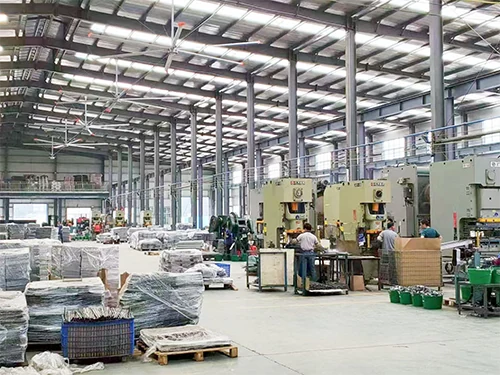
Air movement across the whole hall rather than at the stations nearest a fan, the floor freed of the drum fans that had been...
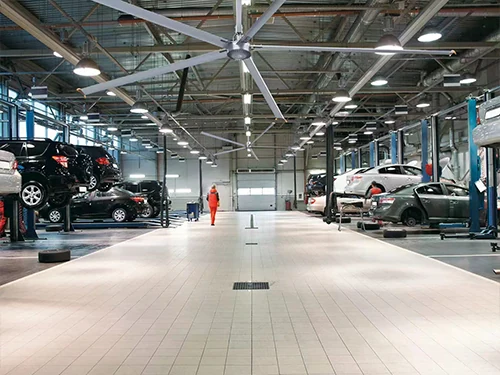
Air movement at the working plane in the lift bays, a clear floor for vehicle handling, and portable units that can be rolled out...

A hall that holds a usable temperature through the season with air movement rather than mechanical cooling, and a gym floor...
Clear height decides it. Up to about 6 to 7 m the commercial fan at 2.4 m to 3.7 m is right, and it looks better in a public room. Above that, and wherever coverage per fan matters more than appearance, use the industrial range from 3 m to 7.3 m.
That depends on clear height, building shape, and what breaks up the space. Racking, cranes and partitions cut effective coverage. Send the dimensions and layout and we will return a fan count and positions rather than a floor-area division.
Yes, and that is where the heating saving comes from. Run at low speed, the fan destratifies: warm air trapped at the roof is mixed back to the floor instead of heating the roof structure.
Cement beams, I-beams and square steel structures are all standard. Where there is no roof structure above, a pole mount is available.
There is no gearbox and no lubrication schedule. Work is limited to cleaning the blades, checking the fixing and end cover screws, and inspecting the junction box wiring for loose or burnt terminals.
Send the building or the duty and the first reply comes back with a model, a count and a price rather than a brochure.