
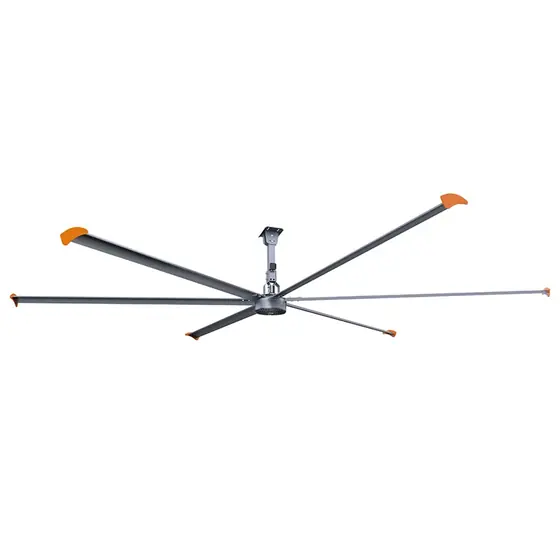
 HVLS Ceiling Fan
Industrial Ceiling Fan
A direct-drive IE5 fan that covers up to 1,700 m2 of high-bay floor on 1.5 kW, with no gearbox and no oil change for the life of the installation.
Products
HVLS Ceiling FanHVLS Floor FanWall FanHigh Temperature Axial FanDiesel GeneratorAll ProductsIndustries
Warehouse and LogisticsManufacturing WorkshopsCommercial and Public SpacesAgriculture and Livestock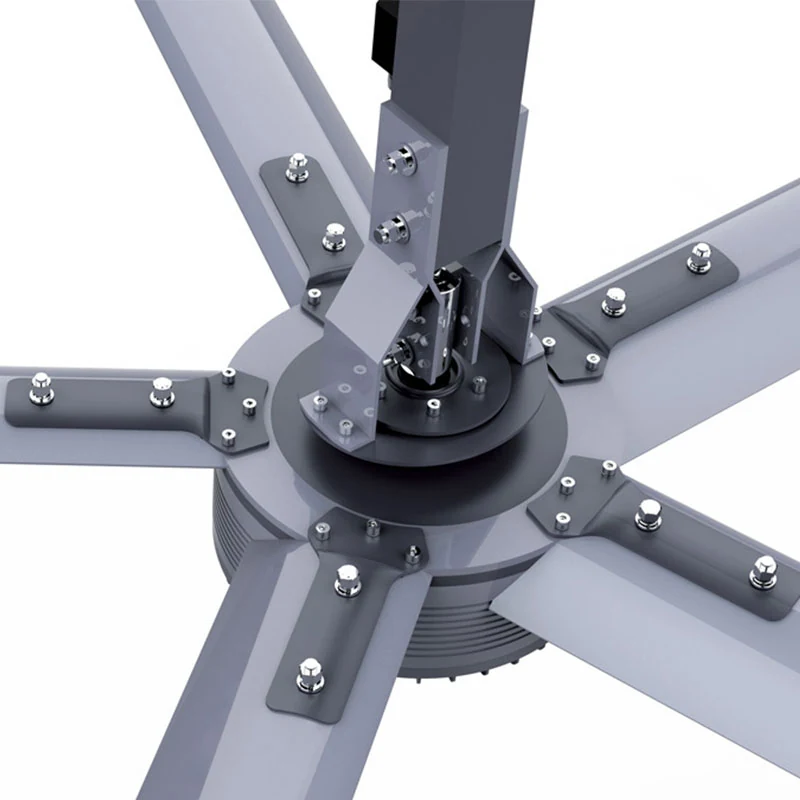
Normal operation and monitoring are not enough on their own. Regular inspection is what catches faults early and keeps an industrial large fan motor running safely and reliably.
To ensure the normal operation of an industrial large fan motor, normal use according to the operating procedures and normal monitoring during operation are not enough on their own. Regular inspections should be carried out so that some faults can be eliminated in time, preventing failures and keeping operation safe and reliable.
The interval between inspections should be set from the form of the motor together with the use environment. A clean office-like building and a dusty press shop do not deserve the same schedule.
1. Clean the motor. Remove dust and sludge on the outside of the motor frame in time. If the use environment is dusty, it is best to clean it once a week.
2. Check and clean the motor terminals. Check whether the wiring screws of the junction box are loose or burnt.
3. Check the screws of each fixed part, including anchor screws, end cover screws and bearing cover screws. Tighten any loose nuts.
4. Check the transmission device. Check whether the pulley or coupling is strong, whether it is damaged and whether the installation is firm, and whether the belt and its coupling buckle are intact.
5. Check the starting equipment of the motor. Clean external dust and dirt in time, check whether there are burn marks on each wiring part and whether the grounding wire is in good condition.
The Diamond industrial and commercial HVLS ranges use a permanent magnet direct-drive motor with no reduction gearbox. That removes the lubricating oil change and the oil contamination risk entirely, which is the basis of the free-maintenance description and the 20-year service life figure.
It does not remove the rest of the list. Dust still collects on the frame and on the blades, junction box terminals still work loose, and fixing screws still need checking. Those are the items worth putting on a planned maintenance system.
HVLS Ceiling Fan
A direct-drive IE5 fan that covers up to 1,700 m2 of high-bay floor on 1.5 kW, with no gearbox and no oil change for the life of the installation.
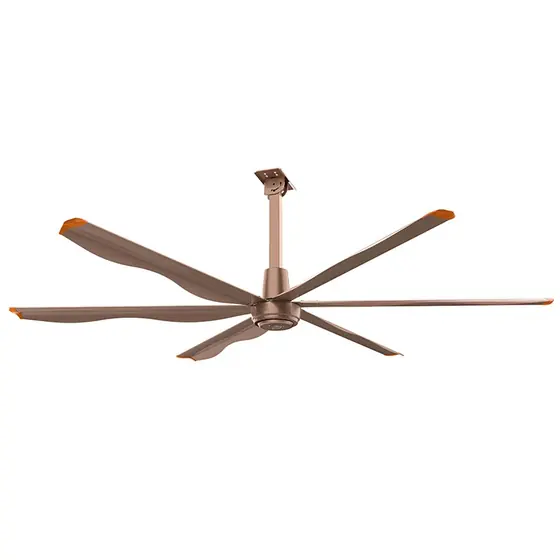 HVLS Ceiling Fan
For rooms under about 7 m where the fan is part of the interior: 330 m2 of coverage, under 38 dB, and a bronze airfoil blade that does not look like plant equipment.
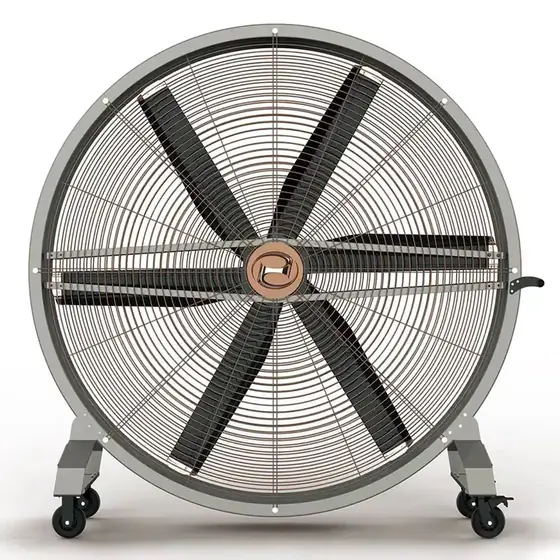 HVLS Floor Fan
A wheeled HVLS fan that throws air up to 28 m in open space, for bays where nothing can be hung from the roof and the cooling has to follow the work.
It depends on the motor form and on the environment. In a dusty building, cleaning the motor frame once a week is recommended. In a clean building the interval can be much longer, but the terminal and fixing checks should still be planned rather than left to chance.
Free maintenance refers to the drive: no gearbox and no oil change. Dust on the frame and blades, loose or burnt junction box terminals and loose fixing screws are all still real and all still worth catching early.
Burn marks at any wiring part, loose junction box screws, a change in vibration or noise, and visible dust build-up on the blades. Any of those is a reason to inspect now rather than at the next interval.
Yes. The fans are built in our own plant and spares are supported from the same factory, which is the practical reason to buy from a manufacturer rather than a trading company.
The guides get you to a shortlist. Building dimensions and duty get you to a price.