
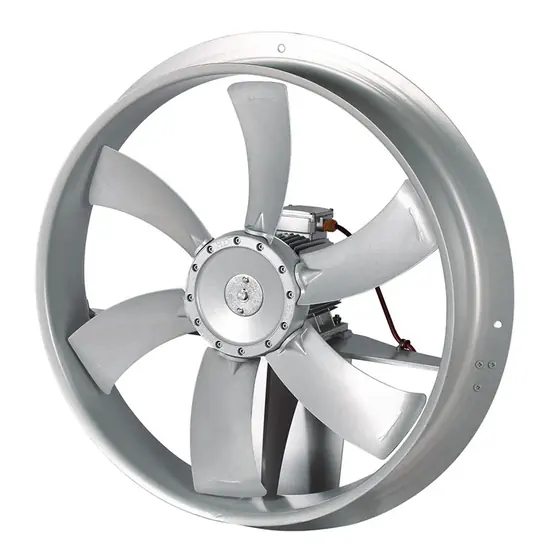
 High Temperature Axial Fan
GKW GWF Wood Drying Fan
A wall type kiln fan in all aluminium, eight diameters from 400 mm to 1000 mm, built for reversible duty at 130 C and 98 percent humidity.
Products
HVLS Ceiling FanHVLS Floor FanWall FanHigh Temperature Axial FanDiesel GeneratorAll ProductsIndustries
Warehouse and LogisticsManufacturing WorkshopsCommercial and Public SpacesAgriculture and LivestockRated for 130 C ambient and 98 percent humidity, in eleven diameters and four mounting types, for paint lines, tobacco, rubber, pharmaceutical and timber drying.
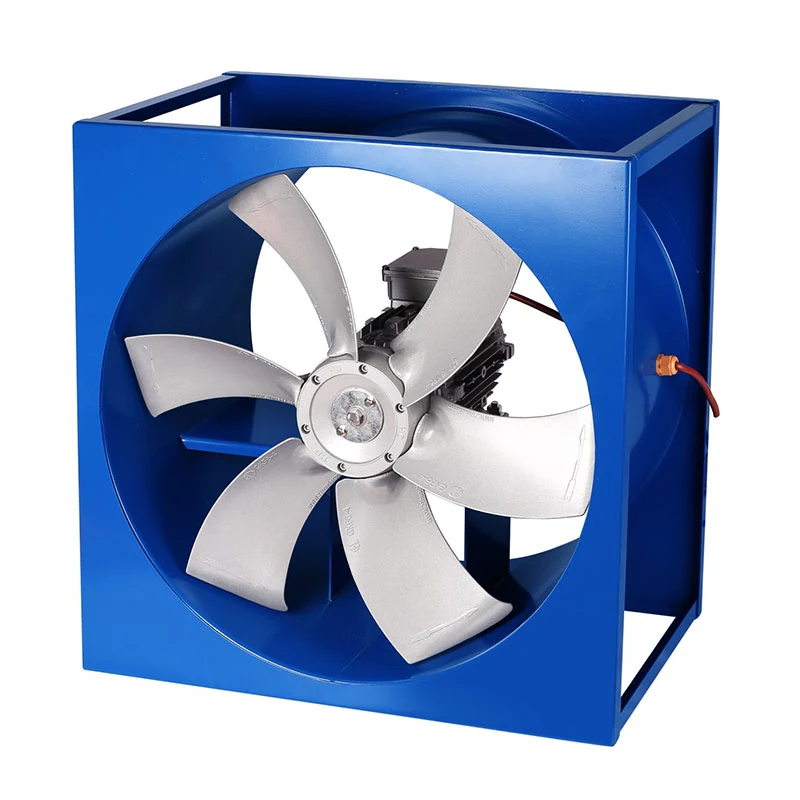
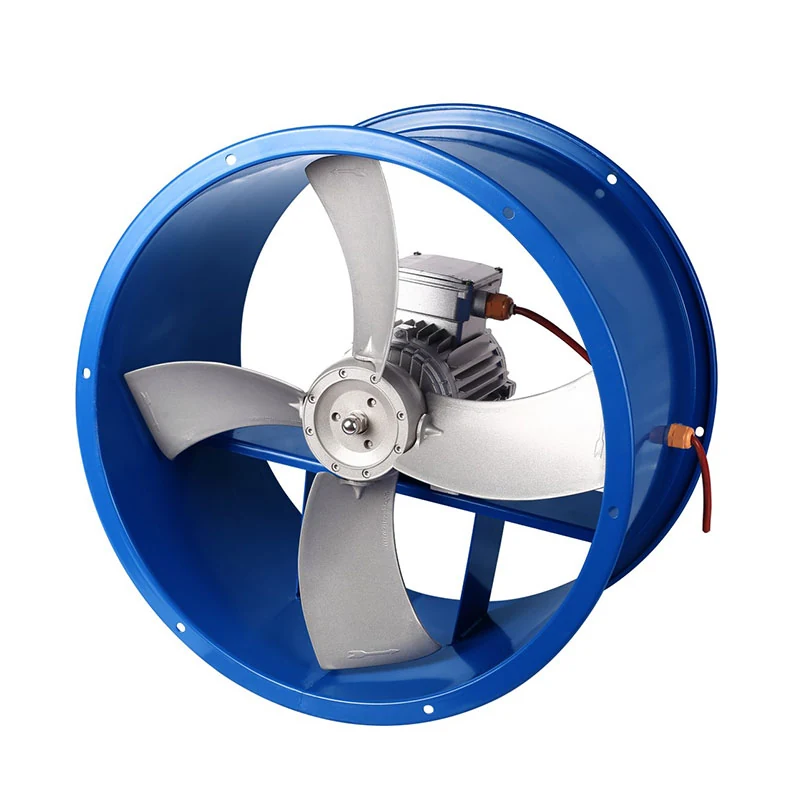
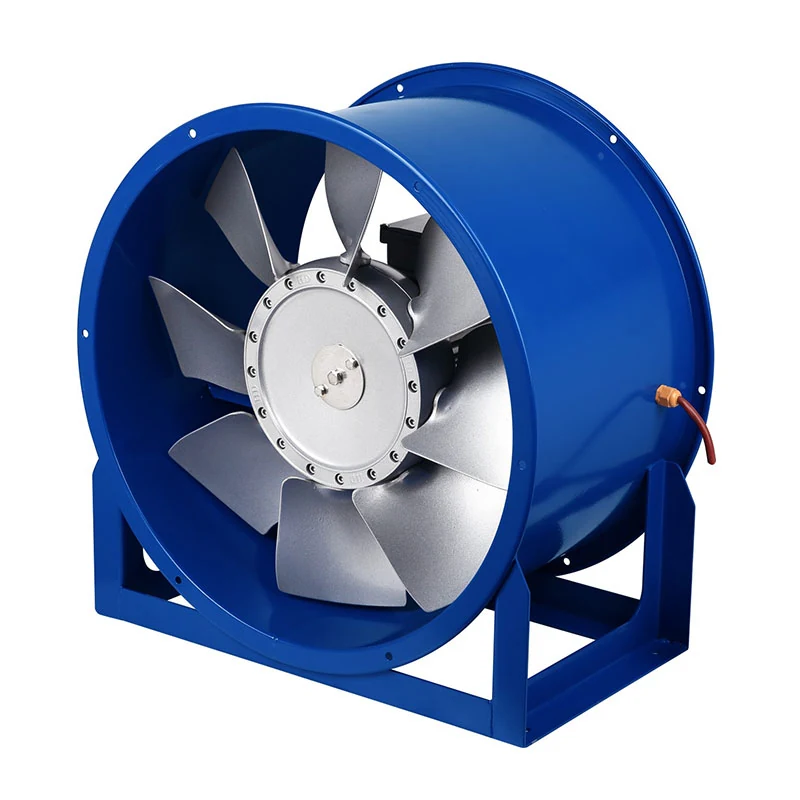
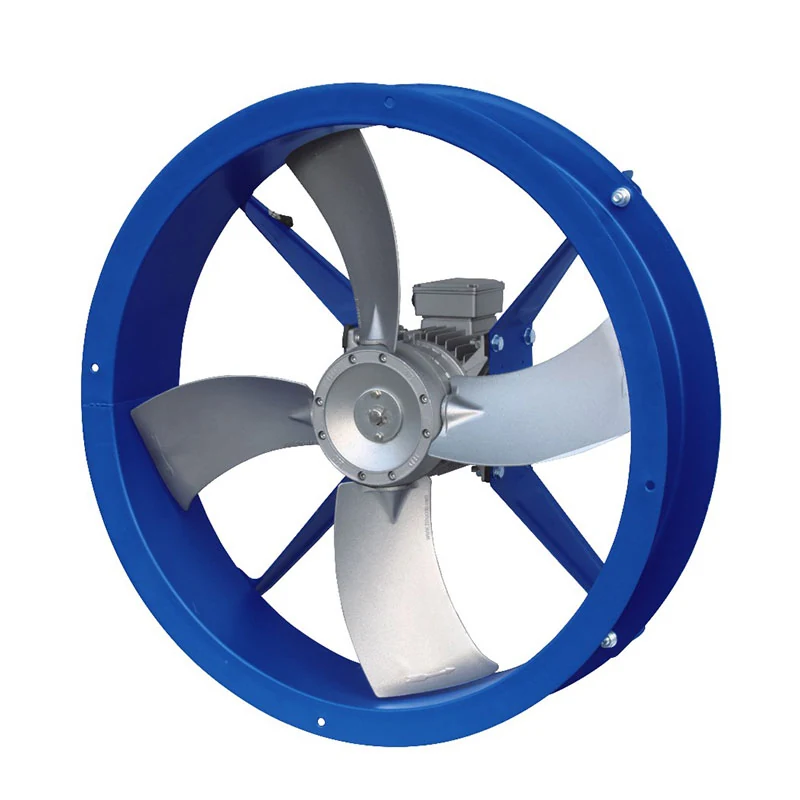
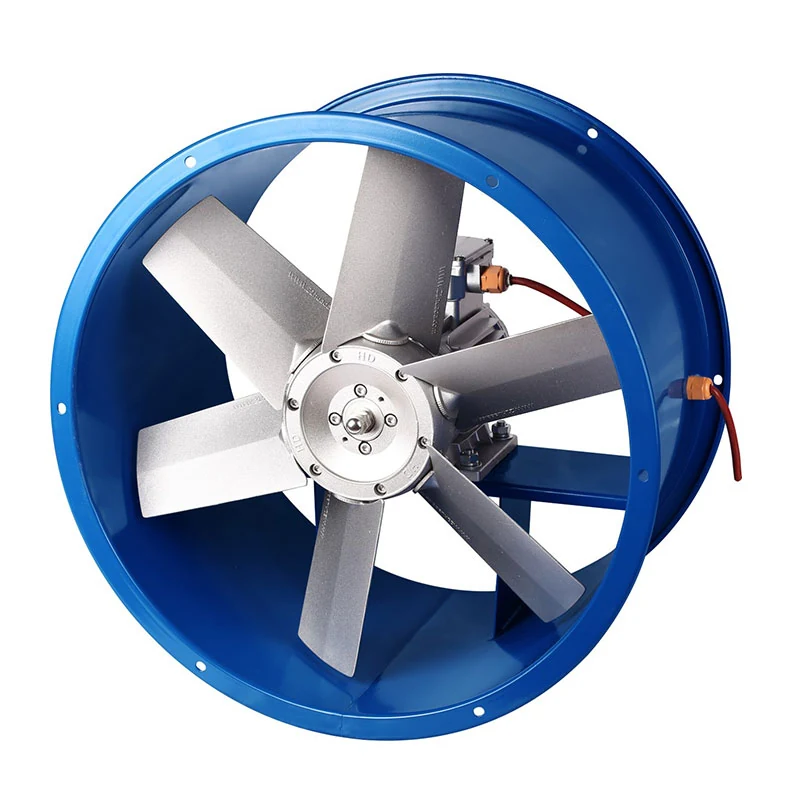
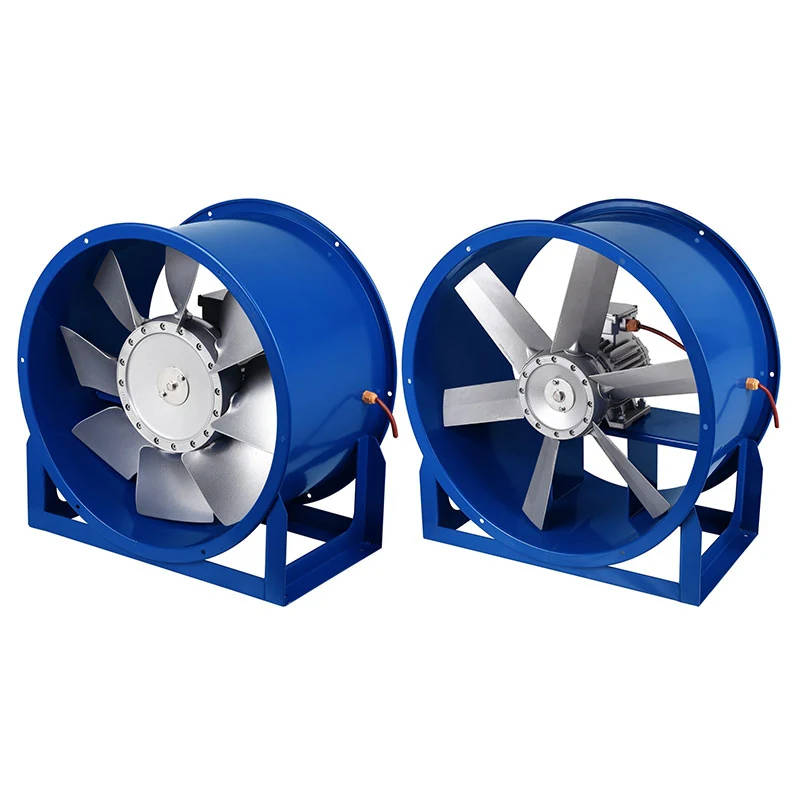
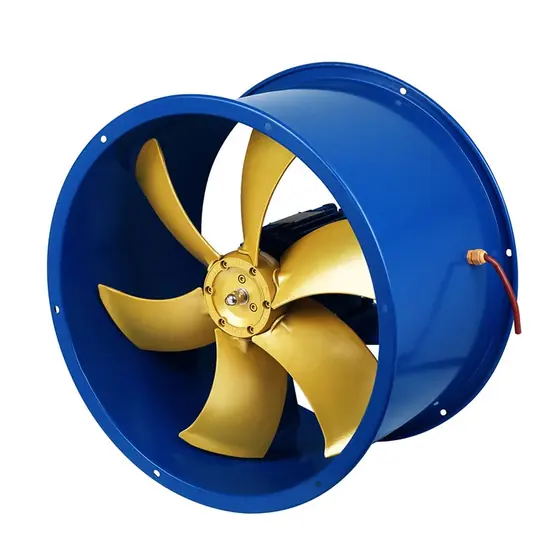
The GKF and GKT series axial fan is built to stay alive in a drying kiln. It combines resistance to high temperature with large air volume, high pressure, energy efficiency, low noise and convenient maintenance, and it is used in painting, tobacco, wood drying, rubber production, pharmaceutical production, drying kilns, paint workshops, warehouses and basements.
As a gas transport fan it handles non-corrosive gas, with the carried dust and hard particles not exceeding 150 mg/m3. The applied conditions are a maximum ambient temperature of 130 C and a maximum relative humidity of 98 percent. In an environment that is acid-deficient or mildly alkaline, with steam and without combustible gas, the motor can also be used inside vacuum drying equipment depending on the specific conditions.
Eleven standard diameters from 250 mm to 1000 mm cover most kiln and duct sizes, and four mounting types (wall, pipeline, fixed and square) mean the fan usually fits the opening you already have.
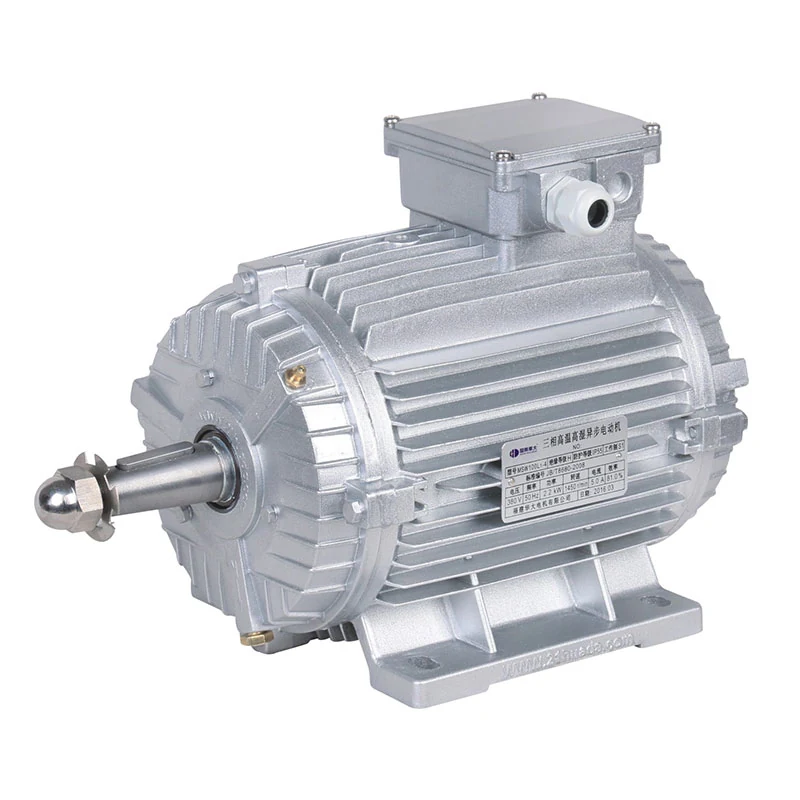
A drying fan fails at the motor, not the blade. This one is an all-copper H class 180 C design with modified polyester imide enamelled wire and Japanese high-temperature grease, built specifically to be run hot and wet without burning out.
250 mm to 1000 mm in steps close enough that the fan matches the duct or kiln opening rather than needing a transition piece fabricated on site.
Wall type, pipeline type, fixed type and square type share the same motor and impeller, so a kiln with mixed openings still has one spares list.
2900 r/min, 1450 r/min and 960 r/min, with blade angle adjusted to the client requirement, which is how the duty point is matched without changing the fan size.
At 130 C and 98 percent humidity an ordinary motor ages and fails quickly. H class insulation, all-copper windings and an aluminium alloy shell are what change the outcome.
The motor uses an external structure injected with lubricating oil, which extends bearing life and avoids the dismantling that oiling would otherwise require.
Large air volume at high pressure keeps the air moving through the stack instead of short-circuiting around it.
Straight shaft extension and subulate shaft extension with high-temperature bearing grease give low noise and small vibration, which is what keeps the ductwork and the fan itself intact.
100 percent copper motor with H class insulation using modified polyester imide enamelled wire. Designed by advanced thermodynamic analysis so the electromagnetic load falls while efficiency rises, and the motor resists ageing and burnout.
Designed around the blower-pump load characteristic. The shell is aluminium alloy and the fastening pieces are stainless steel and copper, which is what holds up in a steam environment.
The motor uses an external structure injected with lubricating oil. Bearing service life goes up and the dismantling that oiling would need goes away.
Rust-resistant aluminium alloy impeller. Arc and right-angle blade profiles are both available to suit different duties.
2900 r/min, 1450 r/min and 960 r/min, selected so the circumferential velocity of the impeller stays within condition.
High-temperature grease imported from Japan, with strict inspection before shipment.
Every figure below comes from our own specification. Where a value depends on the diameter or the duty it is written as TBC rather than invented, and it is confirmed on the specification sheet issued with your quotation.
| Diameter | 250 mm, 300 mm, 350 mm, 400 mm, 500 mm, 550 mm, 600 mm, 700 mm, 800 mm, 900 mm, 1000 mm |
|---|---|
| Maximum ambient temperature | 130 C |
| Maximum relative humidity | 98 percent |
| Dust and hard particle limit | Not more than 150 mg/m3 |
| Power form | Single phase 220 V; three phase 220 / 380 / 660 V, 230 / 400 / 690 V, 240 / 415 V |
| Frequency | 50 / 60 Hz |
| Working method | Continuous (S1), periodic running in positive and opposite directions |
| Cooling mode | IC0141, IC411 (totally enclosed fan-cooled) |
| Protection class | IP55 |
| Insulation class | Class H (180 C) |
| Rotational speeds | 2900 r/min, 1450 r/min, 960 r/min |
| Impeller | 4 to 8 aluminium alloy blades, arc or right-angle profile |
| Mounting types | Wall type, pipeline type, fixed type, square type |
| HS code | 8414599099 |
| Air volume per diameter | TBC, confirm at quotation |
How the GKF GKT range compares with the neighbouring Diamond fans and with other kiln options.
| Against the GKW GWF wood drying fan | Same high-temperature motor philosophy. The GKW GWF is the full-aluminium wall type built specifically for timber kilns; the GKF GKT is the broader family with eleven diameters and four mounting types. |
|---|---|
| Against the CRF diagonal grain drying fan | The CRF is a diagonal flow fan with a pre-rotation vane, giving higher pressure than an axial fan and larger volume than a centrifugal. Choose the CRF for grain dryers, the GKF GKT for kilns and ducts. |
| Against a standard axial fan | A standard fan has a standard motor. At 130 C and 98 percent humidity that is the part that fails, which is the whole reason this range exists. |
| Against a centrifugal fan on a kiln | A centrifugal fan delivers pressure at the cost of volume and bulk. In a kiln where the air has to keep moving through a stack, volume at moderate pressure is usually the right trade. |
130 C maximum ambient and 98 percent maximum relative humidity, non-corrosive gas, dust below 150 mg/m3. If your process sits outside those, tell us and the customised high-temperature build is quoted instead.
2900, 1450 and 960 r/min change the duty point as much as diameter does. Send the air volume and the static pressure you need rather than a fan size.
The fan is rated for continuous duty and for periodic running in positive and opposite directions. Confirm at commissioning that the rotation matches the intended airflow.
If the fan is running hot, the problem is usually the system resistance, not the fan. Send the duct layout and the duty can be rechecked.
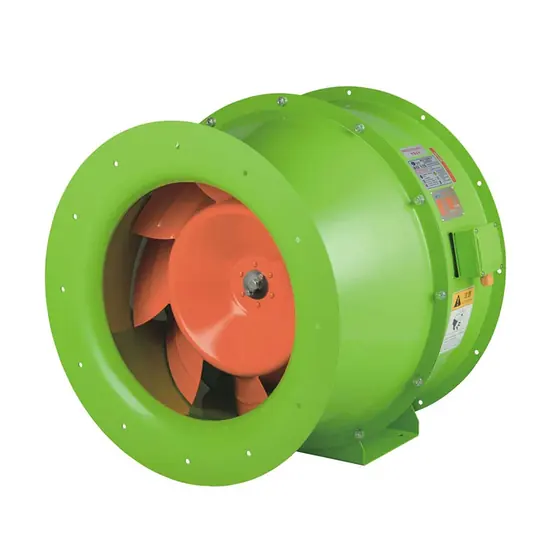
High Temperature Axial Fan
A wall type kiln fan in all aluminium, eight diameters from 400 mm to 1000 mm, built for reversible duty at 130 C and 98 percent humidity.
 High Temperature Axial Fan
A patented diagonal flow design that cuts 40 to 50 minutes off a 15 T drying run and drops the noise from over 110 dB to within 85 dB.
 High Temperature Axial Fan
ExdIIBT4 marked to GB3836.2 and IEC 60079 for Zone 1 and Zone 2 areas, in four mounting types and six diameters.
 Product Guide
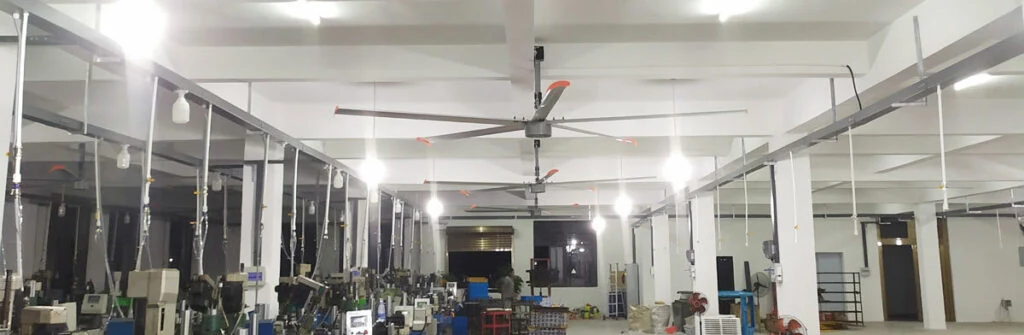
Three figures describe an industrial fan honestly: wind speed, air volume and rotating speed. Each one trades against the others,...
 Technical Note
A drying fan does not fail at the blade. It fails at the motor, and the specification items that decide the outcome are...
The applied conditions are a maximum ambient of 130 C and maximum relative humidity of 98 percent, in an acid-deficient or mildly alkaline steam environment without combustible gas. For a combustible atmosphere the CBF explosion-proof range is the correct product, not this one.
The motor can also be used in vacuum drying equipment depending on the specific conditions. Send the process details and we will confirm before you order.
Wall type for a wall opening, pipeline type for an in-duct installation with flanges, fixed type where the fan sits on its own frame, and square type for a square opening. All four share the same motor and impeller family.
Single phase 220 V, and three phase 220 / 380 / 660 V, 230 / 400 / 690 V or 240 / 415 V, at 50 or 60 Hz. Confirm the supply on site and the motor is wound to match.
8414599099. Quoting it on the enquiry saves a round of questions with your broker.
The angle is set to the client requirement at the factory. Adjusting it afterwards changes the duty and the motor loading, so tell us the target air volume and pressure and it is set correctly before the fan ships.
Between four and eight aluminium alloy blades depending on the diameter and duty, in either arc or right-angle profile. The selection is confirmed on the specification sheet at quotation.
Tell us the duty, the quantity and the destination port. The first reply contains a model, a price and a freight figure.