
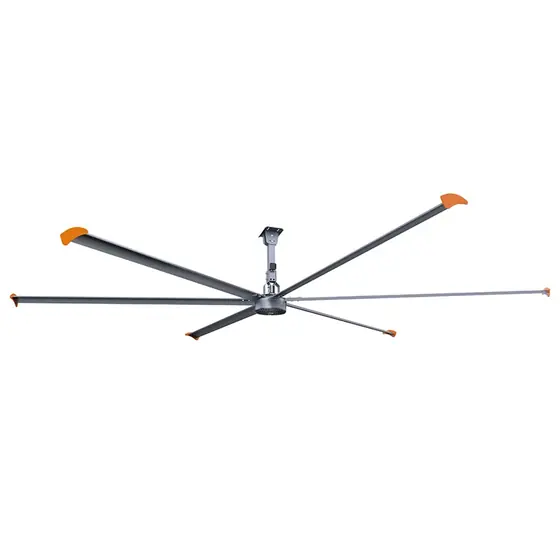
 HVLS Ceiling Fan
Industrial Ceiling Fan
A direct-drive IE5 fan that covers up to 1,700 m2 of high-bay floor on 1.5 kW, with no gearbox and no oil change for the life of the installation.
Products
HVLS Ceiling FanHVLS Floor FanWall FanHigh Temperature Axial FanDiesel GeneratorAll ProductsIndustries
Warehouse and LogisticsManufacturing WorkshopsCommercial and Public SpacesAgriculture and Livestock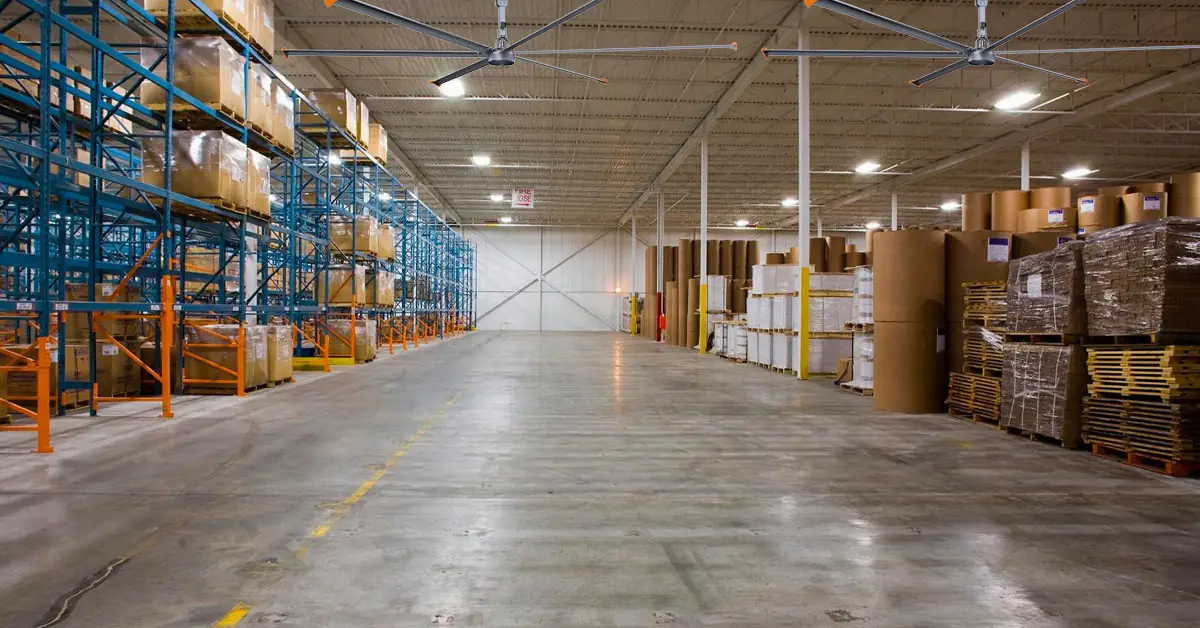
The defining feature of a warehouse is a high ceiling, and it is exactly the feature that makes it expensive to condition. A warehouse ceiling fan is a simple and cost-effective way to improve air circulation and reduce the need for air conditioning, which is why it is usually the first system a distribution operator installs rather than the last.
In a warehouse it is humidity, not temperature, that damages product. Air conditioners and air coolers may lower the temperature but they do not deal with the moisture level, and a cooler actively adds to it.
Long aisles and deep racking block cross ventilation. Pockets of stale, damp air form where nothing moves, and they are rarely where anyone is standing to notice.
Most of the air in a high-bay building is above head height. Conditioning it is money spent on volume nobody occupies.
Comfort in a distribution centre is about people moving stock at pace. Perceived temperature matters more than the thermostat reading.
 HVLS Ceiling Fan
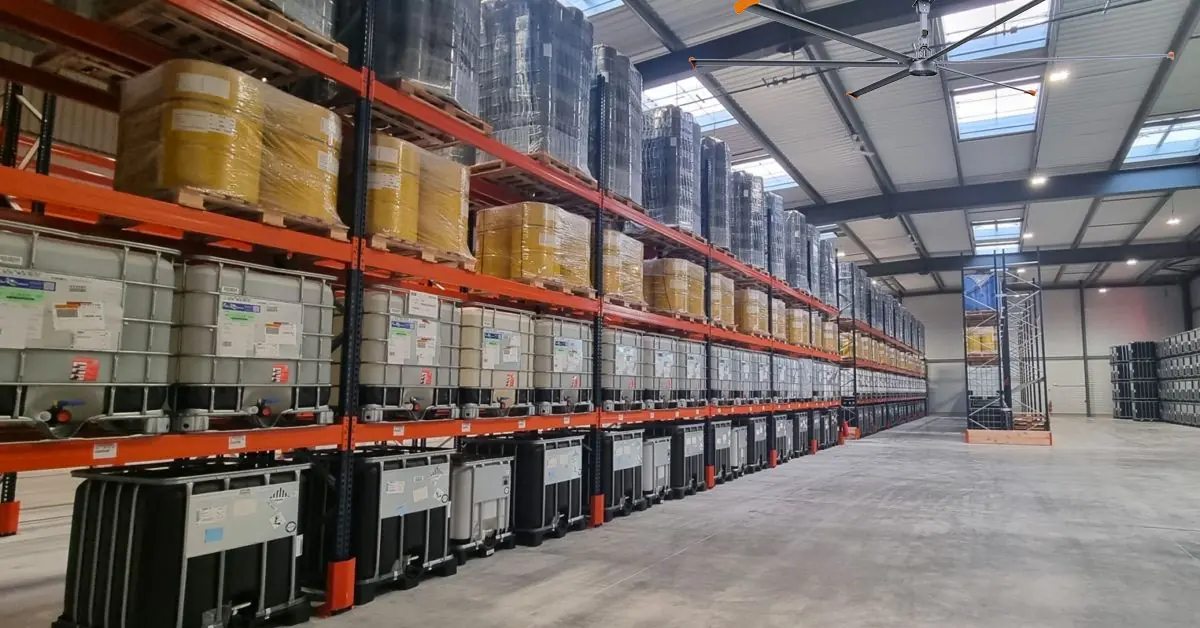
A direct-drive IE5 fan that covers up to 1,700 m2 of high-bay floor on 1.5 kW, with no gearbox and no oil change for the life of the installation.
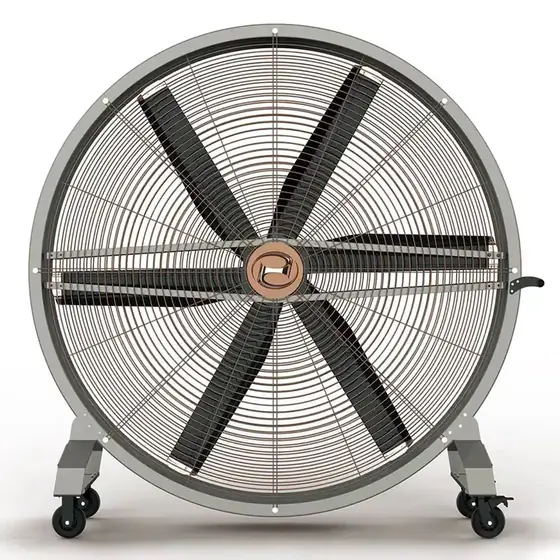 HVLS Floor Fan
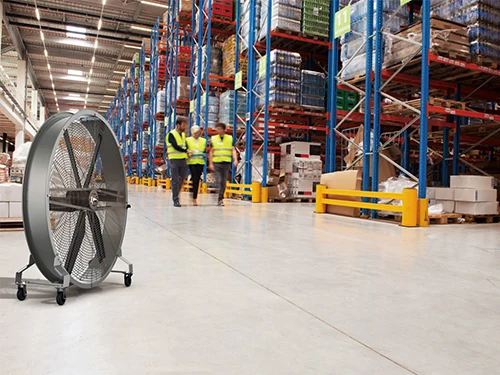
A wheeled HVLS fan that throws air up to 28 m in open space, for bays where nothing can be hung from the roof and the cooling has to follow the work.
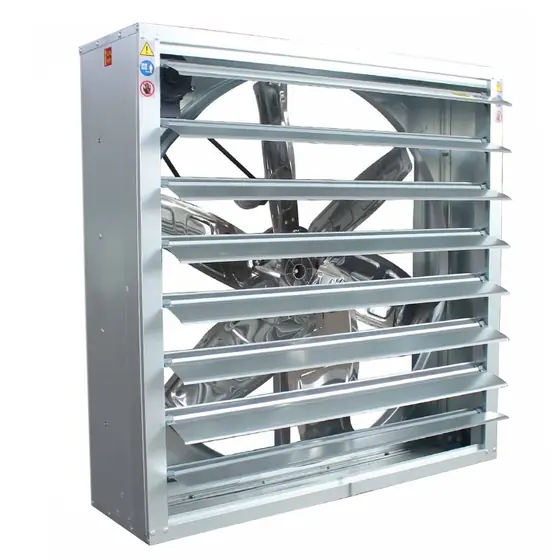 Wall Fan
One-piece formed housing with extra-thick zinc coating, automatic shutters and a bottom drain, for negative-pressure ventilation in hot, humid and smelly buildings.
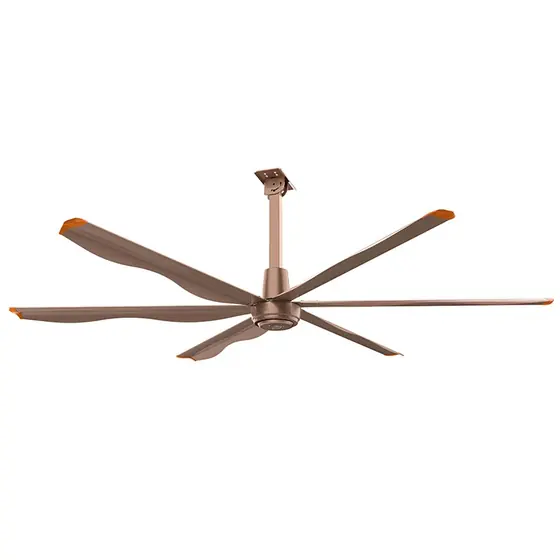 HVLS Ceiling Fan
For rooms under about 7 m where the fan is part of the interior: 330 m2 of coverage, under 38 dB, and a bronze airfoil blade that does not look like plant equipment.
Length, width, clear height, roof structure type and the racking layout. Coverage is set by the obstructions as much as by the square metres.
You get a layout with a fan count, positions and estimated coverage, and an honest answer about whether fewer larger fans are cheaper.
Motors wound for the grid on site, and mounting detailed for cement beam, I-beam or square steel structure.
Ceiling fans, exhaust fans and spares crated and loaded into one container to the destination port you name.
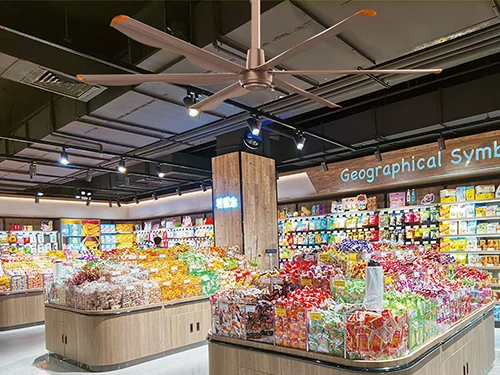 Project reference
Air moving across the whole sales floor including the areas the air conditioning never reached, with the fans visible but quiet...
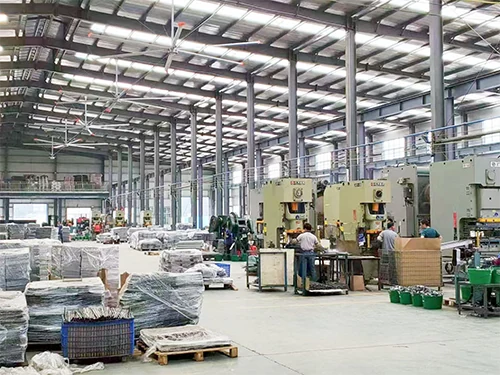 Project reference
Air movement across the whole hall rather than at the stations nearest a fan, the floor freed of the drum fans that had been...
In a high-bay warehouse, usually substantially, because the fans let you raise the set point while the floor still feels comfortable, and in many buildings they replace mechanical cooling entirely. The benefit is largest where the ceiling is highest.
Moving air increases the evaporation rate and stops damp pockets forming behind racking. Where the moisture load comes from the process or the climate rather than from stagnation, pair the ceiling fans with wall exhaust fans so the moist air actually leaves the building.
Often yes, positioned between racking runs rather than above them. Where the racking is continuous to the roof, portable floor fans at the aisle ends are the practical answer. Send the racking layout and we will tell you which applies.
Fan positions have to be coordinated with sprinkler heads and with any smoke detection in the building. Send a reflected ceiling plan or a services drawing with the enquiry so positions are marked clear of them.
Clean the blades on a schedule, check the fixing and end cover screws, and inspect the junction box wiring. There is no gearbox and no oil change on the HVLS ranges.
Building dimensions, clear height, obstructions and grid voltage. Four facts and we can return a layout.