
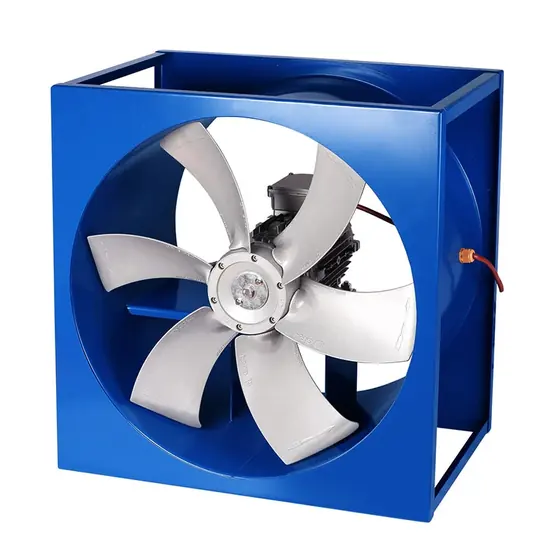
 High Temperature Axial Fan
GKF GKT Drying Fan
Rated for 130 C ambient and 98 percent humidity, in eleven diameters and four mounting types, for paint lines, tobacco, rubber, pharmaceutical and timber drying.
Products
HVLS Ceiling FanHVLS Floor FanWall FanHigh Temperature Axial FanDiesel GeneratorAll ProductsIndustries
Warehouse and LogisticsManufacturing WorkshopsCommercial and Public SpacesAgriculture and LivestockA patented diagonal flow design that cuts 40 to 50 minutes off a 15 T drying run and drops the noise from over 110 dB to within 85 dB.
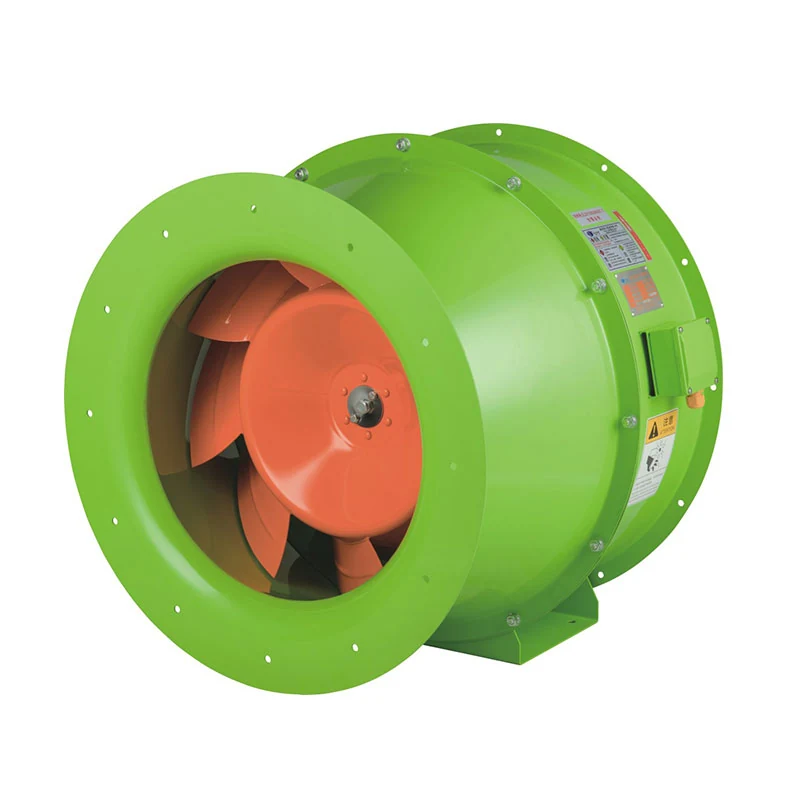
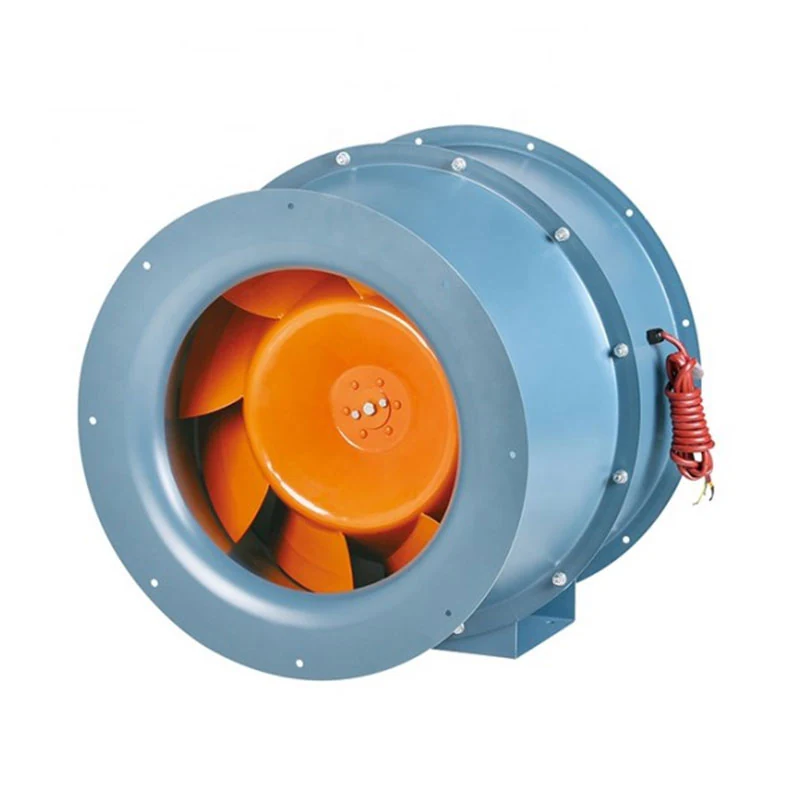
The CRF diagonal flow fan is a high-temperature resistant fan of optimal design, offering high efficiency, low noise, compact dimensions and convenient installation. It holds a Chinese national patent for the utility model, number ZL201320208067.5, with an invention patent applied for.
The construction is a cylindrical housing with three flanges, with the outlet and inlet following the air through a connected pipe network. The inlet wind collector uses a gradually shrinking streamlined form and a sound-absorbing plate. The outlet carries a pre-rotation vane, which gives good airflow distribution and stable pressure resistance. Because of the meridian acceleration design, the pressure is higher than an axial fan and the air volume is larger than a centrifugal fan.
It is used in grain drying and in other agricultural, food, industrial and mining settings, as well as hotels, restaurants, museums, gymnasiums and high-rise buildings for ventilation.
A 15 T dryer fitted with the diagonal flow fan finishes 40 to 50 minutes faster than the same dryer with a traditional centrifugal fan. A 30 T installation with two dryers saves 100 to 120 minutes, and that is fuel the farmer does not buy.
A traditional centrifugal fan in use tested above 110 decibels. The optimised diagonal flow unit sits within the normal acceptance range of 85 decibels, because of the unique impeller and the sound absorption screen.
A centrifugal fan delivers too much pressure and loses efficiency through excess heat loss. The optimised air volume and pressure of the diagonal fan hit the maximum drying efficiency node of the dryer instead.
Light weight, small volume and a compact form cut both the transport cost and the storage space, and two or three workers can complete the installation.
Excess air pressure from a centrifugal fan carries heat away rather than into the grain. Matching the duty point to the dryer is what recovers the time and the fuel.
Above 110 decibels is a hearing protection problem as well as a neighbour problem. Under 85 decibels is a working environment.
Simple and convenient installation completed by two or three workers, because the unit is light and compact.
The unique appearance design raises the grade of the dryer once matched, which matters to the equipment builders who buy these fans by the batch.
Pressure higher than an axial fan, air volume larger than a centrifugal fan, which is the whole reason the format exists.
Gives good airflow distribution and stable pressure resistance through the connected pipe network.
A gradually shrinking streamlined inlet form and a sound-absorbing plate, which is where the noise reduction comes from.
Inlet and outlet both connect to the pipe network, so the fan drops into a duct run rather than needing a plenum built around it.
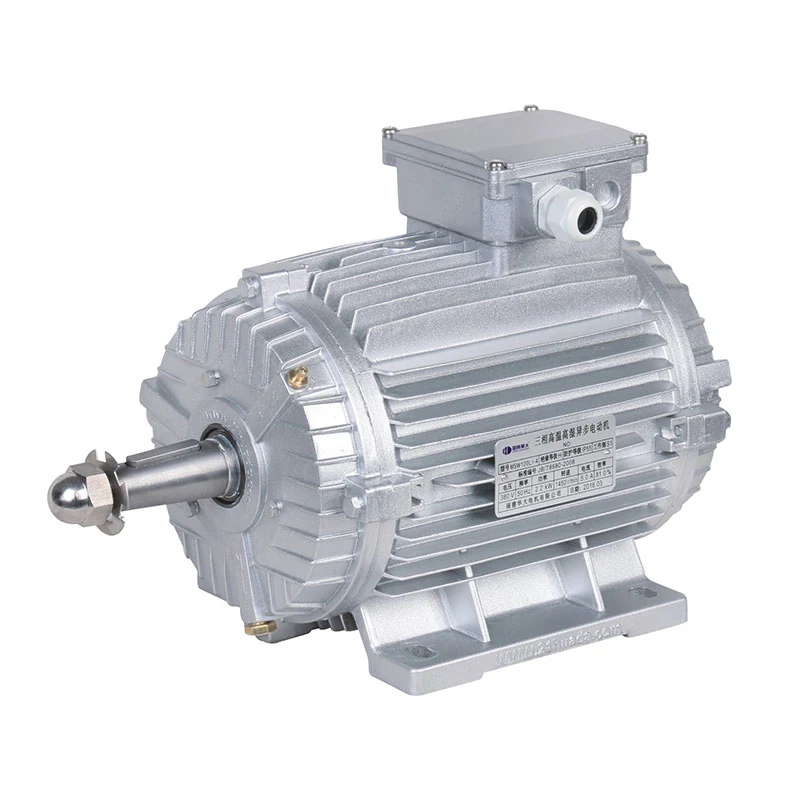
The same high-temperature resistant motor philosophy used across the Diamond axial range.
Chinese national utility model patent ZL201320208067.5, with an invention patent applied for.
Every figure below comes from our own specification. Where a value depends on the diameter or the duty it is written as TBC rather than invented, and it is confirmed on the specification sheet issued with your quotation.
| Diameter | 650 mm, 700 mm, 750 mm, 800 mm |
|---|---|
| Motor | H class 180 C high-temperature resistant |
| Flow type | Diagonal flow with meridian acceleration design |
| Outlet | Pre-rotation vane for flow distribution and stable pressure resistance |
| Inlet | Gradually shrinking streamlined collector with sound-absorbing plate |
| Housing | Cylindrical with three flanges |
| Noise in use | Within the 85 decibel normal acceptance range |
| Time saved, 15 T dryer | 40 to 50 minutes against a traditional centrifugal fan |
| Time saved, 30 T with two dryers | 100 to 120 minutes |
| Patent | Chinese utility model ZL201320208067.5, invention patent applied for |
| HS code | 8414599099 |
| Air volume and static pressure | TBC per diameter, confirm at quotation |
| Motor power | TBC per diameter, confirm at quotation |
The comparison that actually decides this purchase is against the centrifugal fan already fitted to most dryers.
| Against a traditional centrifugal fan | The centrifugal fan pushes too much pressure for a grain dryer and loses efficiency through excess heat loss. On a 15 T dryer the diagonal fan finishes 40 to 50 minutes sooner and runs under 85 dB instead of over 110 dB. |
|---|---|
| Against a plain axial fan | An axial fan cannot hold the pressure a grain column needs. Meridian acceleration gives the diagonal fan higher pressure than an axial fan while keeping the volume up. |
| Against the GKF GKT axial drying fan | The GKF GKT is the right choice for kilns, ducts and paint lines. The CRF is built for the pressure and volume profile of a grain dryer. |
| Against oversizing the existing fan | A bigger centrifugal fan makes the pressure mismatch worse, not better, and adds noise. The fix is the flow type, not the size. |
The published time savings are quoted for a 15 T dryer and for a 30 T installation with two dryers. Tell us the tonnage and the dryer make and the diameter is selected against it.
The fan is designed with inlet and outlet connected to the pipe network. Running it with an open inlet loses the benefit of the streamlined collector.
Installation is simple and can be completed by two or three workers because the unit is light and compact. Plan the lift accordingly rather than hiring equipment.
The noise figure depends on the impeller and the absorption screen together. A damaged screen puts the decibels back.
High Temperature Axial Fan
Rated for 130 C ambient and 98 percent humidity, in eleven diameters and four mounting types, for paint lines, tobacco, rubber, pharmaceutical and timber drying.
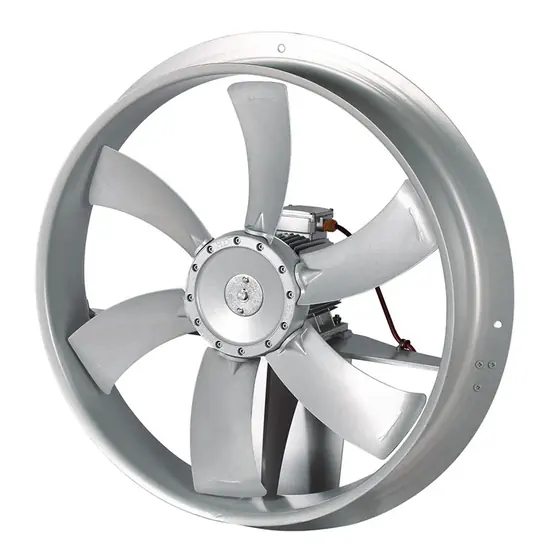 High Temperature Axial Fan
A wall type kiln fan in all aluminium, eight diameters from 400 mm to 1000 mm, built for reversible duty at 130 C and 98 percent humidity.
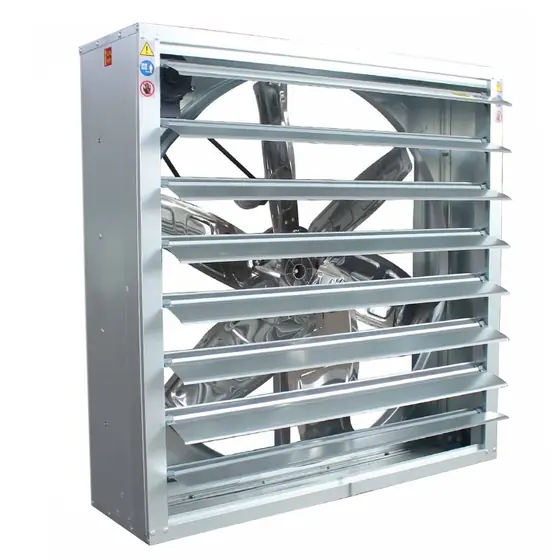 Wall Fan
One-piece formed housing with extra-thick zinc coating, automatic shutters and a bottom drain, for negative-pressure ventilation in hot, humid and smelly buildings.
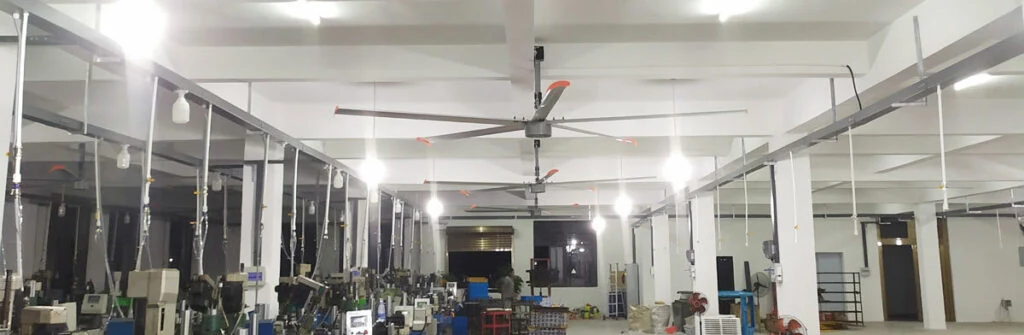 Product Guide
Three figures describe an industrial fan honestly: wind speed, air volume and rotating speed. Each one trades against the others,...
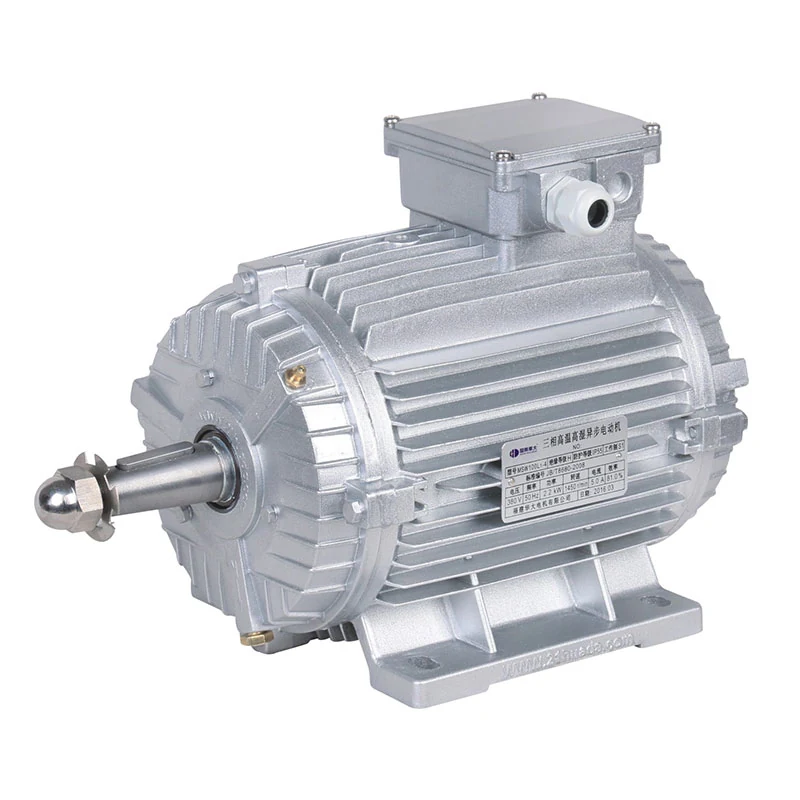 Technical Note
A drying fan does not fail at the blade. It fails at the motor, and the specification items that decide the outcome are...
On a 15 T dryer, 40 to 50 minutes compared with a traditional centrifugal fan. On a 30 T installation equipped with two dryers, 100 to 120 minutes. The saving comes from matching the air volume and pressure to the dryer's maximum efficiency node rather than overpressuring it.
Yes. It is a Chinese national utility model patent, number ZL201320208067.5, and an invention patent has been applied for. The patent document is issued on request.
A traditional centrifugal fan tested above 110 decibels in use. The optimised diagonal flow unit falls within the normal acceptance range of 85 decibels, through the combination of the impeller design and the sound-absorbing plate at the inlet.
Yes. It is used across agricultural, food, industrial and mining applications, and for ventilation in hotels, restaurants, museums, gymnasiums and high-rise buildings.
Yes, and that is the main channel for this product. Tell us the dryer model and annual volume and we will quote the flange pattern, the housing colour and the batch schedule together.
650 mm, 700 mm, 750 mm and 800 mm. If your dryer needs something outside that range, send the duty and we will tell you honestly whether the CRF or the GKF GKT axial range is the better fit.
Tell us the duty, the quantity and the destination port. The first reply contains a model, a price and a freight figure.