
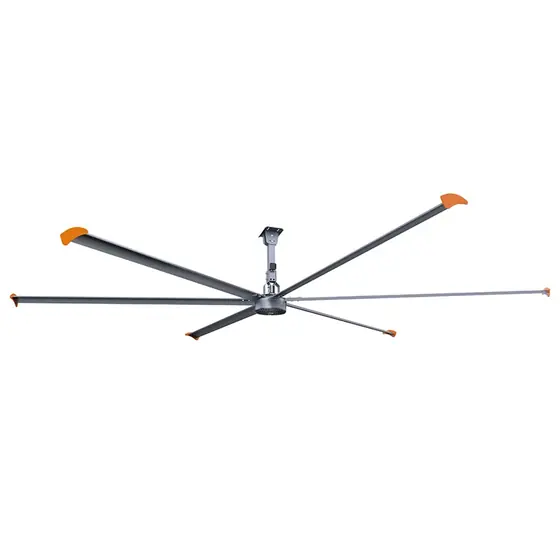
 HVLS Ceiling Fan
Industrial Ceiling Fan
A direct-drive IE5 fan that covers up to 1,700 m2 of high-bay floor on 1.5 kW, with no gearbox and no oil change for the life of the installation.
Products
HVLS Ceiling FanHVLS Floor FanWall FanHigh Temperature Axial FanDiesel GeneratorAll ProductsIndustries
Warehouse and LogisticsManufacturing WorkshopsCommercial and Public SpacesAgriculture and Livestock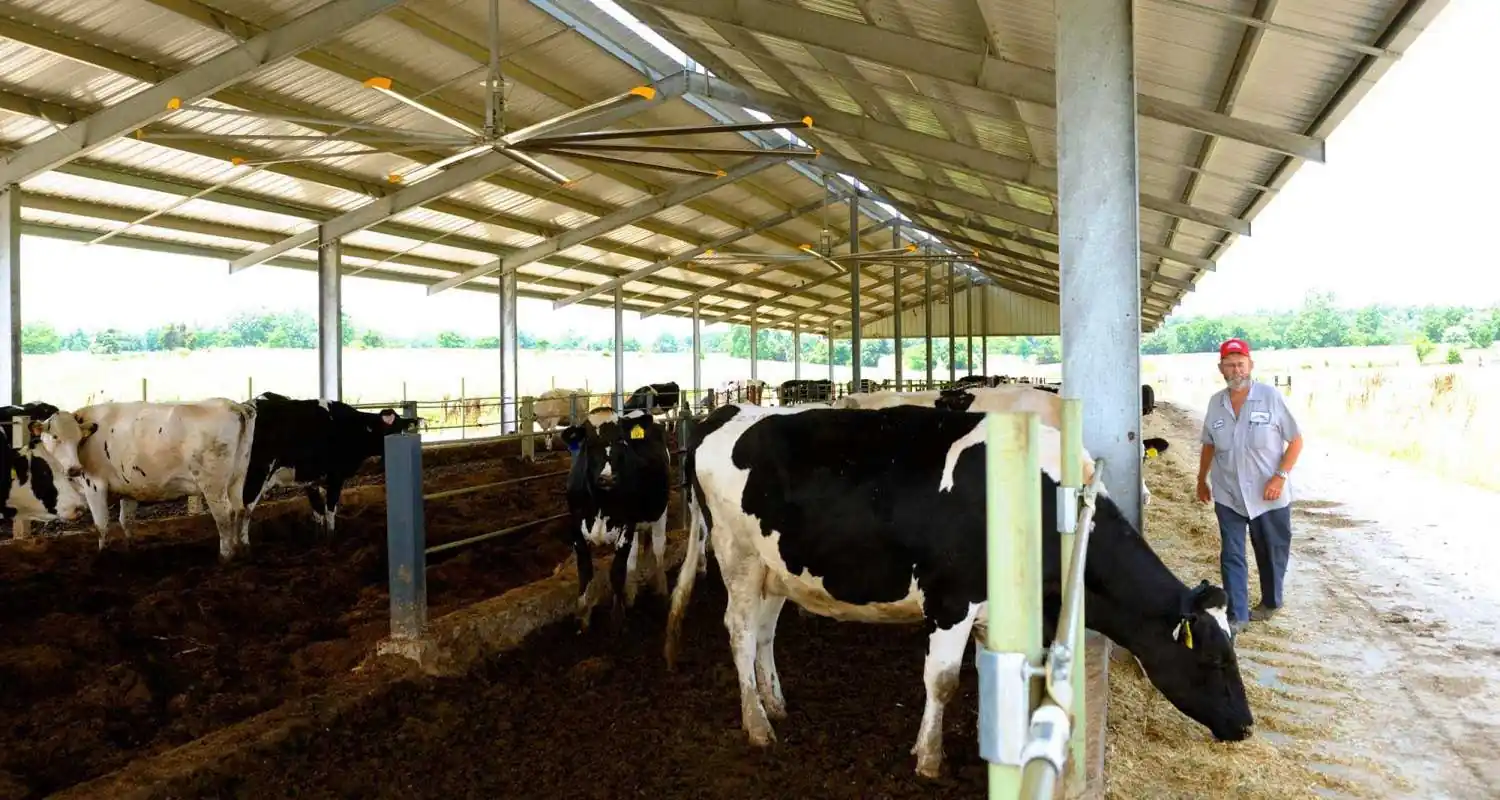
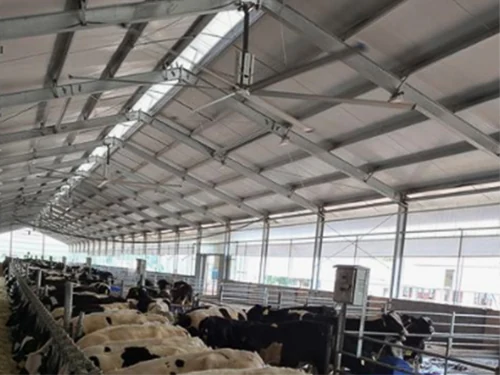
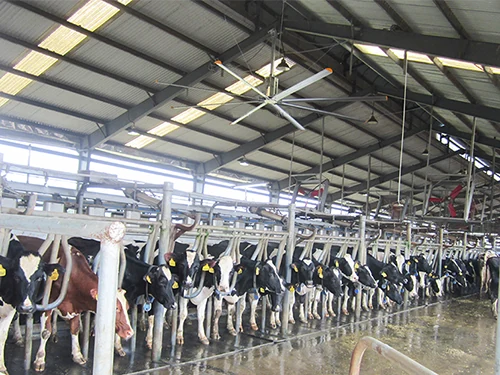
The large HVLS fan was originally invented to ventilate and cool livestock, and dairy farming is still where the mechanism is easiest to see. Large-diameter blades turning slowly form a three-dimensional circulating airflow that covers the whole barn, similar to natural wind, which helps the animals dissipate heat.
In hot weather dairy cows lose appetite, and with flies, mosquitoes and gadflies on top of that, reproductive capacity and milk production both fall substantially.
In wet weather mosquitoes multiply, ventilation is poor, infection spreads and mortality rises. In a herd, disease spreads rapidly and late treatment brings large losses.
A poorly ventilated cowshed lets a large volume of manure volatilise into toxic gas, which harms both the cattle and the people working with them.
Ducks in particular cannot be blown directly, and certainly not on the belly. High-speed direct blowing is unsuitable, which rules out conventional fans.
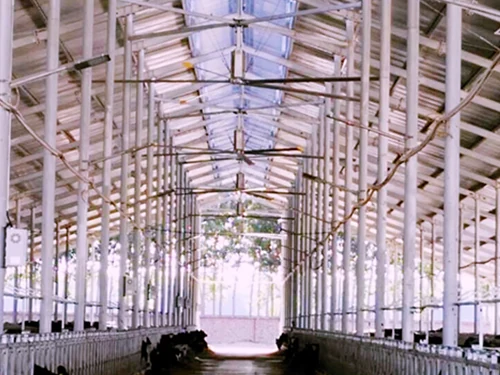
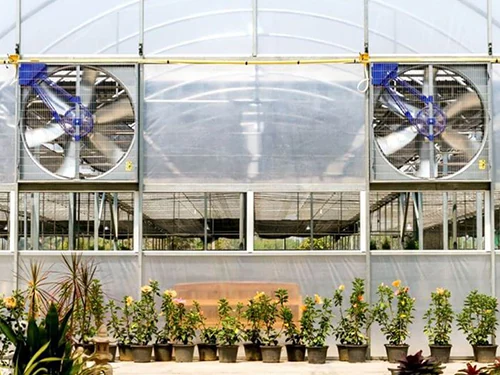 HVLS Ceiling Fan
A direct-drive IE5 fan that covers up to 1,700 m2 of high-bay floor on 1.5 kW, with no gearbox and no oil change for the life of the installation.
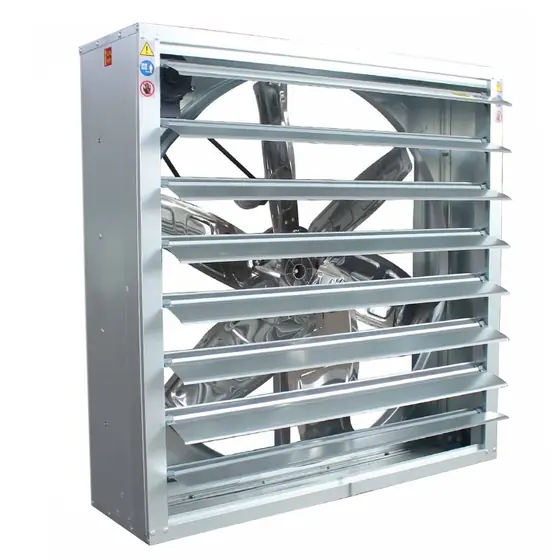 Wall Fan
One-piece formed housing with extra-thick zinc coating, automatic shutters and a bottom drain, for negative-pressure ventilation in hot, humid and smelly buildings.
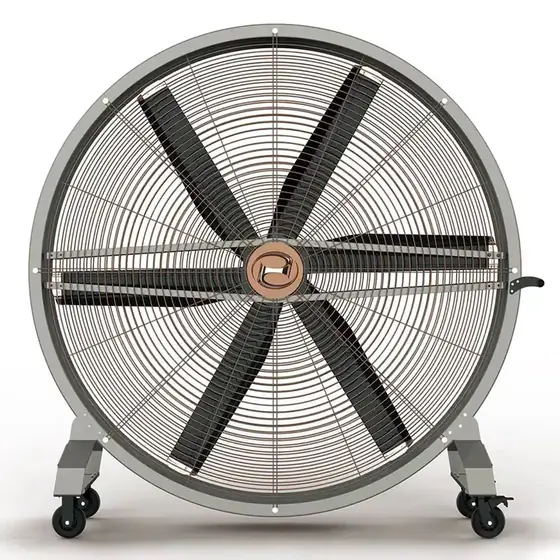 HVLS Floor Fan
A wheeled HVLS fan that throws air up to 28 m in open space, for bays where nothing can be hung from the roof and the cooling has to follow the work.
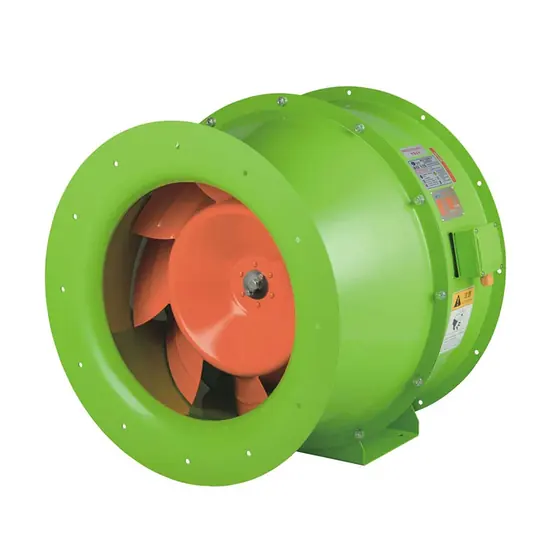 High Temperature Axial Fan
A patented diagonal flow design that cuts 40 to 50 minutes off a 15 T drying run and drops the noise from over 110 dB to within 85 dB.
Building length, width and eaves height, the animal type and density, and whether the sides are open or closed. Those four things set the whole design.
Ceiling fans circulate; wall exhaust fans exchange. Most livestock buildings need both, and the balance depends on how enclosed the house is.
Farm supplies vary widely. The motors are wound for the voltage, phase and frequency on site.
Barn roof structures differ from industrial ones. Send photographs of the purlins or trusses and the mounting is detailed against them.
Project reference
A barn with appropriate temperature, clean dry bedding conditions and visibly fewer insects on the animals, achieved with...
No, and that is the point of the low-speed design. A large amount of airflow is generated by the slow rotation of a very large blade set, which simulates a natural breeze of two to three levels and gently reaches the animals rather than blowing them directly.
The airflow drives airflow exchange with fresh outdoor air through doors, windows or the roof, which reduces bacteria in the air. It also drives off mosquitoes and moves out the harmful gases produced by bacteria, mould and faeces.
For growing pigs in summer, the guidance we work to is holding the house below 28 C after ventilation cooling, while discharging the dirty air. Window screens to keep mosquitoes out reduce the probability of insect-borne disease at the same time.
In an open-sided barn, ceiling fans usually carry the job. In an enclosed house, wall exhaust fans running negative pressure are essential and the ceiling fans work alongside them. Send the building details and we will say which applies.
The wall exhaust fans use a one-piece formed housing with an extra-thick zinc coating and a bottom drain, which is specifically designed for barn and greenhouse conditions. Clean the shutters on a schedule so they keep closing fully.
Building dimensions, clear height, obstructions and grid voltage. Four facts and we can return a layout.