
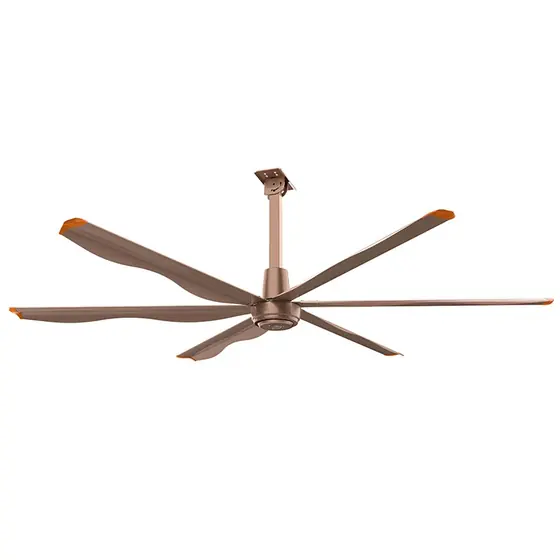
 HVLS Ceiling Fan
Commercial Ceiling Fan
For rooms under about 7 m where the fan is part of the interior: 330 m2 of coverage, under 38 dB, and a bronze airfoil blade that does not look like plant equipment.
Products
HVLS Ceiling FanHVLS Floor FanWall FanHigh Temperature Axial FanDiesel GeneratorAll ProductsIndustries
Warehouse and LogisticsManufacturing WorkshopsCommercial and Public SpacesAgriculture and Livestock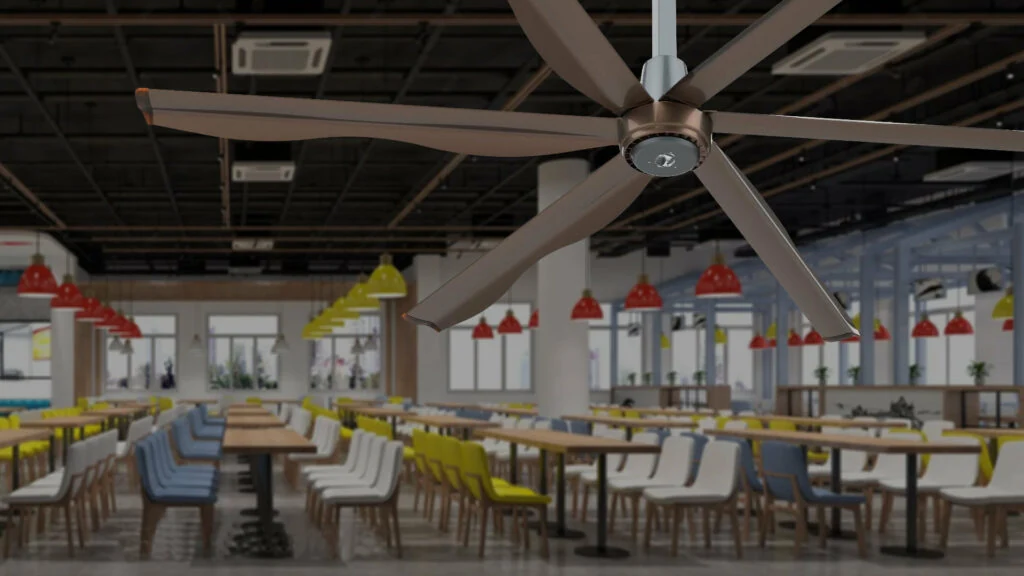
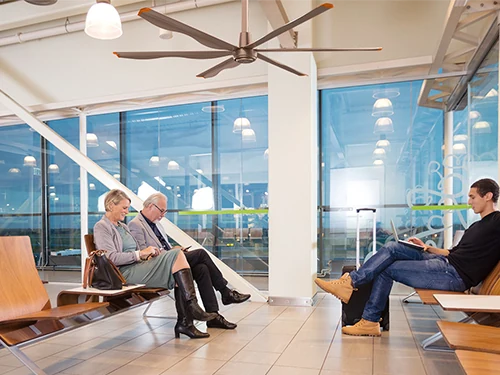
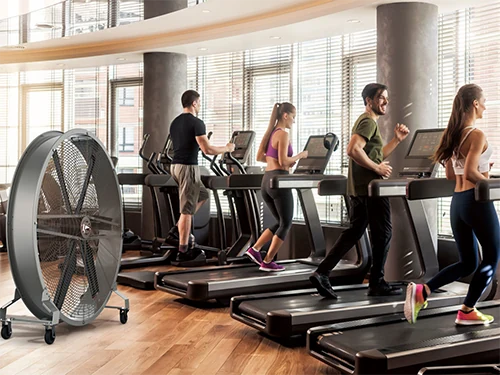
In a commercial room the fan is part of the product. People who are too hot leave sooner, buy less and do not come back, and in a fitness facility an uncomfortable environment is a stated reason for cancelling a membership. Air circulation also raises the rate at which moisture evaporates and reduces the unpleasant odours that are all too common in gyms and recreation facilities.
In a large room with a high ceiling the units cool the zones near them and leave the rest. Huge electricity consumption raises the daily operating cost without fixing the dead areas.
Short-term dense crowds leave the air turbid and the odour noticeable, and the retention rate of people through the space falls with it.
Proper airflow dramatically increases the rate at which moisture evaporates, and circulation reduces the spread of illness in a facility, a phenomenon known as sick building syndrome.
A wall of oscillating fans is visible and loud in a room customers are paying to be in.

 HVLS Ceiling Fan
For rooms under about 7 m where the fan is part of the interior: 330 m2 of coverage, under 38 dB, and a bronze airfoil blade that does not look like plant equipment.
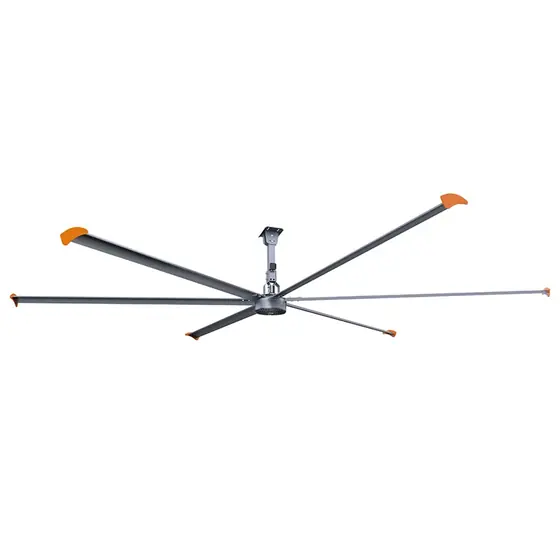 HVLS Ceiling Fan
A direct-drive IE5 fan that covers up to 1,700 m2 of high-bay floor on 1.5 kW, with no gearbox and no oil change for the life of the installation.
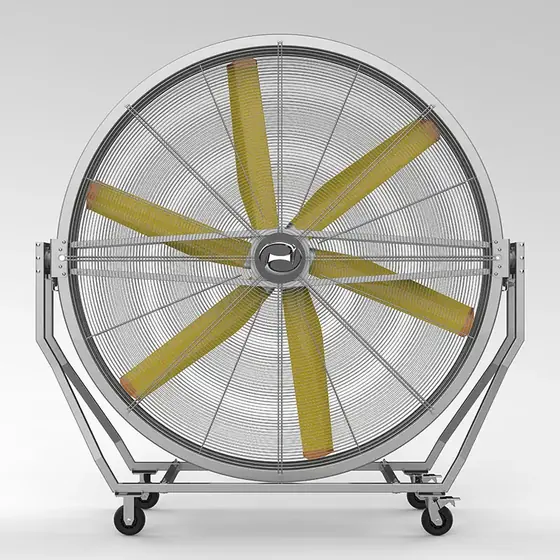 HVLS Floor Fan
Three sizes, four wheels, IP55, and a pivot that puts the air where the work is rather than where the fan happens to point.
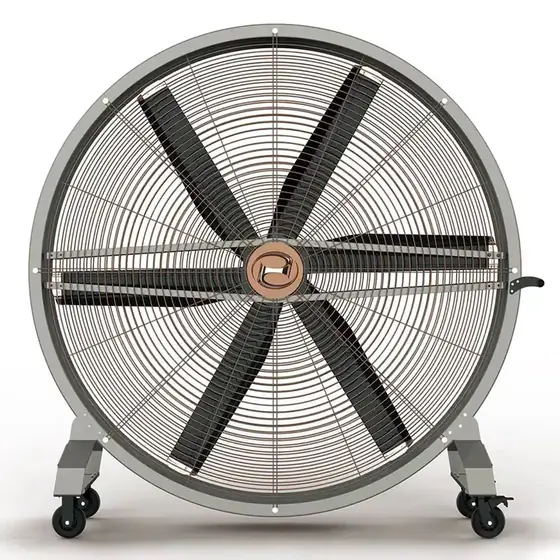 HVLS Floor Fan
A wheeled HVLS fan that throws air up to 28 m in open space, for bays where nothing can be hung from the roof and the cooling has to follow the work.
Up to about 7 m the commercial range is the right choice and looks better doing it. Above that, the industrial range covers the floor properly.
Send a reflected ceiling plan. Lighting, sprinklers, ductwork and speakers all have to be cleared, and drop rod lengths are set from it.
Halls and dining rooms take ceiling fans. Courts, pitches and leased units usually take stand fans with 45 degree tilt.
Blade and housing colour can follow your specification on production orders, but changing it afterwards costs a full cycle.
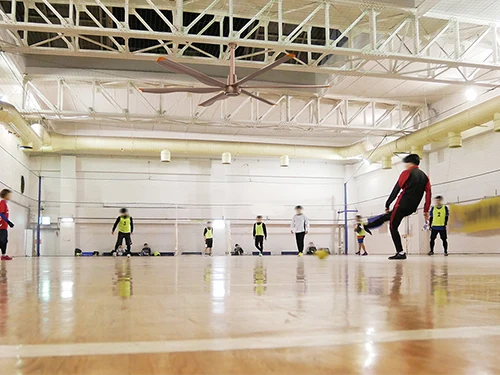 Project reference
A hall that holds a usable temperature through the season with air movement rather than mechanical cooling, and a gym floor...
Project reference
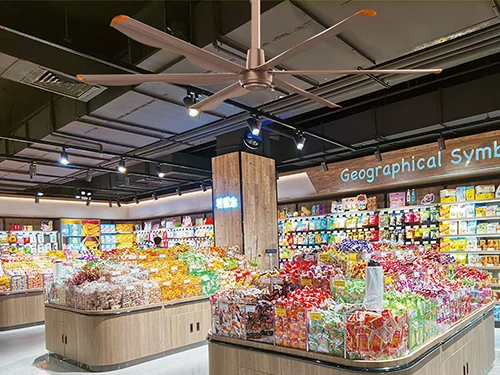
Air moving across the whole sales floor including the areas the air conditioning never reached, with the fans visible but quiet...
For a room up to about 7 m high, the commercial ceiling fan: it fits a tighter space, keeps a clean appearance and runs under 38 dB. For a full-height sports hall, the industrial range from 3 m to 7.3 m. Where the ceiling is unavailable, a stand fan with 45 degree tilt puts air at player height.
HVLS fans generate a perceived cooling effect of up to around ten degrees in a facility, and they also lessen the effects of moisture by increasing the evaporation rate. The air temperature does not change; what people feel does.
Under 38 dB at the fan across both HVLS ranges, which keeps music, announcements and conversation unaffected.
Yes, and that is the normal arrangement in a fitted-out building. The fan lets the set point rise while the room still feels comfortable, which is where the saving comes from.
Blade and housing colour follow your specification on production orders. Confirm the finish before the spray line is scheduled.
Building dimensions, clear height, obstructions and grid voltage. Four facts and we can return a layout.