
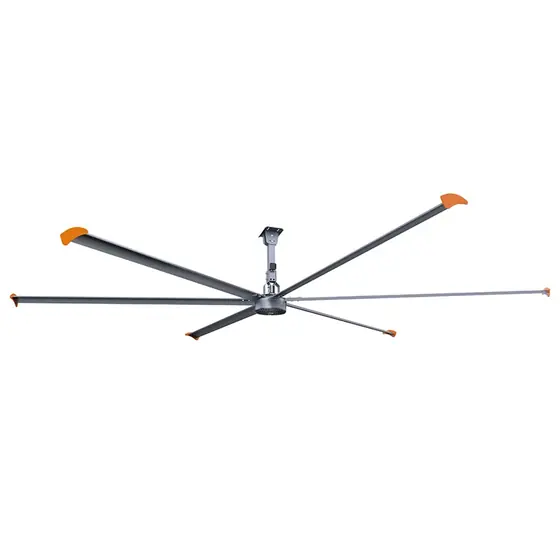
 HVLS Ceiling Fan
Industrial Ceiling Fan
A direct-drive IE5 fan that covers up to 1,700 m2 of high-bay floor on 1.5 kW, with no gearbox and no oil change for the life of the installation.
Products
HVLS Ceiling FanHVLS Floor FanWall FanHigh Temperature Axial FanDiesel GeneratorAll ProductsIndustries
Warehouse and LogisticsManufacturing WorkshopsCommercial and Public SpacesAgriculture and Livestock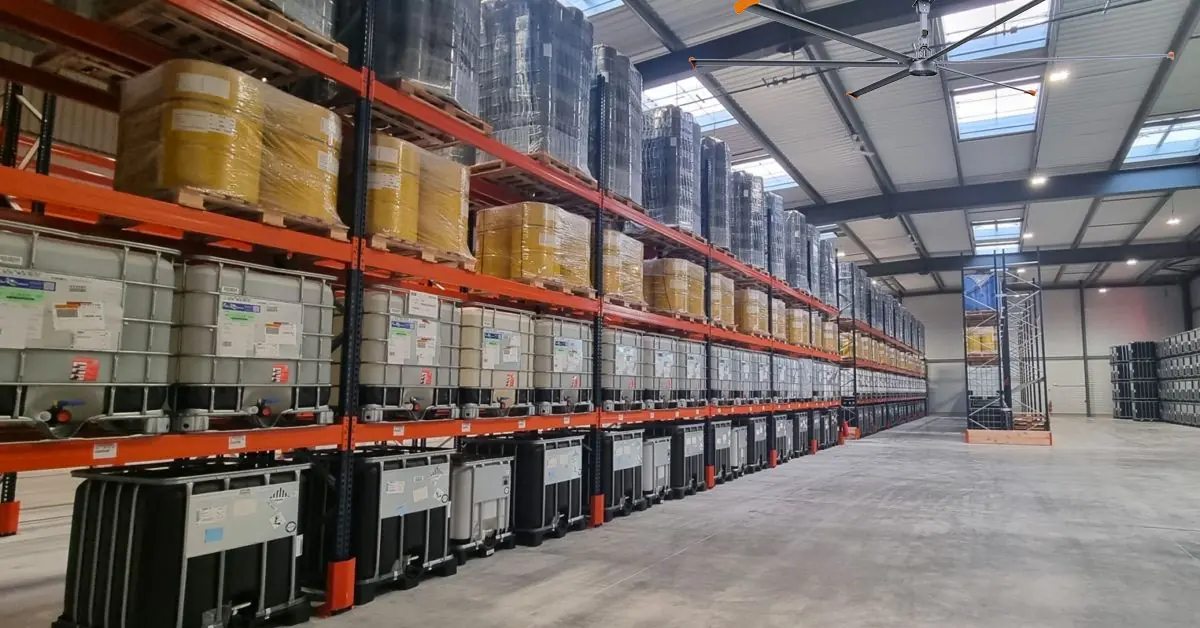
Warehouse ceiling fans are a simple and cost-effective way to improve air circulation and reduce the need for air conditioning, and the selection criteria are more specific than floor area.
Warehouse ceiling fans are a simple and effective way to improve air circulation and reduce the need for air conditioning in industrial spaces. These large, high-capacity fans are designed specifically for warehouses and other industrial environments, and they provide energy savings, improved employee comfort and better product storage conditions.
High volume low speed fans are the type used, characterised by large size and low operating speed. They move a large volume of air at a slower speed, which creates a comfortable, evenly distributed airflow throughout the building. They are particularly effective at cooling large open spaces with high ceilings, which is why warehouses, manufacturing facilities and similar industrial settings are the main application.
The size of the warehouse and the ceiling height are the first considerations, because the fan has to be large enough to circulate air throughout the space effectively.
The type of materials being stored matters too, since some materials are sensitive to temperature or humidity change. Paper, textiles and packaging are the obvious cases.
The location of the warehouse is also relevant, because the climate and weather conditions affect the performance of the fans across the year.
Proper maintenance is essential to keep the fans operating effectively and safely. That includes cleaning the blades, checking for loose bolts and ensuring the electrical wiring is in good condition.
It is equally important to follow safety guidelines when installing and operating the fans, including wearing appropriate personal protective equipment and following all manufacturer instructions.
By carefully selecting the right type of fan and properly maintaining it, warehouses enjoy the benefits of improved air circulation without incurring the high cost of air conditioning. Energy savings, improved employee comfort and better product storage conditions all come from the same installation.
The practical step is to send the building dimensions, the clear height and the racking layout rather than the floor area alone, because obstructions decide the real coverage per fan.
HVLS Ceiling Fan
A direct-drive IE5 fan that covers up to 1,700 m2 of high-bay floor on 1.5 kW, with no gearbox and no oil change for the life of the installation.
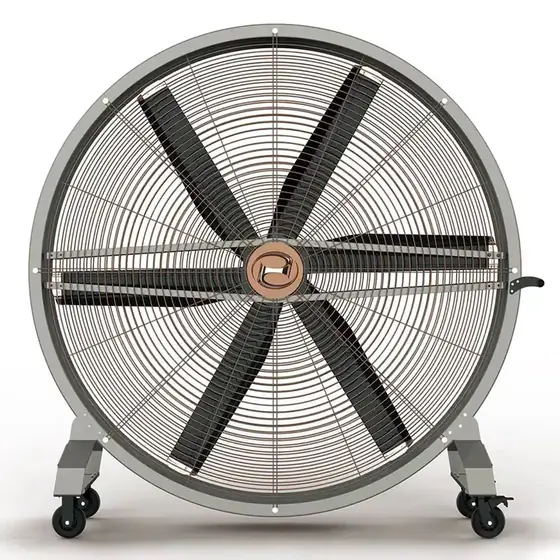 HVLS Floor Fan
A wheeled HVLS fan that throws air up to 28 m in open space, for bays where nothing can be hung from the roof and the cooling has to follow the work.
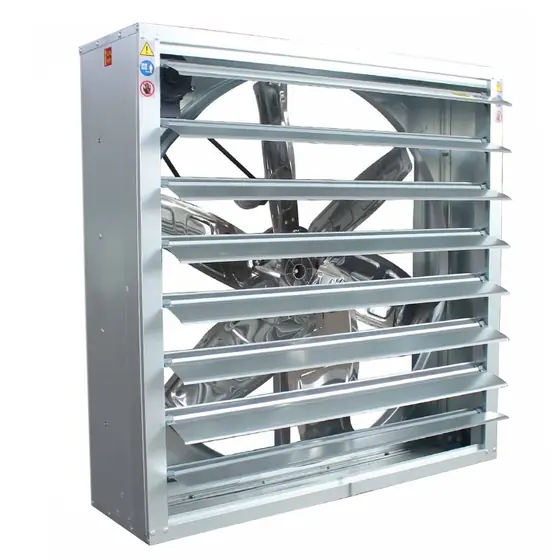 Wall Fan
One-piece formed housing with extra-thick zinc coating, automatic shutters and a bottom drain, for negative-pressure ventilation in hot, humid and smelly buildings.
It follows the clear height, the building geometry and the racking layout rather than floor area. Send the dimensions and the layout and you get a fan count and positions rather than an estimate.
Moving air raises the evaporation rate and stops damp pockets forming behind racking. Where the moisture load comes from the process or the climate rather than from stagnation, add wall exhaust fans so the moist air leaves the building.
Yes, with positions coordinated against the racking, the sprinklers and any smoke detection. Follow the manufacturer instructions on installation and use appropriate protective equipment during the work.
Clean the blades, check for loose bolts and make sure the electrical wiring stays in good condition. On the Diamond direct-drive ranges there is no gearbox and no oil change.
The guides get you to a shortlist. Building dimensions and duty get you to a price.