
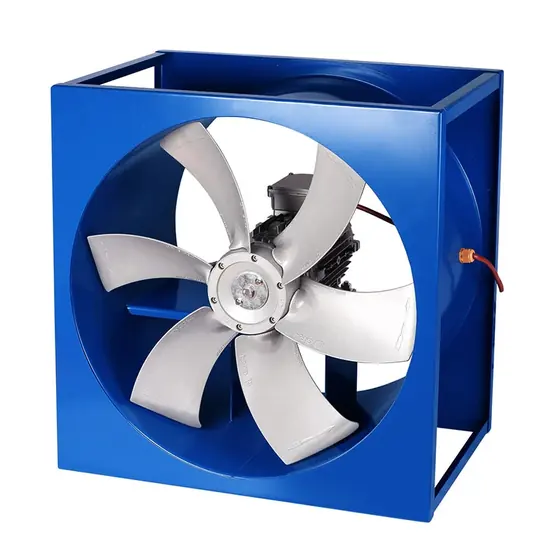
 High Temperature Axial Fan
GKF GKT Drying Fan
Rated for 130 C ambient and 98 percent humidity, in eleven diameters and four mounting types, for paint lines, tobacco, rubber, pharmaceutical and timber drying.
Products
HVLS Ceiling FanHVLS Floor FanWall FanHigh Temperature Axial FanDiesel GeneratorAll ProductsIndustries
Warehouse and LogisticsManufacturing WorkshopsCommercial and Public SpacesAgriculture and Livestock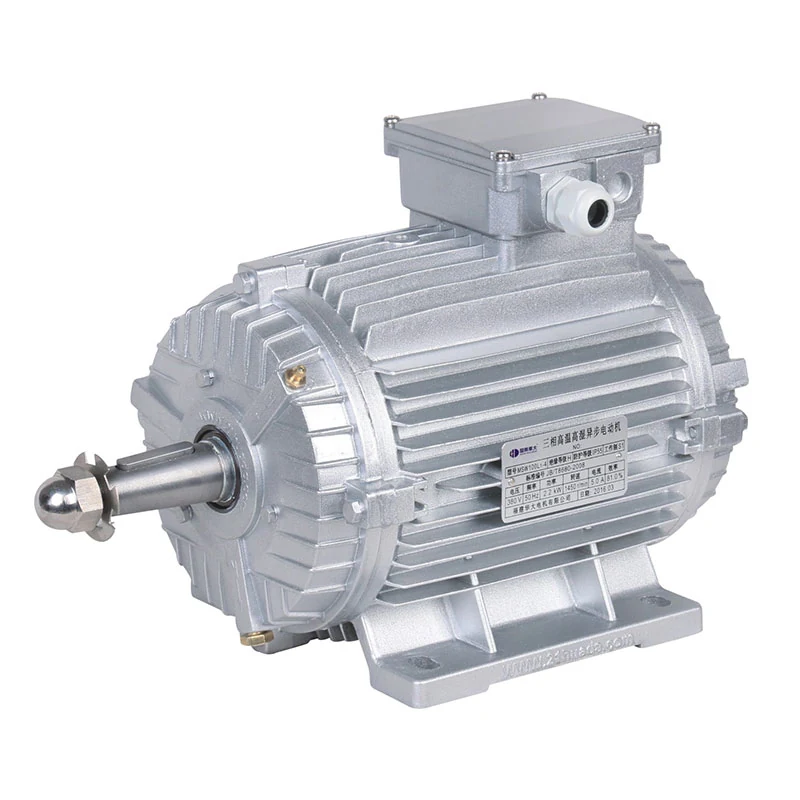
A drying fan does not fail at the blade. It fails at the motor, and the specification items that decide the outcome are insulation class, winding material, shell material and how the bearing is lubricated.
Across the Diamond axial range the applied conditions are a maximum ambient temperature of no more than 130 C and a maximum relative humidity of no more than 98 percent, in an environment that is acid-deficient or mildly alkaline, with steam and without combustible gas. Depending on the specific conditions the motor can also be used inside vacuum drying equipment.
For gas transport duty the carried gas must be non-corrosive, with dust and hard particles not exceeding 150 mg/m3. These are not marketing numbers; they are the boundary of what the design is rated for, and a duty outside them needs a customised high-temperature build.
The motor uses H class insulation rated to 180 C, built with modified polyester imide enamelled wire, in a 100 percent copper motor. Designed by advanced thermodynamic analysis, it not only reduces the electromagnetic loads on the motor but also increases performance efficiency and energy saving.
The practical outcome is that the motor resists ageing and burnout and can be operated in high-temperature and high-humidity vapour environments. Insulation class is the single specification that most reliably separates a fan that lasts a season from one that lasts years.
The design follows the characteristic of a blower-pump load. The shell is aluminium alloy and the fastening pieces are stainless steel and copper, which is what survives continuous steam exposure where painted steel does not.
The motor adopts an external structure injected with lubricating oil. That increases the service life of the bearing and avoids the dismantling that oiling would otherwise require. Bearing grease is high-temperature grease imported from Japan.
The motor structure uses straight shaft extension and subulate shaft extension with a special high-temperature bearing lubricant, which gives low noise and small vibration. Vibration is what destroys a bearing on a fan running continuously, so this is a durability item and not a comfort one.
None of it addresses a flammable atmosphere. The GKF GKT, GKW GWF and CRF ranges are all specified for environments without combustible gas.
Where explosive gas may be present, the CBF range is the correct product: ExdIIBT4 marking against GB3836.2 and IEC 60079, for Zone 1 and Zone 2 sites, gas groups IIA and class IIB, temperature group T4, with steel pipe and cable wiring as part of the certified construction. It carries the same H class 180 C motor philosophy on top of the explosion-proof construction.
High Temperature Axial Fan
Rated for 130 C ambient and 98 percent humidity, in eleven diameters and four mounting types, for paint lines, tobacco, rubber, pharmaceutical and timber drying.
 High Temperature Axial Fan
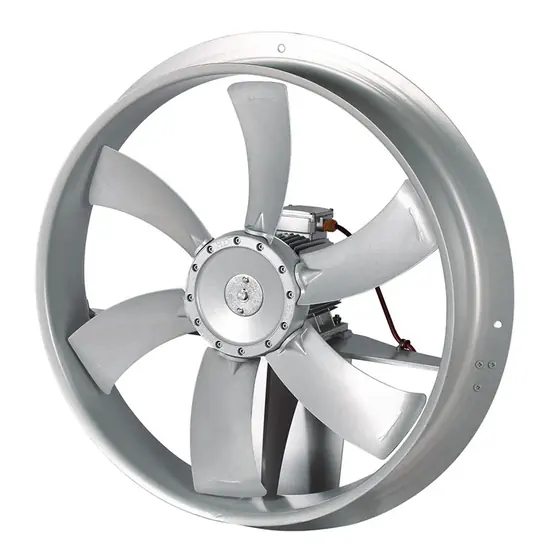
A wall type kiln fan in all aluminium, eight diameters from 400 mm to 1000 mm, built for reversible duty at 130 C and 98 percent humidity.
 High Temperature Axial Fan
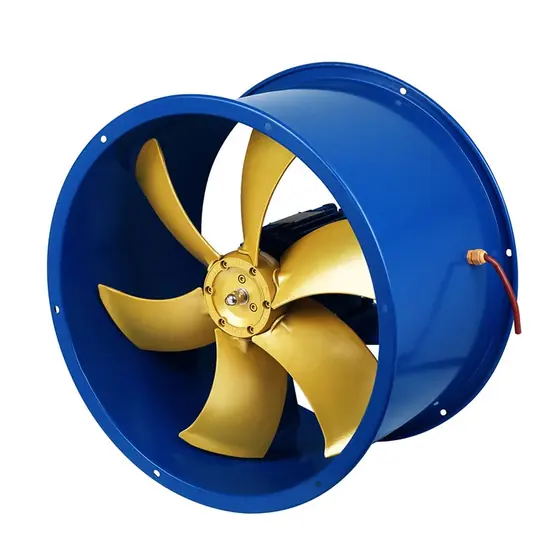
ExdIIBT4 marked to GB3836.2 and IEC 60079 for Zone 1 and Zone 2 areas, in four mounting types and six diameters.
It is an insulation temperature class rated to 180 C. In these fans it is delivered with modified polyester imide enamelled wire in a 100 percent copper motor, which together resist ageing and burnout in high-temperature and high-humidity vapour.
The shell is aluminium alloy and the fasteners stainless steel and copper because continuous steam exposure attacks painted steel. Refitting an H class motor into a steel housing leaves the housing, fasteners and impeller to corrode instead.
The motor uses an external structure injected with lubricating oil, specifically so the bearing does not have to be dismantled for lubrication. The grease itself is a high-temperature grease imported from Japan.
Then the standard drying ranges are not appropriate at any specification. Use the CBF explosion-proof range with ExdIIBT4 marking, and tell us the area classification so we can confirm it matches Zone 1 or Zone 2 with gas groups IIA or IIB and temperature group T4.
The guides get you to a shortlist. Building dimensions and duty get you to a price.