
 HVLS Ceiling Fan
Commercial Ceiling Fan
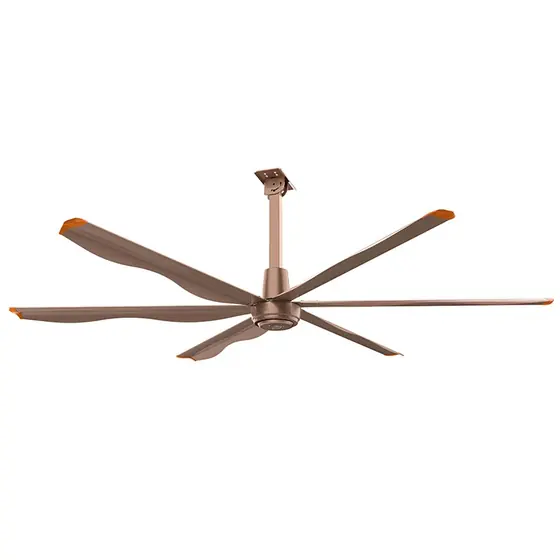
For rooms under about 7 m where the fan is part of the interior: 330 m2 of coverage, under 38 dB, and a bronze airfoil blade that does not look like plant equipment.
Products
HVLS Ceiling FanHVLS Floor FanWall FanHigh Temperature Axial FanDiesel GeneratorAll ProductsIndustries
Warehouse and LogisticsManufacturing WorkshopsCommercial and Public SpacesAgriculture and Livestock
Maintaining a comfortable, even gym environment is essential, and an uncomfortable environment is a stated reason members leave. Airflow is the cheapest lever available.
For gyms, fitness centres and recreation facilities the importance of airflow cannot be overstated. Studies suggest the best temperature to work out in is between 68 and 72 degrees Fahrenheit, and with seasonal variation it is incredibly difficult to maintain that year round. Overheating easily leads to heat exhaustion and other temperature-related problems, and in the simplest terms an uncomfortable environment is a reason a guest decides to leave a facility permanently.
Air circulation benefits a gym in other ways too. Proper airflow dramatically increases the rate at which moisture evaporates and reduces unpleasant odours, both of which are all too common in gyms and recreation facilities. Circulation also reduces the spread of sickness in a facility, a phenomenon known as sick building syndrome. Installing ceiling fans is an effective and cost-saving way to make a gym safer, healthier and more comfortable.
Depending on the size of the facility, HVLS fans may be the right option. They are large, running between 7 and 24 feet in diameter, and they generate tremendous airflow and circulation throughout the building.
HVLS fans spin at a lower rate than standard residential ceiling fans, but their size means they move a high volume of air, effectively destratifying the air in the facility. They generate a perceived cooling effect of up to ten degrees, so the environment feels substantially cooler for visitors and staff, and they lessen the effects of moisture by increasing the evaporation rate.
For more confined gyms or fitness facilities, commercial ceiling fans may be the right option. They deliver airflow and durability superior to a standard home ceiling fan while maintaining a sleek modern appearance, and they fit in tighter spaces than HVLS ceiling fans.
The Diamond commercial ceiling fan fits this brief, built with a commercial-grade motor and aluminium blades, for spaces where comfort is as important as style and durability.
Three factors decide it: the size of the building, the number of occupants and the overall style of the facility.
A full-height sports hall takes the industrial HVLS range. A studio, a mezzanine gym floor or a boutique facility under about 7 m takes the commercial range. Where the ceiling is committed to lighting, mirrors and services, a portable stand fan with 45 degree tilt puts air at user height without touching the ceiling at all.
HVLS Ceiling Fan
For rooms under about 7 m where the fan is part of the interior: 330 m2 of coverage, under 38 dB, and a bronze airfoil blade that does not look like plant equipment.
 HVLS Ceiling Fan
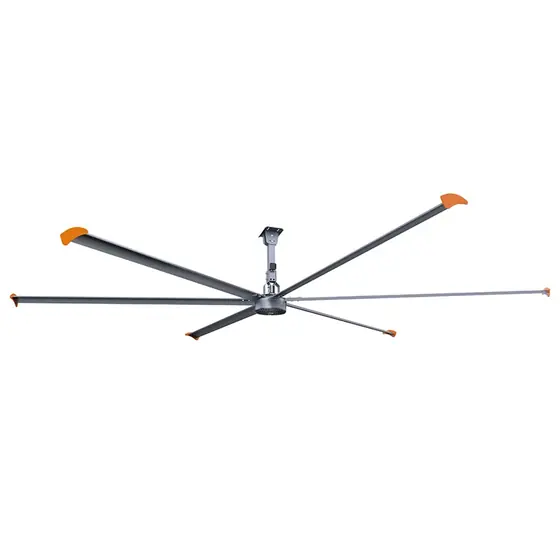
A direct-drive IE5 fan that covers up to 1,700 m2 of high-bay floor on 1.5 kW, with no gearbox and no oil change for the life of the installation.
 HVLS Floor Fan
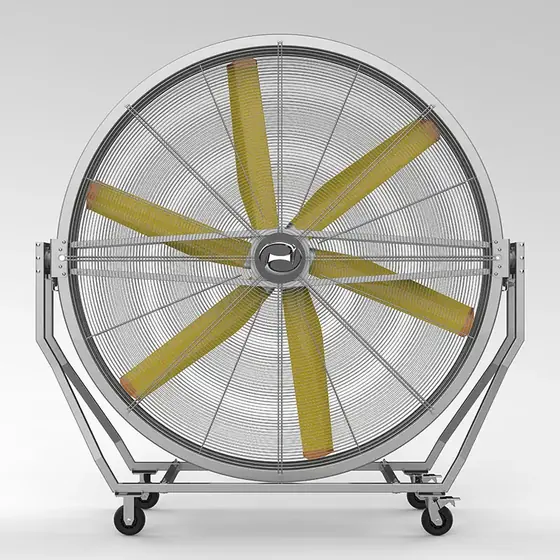
Three sizes, four wheels, IP55, and a pivot that puts the air where the work is rather than where the fan happens to point.
HVLS fans generate a perceived cooling effect of up to ten degrees. The air temperature is unchanged; the increased evaporation rate and air movement are what the body responds to.
Both Diamond HVLS ranges run under 38 dB at the fan, which keeps instruction, music and announcements clear underneath them.
Yes. Proper airflow dramatically increases the rate at which moisture evaporates and reduces unpleasant odours, both of which are common problems in gyms and recreation facilities.
A stand fan with 45 degree up and down tilt puts the air at user height from the side of the room, which is the reason the tilt exists on that range.
The guides get you to a shortlist. Building dimensions and duty get you to a price.