




Why H Type Fin Tube Survives Ash Laden Flue Gas
An economizer that blinds with ash costs more in lost availability than the bank itself cost to buy. H type geometry is the standard answer, and the reason is simple mechanics.
The ash lane
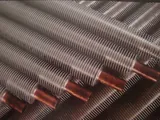
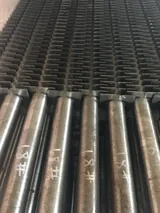
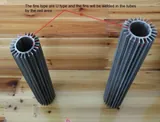
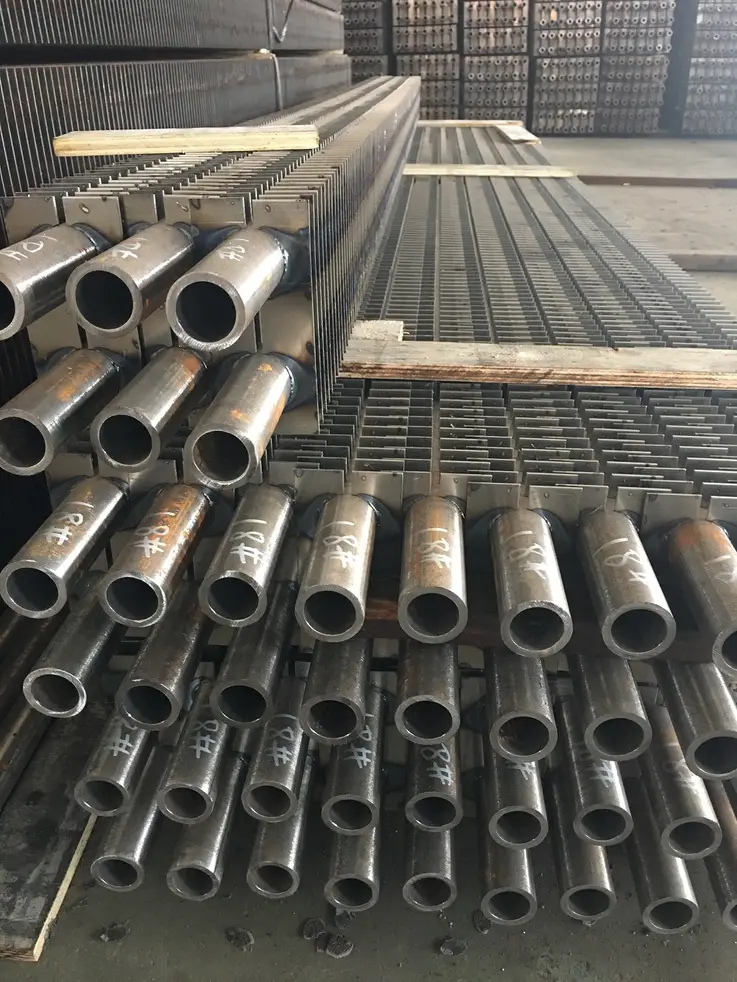
An H type fin is not a continuous disc. Two square halves are welded around the tube with a gap between them, so a straight lane runs the length of the tube.
Fly ash that would bridge between continuous fins falls through that lane instead. The bank keeps its gas side pressure drop for longer, and soot blowing clears what remains.
Why the fins are thick
H type fins run 1.5 mm to 4.0 mm thick - far heavier than the 0.3 mm to 0.5 mm strip used on a wound fin.
That thickness is there for the cleaning cycle, not for heat transfer. Soot blowers erode thin fins until the surface is gone.
Pitch and height
Fin pitch runs 9.0 mm to 30.0 mm. Dirtier gas takes the open end of the range.
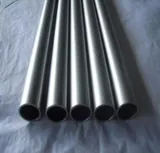
Fin height runs 15.0 mm to 45.0 mm, on base tubes from 25 mm to 73 mm with walls of 3.0 mm to 6.0 mm.
The design sequence is: dust loading sets the pitch, then the duty sets the fin height and the bank depth - not the other way round.
When to use HH instead
HH uses a doubled fin arrangement in the same bank geometry, for heavier heat recovery duty where bank depth is limited.
Where the fuel slags rather than simply ashes, move past H type entirely and use stud fin tubes.
Tube Referenced Above
 H/HH Fin Tube
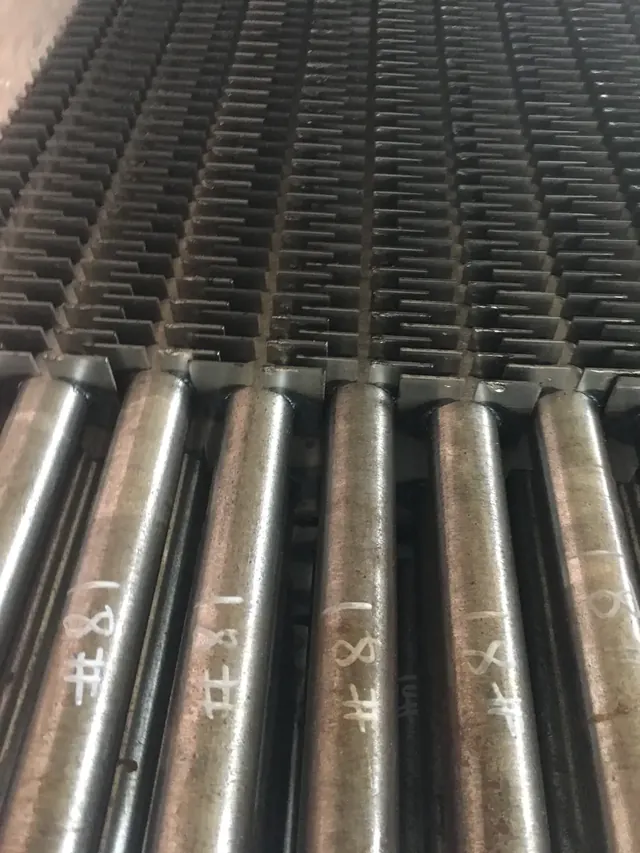
Split square fins welded in pairs, leaving a straight ash lane along the tube
Base tube diameter: 25 mm - 73 mm · Base tube wall thickness: 3.0 mm - 6.0 mm
H/HH Fin Tube
Split square fins welded in pairs, leaving a straight ash lane along the tube
Base tube diameter: 25 mm - 73 mm · Base tube wall thickness: 3.0 mm - 6.0 mm
 Stud Fin Tube
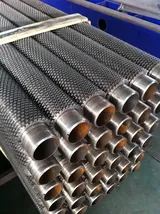
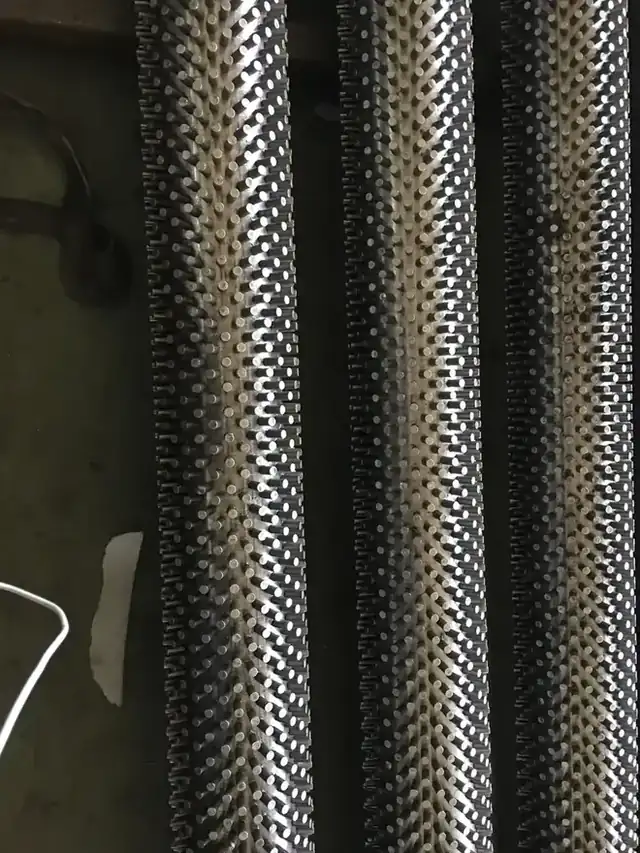
Individually welded studs for the dirtiest furnace and process heater duty
Base tube diameter: 38 mm - 273 mm · Base tube wall thickness: 3.5 mm - 10.0 mm
Stud Fin Tube
Individually welded studs for the dirtiest furnace and process heater duty
Base tube diameter: 38 mm - 273 mm · Base tube wall thickness: 3.5 mm - 10.0 mm
 Spiral Fin Tube
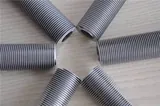
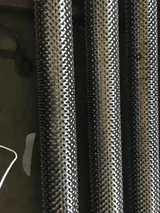
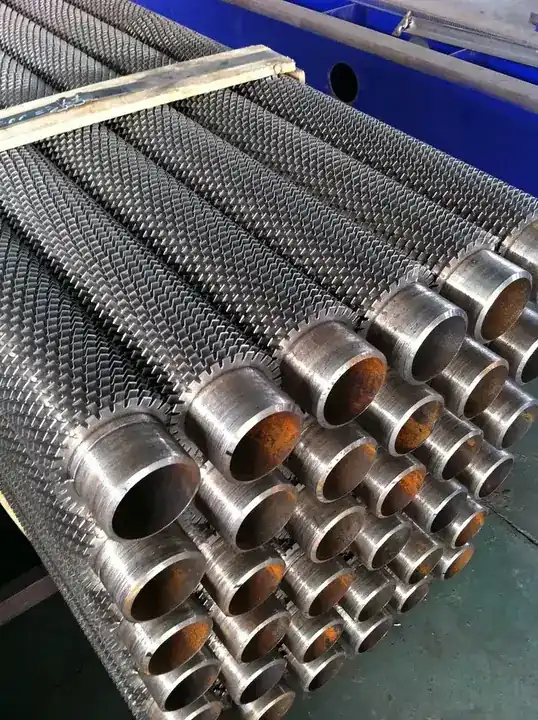
Continuously welded helical fin for boiler, economizer and flue gas duty
Base tube diameter: 15 mm - 70 mm · Base tube wall thickness: 2.0 mm - 15.0 mm
Spiral Fin Tube
Continuously welded helical fin for boiler, economizer and flue gas duty
Base tube diameter: 15 mm - 70 mm · Base tube wall thickness: 2.0 mm - 15.0 mmMore guides
Reader Questions
What fin pitch should an economizer on a biomass boiler use?
Towards the open end of the 9.0 mm to 30.0 mm range. The exact figure comes from the dust loading and the soot blowing arrangement, then gets checked against gas side pressure drop.
Can H type fins be stainless steel?
Yes. Fin plate is available in carbon steel, stainless steel and alloy steel, on stainless, carbon, alloy or nickel base tubes.
Apply This to Your Bundle
Send the duty, the stream data and the envelope. We will tell you which geometry and grade the guide points to in your case.
[email protected] · Tel 0086 512 58392615 · Monday to Saturday, 08:30 - 17:30 China Standard Time (GMT+8)