
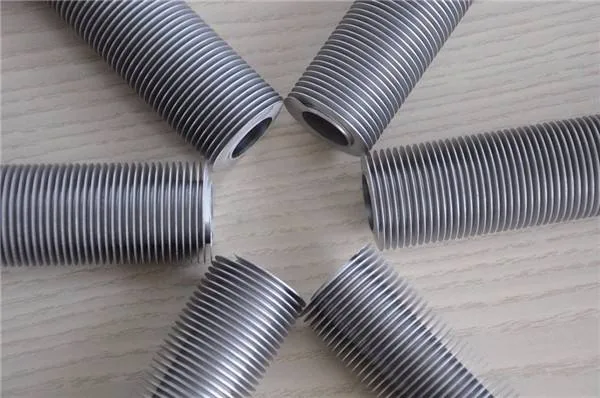
Extruded Fin Tube
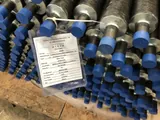
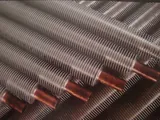
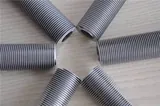
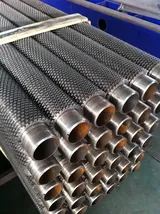
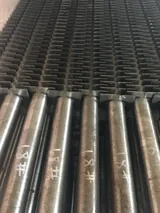
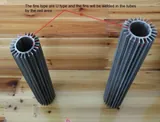
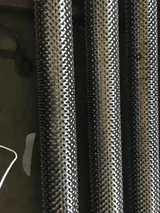
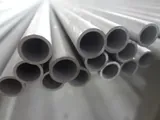
Bimetal tube with the fin extruded from an outer sleeve, giving a seamless fin-to-tube wall
What Extruded Fin Tube Is
An extruded fin tube starts as two tubes: a base tube carrying the process fluid and an outer aluminium sleeve. The fin is rolled up out of the sleeve itself.
Because the fin and the sleeve are one piece of metal, there is no fin foot to loosen and no exposed base tube for the atmosphere to attack.
Fanbang runs ten extruded fin tube machines, covering base tubes from 10 mm to 51 mm for air cooled condensers and process coolers in corrosive plant environments.
Why Engineers Specify It
No gap between fin and tube
The fin grows out of the sleeve, so the contact path is continuous rather than a pressed joint that can open up.
The base tube never sees the air
The sleeve covers the parent tube along the finned length, which is why extruded tubes are chosen for coastal and chemical plant atmospheres.
Widest fin pitch range we offer
2.0 mm to 15.0 mm lets a designer open the pitch for dirty or dusty air streams without losing the bimetal construction.
Small bore capability
Base tubes from 10 mm suit compact coolers where an embedded groove is not practical.
Where It Is Used
- Heat exchanger units for electric, nuclear, thermal and geothermal power plants
- High corrosion systems including condensers, evaporators, sea water desalination, fertiliser and urea systems, ammonia, gas and corrosive acids
- Petroleum, chemical and petrochemical industries
- Food processing and refrigeration industries
- Natural gas treatment
Buyers Who Come to Us for This Tube
Air cooled condenser builders in coastal plants
Salt-laden air that would corrode an exposed base tube.
Chemical and fertiliser plant contractors
Ammonia, urea and acid service where the outside atmosphere is as aggressive as the process.
Compact cooler OEMs
Small bore bundles from 10 mm base tube.
What Goes Wrong Without It
Fin-to-tube gap opening after service
There is no joint to open - the fin is extruded from the sleeve that grips the tube.
Base tube corroding under the fins
The aluminium sleeve shields the parent tube for the whole finned length.
Fouling in dusty air streams
Fin pitch can be opened to 15.0 mm so the bundle stays cleanable.
Extruded Fin Tube Dimensions
These are the ranges our production lines run. Sizes outside them are quoted case by case rather than assumed.
| Item | Specification |
|---|---|
| Base tube diameter | 10 mm - 51 mm |
| Base tube wall thickness | 1.65 mm - 3.0 mm |
| Fin thickness | 0.3 mm - 1.2 mm |
| Fin pitch | 2.0 mm - 15.0 mm |
| Fin height | 5 mm - 16 mm |
Materials
| Component | Materials available |
|---|---|
| Base tube | Stainless steel, carbon steel, alloy steel, titanium, nickel, copper |
| Fin sleeve | Aluminium strip, copper strip |
How It Is Made
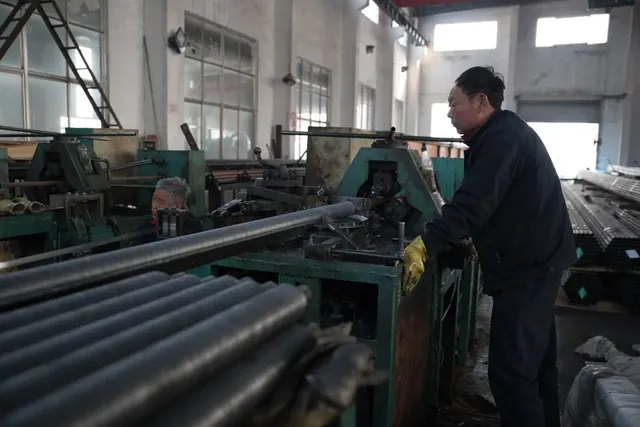
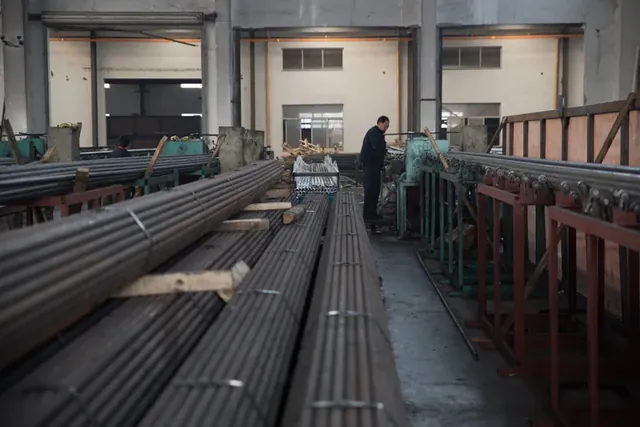
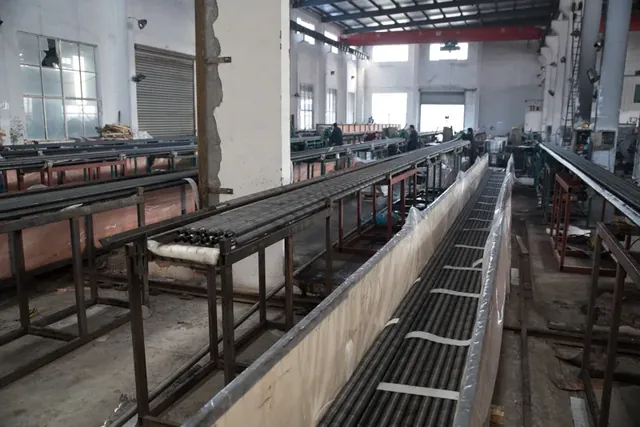
Extruded Fin Tube on the Shop Floor
Inspection and Certification
Every tube passes eddy current and hydrostatic testing, with tensile, flattening, flaring, hardness and chemical analysis carried out on our own equipment. Fin pitch, fin height and finned length are verified as dimensional items in their own right.
The company holds ISO 9001:2015, CE certificate, Production licence for pressure pipe.
What Can Be Changed
- Base tube material and wall thickness within the range above
- Fin material, fin pitch and fin height to the bundle design
- Finned length and bare end length for the tubesheet joint
- Marking, packing and certificate scope for the destination market
Compared With the Alternatives
Extruded tubes cost more than L type and take longer to produce, but they are the only mechanical fin type here that leaves no exposed base tube surface. Against G type embedded tubes they win on atmospheric corrosion resistance and lose on maximum base tube diameter - 51 mm against 80 mm.
Use Guide
- Give the ambient environment as well as the process data - corrosive atmosphere is the main reason to pay for an extruded tube.
- Check bundle pressure drop against fin pitch before fixing the pitch; a wide pitch reduces fouling but also reduces surface area.
- Bare ends for tubesheet rolling must be stated; the sleeve is removed there.
Extruded Fin Tube FAQ
Why choose extruded over L type fin tube?
Because the fin is formed from a sleeve that covers the base tube, there is no exposed parent metal and no fin foot that can loosen. It suits corrosive atmospheres.
What base tube sizes can you extrude?
10 mm to 51 mm outside diameter with 1.65 mm to 3.0 mm wall.
How wide can the fin pitch be?
Up to 15.0 mm, which is the widest pitch of the mechanical fin types we produce.
How many extruded fin lines do you run?
Ten machines are dedicated to extruded fin tube production.
Often Compared With
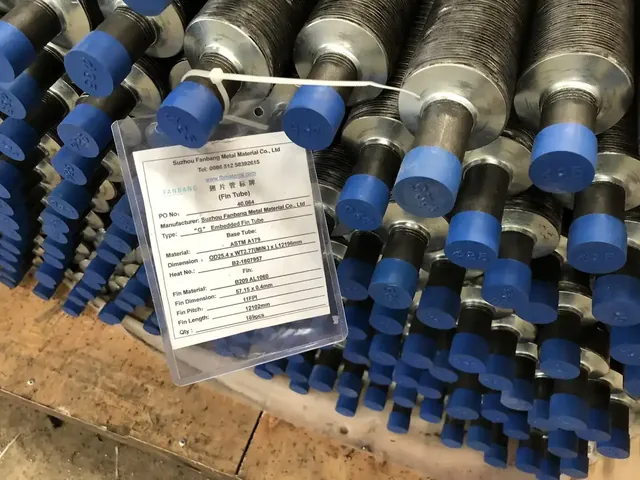 "G" Embedded Fin Tube
Fin strip rolled into a machined groove in the tube wall for permanent metal-to-metal contact
Base tube diameter: 16 mm - 80 mm · Base tube wall thickness: 1.65 mm - 4.0 mm
"G" Embedded Fin Tube
Fin strip rolled into a machined groove in the tube wall for permanent metal-to-metal contact
Base tube diameter: 16 mm - 80 mm · Base tube wall thickness: 1.65 mm - 4.0 mm
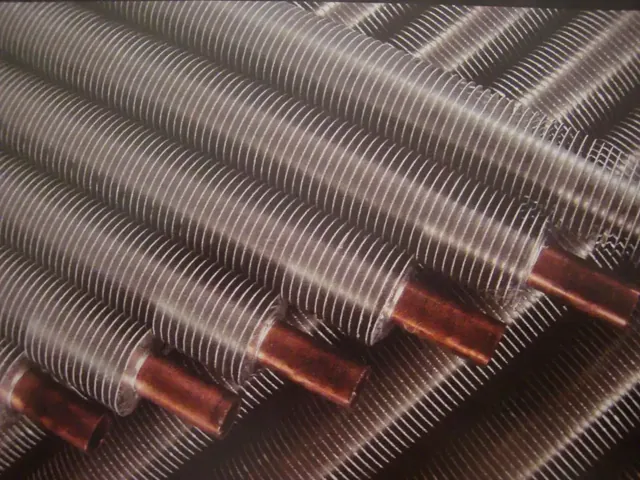 L/LL/KL Fin Tube
Tension-wound foot fin in three footprint styles, the standard choice for air cooled heat exchangers
Base tube diameter: 19 mm - 51 mm · Base tube wall thickness: 1.65 mm - 3.0 mm
L/LL/KL Fin Tube
Tension-wound foot fin in three footprint styles, the standard choice for air cooled heat exchangers
Base tube diameter: 19 mm - 51 mm · Base tube wall thickness: 1.65 mm - 3.0 mm
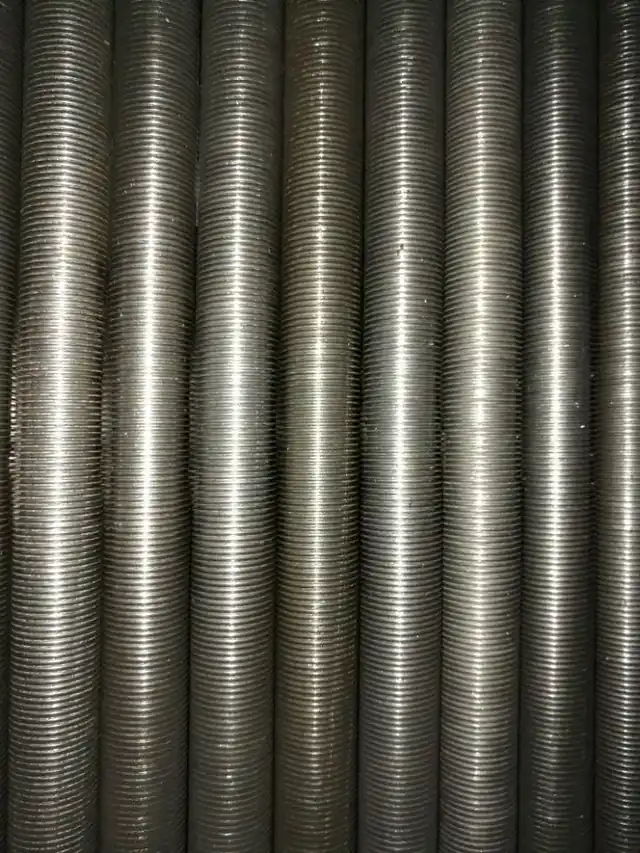 Low Fin Tube
Integral low fin rolled from the tube wall itself, for shell and tube exchangers
Base tube diameter: 12.7 mm - 31.8 mm · Base tube wall thickness: 1.65 mm - 3.0 mm
Low Fin Tube
Integral low fin rolled from the tube wall itself, for shell and tube exchangers
Base tube diameter: 12.7 mm - 31.8 mm · Base tube wall thickness: 1.65 mm - 3.0 mmIndustries using this tube
Related reading
Quote Extruded Fin Tube From Your Drawing
Send base tube size, wall thickness, fin geometry, material and length. You get a quotation against the drawing, not a catalogue page.
[email protected] · Tel 0086 512 58392615 · Monday to Saturday, 08:30 - 17:30 China Standard Time (GMT+8)