
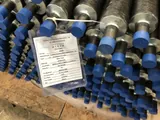
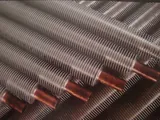
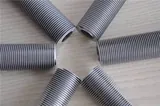
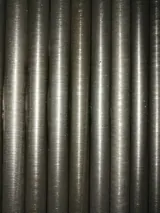
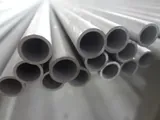
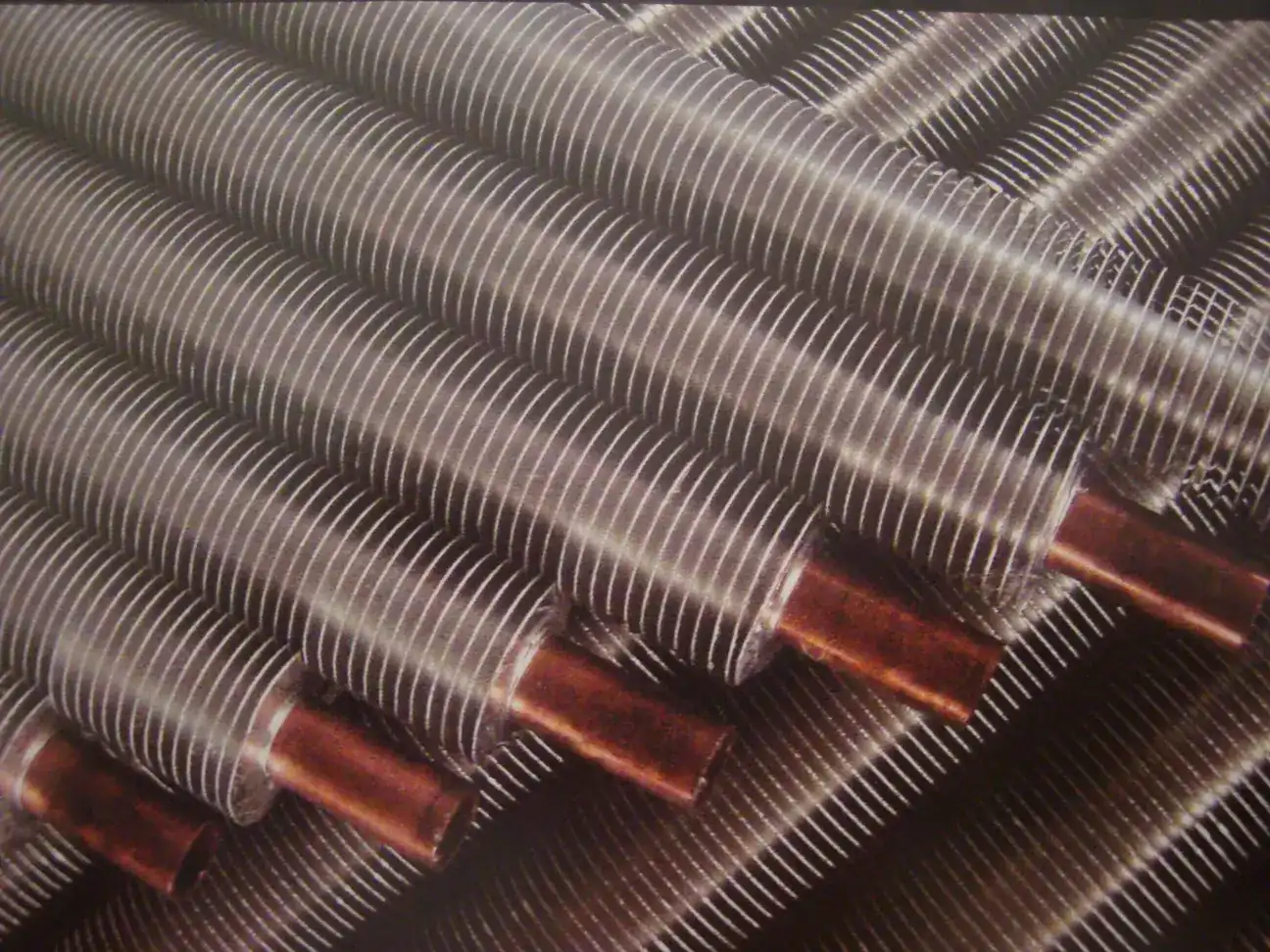
L/LL/KL Fin Tube
Tension-wound foot fin in three footprint styles, the standard choice for air cooled heat exchangers
What L/LL/KL Fin Tube Is
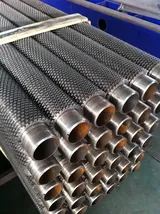
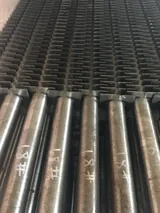
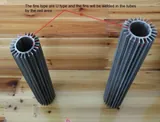
L type finned tube is made by winding a footed fin strip onto the base tube under tension, so the foot covers part of the tube surface and holds the fin in place.
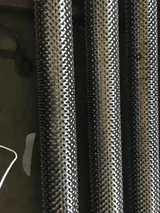
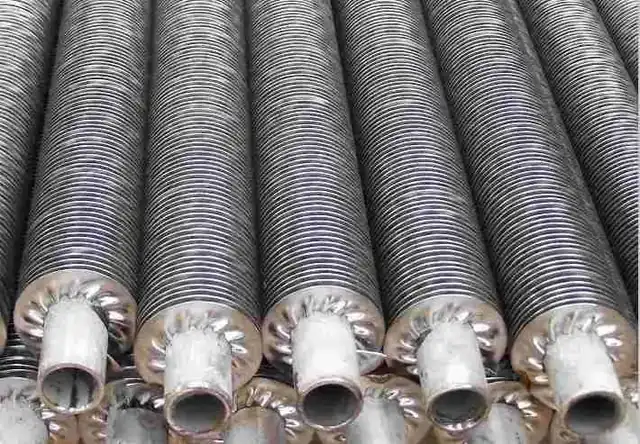
LL overlaps each foot to sheath the tube completely against the atmosphere, and KL seats the foot in a knurled tube surface for a tighter grip at higher temperature.
The three styles share one tooling family, which is why most air cooled heat exchanger bundles start here before a more expensive fin type is considered.
Why Engineers Specify It
Three grip levels from one geometry
L for general duty, LL for a fully sheathed tube surface, KL for a knurled seat that holds tighter when the tube runs warmer.
Base tube protected by the fin foot
With LL the overlapping foot covers the whole tube surface, which keeps atmospheric corrosion away from a carbon steel base tube.
Cost efficient surface area
Tension winding adds four to six times the bare tube surface without the machining time an extruded or embedded fin needs.
Repairable in the field
A damaged section can be rewound rather than scrapping the tube, which matters for bundles under a turnaround clock.
Where It Is Used
- Heat exchanger units for electric, nuclear, thermal and geothermal power plants
- High corrosion systems including condensers, evaporators, sea water desalination, fertiliser and urea systems, ammonia, gas and corrosive acids
- Petroleum, chemical and petrochemical industries
- Food processing and refrigeration industries
Buyers Who Come to Us for This Tube
Air cooled heat exchanger fabricators
Standard bundles where cost per square metre of surface decides the tender.
Refrigeration and food plant builders
Clean duty at moderate temperature where aluminium fin on a copper or stainless tube is the normal pairing.
Desalination and fertiliser plant contractors
LL type tubes where the base tube must be sheathed from a salt-laden atmosphere.
What Goes Wrong Without It
Atmospheric corrosion on a carbon steel base tube
LL type overlapping feet cover the tube surface so the atmosphere never touches the parent metal.
Fin loosening at moderate temperature
KL type knurling raises the grip without moving to a machined groove.
Long lead times on standard bundles
Six G and L type lines run this geometry as routine production rather than a special setup.
L/LL/KL Fin Tube Dimensions
These are the ranges our production lines run. Sizes outside them are quoted case by case rather than assumed.
| Item | Specification |
|---|---|
| Base tube diameter | 19 mm - 51 mm |
| Base tube wall thickness | 1.65 mm - 3.0 mm |
| Fin thickness | 0.3 mm - 0.5 mm |
| Fin pitch | 2.0 mm - 5.0 mm |
| Fin height | 10 mm - 16 mm |
Materials
| Component | Materials available |
|---|---|
| Base tube | Stainless steel, carbon steel, alloy steel, titanium, nickel, copper |
| Fin strip | Aluminium strip, copper strip |
How It Is Made
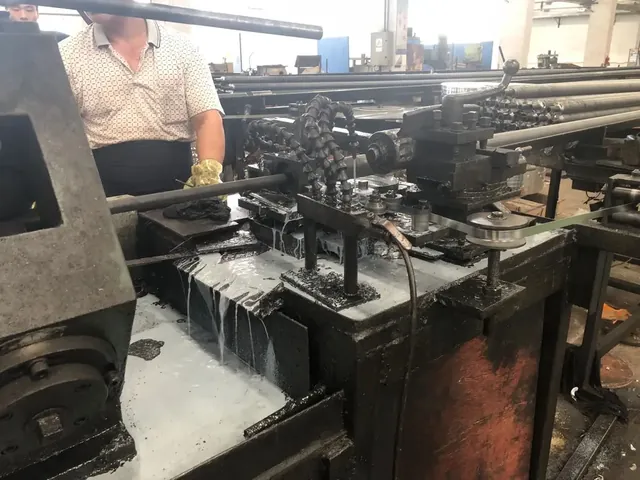
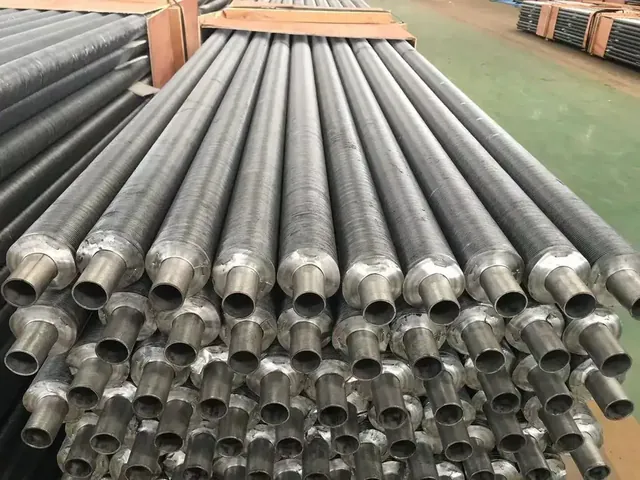
L/LL/KL Fin Tube on the Shop Floor
Inspection and Certification
Every tube passes eddy current and hydrostatic testing, with tensile, flattening, flaring, hardness and chemical analysis carried out on our own equipment. Fin pitch, fin height and finned length are verified as dimensional items in their own right.
The company holds ISO 9001:2015, CE certificate, Production licence for pressure pipe.
What Can Be Changed
- Base tube material and wall thickness within the range above
- Fin material, fin pitch and fin height to the bundle design
- Finned length and bare end length for the tubesheet joint
- Marking, packing and certificate scope for the destination market
Compared With the Alternatives
L, LL and KL tubes cost less than embedded or extruded tubes and are faster to produce, but the fin is held by tension rather than locked into the wall, so they suit moderate metal temperatures. Where the bundle runs hotter, move to G type embedded; where a bimetal wall is needed, move to extruded.
Use Guide
- Choose L for general service, LL when the base tube must be covered against the atmosphere, KL when metal temperature is at the upper end of tension-wound service.
- Specify finned length and bare end lengths separately - the bare ends are what the tubesheet sees.
- Aluminium fin is the default for cost and conductivity; copper fin is used where the bundle already runs copper.
L/LL/KL Fin Tube FAQ
What is the difference between L, LL and KL?
L has a plain footed fin wound under tension. LL overlaps the feet so the tube surface is fully covered. KL seats the foot into a knurled tube surface for a tighter mechanical grip.
Which base tube sizes do you cover?
19 mm to 51 mm outside diameter with 1.65 mm to 3.0 mm wall thickness.
Can you match the fin pitch of our existing bundle?
Yes, within the 2.0 mm to 5.0 mm range. Send the bundle drawing or a sample tube.
What fin thickness is standard?
0.3 mm to 0.5 mm for L, LL and KL type fins.
Often Compared With
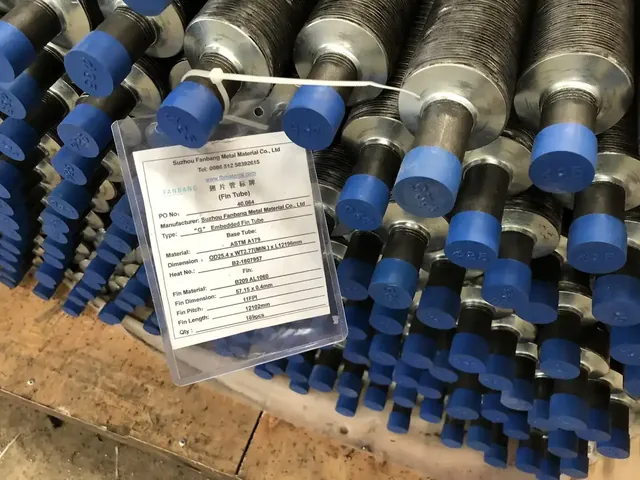 "G" Embedded Fin Tube
Fin strip rolled into a machined groove in the tube wall for permanent metal-to-metal contact
Base tube diameter: 16 mm - 80 mm · Base tube wall thickness: 1.65 mm - 4.0 mm
"G" Embedded Fin Tube
Fin strip rolled into a machined groove in the tube wall for permanent metal-to-metal contact
Base tube diameter: 16 mm - 80 mm · Base tube wall thickness: 1.65 mm - 4.0 mm
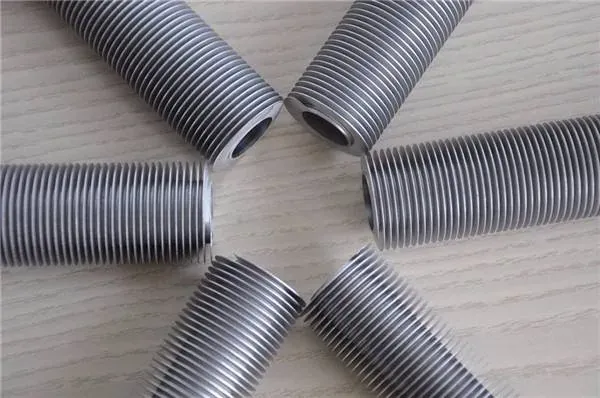 Extruded Fin Tube
Bimetal tube with the fin extruded from an outer sleeve, giving a seamless fin-to-tube wall
Base tube diameter: 10 mm - 51 mm · Base tube wall thickness: 1.65 mm - 3.0 mm
Extruded Fin Tube
Bimetal tube with the fin extruded from an outer sleeve, giving a seamless fin-to-tube wall
Base tube diameter: 10 mm - 51 mm · Base tube wall thickness: 1.65 mm - 3.0 mm
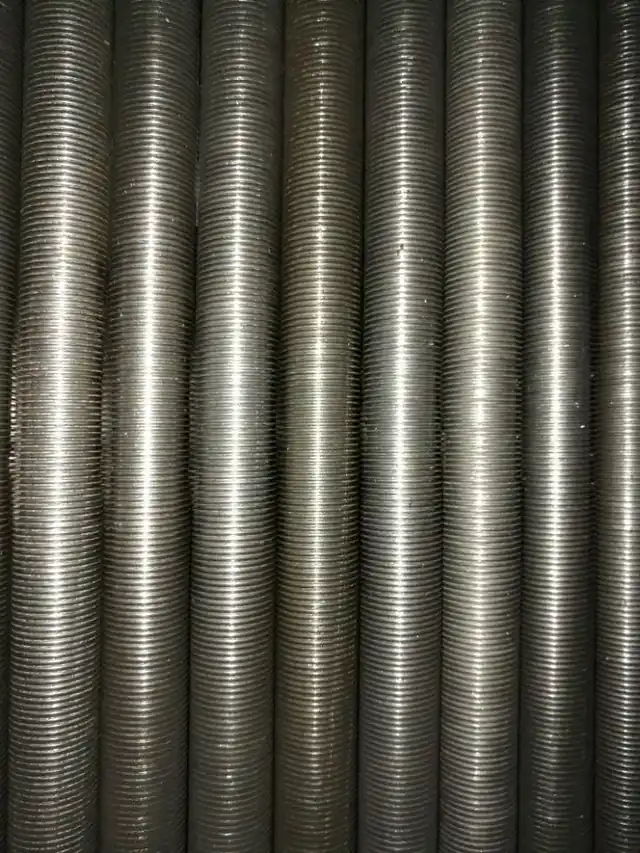 Low Fin Tube
Integral low fin rolled from the tube wall itself, for shell and tube exchangers
Base tube diameter: 12.7 mm - 31.8 mm · Base tube wall thickness: 1.65 mm - 3.0 mm
Low Fin Tube
Integral low fin rolled from the tube wall itself, for shell and tube exchangers
Base tube diameter: 12.7 mm - 31.8 mm · Base tube wall thickness: 1.65 mm - 3.0 mmIndustries using this tube
Related reading
Quote L/LL/KL Fin Tube From Your Drawing
Send base tube size, wall thickness, fin geometry, material and length. You get a quotation against the drawing, not a catalogue page.
[email protected] · Tel 0086 512 58392615 · Monday to Saturday, 08:30 - 17:30 China Standard Time (GMT+8)