
Low Fin Tube
Integral low fin rolled from the tube wall itself, for shell and tube exchangers
What Low Fin Tube Is
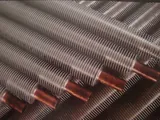
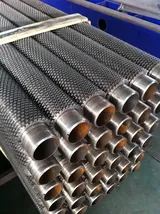
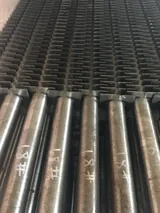
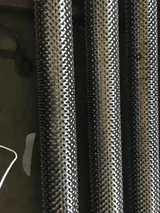
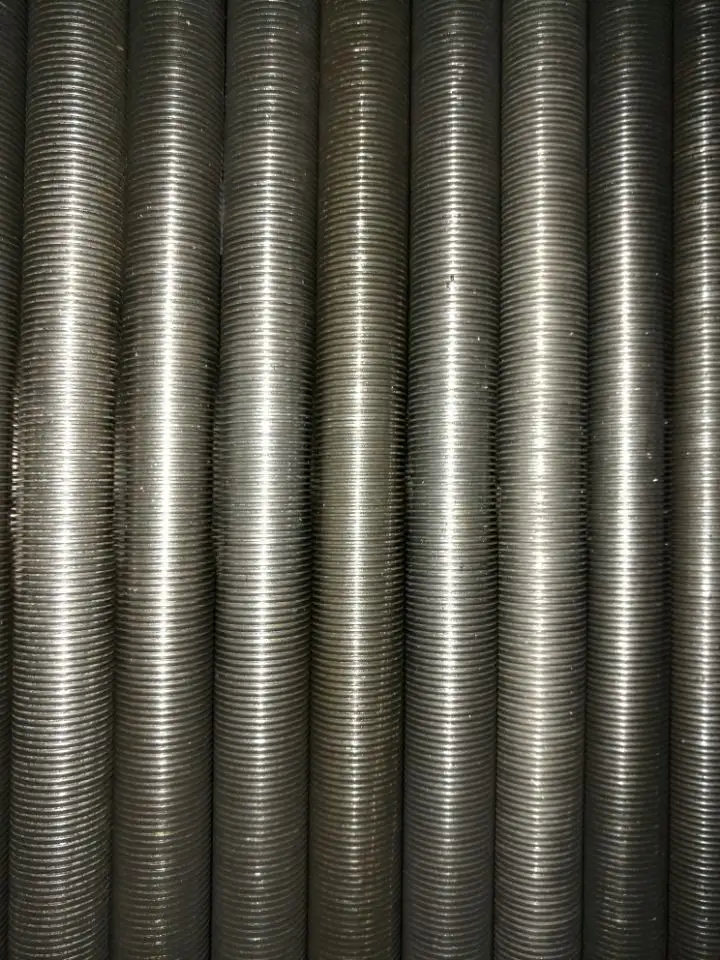
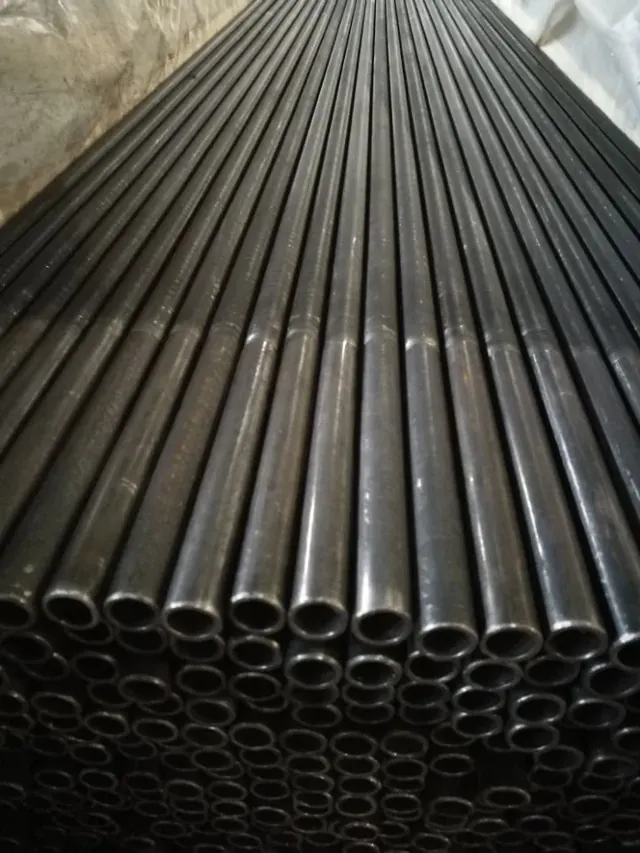
A low fin tube has no added fin strip at all. The fin is rolled out of the tube wall, so tube and fin are one piece of the same alloy.
The short fin height - 0.9 mm to 1.3 mm - is what lets the tube still pass through a conventional shell and tube baffle stack while carrying roughly two to three times the bare outside surface.
This is the tube used where the controlling resistance is on the shell side and there is no room for a tall fin.
Why Engineers Specify It
One alloy throughout
Fin and tube are the same metal, so there is no galvanic pair and no bond to qualify.
Fits standard exchanger internals
A short integral fin passes through baffles and tubesheets sized for plain tube.
More shell side surface without a bigger shell
Retubing an existing exchanger with low fin tube raises duty inside the same shell.
No fin loosening mechanism
There is no foot, no groove and no sleeve, so thermal cycling cannot separate fin from tube.
Where It Is Used
- Heating systems
- Ventilation systems
- Refrigeration and climate control systems
- Mechanical engineering
- Automotive manufacturing
- Chemical, petrochemical and power plant technology
Buyers Who Come to Us for This Tube
Shell and tube exchanger builders
Duty limited by the shell side film coefficient.
Refrigeration and climate control OEMs
Evaporator and condenser bundles in a fixed envelope.
Plant engineers retubing an existing exchanger
More surface without changing the shell or the tubesheet drilling.
What Goes Wrong Without It
Exchanger short on duty but no space for a bigger shell
Integral low fins add shell side area inside the existing envelope.
Galvanic corrosion between fin and tube
There is no second metal - the fin is parent wall material.
Baffle clearance with finned tube
Fin height stays at or below 1.3 mm so standard baffle drilling still works.
Low Fin Tube Dimensions
These are the ranges our production lines run. Sizes outside them are quoted case by case rather than assumed.
| Item | Specification |
|---|---|
| Base tube diameter | 12.7 mm - 31.8 mm |
| Base tube wall thickness | 1.65 mm - 3.0 mm |
| Fin thickness | 0.3 mm - 0.5 mm |
| Fin pitch | 0.9 mm - 1.5 mm |
| Fin height | 0.9 mm - 1.3 mm |
Materials
| Component | Materials available |
|---|---|
| Tube | Stainless steel, carbon steel, alloy steel, titanium, nickel, copper |
How It Is Made
Low Fin Tube on the Shop Floor
Inspection and Certification
Every tube passes eddy current and hydrostatic testing, with tensile, flattening, flaring, hardness and chemical analysis carried out on our own equipment. Fin pitch, fin height and finned length are verified as dimensional items in their own right.
The company holds ISO 9001:2015, CE certificate, Production licence for pressure pipe.
What Can Be Changed
- Base tube material and wall thickness within the range above
- Fin material, fin pitch and fin height to the bundle design
- Finned length and bare end length for the tubesheet joint
- Marking, packing and certificate scope for the destination market
Compared With the Alternatives
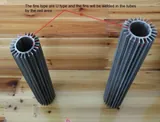
Low fin tubes carry far less surface per metre than L type or extruded tubes because the fin is only about 1 mm tall, but they are the only fin type here that works inside a conventional shell and tube bundle and needs no second metal.
Use Guide
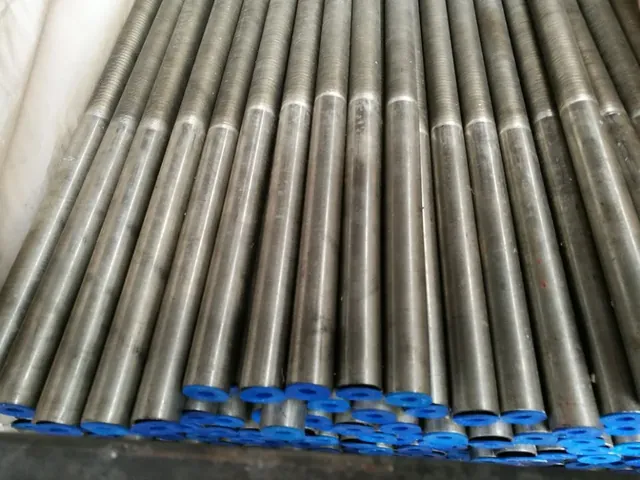
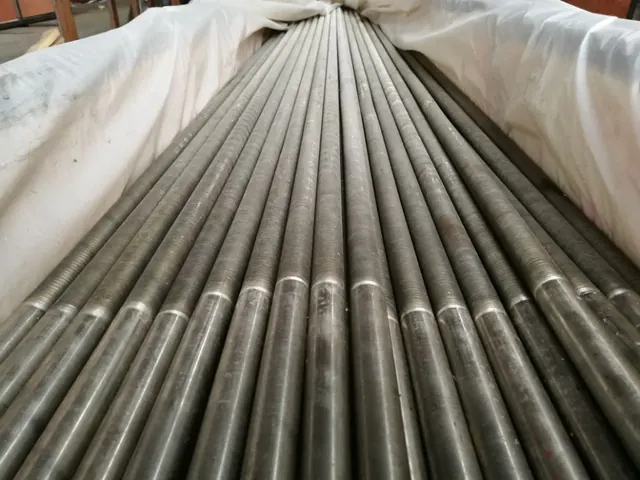
- State the wall thickness you need under the fin root, not just the nominal tube wall - fin rolling takes metal from the wall.
- Keep plain bare ends long enough for the tubesheet joint plus any grooving.
- Low fin tube is most effective where the shell side film is controlling; if the tube side controls, the extra outside area gains little.
Low Fin Tube FAQ
Is the fin welded on?
No. The fin is rolled out of the tube wall itself, so the tube and fin are a single piece of the same alloy.
What fin height can you roll?
0.9 mm to 1.3 mm, with fin pitch from 0.9 mm to 1.5 mm.
Which tube diameters are available?
12.7 mm to 31.8 mm outside diameter with 1.65 mm to 3.0 mm wall thickness.
Can you supply low fin tube in stainless or titanium?
Yes. Stainless steel, carbon steel, alloy steel, titanium, nickel and copper are all rolled.
Often Compared With
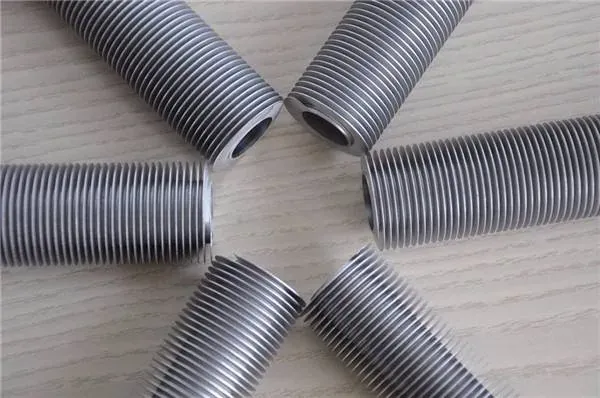 Extruded Fin Tube
Bimetal tube with the fin extruded from an outer sleeve, giving a seamless fin-to-tube wall
Base tube diameter: 10 mm - 51 mm · Base tube wall thickness: 1.65 mm - 3.0 mm
Extruded Fin Tube
Bimetal tube with the fin extruded from an outer sleeve, giving a seamless fin-to-tube wall
Base tube diameter: 10 mm - 51 mm · Base tube wall thickness: 1.65 mm - 3.0 mm
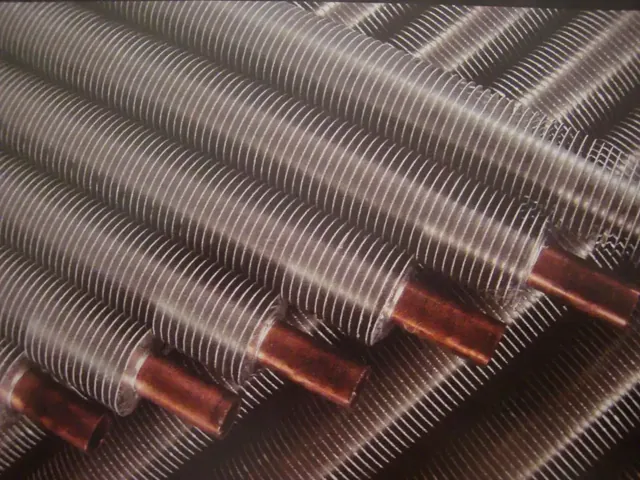 L/LL/KL Fin Tube
Tension-wound foot fin in three footprint styles, the standard choice for air cooled heat exchangers
Base tube diameter: 19 mm - 51 mm · Base tube wall thickness: 1.65 mm - 3.0 mm
L/LL/KL Fin Tube
Tension-wound foot fin in three footprint styles, the standard choice for air cooled heat exchangers
Base tube diameter: 19 mm - 51 mm · Base tube wall thickness: 1.65 mm - 3.0 mm
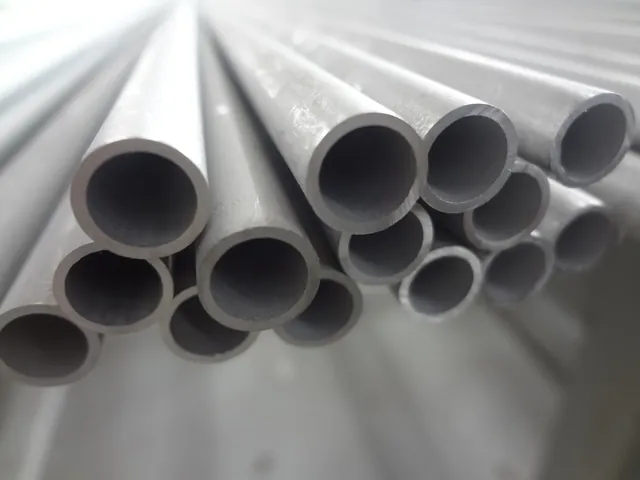 Stainless Steel Tube
Austenitic and super austenitic seamless tube and pipe to ASTM A213, A269 and A312
Tube outside diameter: 1/2" - 3" (12 mm - 76.2 mm) · Tube wall thickness: 0.02" - 0.5" (0.5 mm - 12.0 mm)
Stainless Steel Tube
Austenitic and super austenitic seamless tube and pipe to ASTM A213, A269 and A312
Tube outside diameter: 1/2" - 3" (12 mm - 76.2 mm) · Tube wall thickness: 0.02" - 0.5" (0.5 mm - 12.0 mm)Industries using this tube
Related reading
Quote Low Fin Tube From Your Drawing
Send base tube size, wall thickness, fin geometry, material and length. You get a quotation against the drawing, not a catalogue page.
[email protected] · Tel 0086 512 58392615 · Monday to Saturday, 08:30 - 17:30 China Standard Time (GMT+8)