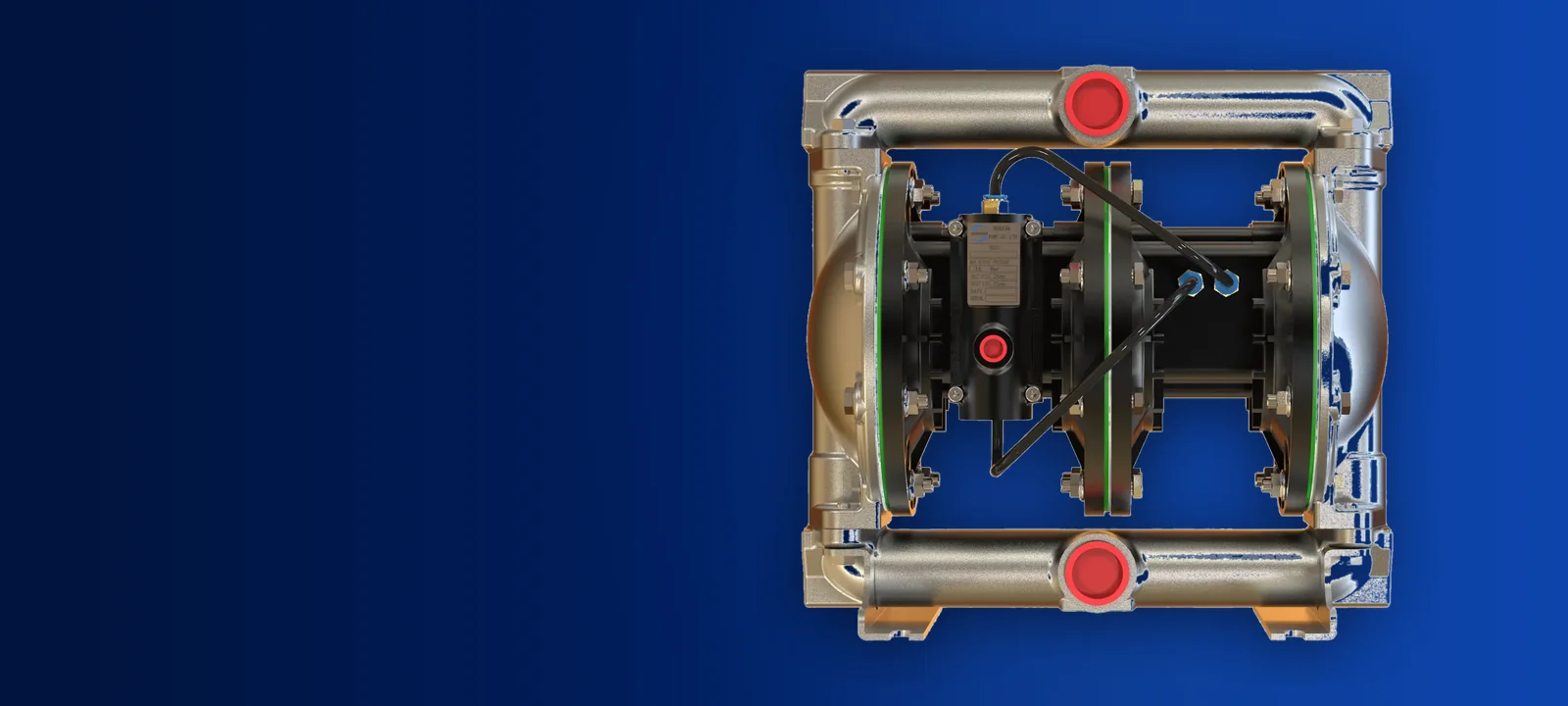
Understanding The Two To One Mechanical Advantage
A standard air operated double diaphragm pump operates on a one to one ratio. When supplied with compressed air at 100 psi, the liquid leaving the discharge manifold reaches a maximum static pressure of 100 psi before the forces balance and the pump stalls. In systems with severe line friction, thick viscosity, or elevated discharge points, 100 psi of available fluid pressure is often insufficient to keep media moving.
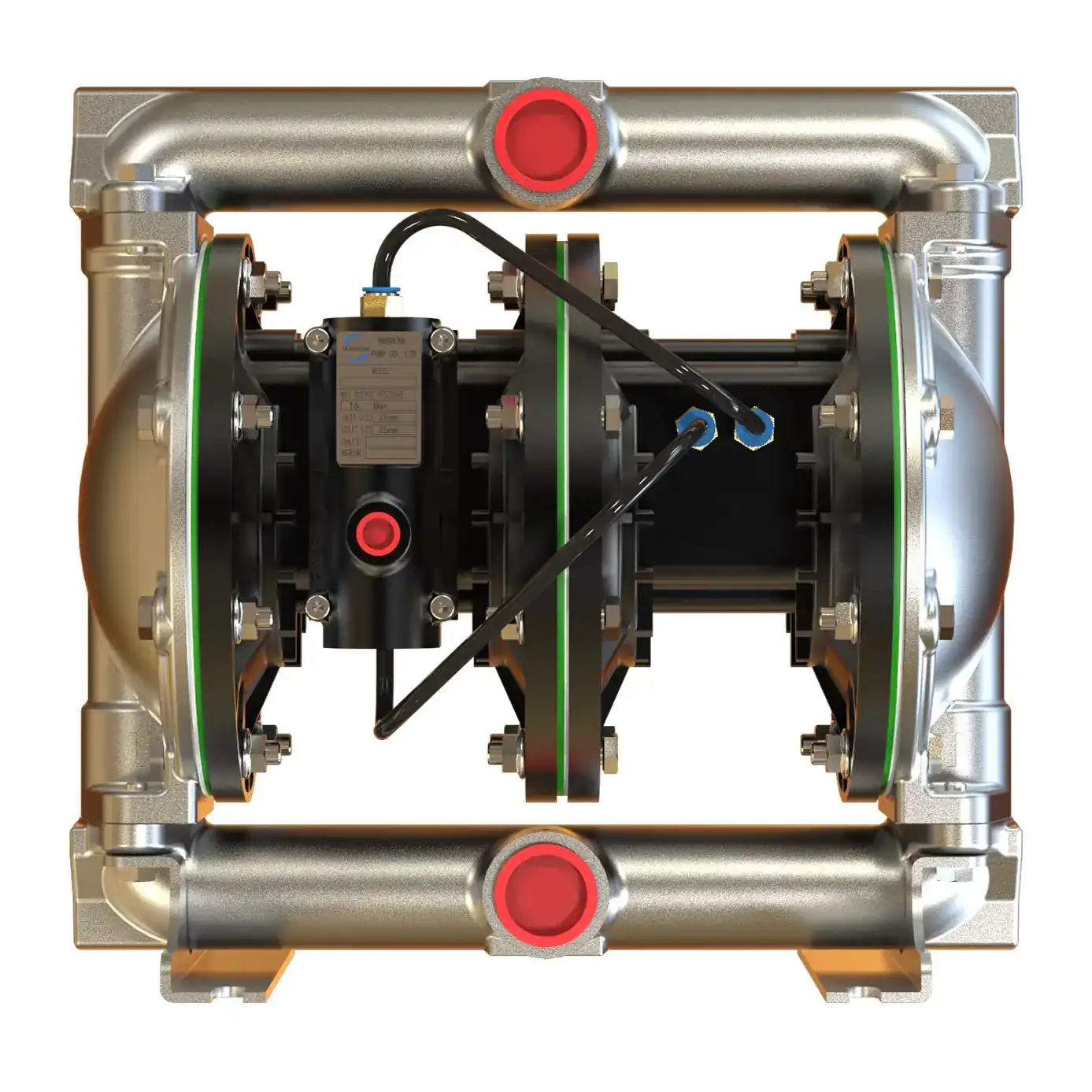
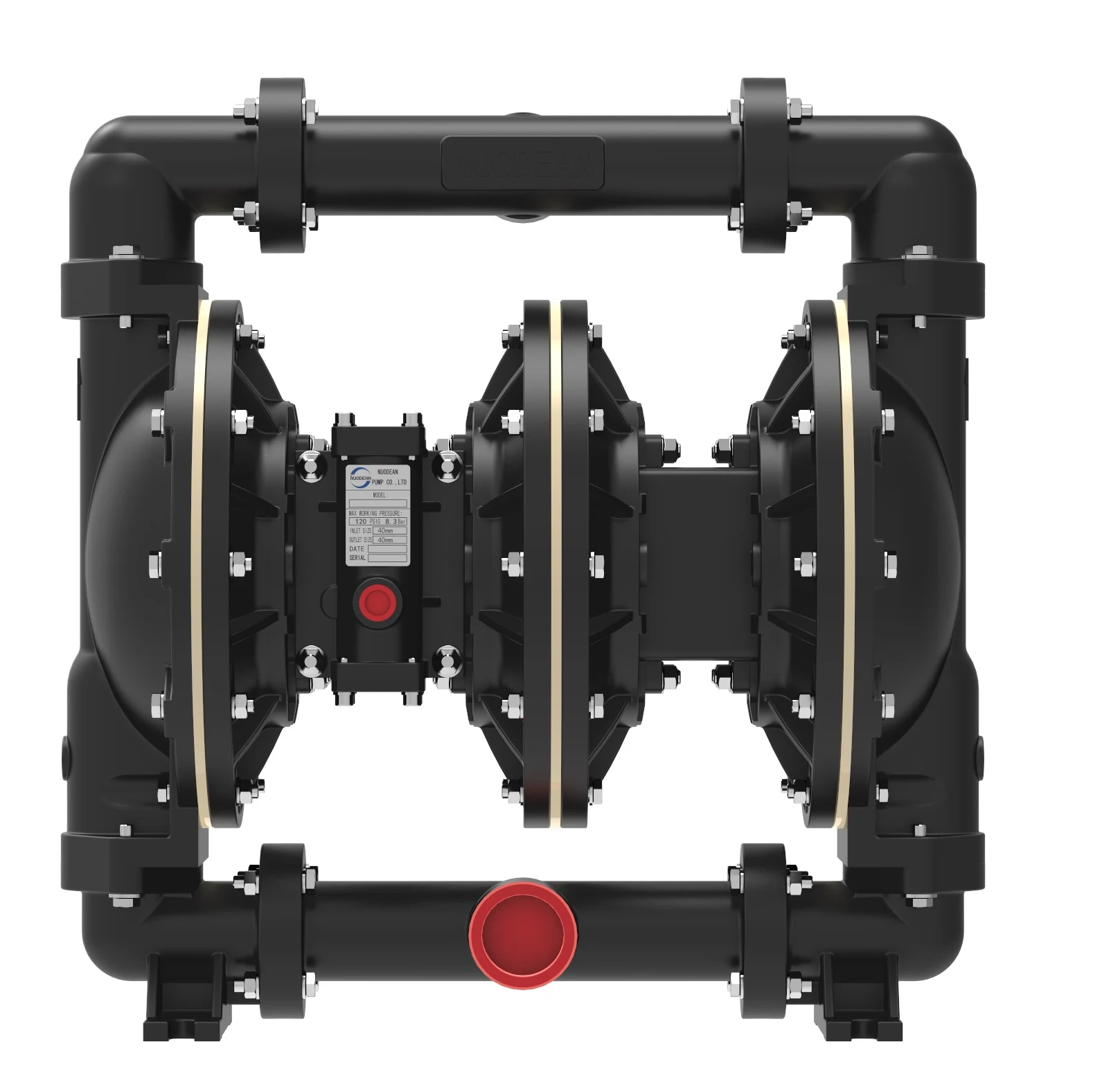
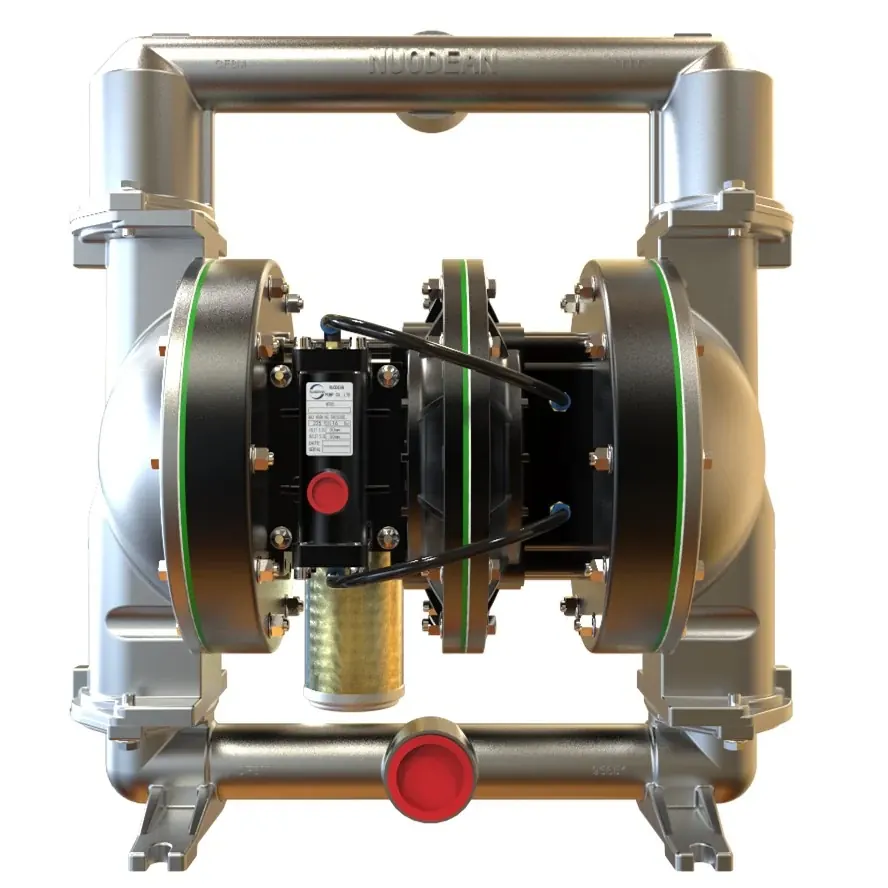
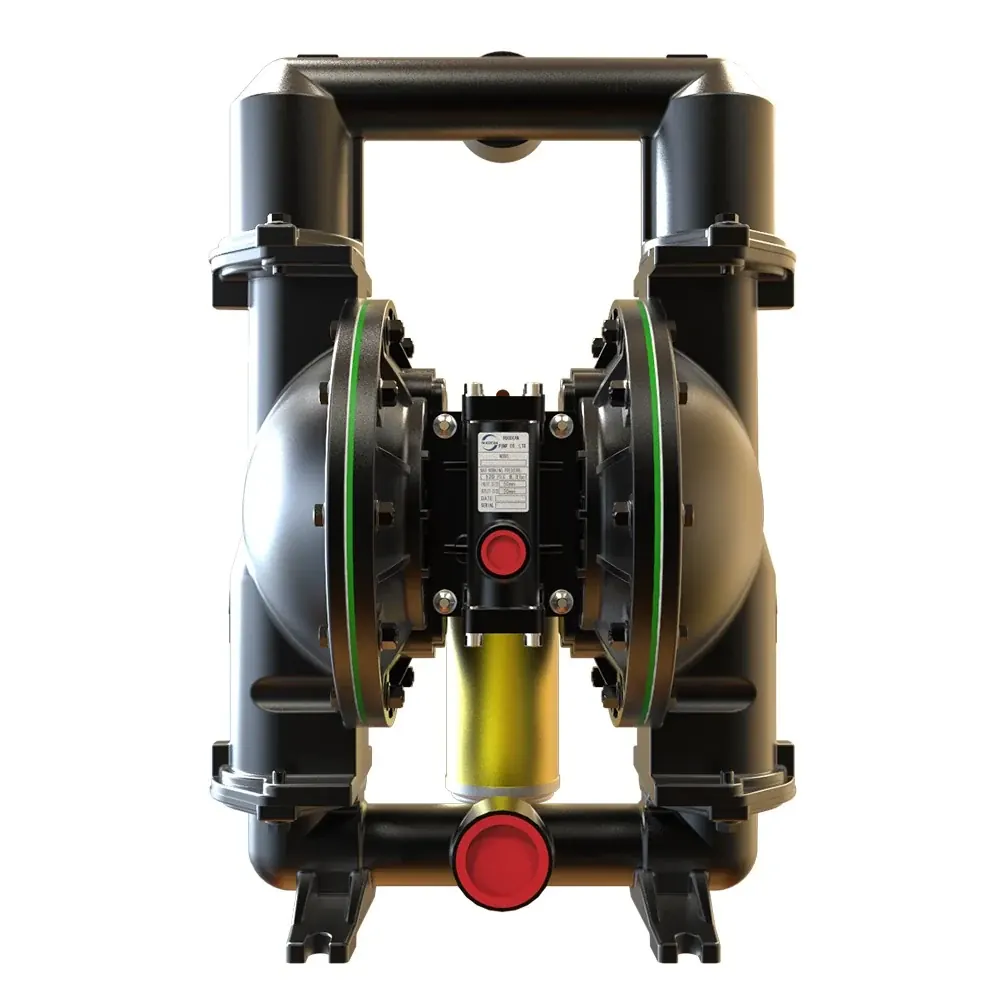
A high pressure triple diaphragm pump introduces a mechanical pressure multiplication step directly inside the center section. By pairing an additional air driven diaphragm with the existing diaphragm assembly, the pump applies the force of compressed air across a larger drive area while acting against a smaller fluid area. This geometry creates a two to one pressure ratio.
With this arrangement, supplying air at 100 psi produces discharge fluid pressure up to 200 psi. The unit relies strictly on internal pneumatic force multiplication without requiring external booster compressors, mechanical gearboxes, or high voltage electric motors.
How The Triple Diaphragm Configuration Works
In a conventional pump, two diaphragms are connected across a central reciprocating shaft, bounded by two air chambers and two fluid chambers. The triple diaphragm architecture alters this layout by integrating a third diaphragm into the center section, partitioning the drive mechanism into an augmented pneumatic actuator.
The DP3X air distribution system directs compressed air through a pilot valve and major air valve assembly. At the end of every stroke, actuator pins mechanically shift the pilot spool, which pneumatically repositions the major air valve piston to toggle air between chambers without stalling.
In the triple diaphragm design, the supply air is delivered simultaneously across combined pneumatic diaphragm surfaces. The mechanical thrust transferred to the common connecting shaft is doubled relative to the fluid chamber surface area. As the wetted diaphragm drives forward, it concentrates this elevated thrust into the liquid cavity, pushing fluid past the discharge check ball at twice the pressure of the incoming plant air.
Applications Demanding Two To One Fluid Pressure
High pressure units are selected for duties where frictional head, elevation, or media density cause standard AODD pumps to stall mid stroke. Plants routinely encounter process bottlenecks that cannot be resolved simply by opening an air regulator wider.
Filter press feeding represents the primary installation environment. As solids accumulate across filter cloths, internal cake resistance climbs steadily. A standard pump slows and eventually deadheads at supply pressure, leaving wet, unformed filter cakes. A 2:1 pump maintains continuous packing force as backpressure climbs toward 200 psi, yielding drier cake discharge.
Long transfer piping runs and vertical drops also benefit from pressure doubling. Moving viscous liquids, sludges, or chemical slurries through several hundred feet of process piping introduces severe boundary layer friction. The amplified fluid thrust sustains flow velocity without requiring an upsized pipe diameter.
Spray systems, viscous coating lines, and batch injection manifolds require consistent atomisation or rapid line clearance against existing system backpressure. A 2:1 pump delivers fluid into pressurised headers where a 1:1 pump would be pushed backward.
Performance Tradeoffs In Flow And Air Usage
Energy conservation applies directly to fluid mechanics. Doubling fluid pressure within a pneumatic pump requires consuming approximately twice the volume of compressed air per stroke for a given volume of fluid displaced.
Because drive chambers must fill and exhaust larger pneumatic volumes through the valve chest, the pump strokes at a measured pace. Air consumption per gallon pumped increases noticeably compared to standard transfer pumps operating at low head.
Discharge flow capacity is also limited relative to pump envelope size. For operations requiring rapid bulk offloading under low head, standard 1:1 double diaphragm units remain more efficient. The 2:1 triple diaphragm design is engineered specifically for overcoming high system resistance rather than maximising open discharge volumetric transfer.
Operating Within The Twenty To Two Hundred PSI Range
High pressure triple diaphragm pumps feature an operating fluid pressure range of 20 to 200 psi. Understanding this window prevents process errors and equipment mismatch.
The 20 psi minimum fluid threshold reflects the internal spring rates, seal friction, and mechanical inertia of moving three coupled diaphragms and associated heavy duty hardware. Supplying less than 10 psi of air will not reliably shift the internal pilot and major valve assemblies.
The 200 psi upper limit corresponds to maximum permissible fluid chamber pressure when supplying 100 psi compressed air. Operating near 200 psi fluid discharge imposes severe mechanical stresses on fluid manifolds, clamping bands, bolts, and connected downstream process piping. All discharge valves, hoses, and filtration vessels must be rated to handle these elevated pressures safely.
Comparing High Pressure Triple Models And Standard Pumps
Evaluating specifications illustrates how the internal pressure multiplication hardware impacts unit physical dimensions, flow ratings, and structural mass.
The 1 Inch High Pressure Triple Diaphragm Pump delivers a flow of 35 GPM (133 LPM), handles solids up to 1/8 inch (3.2 mm), provides suction lift to 20 feet (6.1 m), operates at an air pressure of 100 psi (7 bar), weighs 51 lbs (23 kg), and records a sound level of 70 db(A) measured at 70 psi and 60 cycles per minute.
The 1-1/2 Inch High Pressure Triple Diaphragm Pump achieves 90 GPM (340.7 LPM), handles solids up to 1/4 inch (6.4 mm), delivers suction lift of 19 feet (5.8 m), operates up to 100 psi (7 bar) air supply, weighs 110 lbs (50 kg), and produces 88.0 db(A) at 70 psi and 60 cycles per minute.
The 2 Inch High Pressure Triple Diaphragm Pump provides 172 GPM (651 LPM), accommodates 1/4 inch (6.4 mm) solids, pulls suction lift to 27.2 feet (8.3 m), operates at an air pressure of 100 psi (6.9 bar), weighs 198 lbs (90 kg), and produces a sound level of 90 db(A) at 70 psi and 60 cycles per minute.
Comparing the 2 Inch High Pressure unit to a standard 2 Inch Aluminum Air Operated Double Diaphragm Pump shows the mechanical reality of the 2:1 build. While both models share a flow rating of 172 GPM (651 LPM), 1/4 inch (6.4 mm) solids passage, and 27.2 feet (8.3 m) suction lift, the standard aluminum pump weighs 65.2 lbs (29.6 kg) and records 80.5 db(A) at 70 psi and 60 cycles per minute. The triple diaphragm variant weighs 198 lbs (90 kg), reflecting the reinforced center section and casing castings required to contain 200 psi fluid pressures.
| 1 Inch Triple (1-triple-diaphragm-pump-high-pressure) | Flow 35 GPM (133 LPM), pressure 100 psi (7 bar), solids 1/8 inch (3.2 mm), suction lift 20 feet (6.1 m), weight 51 lbs (23 kg), sound 70 db(A) |
|---|---|
| 1-1/2 Inch Triple (1-1-2-triple-diaphragm-pump21-high-pressure) | Flow 90 GPM (340.7 LPM), pressure 100 psi (7 bar), solids 1/4 inch (6.4 mm), suction lift 19 feet (5.8 m), weight 110 lbs (50 kg), sound 88.0 db(A) |
| 2 Inch Triple (2-triple-diaphragm-pump-high-pressure) | Flow 172 GPM (651 LPM), pressure 100 psi (6.9 bar), solids 1/4 inch (6.4 mm), suction lift 27.2 feet (8.3 m), weight 198 lbs (90 kg), sound 90 db(A) |
| 2 Inch Standard (2-aluminum-double-diaphragm-pump) | Flow 172 GPM (651 LPM), pressure 120 psi (8.3 bar), solids 1/4 inch (6.4 mm), suction lift 27.2 feet (8.3 m), weight 65.2 lbs (29.6 kg), sound 80.5 db(A) |
Engineering Rules For High Pressure Installations
Installing a 2:1 ratio pump requires rigorous adherence to piping standards. Because liquid pressure reaches up to 200 psi, downstream components must be specified with adequate pressure ratings.
Rigid pipework, valves, flanges, and hoses on the discharge side must be rated for at least 200 psi working pressure. Never connect low pressure schedule 40 PVC or standard utility hoses to the fluid outlet.
Air supply lines must provide clean, dry compressed air with sufficient volumetric flow. Restricting air inlet volume causes severe pressure drop at the pump motor, preventing the unit from building rated fluid pressure.
Discharge pulsation is intensified under 2:1 operation. Piping runs must be rigidly anchored to structural supports to prevent pipe fatigue and flange leakage caused by hydraulic shock loads at stroke changeover.
- Verify all discharge valves and filtration housings are rated to 200 psi working pressure
- Anchor discharge piping securely to structural steel to absorb hydraulic shock
- Supply clean dry compressed air regulated up to 100 psi maximum inlet pressure
- Size compressed air delivery lines to avoid dynamic pressure drops during full stroke operation
- Fit a pressure relief valve on the discharge line if piping components cannot handle full deadhead pressure