The Core Tradeoff Between Flex Life And Chemical Inertness
Every stroke of an air operated double diaphragm pump bends the diaphragm back and forth through its full travel. Under normal operation at moderate speeds, a flexible elastomer flexes tens of millions of times before mechanical fatigue begins to cause microscopic fissures.
Chemical incompatibility ruins this mechanical longevity. When a diaphragm material contacts an incompatible fluid, the polymer absorbs the solvent, plasticizers leach out, or acid cleaves the polymer chains. The diaphragm swells, softens, stiffens, or embrittles, leading to rupture in a fraction of its design life.
Selecting the right material requires balancing flex life against chemical resistance. Highly inert materials like fluoropolymers withstand aggressive solvents and concentrated acids but have lower flex fatigue life. Resilient elastomers deliver long mechanical life on benign liquids but fail quickly in aggressive chemical streams.
Santoprene The Standard General Purpose Choice
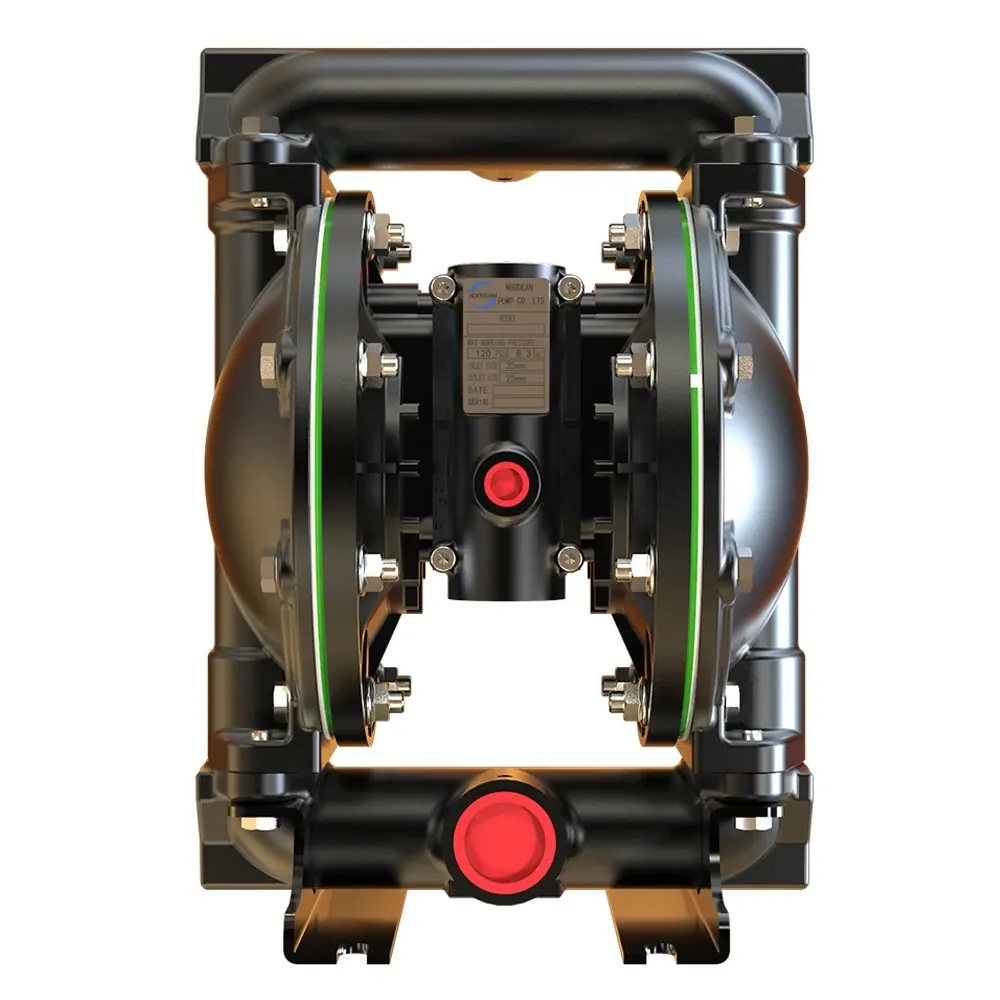
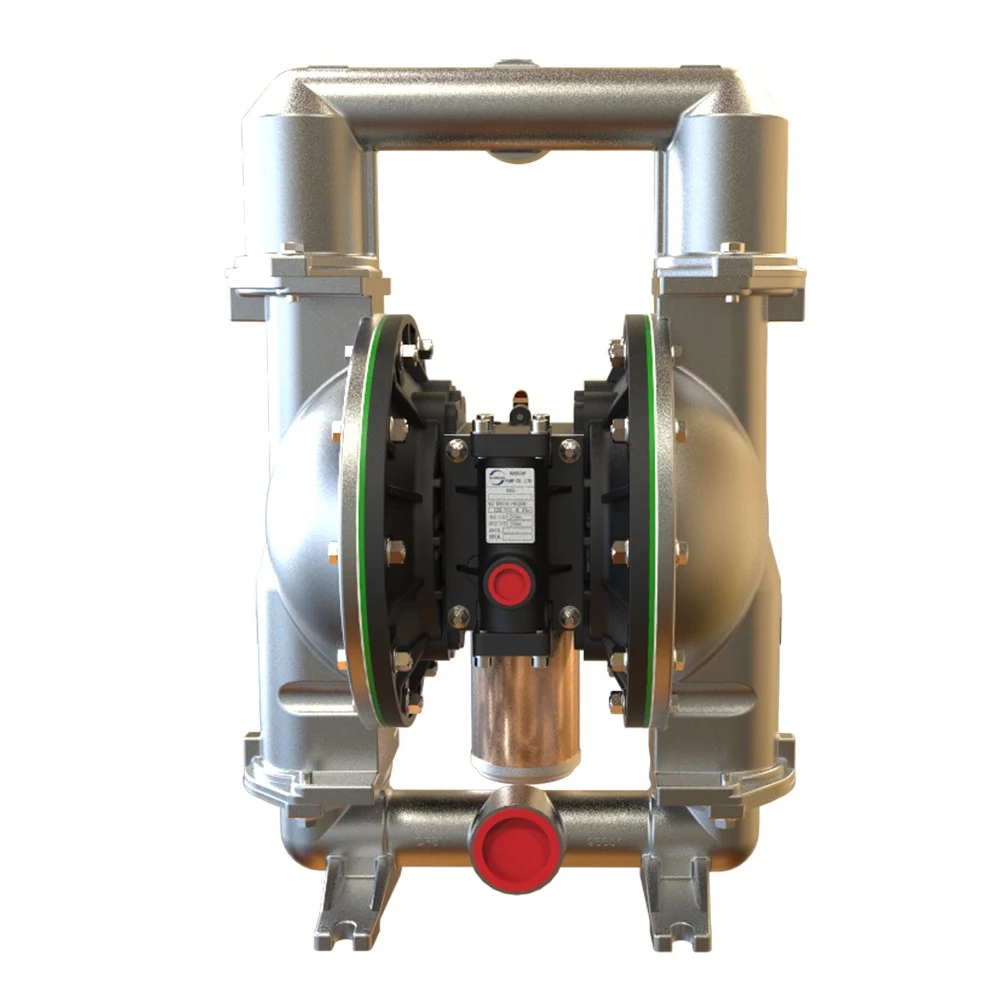
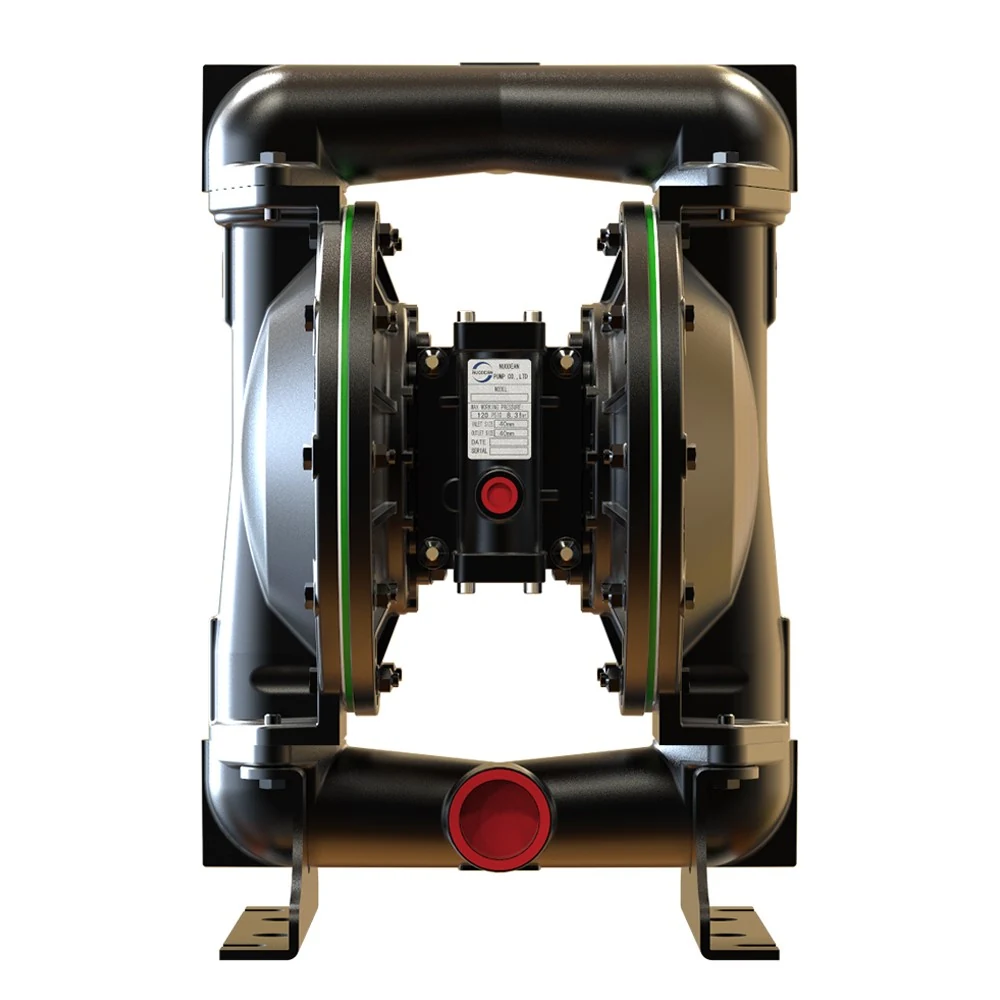
Santoprene is a thermoplastic elastomer combining cured EPDM rubber particles dispersed in a polypropylene matrix. Nuodean catalogues Santoprene as the standard, general purpose diaphragm option across the DP3X and WA series for good reason.
It delivers outstanding mechanical flex life, often outlasting traditional vulcanized rubbers by a wide margin in neutral and mildly aggressive duties. It resists water, dilute acids, caustics, dirty waste water, lime slurry, and abrasive fluid mixtures without hardening or taking a permanent set.
Santoprene is not suitable for aromatic hydrocarbons, halogenated solvents, fuels, or concentrated petroleum oils. Where hydrocarbons are absent, Santoprene provides the lowest operating cost per hour of run time.
PTFE Diaphragms And Why They Require A Santoprene Backer
Polytetrafluoroethylene provides near universal chemical inertness across the full pH range. It handles concentrated nitric acid, sulfuric acid, strong sodium hydroxide, chlorinated solvents, aromatic hydrocarbons, and reactive chemical formulations without swelling or dissolving.
The limitation of PTFE is its physical stiffness. As a fluoropolymer resin rather than an elastic rubber, PTFE does not stretch or spring back. Under repeated flexing, pure PTFE develops fatigue lines and cold flow stress cracking much faster than any elastomer.
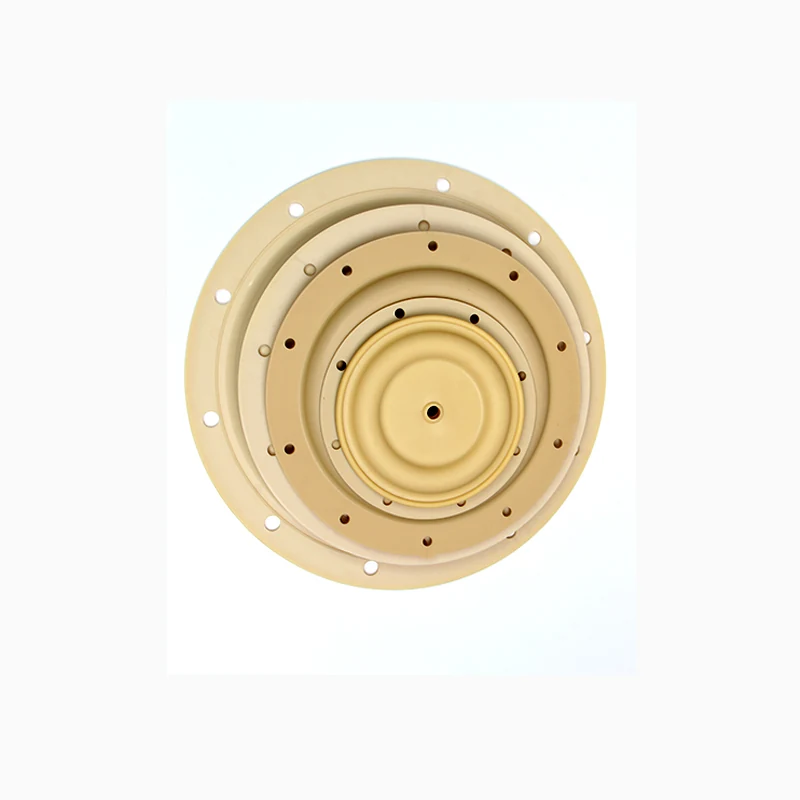
To solve this mechanical limitation, Nuodean uses a two piece diaphragm assembly: a primary virgin PTFE diaphragm on the liquid side backed by a Santoprene diaphragm on the air side. The Santoprene backing diaphragm distributes the pneumatic force evenly across the back of the PTFE disc, absorbs mechanical stroke stresses, and extends the service life of the fluoropolymer barrier.
Rubber Elastomers Neoprene Nitrile Viton And EPDM
Standard vulcanized elastomers remain the optimal choice for specific chemical families where neither Santoprene nor PTFE is the economical match.
Nitrile is the industry standard for petroleum based media. It resists crude oils, diesel, hydraulic oils, cutting fluids, quenching oil, and lubricating greases. Nitrile exhibits high abrasion resistance when handling gritty oil waste, though it degrades in strong oxidizers, ketones, and ozone.
Neoprene provides balanced all around durability for non aromatic oils, general industrial effluent, water seepage, and mild chemical waste. It maintains flexibility in cool environments and resists light abrasion well.
EPDM excels in polar fluids. It handles concentrated alkalis, caustics, hot water, alcohols, and ketones like acetone or MEK. EPDM must never be specified for mineral oils, hydrocarbons, or petroleum solvents, which cause it to swell rapidly and tear.
Viton handles aggressive hydrocarbon fuels, aromatic solvents such as toluene and xylene, and strong mineral acids at elevated process temperatures. Because Viton is denser and has a stiffer flex modulus, its cycle life is lower than that of nitrile or Santoprene, making it a specialized choice for aggressive fluids that attack other rubbers.
Specialty Thermoplastics Hytrel And Acetal
Thermoplastic polymers bridge the gap between traditional synthetic rubbers and rigid fluoropolymers in specific high stress duties.
Hytrel provides high tensile strength, exceptional cut growth resistance, and resilience under high discharge pressures. It functions well with oils, hydrocarbons, and non polar industrial solvents, providing longer flex life than standard nitrile under heavy mechanical loads.
Acetal offers dimensional stability, rigidity, and resistance to fatigue and solvents. Nuodean utilizes acetal in specialized fluid handling and conductive components where static dissipation and resistance to structural creep under solvent exposure are necessary.
Quick Selection Reference By Fluid Category
Match the dominant chemical nature of your process fluid against the recommended diaphragm construction.
| Aqueous waste and slurries | Santoprene. Provides the longest flex life and abrasion resistance on water, neutral waste water, and light abrasives. |
|---|---|
| Oils, fuels, cutting fluids | Nitrile or Hytrel. Resists swelling, oil dissolution, and mechanical wear from lubricating and fuel media. |
| Concentrated acids and solvents | PTFE with Santoprene backing. Resists chemical attack, solvent permeation, and aggressive chemical processing streams. |
| Aromatics, xylene, hot acids | Viton. Provides resistance to solvent degradation where standard rubbers dissolve and temperatures run high. |
| Caustics, alkalis, ketones | EPDM. Unaffected by caustic soda, basic washes, or polar solvents like MEK and acetone. |
| General industrial water | Neoprene. Economical choice for water seepage, drainage, and basic transfer with trace oils. |
How To Inspect And Read A Failed Diaphragm
When a diaphragm reaches the end of its life, examining the failure mode reveals whether the cause was normal mechanical wear, chemical attack, or an operating system error.
A diaphragm that has failed from normal fatigue shows a clean circumferential crack following the flex bead or outer clamping plate radius. The material remains pliable, retains its original thickness, and shows no swelling or discoloration.
- Soft, spongy, or swollen rubber indicates chemical attack and solvent absorption. Change to PTFE or Viton.
- Hard, brittle, or cracked surface skins indicate thermal degradation or chemical extraction of plasticizers.
- Concentric cracking near the inner clamp plate indicates running against excessive discharge pressure or severe cavitation.
- Pie shaped splits or ruptured fabric reinforcement point to excessive inlet air pressure surges beyond the 8.3 bar limit.
- Creased or folded PTFE diaphragms indicate that the pump was operated with an incorrect or missing Santoprene backing piece.
Practical Service Life Guidelines And Kit Planning
Diaphragm failure allows process fluid to enter the air chambers. Liquid then passes through the pilot and major air valve mechanisms and exhausts out the muffler, contaminating the work area and stalling the air motor.
Plants handling hazardous, toxic, or corrosive fluids should avoid running diaphragms to ultimate failure. Establishing a planned maintenance schedule using standard fluid section kits ensures replacement before containment is breached.
Nuodean catalogues spare parts and fluid section repair kits specifically grouped by material type. When ordering a 2 inch metallic or non metallic pump, specify spare diaphragm sets matching your operating medium to minimize maintenance downtime.