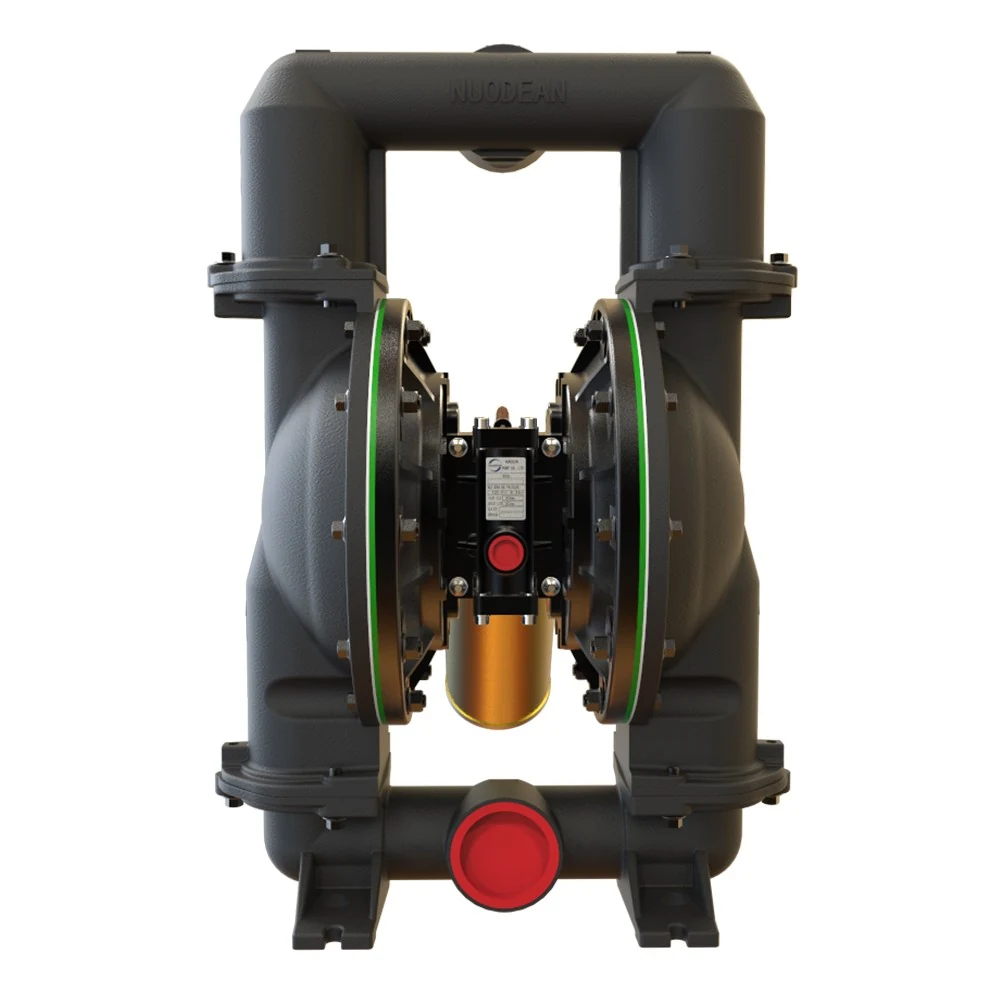
Cutting fluid, quenching oil, and swarf laden coolant are listed in our catalogues as applications. These duties involve high solids, frequent dry running, and variable flow demands. The wrong pump fails at the end of each shift, not at the end of a year.
Three failure modes are common in coolant and quenching oil transfer.
Cutting fluid carries metal chips and oil that collect in the pump body. If the internal clearances are tight or the check valves are not designed for solids, the pump stops after a few hours of operation.
Machine sumps empty at the end of each shift. Centrifugal pumps lose prime and overheat. A diaphragm pump continues to run dry without damage, but only if the materials and design are correct.
Quenching oil and cutting fluid contain additives that degrade rubber and aluminum over time. A pump with a body or seal that is not resistant to these fluids will fail within weeks.
The specification usually comes down to five points, and all five are confirmed before the pump is ordered.

Aluminum for light to medium flow, cast iron for high flow and heavy solids, all with PTFE diaphragms and robust check valves.

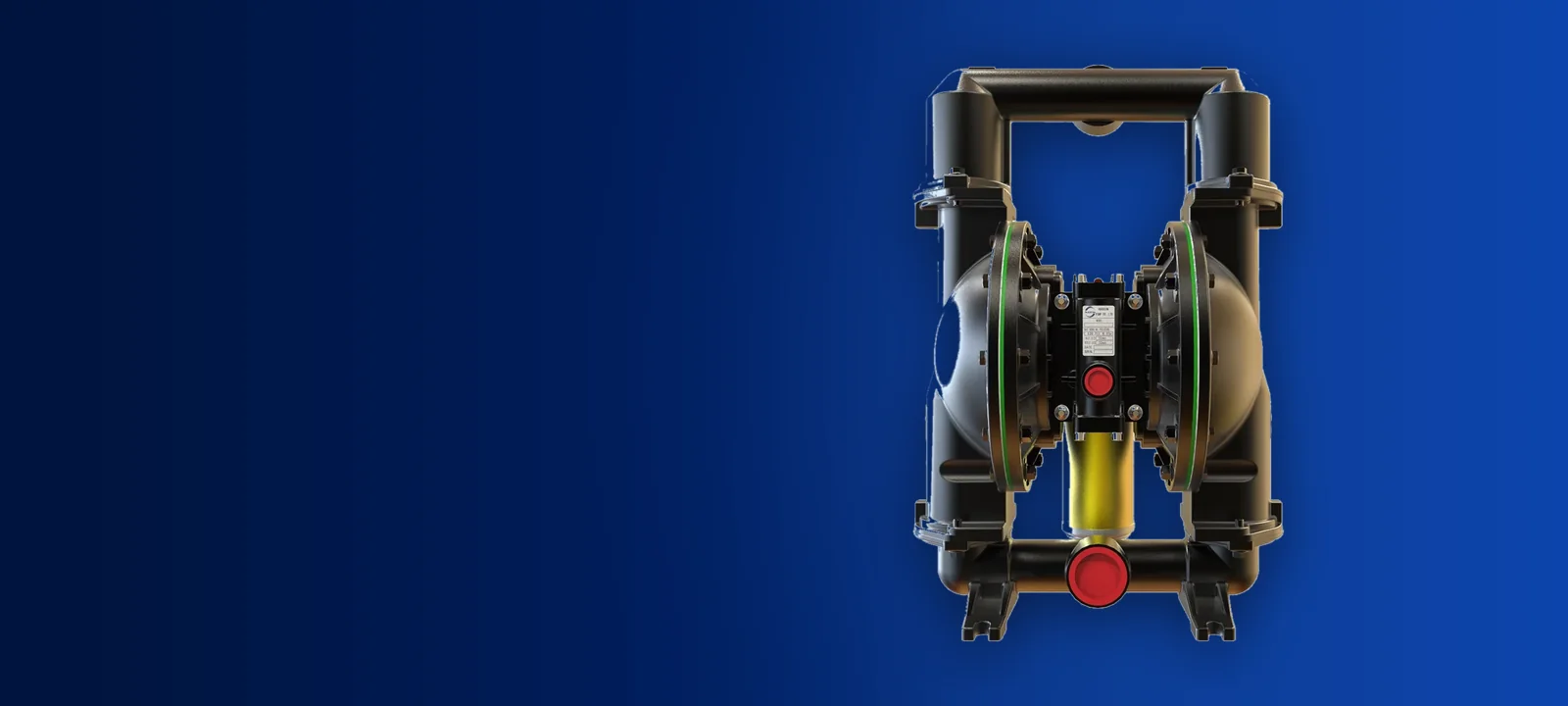
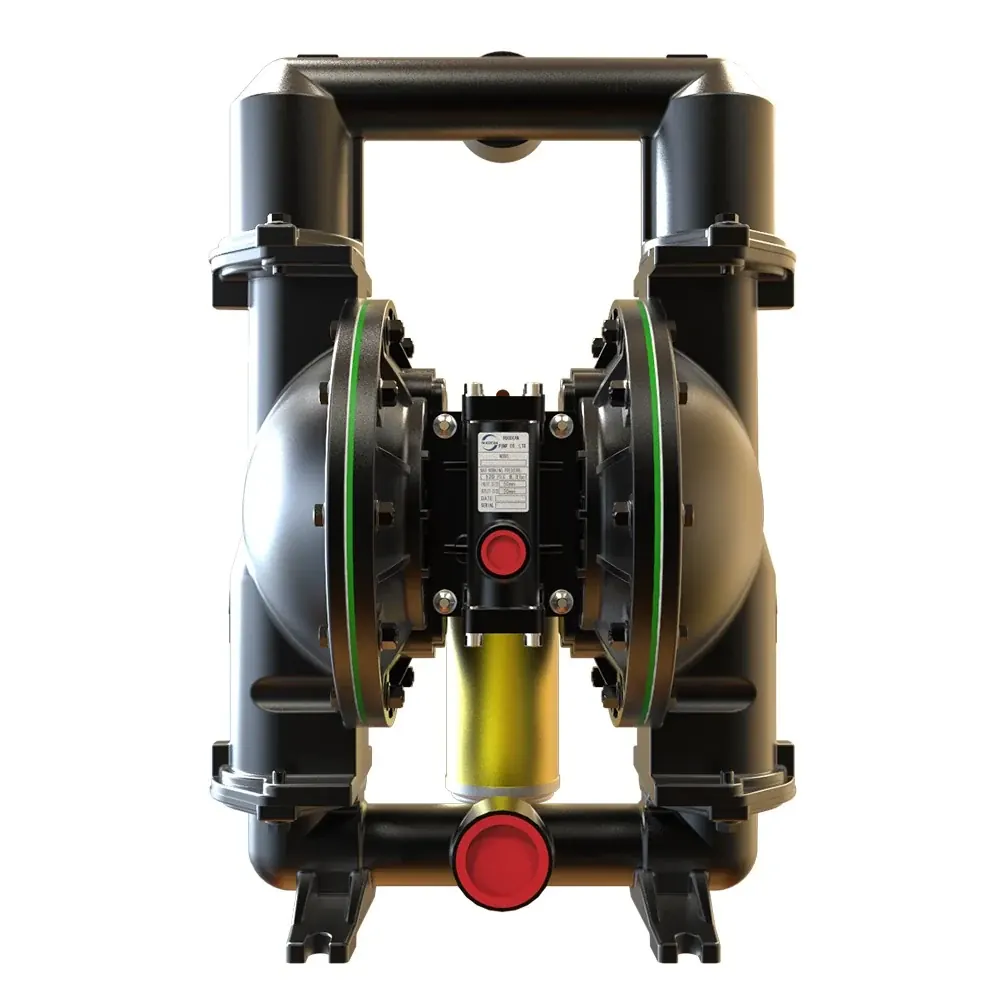
651 LPM and 8.3 bar from a 29.6 kg aluminum body. The volume workhorse of the DP3X range.
View Specifications →
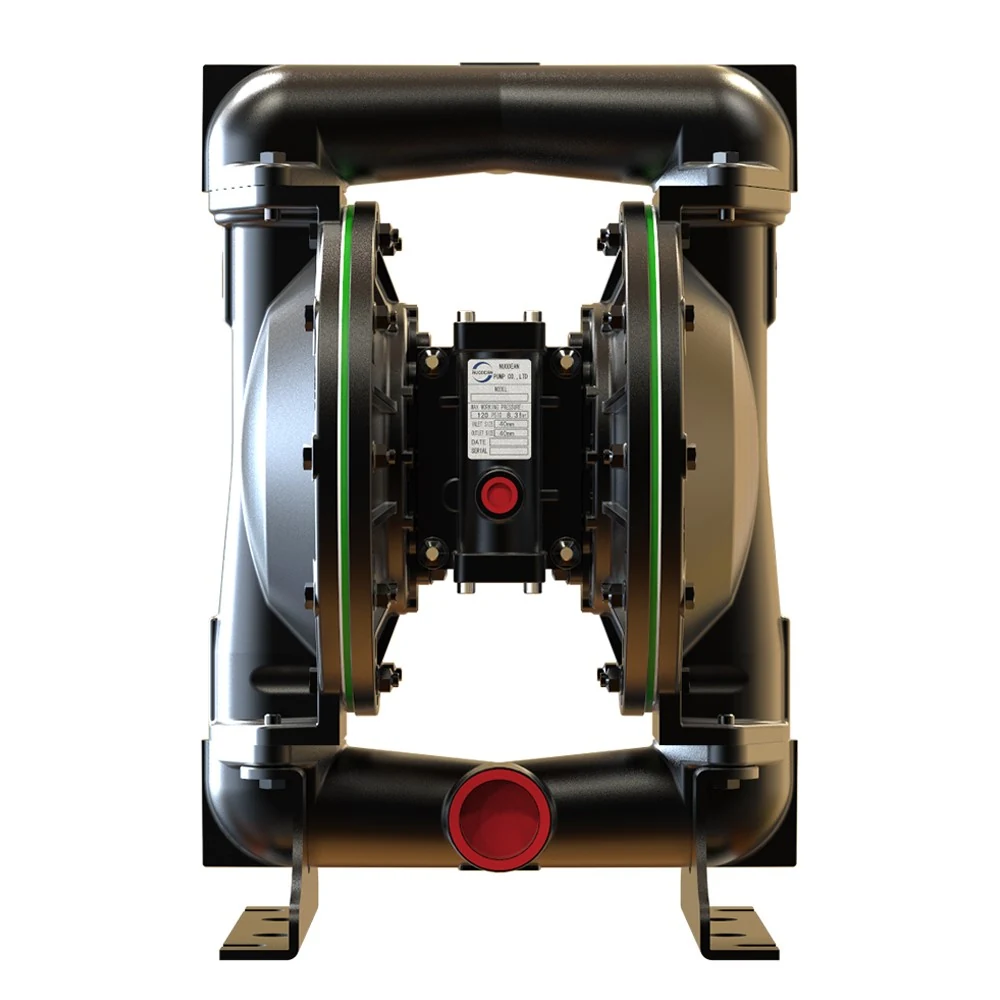
340.7 LPM and 8.3 bar from a 23.4 kg aluminum body. The mid-range volume pump in the DP3X series.
View Specifications →
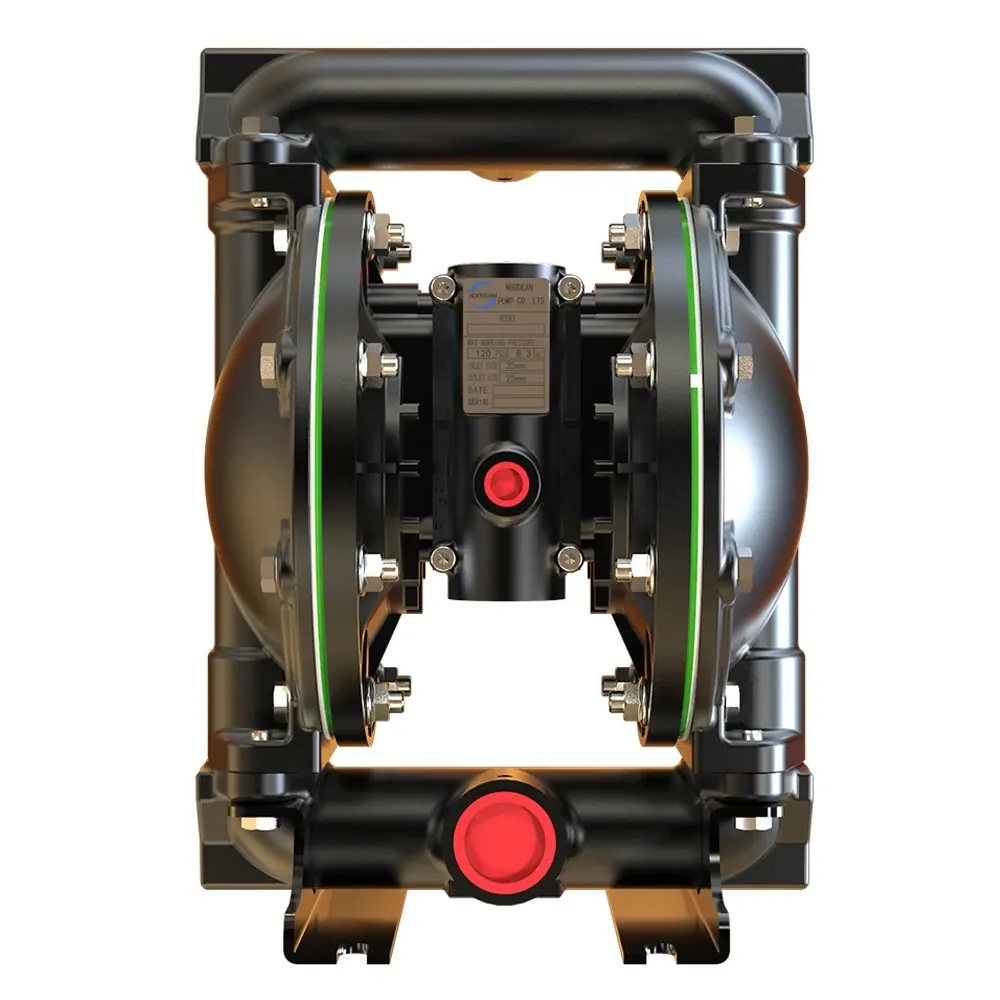
133 LPM and 8.3 bar from an 8.6 kg aluminum body. The compact workhorse of the DP3X range.
View Specifications →
897 LPM and 8.3 bar from a 96.7 kg cast iron body. The heavy duty volume pump in the DP3X range.
View Specifications →Self priming from ground level with the pump above the sump, and dry running accepted at the end of each shift without damage.
Transfer of swarf laden coolant between storage tanks, where the pump handles tramp oil and metal particles without clogging.
Recycling quenching oil from a heat treatment line, where the pump runs continuously and tolerates dry periods between batches.
Flushing coolant lines between different machines, where the pump must handle air, liquid, and solids in sequence.
Four steps. The first one is the only one that matters, and it is the one most enquiries skip.
Cutting fluid, quenching oil, or coolant with tramp oil. Specify if it is water based or oil based. The wetted materials must match the fluid chemistry.
We set the body, seat, ball, and diaphragm against the fluid. Aluminum is suitable for most cutting fluids. Cast iron is used for high flow and heavy solids. All models use PTFE diaphragms.
Flow at your discharge head with your available air pressure. The 1 inch pump handles up to 133 LPM, the 2 inch up to 651 LPM, the 3 inch up to 897 LPM. Choose the port size based on flow, not pipe size.
One air section kit and one fluid section kit coded to your elastomer choice, so the first failure is a fifteen minute job rather than a three week wait.
Follow one full stroke through the pilot valve, the major air valve and both liquid chambers, and the rest of the pump stops being mysterious.
Buying GuideSizing an air diaphragm pump from the existing pipe size or the headline maximum flow guarantees poor performance. Here is how to select the right displacement and port size from actual duty conditions.
Material GuideCompare aluminum, cast iron, stainless steel and non metallic bodies by fluid, duty and weight, not by habit.
Yes, aluminum is suitable for quenching oil and most cutting fluids. The pump uses PTFE diaphragms and PTFE or PVDF seats, which resist the additives in these fluids. Confirm the fluid type and temperature before ordering.
The 1 inch pump handles solids up to 3.2mm (1/8 inch), the 1-1/2 inch and 2 inch pumps up to 6.4mm (1/4 inch), and the 3 inch pump up to 9.5mm (3/8 inch). All models are designed for swarf and tramp oil without clogging.
The 1 inch pump has a dry suction lift of 6.1m (20 feet), the 1-1/2 inch pump 5.8m (19 feet), the 2 inch pump 8.3m (27.2 feet), and the 3 inch pump 5.4m (17.6 feet). All can self prime from ground level.
Yes, the pumps are designed for continuous operation. The air motor and diaphragms are rated for long cycles. The 2 inch and 3 inch models are used in high flow applications with no downtime.
Yes, all models are rated for dry running and dead heading. The diaphragm and check valves are designed to operate without fluid. No shaft seal means no risk of overheating.
Fluid type, flow, discharge head, and suction lift. We will come back with the model code, wetted part list, and a price.