Qingdao Nuodean Pump Co Ltd — air operated double diaphragm pumps since the DP series
Nuodean AODD pumps for food and pharmaceutical
Industry Application

AODD Pumps For Food And Pharmaceutical Transfer

Condiments, additives, liquid materials and pharmaceuticals are named applications in our catalogues. These duties require pumps that do not shear the product and do not introduce contamination. The wetted parts must be compatible with the fluid and the process, and the pump must empty the vessel completely on each batch.

Pain Points

What Goes Wrong In A Food And Pharmaceutical Duty

Three failure modes are common in batch transfer where product integrity and cleanability are critical.

The Product Is Sheared And Altered

Shear sensitive materials like emulsions, suspensions and protein-based liquids lose consistency or separate when exposed to high shear. Centrifugal pumps generate shear at the impeller, which changes the product and can affect shelf life or performance.

The Wetted Parts Contaminate The Product

Aluminum, brass or carbon steel in contact with food or pharmaceutical fluids can leach metal ions or corrode. Even stainless steel grades not rated for food use may not meet the cleaning and sterilization demands of the process.

The Vessel Does Not Empty Completely

Incomplete transfer means product loss, batch inconsistency, and increased cleaning time. Pumps with poor dry suction lift or poor self priming ability leave residual fluid in the vessel or line.

What Buyers Need

What Food And Pharmaceutical Buyers Actually Specify

The specification usually comes down to six lines, and all six are settled in the model code before the pump is built.

  • Wetted parts made of 316 stainless steel or PTFE for compatibility with food and pharmaceutical fluids, with PTFE diaphragms and seats to resist cleaning agents and maintain product purity
  • No shear in the flow path, which means a diaphragm pump with a low shear design and no rotating parts in the fluid path
  • Self priming with dry suction lift up to 8.3 meters, so drums, IBCs and tanks can be emptied from ground level without manual priming
  • Dry running and dead heading tolerated as normal operation, so the pump can run safely when the vessel is empty or the discharge valve closes
  • Full cleanability with no crevices or dead ends, and smooth internal surfaces that resist product buildup
  • Published drawings and part lists so the plant can maintain the pump and verify compliance during audits
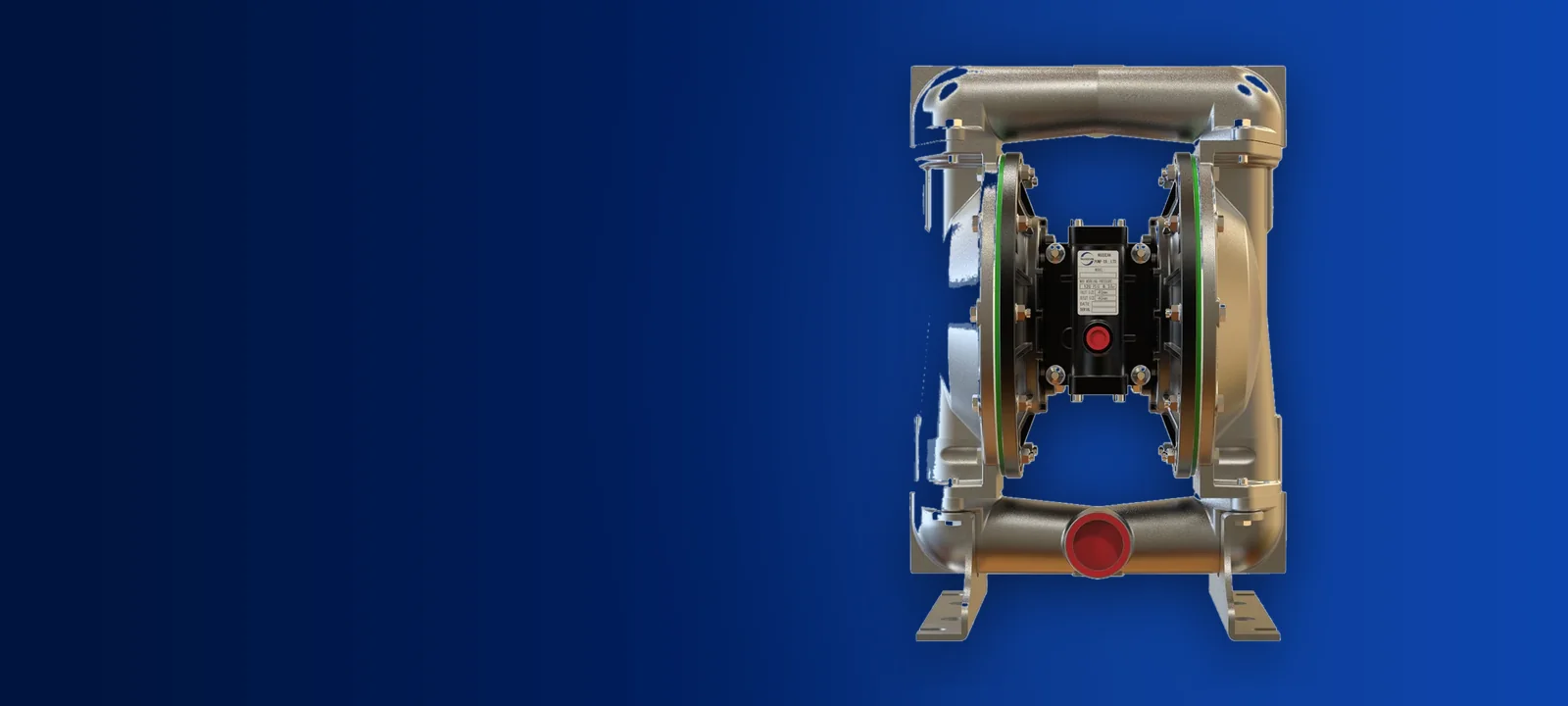
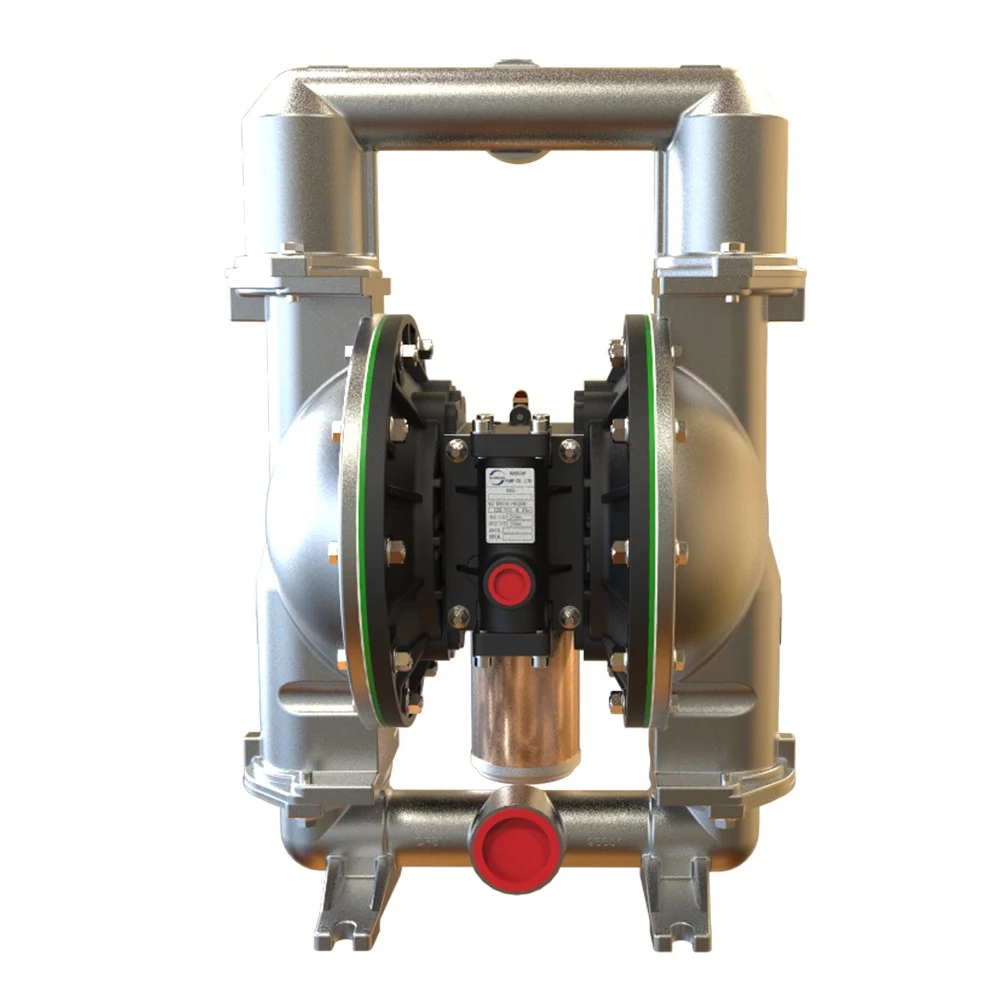
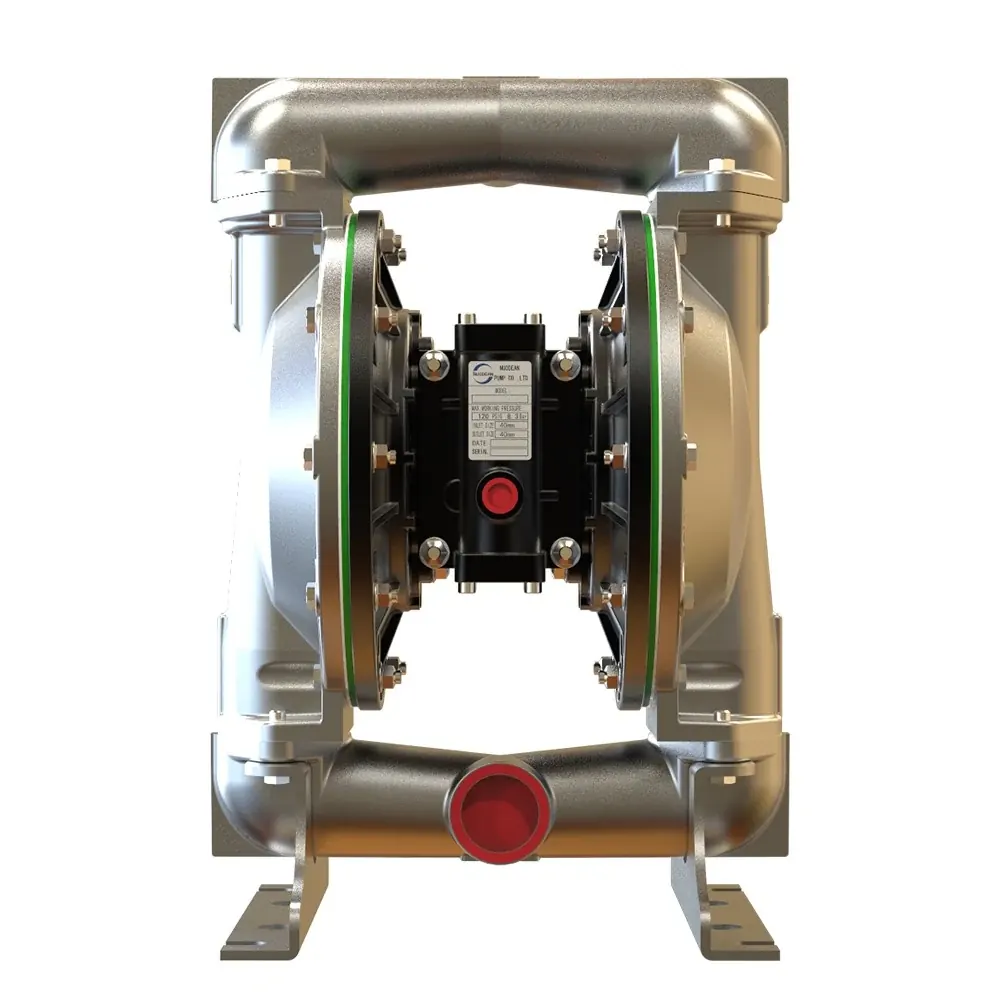
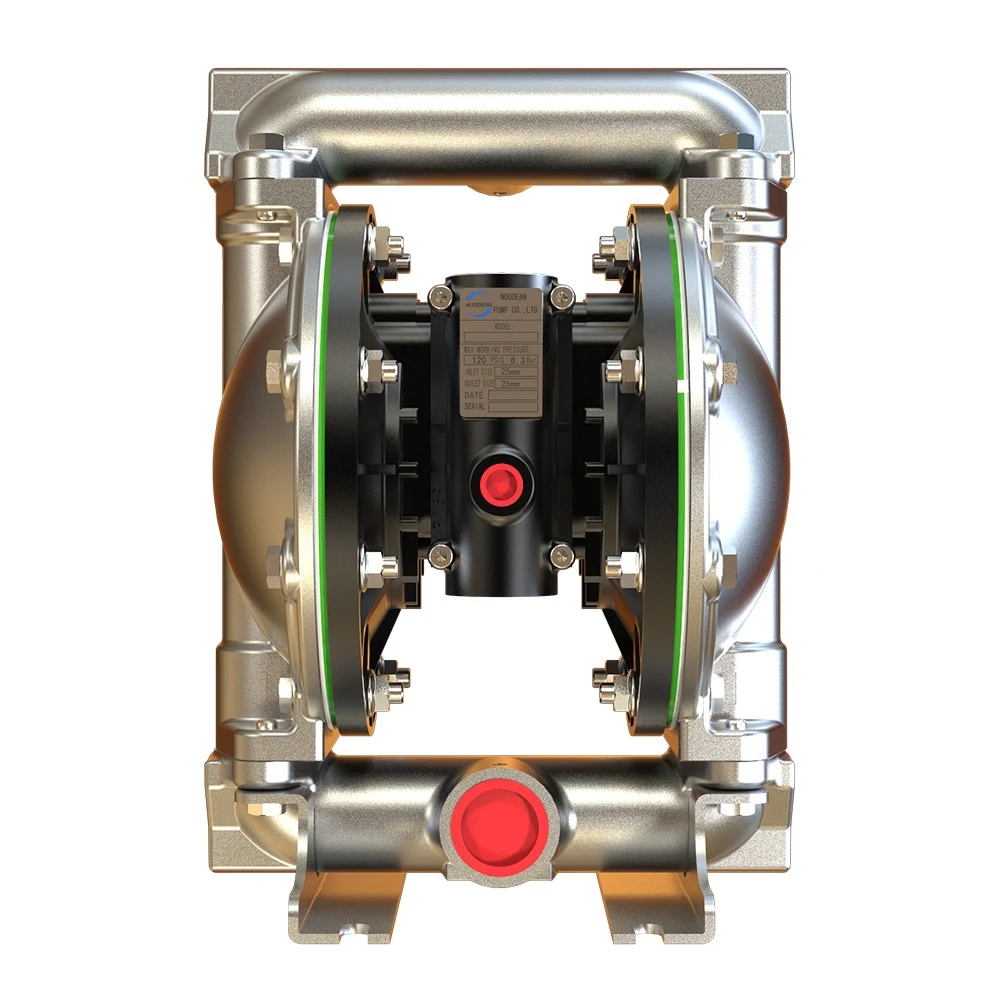
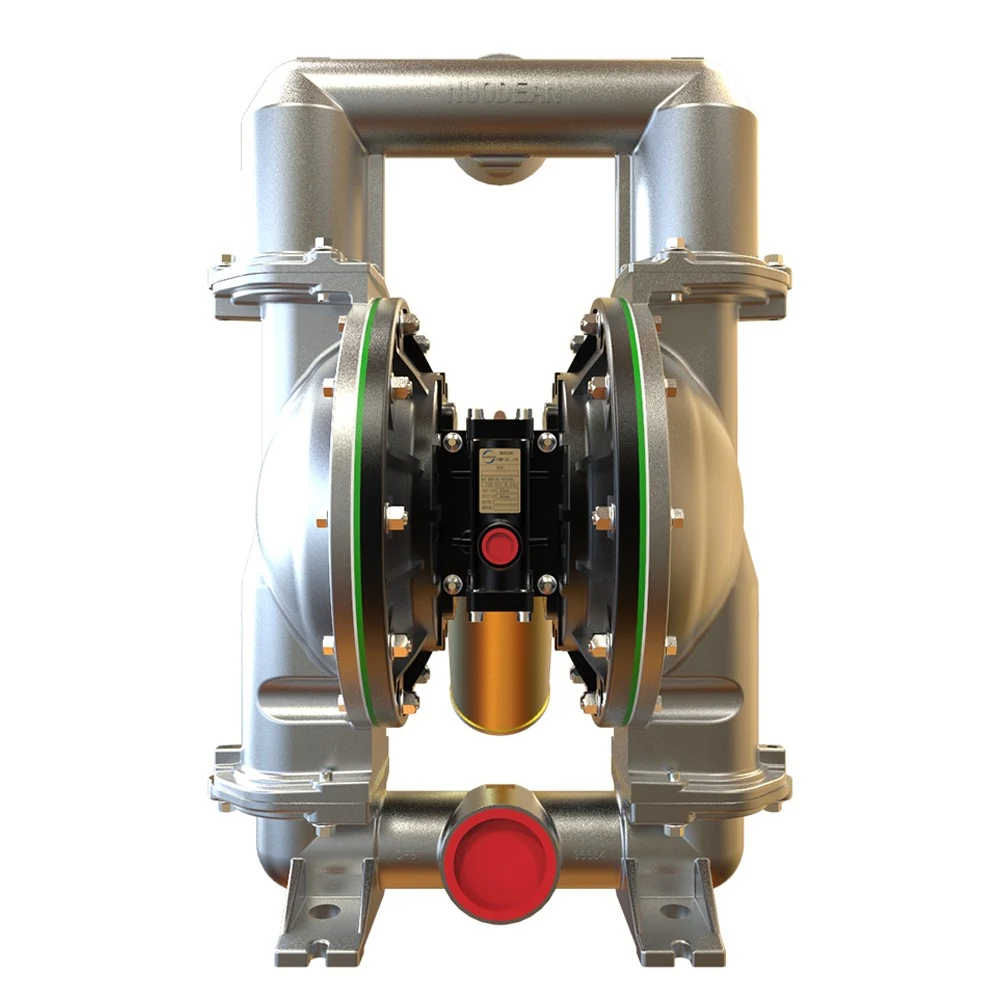
A silver metallic industrial double diaphragm pump with red caps and a central black manifold.
Typical Duties

Typical Duties On A Food And Pharmaceutical Site

01

Drum And IBC Emptying

Self priming from ground level with the pump above the container, and dry running accepted at the end of each batch. The 1-1/2 inch pump achieves 340.7 LPM with a 5.8m dry suction lift.

02

Batch Transfer And Formulation

Air throttled flow into a mixing vessel, with the pump dead heading safely when the batch is complete. The 2 inch pump delivers 651 LPM at 8.3 bar pressure.

03

System Flush And Clean Down

Flushing lines between batches with air and liquid, where the pump must handle both phases without damage. The 3 inch pump passes 9.5 mm solids and handles high flow rates.

04

Filling And Packaging

Accurate, low shear transfer to packaging lines. The 1 inch pump provides 133 LPM with a 6.1m dry suction lift, suitable for small-scale filling operations.

How We Work

How We Get From Enquiry To Pump

Four steps. The first one is the only one that matters, and it is the one most enquiries skip.

  1. Name The Fluid Properly

    Product name, viscosity range, and whether it is shear sensitive. The pump choice depends on the fluid's physical and chemical properties, not the pipe size.

  2. Fix The Wetted Materials

    We set the body, seat, ball and diaphragm against the fluid. For food and pharmaceuticals, this means 316 stainless steel or PTFE. We check the hardware and connection thread for compatibility with cleaning agents.

  3. Set The Duty Point

    Flow at your discharge head with your available air pressure. The port size is determined by the flow and pressure requirement, not by the existing pipe size.

  4. Agree The Spares Package

    One air section kit and one fluid section kit coded to your elastomer choice, so the first failure is a fifteen minute job rather than a three week wait.

Supply And Delivery

What Ships With The Pump

Related Guides

Guides For Food And Pharmaceutical Duty

Answers

Food And Pharmaceutical Pump FAQ

Which pump should I use for a shear-sensitive liquid?

Use a diaphragm pump with a low shear design and no rotating parts in the fluid path. The 1 inch, 1-1/2 inch, 2 inch and 3 inch stainless steel models are all suitable, with flow rates from 133 LPM to 897 LPM.

Are the pumps suitable for clean-in-place (CIP) systems?

Yes. The 316 stainless steel bodies and PTFE diaphragms and seats resist cleaning agents and high temperatures. The pump can be flushed with water, detergent or sterilant without damage.

Can the pump handle a fluid with small particulates?

The 1-1/2 inch, 2 inch and 3 inch models pass up to 9.5 mm solids. The 1 inch model passes 3.2 mm. All are designed for batch transfer with complete vessel emptying.

How do I ensure the pump does not introduce metal particles?

The body is 316 stainless steel, and all wetted parts are either 316 stainless steel or PTFE. No aluminum, brass or carbon steel is used in the fluid path. The pump has no shaft seal, so no metal-to-metal contact with the fluid.

What is the maximum dry suction lift for the 2 inch pump?

The 2 inch stainless steel pump has a dry suction lift of 8.3 meters. This allows it to empty drums and IBCs from ground level without priming.

Send Us The Fluid And The Duty

Product name, flow, discharge head, and whether it is shear sensitive. We will come back with the wetted part list, the model code and a price.

[email protected]?subject=Inquiry%3A%20Food%20And%20Pharmaceutical%20pump%20selection
Language