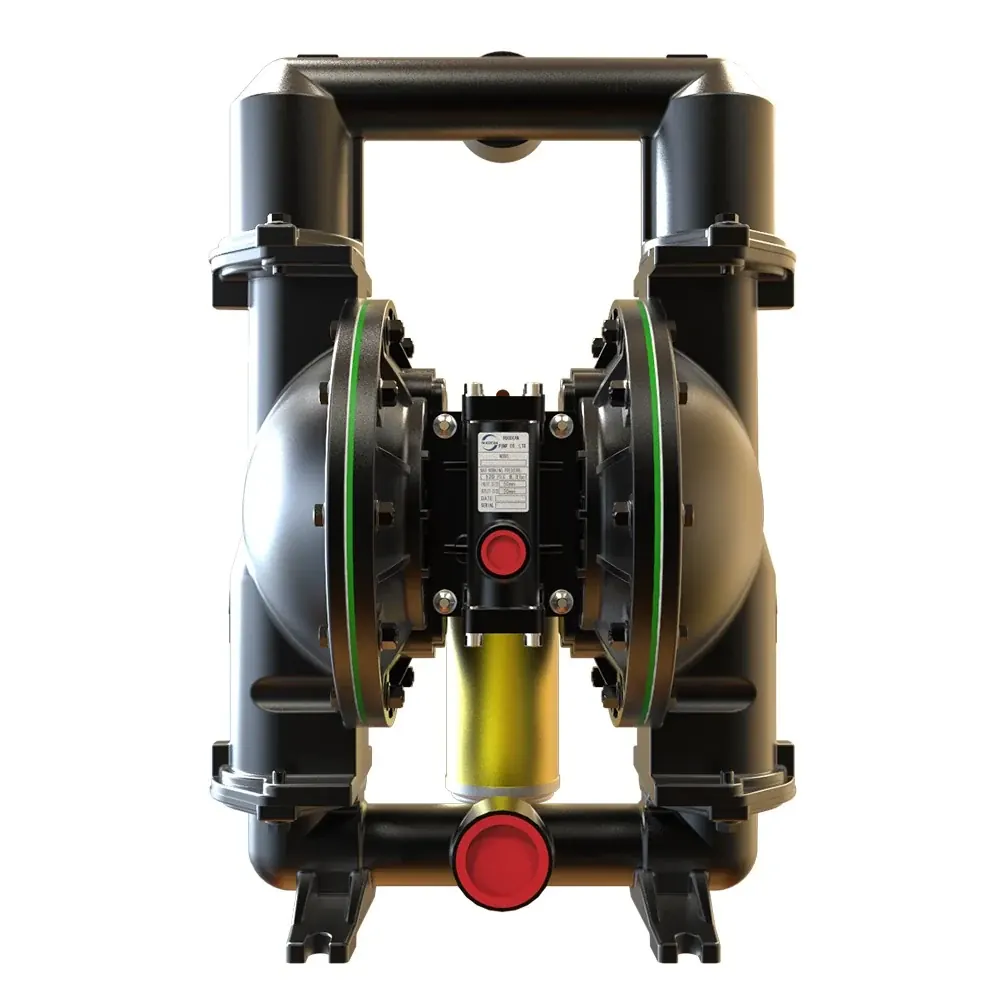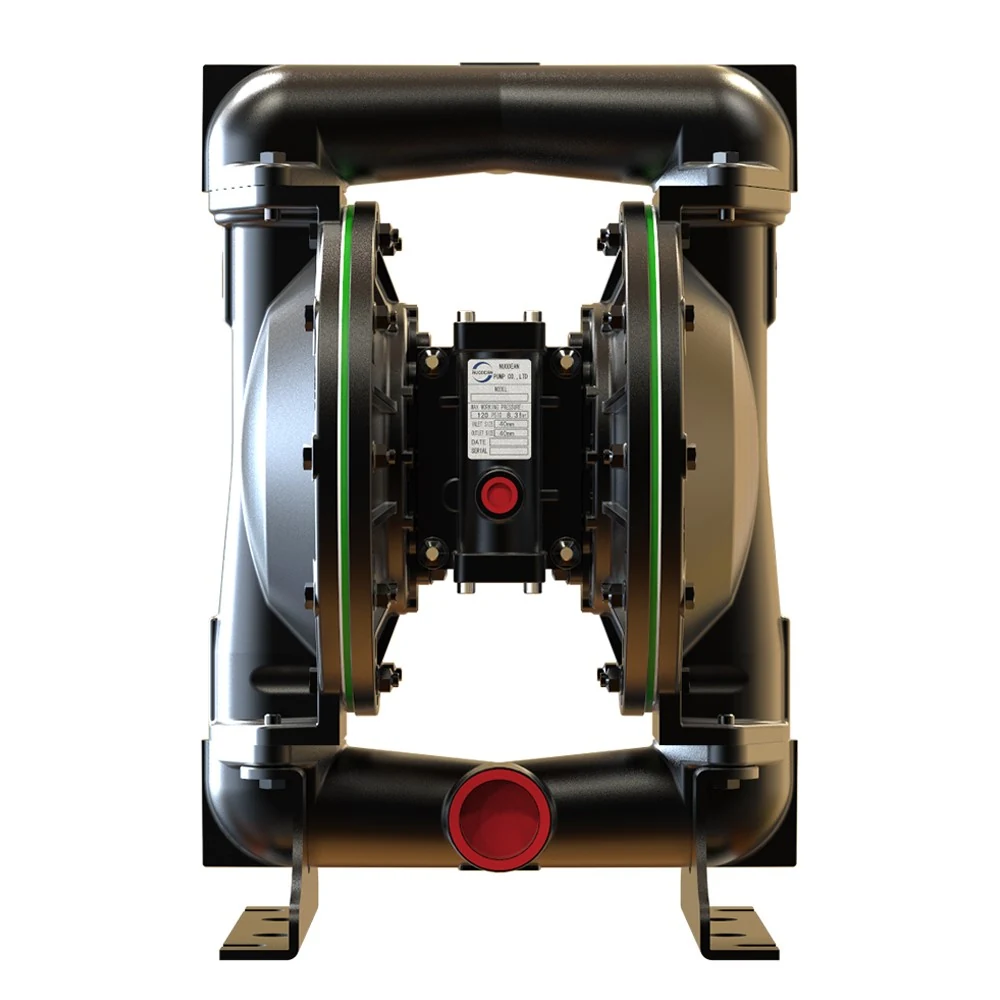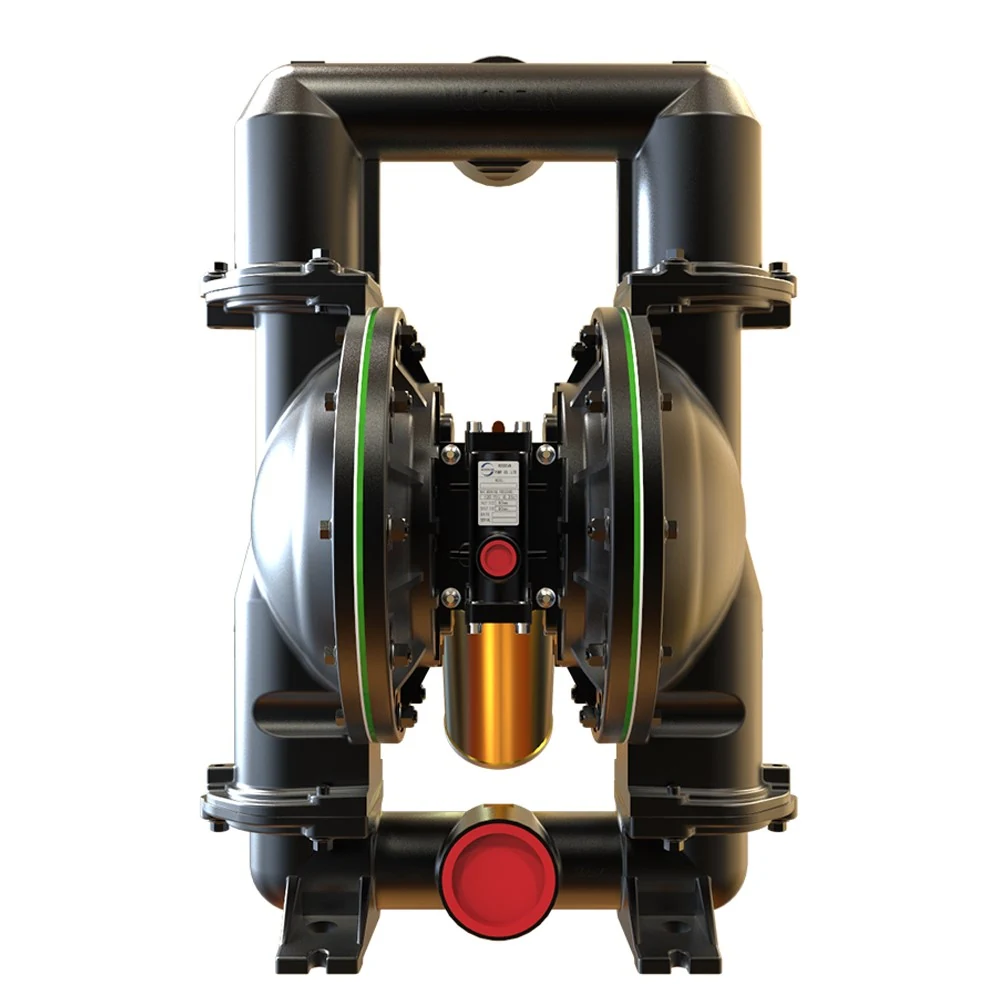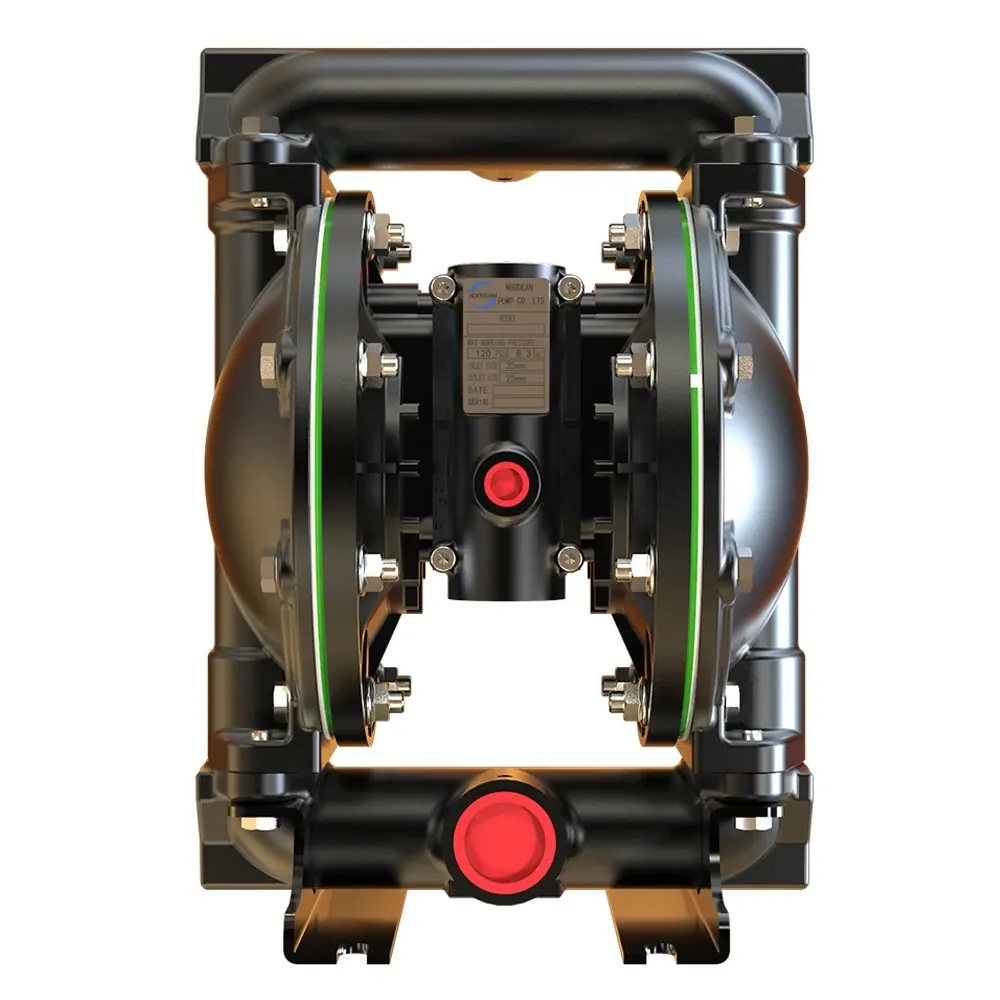
The Short Version
An air operated double diaphragm pump has two diaphragms on a common shaft, sitting between two air chambers and two liquid chambers. Compressed air pushes on the back of one diaphragm while the other one is pulled along by the shaft. One liquid chamber discharges while the other fills.
At the end of the stroke a valve arrangement swaps which air chamber is pressurised and which is exhausted, and the whole thing runs the other way. There is no rotation, no shaft seal to atmosphere and nothing that has to stay full of liquid to survive.
That is why an AODD pump self primes, runs dry without damage and stops harmlessly when you close the discharge valve. The interesting engineering is not in the diaphragms. It is in the valve that decides when to change direction.
The Two Valves That Run The Pump
The DP3X air distribution system is built from two valves working together. The major air valve does the heavy work of connecting each air chamber alternately to supply and to exhaust. The pilot air valve is a smaller valve whose only job is to tell the major valve when to shift.
A single valve pump has to decide the changeover with the same component that carries the full air flow, which is exactly when a pump hangs at mid stroke. Splitting the decision from the flow is what makes the shift positive.
- Actuator pins, driven mechanically by the diaphragm at the end of travel
- Pilot air valve spool, shifted by the pin and then held by supply air
- Major air valve piston and spool, shifted by the pilot signal
- Air chambers behind each diaphragm, alternately pressurised and exhausted
- Liquid chambers in front of each diaphragm, alternately filling and discharging
- Four check balls, two on the suction manifold and two on the discharge manifold
Stroke One Diaphragm Moving Right To Left
The diaphragm reaches the end of its travel and pushes the right hand actuator pin, which moves the pilot valve spool to the left mechanically. Compressed air then flows to the right hand end of the pilot valve and holds the spool in that position pneumatically.
Supply air also reaches the large right hand end of the major air valve and acts on the right side of the piston, pushing the piston and the main spool to the left. Because the piston area on the right is larger than the spool area on the left, it stays there.
With the valve in that position, the left air chamber is connected to the exhaust port and its pressure is released, while the right air chamber is connected to supply and fills quickly. The air in the right chamber pushes the diaphragm assembly back toward the right.
On the liquid side, the left liquid chamber grows and draws fluid in through the suction check ball, while the right liquid chamber shrinks and pushes fluid out through its discharge check ball.
Stroke Two Diaphragm Moving Left To Right
At the other end of the travel the diaphragm pushes the left actuator pin, the pilot spool moves right, and air is admitted to the left end of the pilot valve to hold it there.
Constant supply pressure now acts on the left face of the main spool, and because the air at the right hand end of the major valve is exhausted, the piston and spool shift to the right.
The right air chamber exhausts, the left air chamber fills, and the diaphragms travel back to the left. The right liquid chamber now fills through its suction ball and the left liquid chamber discharges.
That is one complete cycle. At sixty cycles per minute, which is the condition Nuodean prints its sound levels at, the pump is doing this once a second.
Why This Design Does Not Stall
Stalling is what happens when the changeover signal is weak and the valve stops halfway, leaving both air chambers at the same pressure and the pump standing still. Somebody then walks over and taps the air end.
The pilot valve prevents that. It is shifted first mechanically by the actuator pin and then held pneumatically by supply air, so the signal it sends to the major valve is positive and fast rather than gradual. The pump trips over quickly, which also means less pulsation in the discharge line because the flow gap between strokes is shorter.
Why The Air End Ices Up And What Stops It
Compressed air cools sharply as it expands into the exhaust. On a humid day that cold surface collects ice, the exhaust port restricts, and the pump slows down or stops. Most air motor icing complaints are this and nothing else.
The DP3X air section uses an anti icing design with a built in vacuum chamber that reduces the discharge air pressure. Less pressure drop across the exhaust means less cooling, less ice and, as a side effect, a quieter pump.
The published sound level for the 1 inch non metallic pump is 64.5 dB(A), and for the 2 inch metallic pump 80.5 dB(A), both measured at 70 psi and 60 cycles per minute.
What The Design Means In Practice
Every behaviour that makes plants specify these pumps falls out of the mechanism above.
| Self priming | The diaphragms displace air as easily as liquid, so the pump evacuates the suction line by itself. Dry suction lift is published per model, from 4.6 m to 8.3 m. |
|---|---|
| Dry running | Nothing depends on liquid for lubrication or cooling, so an empty suction line is a non event. |
| Dead heading | Close the discharge valve and the pump stops. Fluid pressure equals air pressure and the diaphragms stop moving. Open the valve and it starts again. |
| Flow control | Throttle the air, not the suction. Flow follows the air you feed the pump, so a simple regulator replaces a variable speed drive. |
| Solids handling | Ball checks pass suspended solids, from 3.2 mm on the 1 inch pumps to 9.5 mm on the 3 inch, and 50 mm on the flap valve pump. |
| Shear sensitivity | There is no impeller, so emulsions, latex and pigment dispersions arrive at the far end in the state they left in. |
Where The Wear Actually Is
Because the mechanism is simple, so is the wear list. It is worth knowing which half of the pump a symptom belongs to before anything is opened.
- Diaphragms flex millions of times and are the normal wear part. A wet exhaust usually means one has split
- Check balls and seats wear from solids and from chemical attack, and show up as reduced flow or loss of prime
- The pilot and major valve spools wear from dirty or wet compressed air, which is why the DP3X uses ceramic dynamic seals on both
- Muffler and exhaust restriction from ice or debris shows up as a pump that slows without any change in the fluid
- Air section repair kits and fluid section repair kits are catalogued separately for exactly this reason