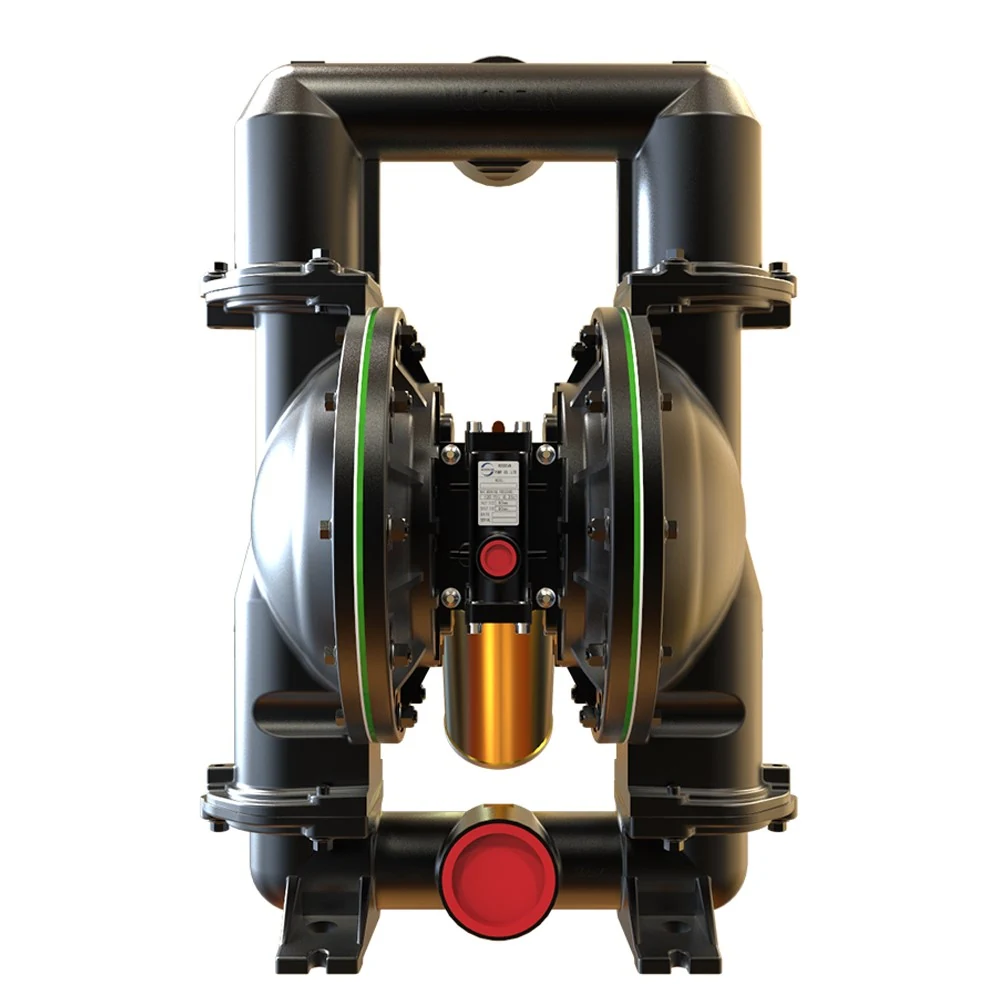
Choosing a pump based on pipe size or an old model code leads to underperformance, early failure, or unnecessary air use. The right pump matches the duty, not the installation.
A pump selected by pipe size often ends up oversized or undersized for the actual flow and pressure. The DP3X series is sized to match your real duty, not the spool. Port size is chosen by flow and solids handling, not by the flange on the pipe.

Four steps to the right model code, starting with your duty data.
Problem. Without the actual duty, the pump may be too small for the flow or too large for the pressure, leading to poor performance or early failure.
How we solve it. Send the required flow in GPM or LPM, the discharge head in meters or psi, the fluid type, and the available air pressure in bar or psi. We use this to select the correct pump size and model.
Problem. Using the same port size as the pipe leads to clogging or reduced flow, especially with solids or viscous fluids.
How we solve it. We calculate the required port size from your flow and solids size. For example, 50 mm solids require a 3 inch port. A 1 inch port is only for low flow and clean liquids.
Problem. Using the wrong material causes rapid diaphragm or ball failure, especially with acids, solvents, or shear-sensitive fluids.
How we solve it. We select body material - aluminum, stainless steel, or plastic - and elastomers - NBR, EPDM, or PTFE - based on the fluid's chemical properties and temperature.
Problem. A pump that works at 8 bar may not deliver the required flow at 5 bar, leading to underperformance.
How we solve it. We check your available air pressure against the pump's performance curve. If the air supply is low, we may recommend a smaller pump or adjust the model code to match your real conditions.

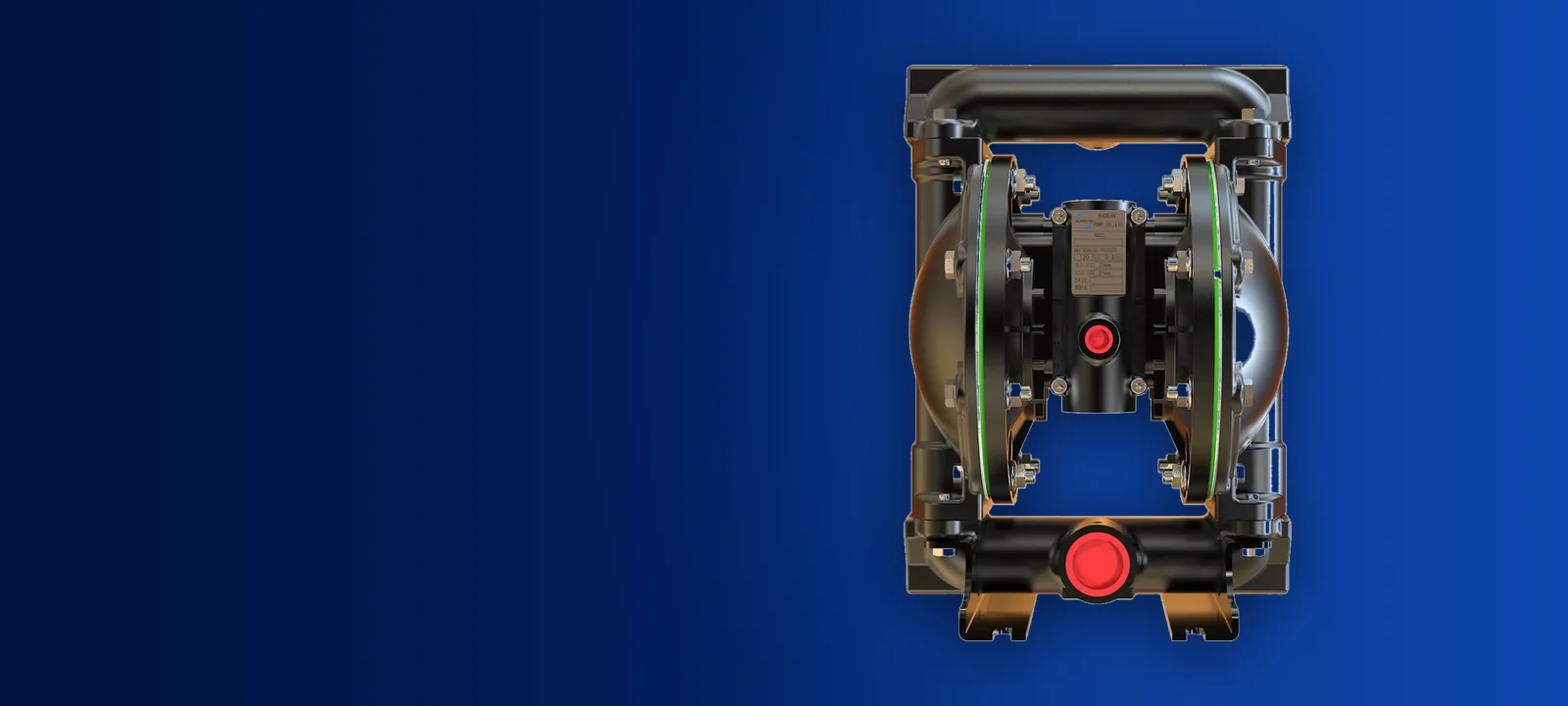
133 LPM and 8.3 bar from an 8.6 kg aluminum body. The compact workhorse of the DP3X range.
View Specifications →
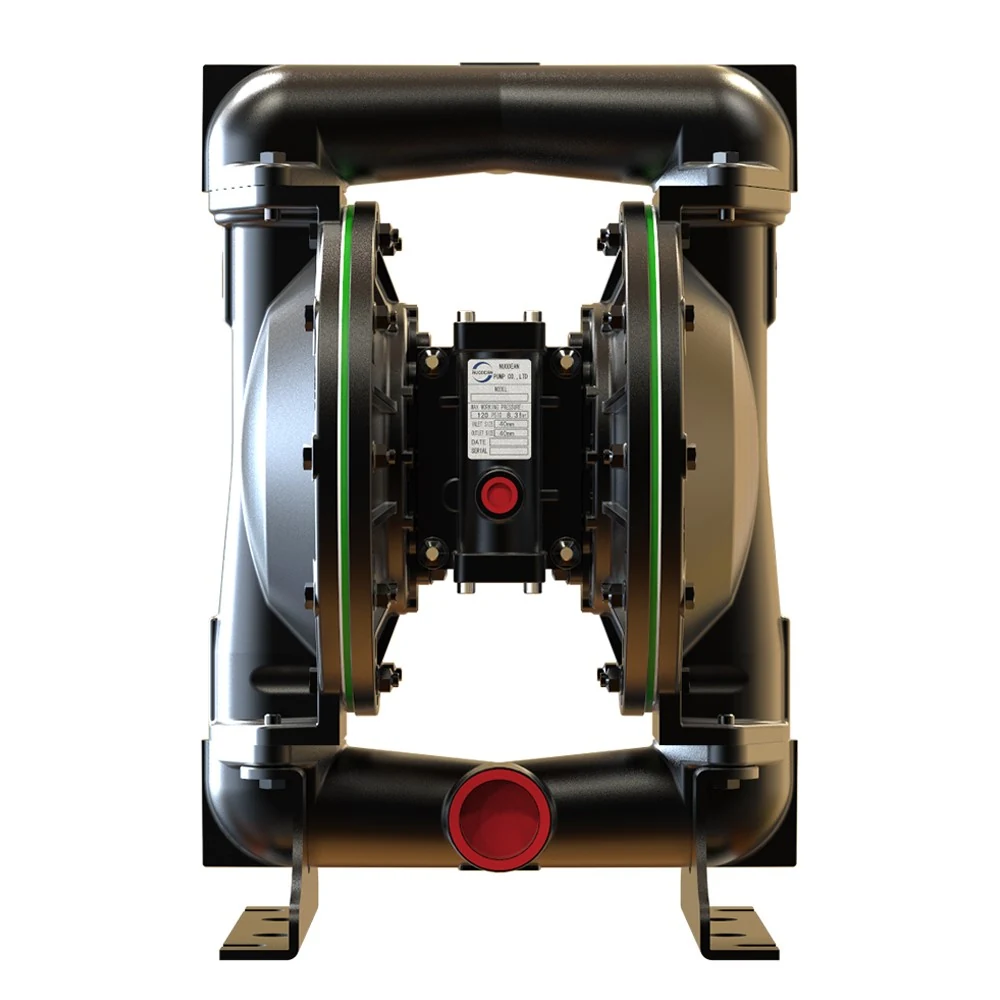
340.7 LPM and 8.3 bar from a 23.4 kg aluminum body. The mid-range volume pump in the DP3X series.
View Specifications →
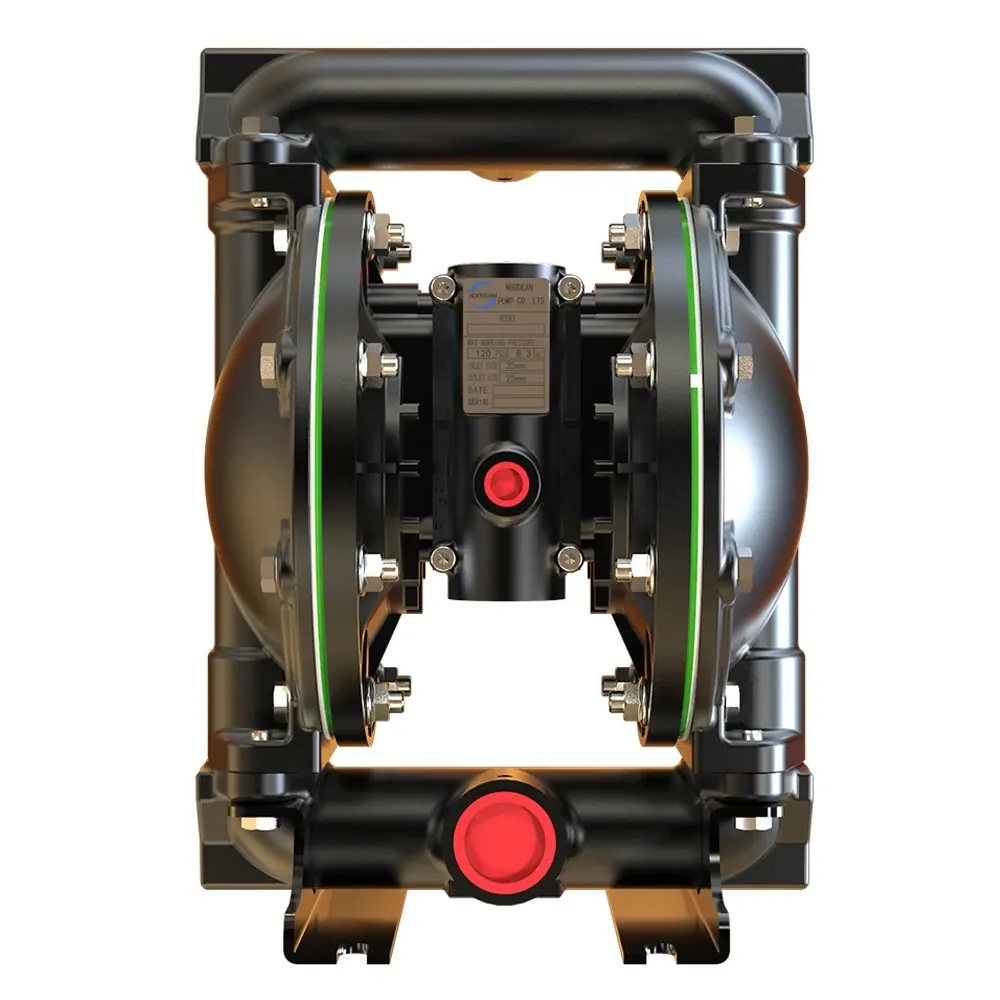
651 LPM and 8.3 bar from a 29.6 kg aluminum body. The volume workhorse of the DP3X range.
View Specifications →
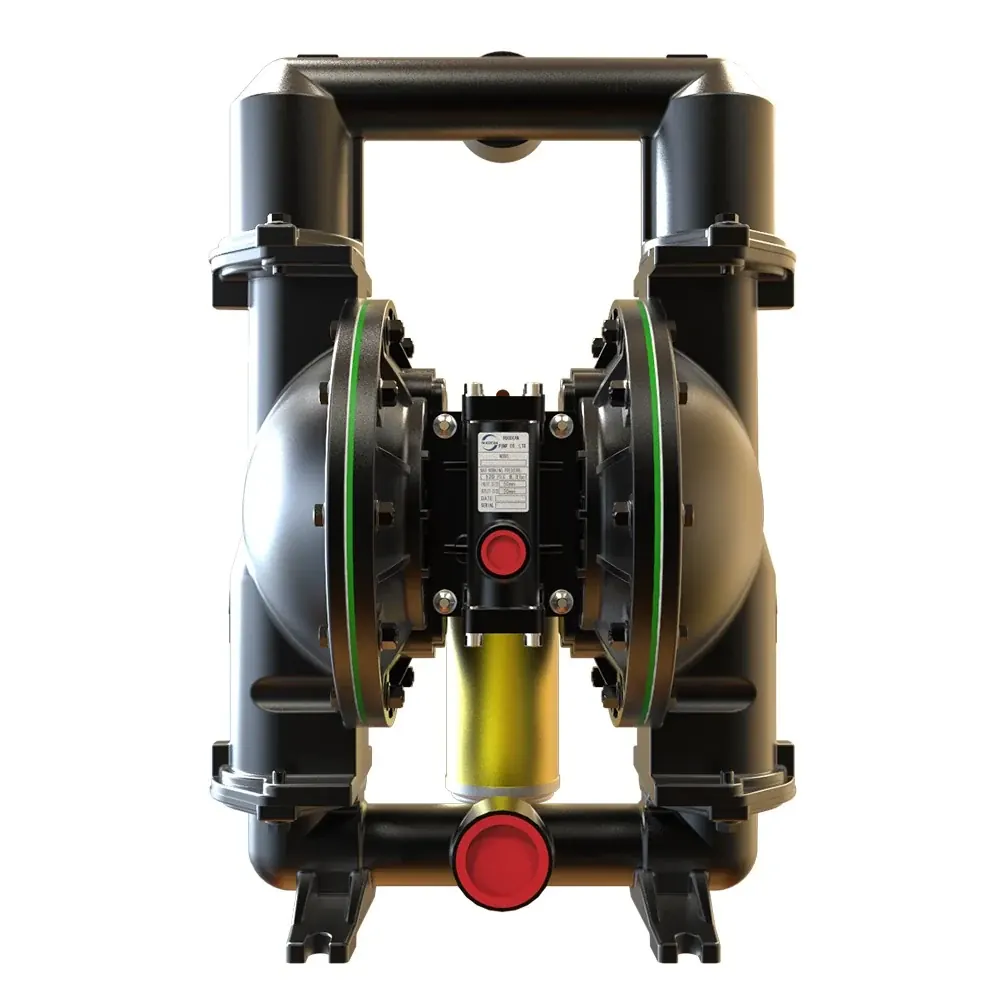
897 LPM and 8.3 bar from a 49.8 kg aluminum body. The largest volume pump in the DP3X range.
View Specifications →Follow one full stroke through the pilot valve, the major air valve and both liquid chambers, and the rest of the pump stops being mysterious.
Buying GuideSizing an air diaphragm pump from the existing pipe size or the headline maximum flow guarantees poor performance. Here is how to select the right displacement and port size from actual duty conditions.
Material GuideCompare aluminum, cast iron, stainless steel and non metallic bodies by fluid, duty and weight, not by habit.
Send the required flow in GPM or LPM, the discharge head in meters or psi, the fluid type, and the available air pressure in bar or psi. Include solids size if applicable.
The pipe thread determines how the spool connects, not the flow capacity. A 1 inch pipe can carry less flow than a 1 inch pump. The pump's port size is chosen for flow and solids handling, not the pipe.
Yes, if the duty is within the pump's performance range. A 2 inch pump may not be needed for 100 GPM if the discharge head is low. We check the performance curve to confirm.
Lower air pressure reduces flow and maximum discharge head. We select a pump that performs within your actual air supply, which may mean choosing a different size than expected.
Yes. Each pump model has a specific repair kit. When you get a new model code, we quote the matching air section and fluid section kits at the same time.
Provide your required flow, discharge head, fluid type, and air pressure. We will return the correct model code, port size, materials, and a price.