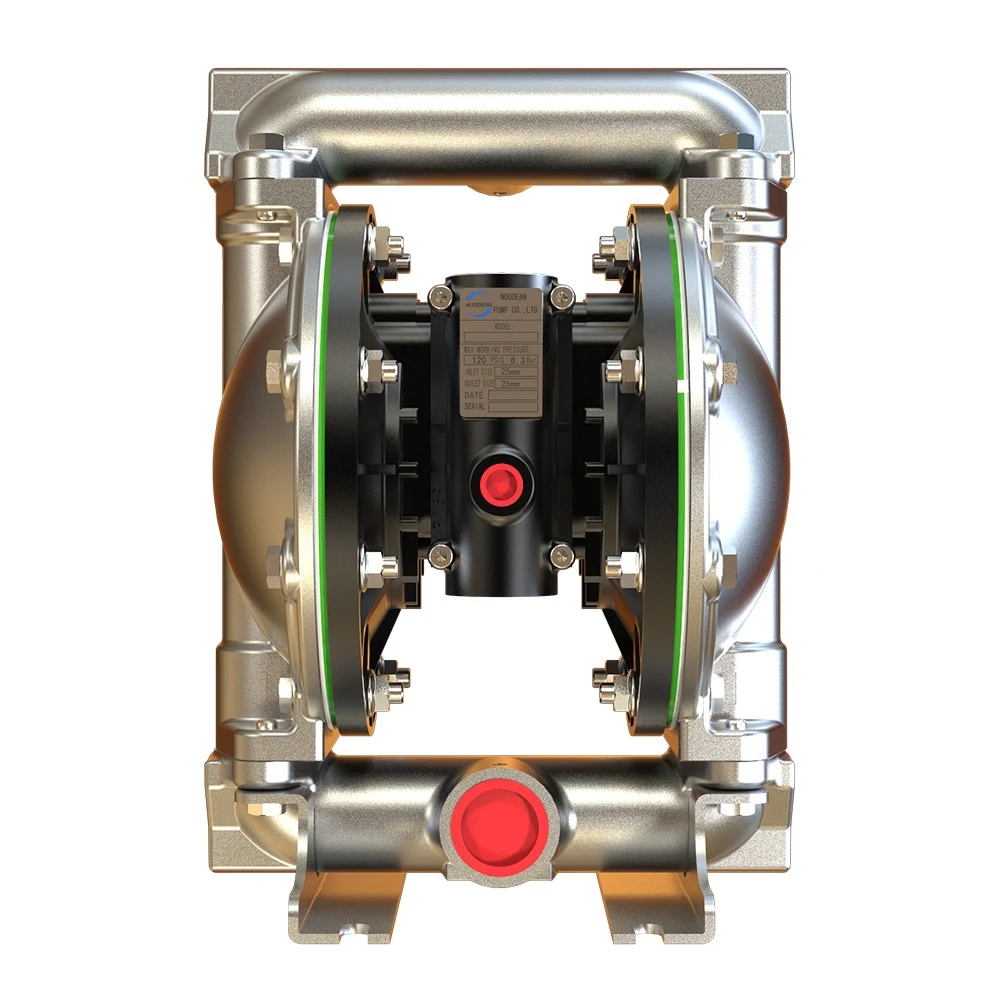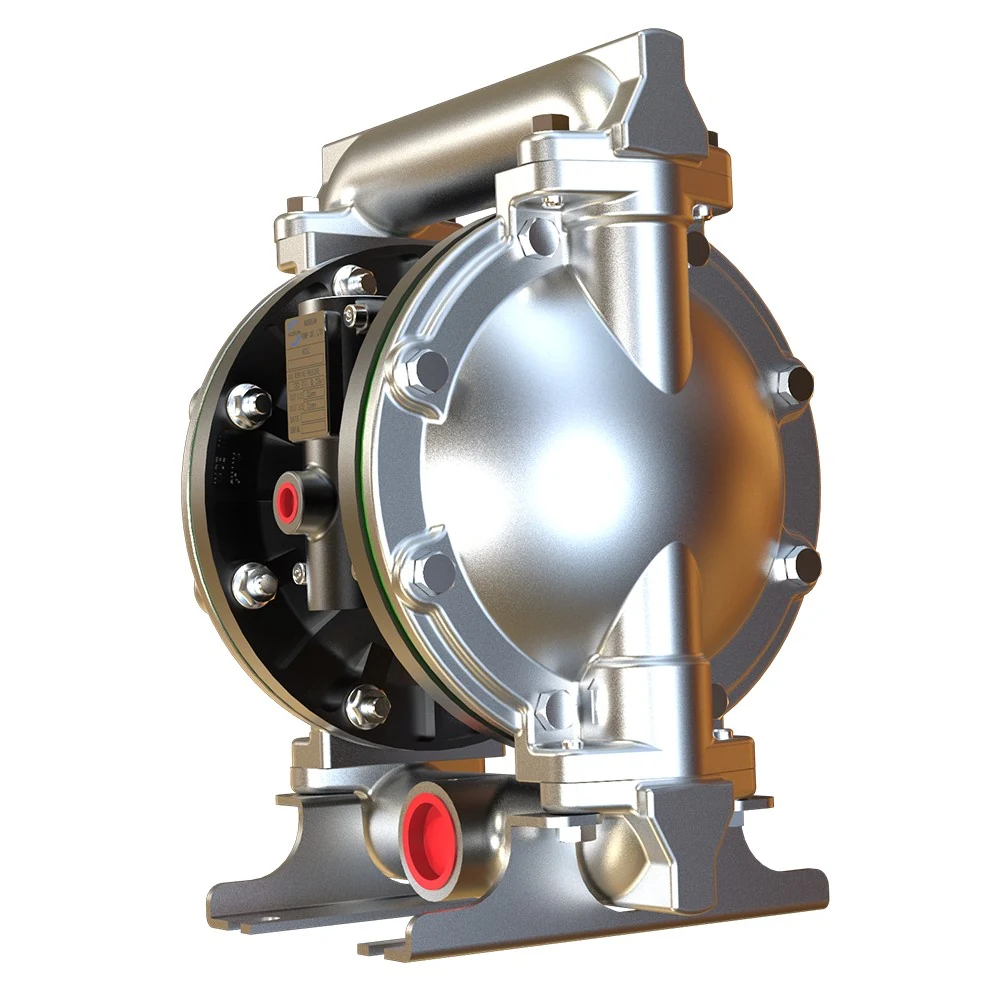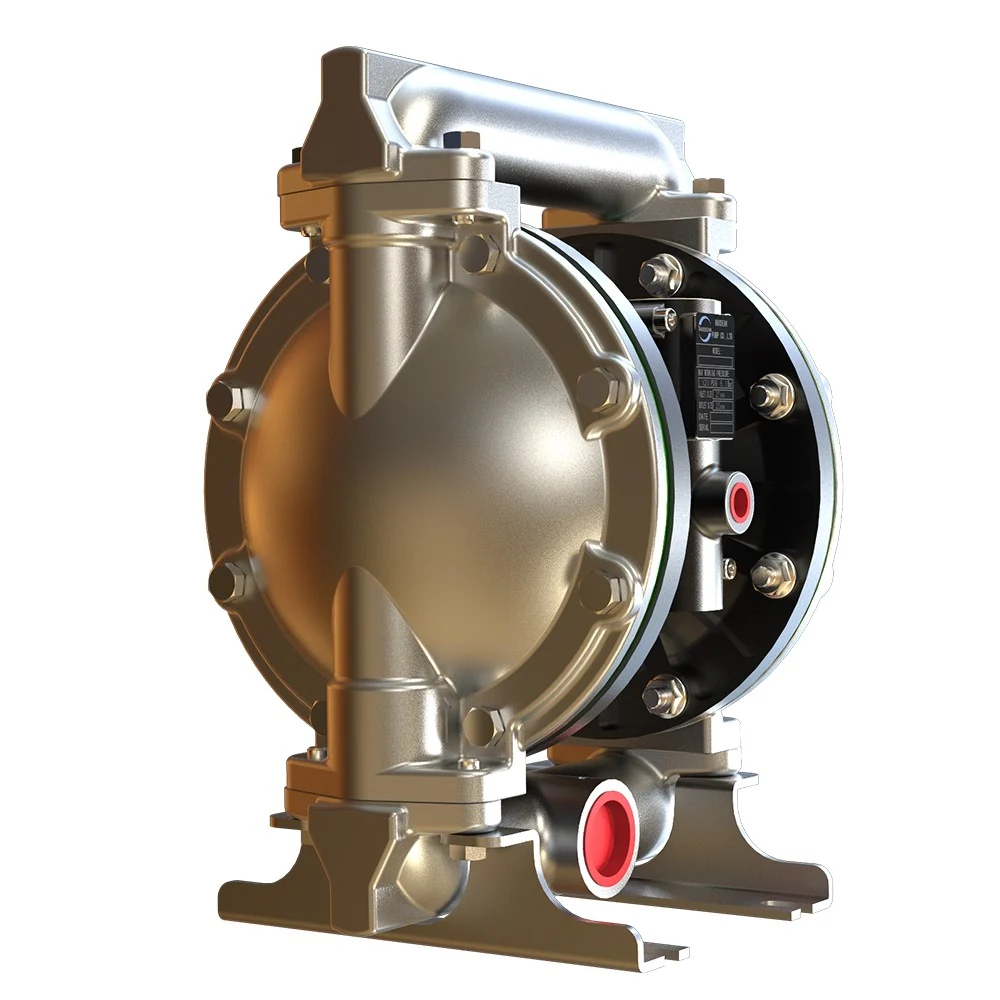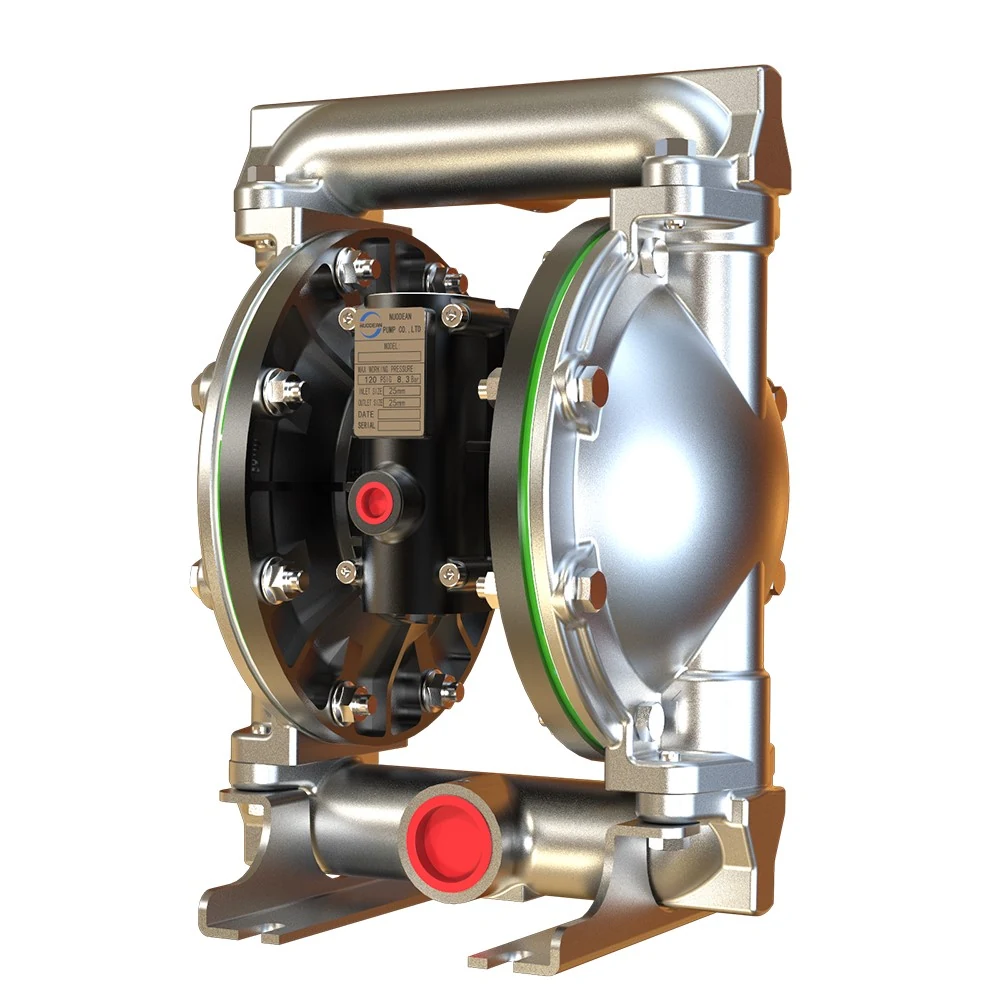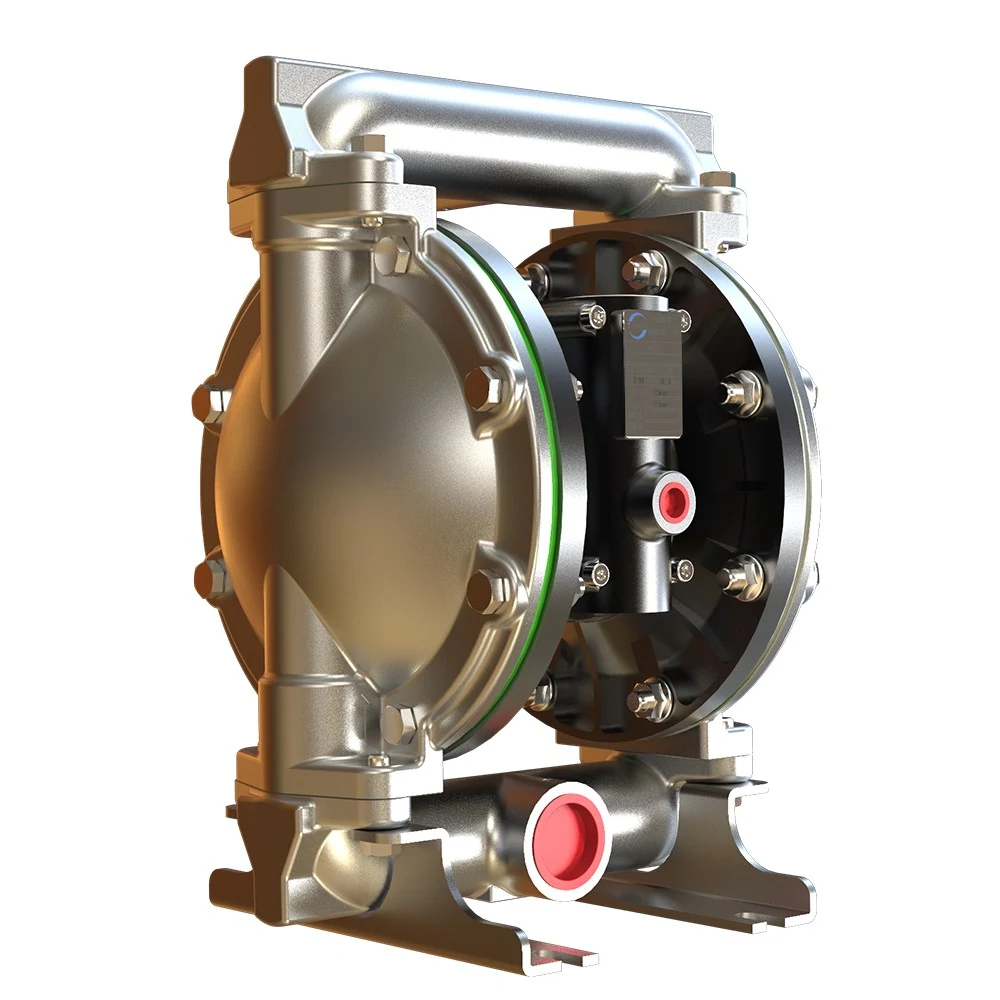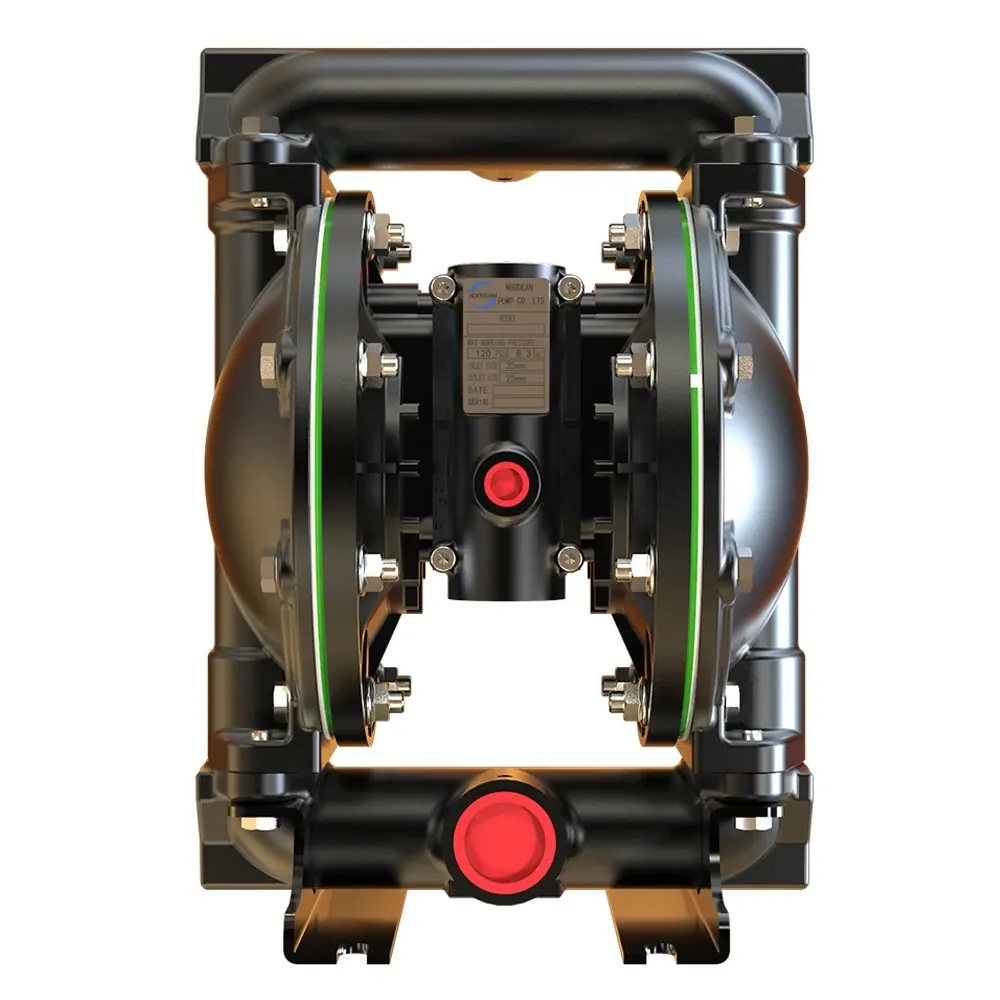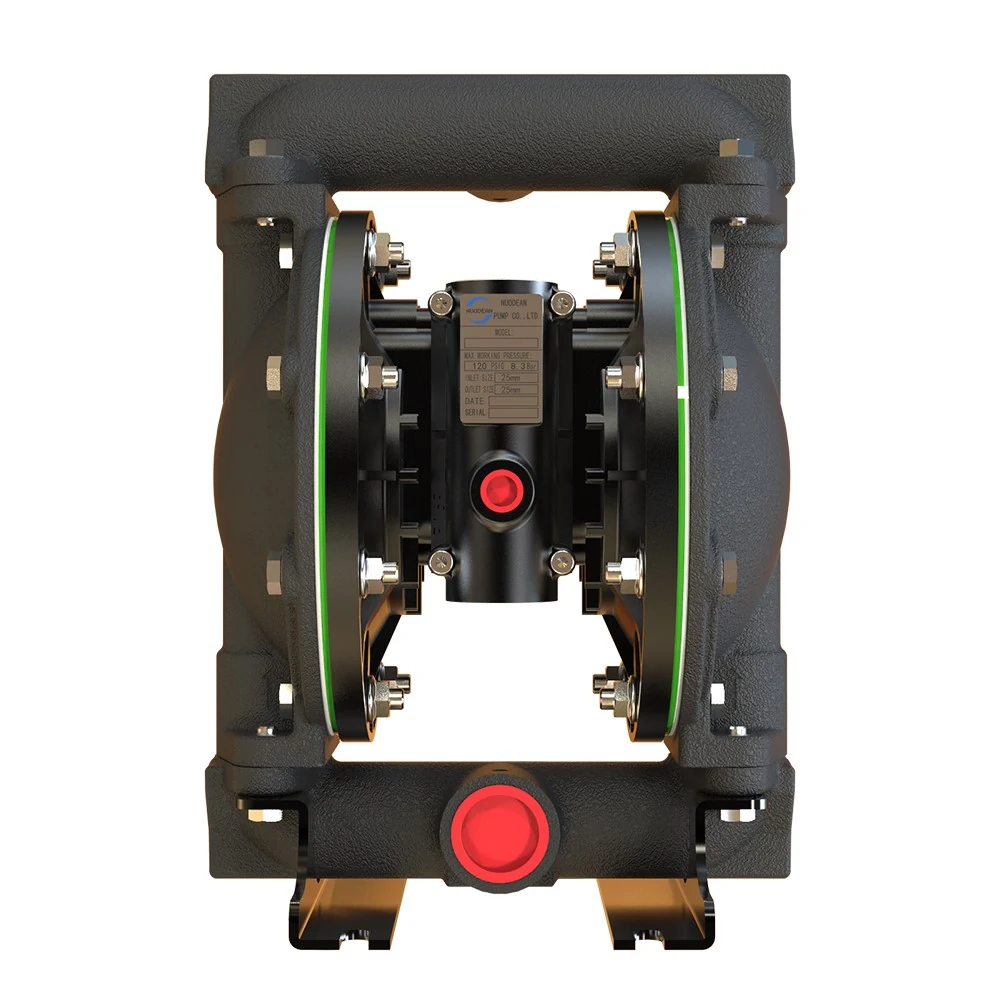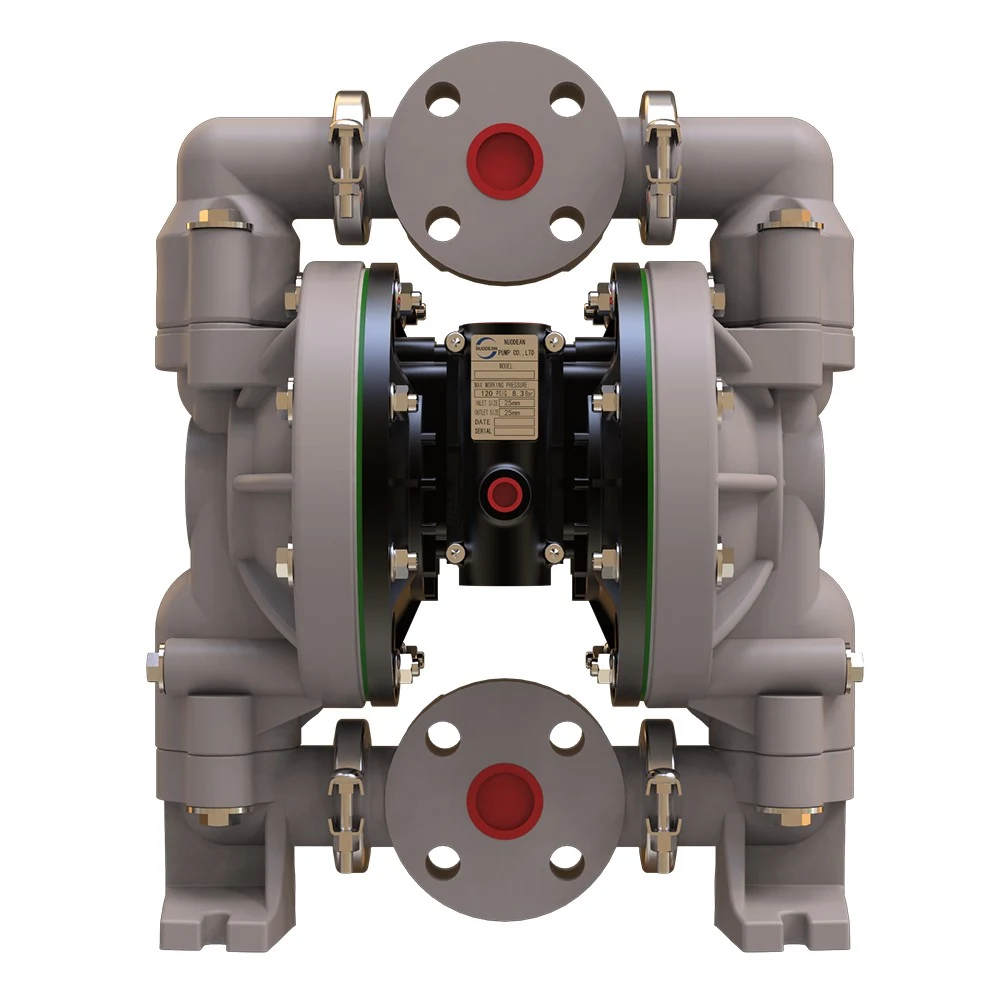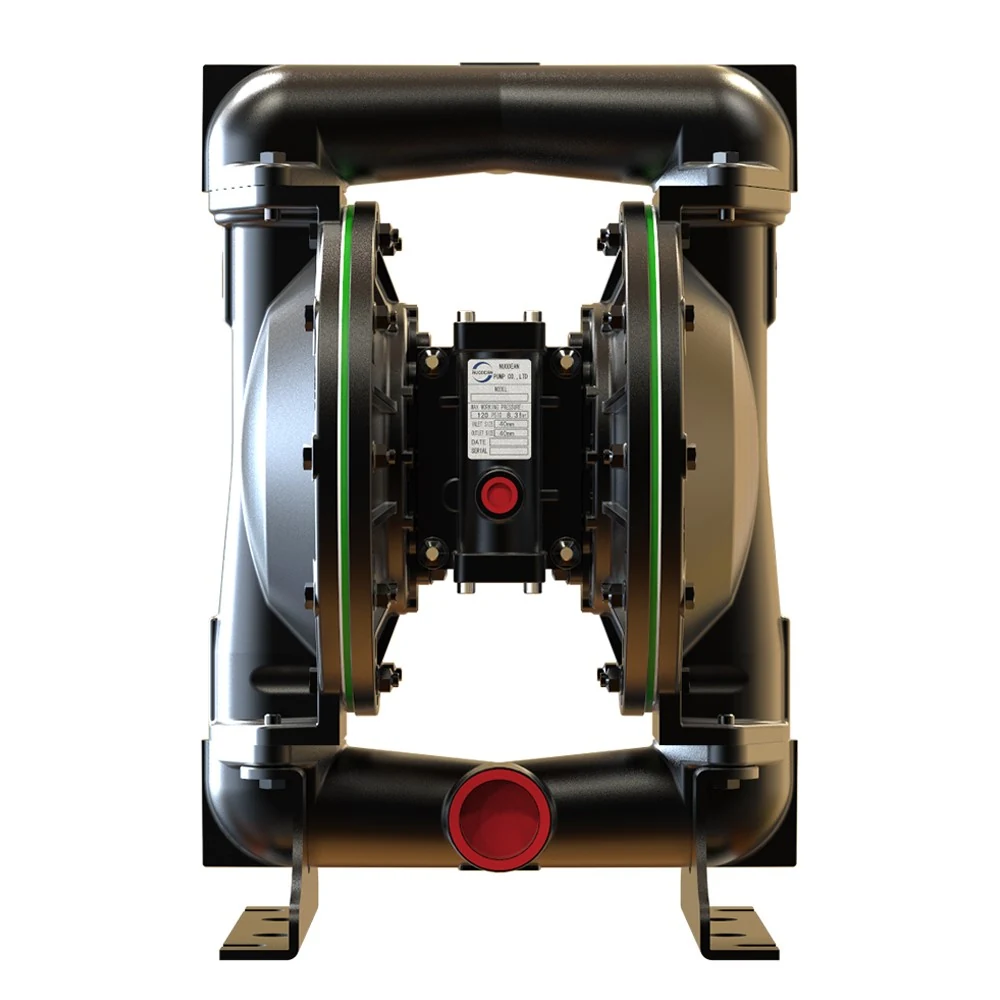


The DP31-25 is the one inch stainless steel pump in the DP3X series, and it is the model chosen when the fluid is corrosive or the duty demands a durable, hygienic body. It delivers 35 GPM, which is 133 LPM, at up to 120 psi or 8.3 bar, passes suspended solids to 3.2 mm and lifts 6.1 m dry. The 316 stainless steel center body and fluid caps resist rust and chemical attack, and the pump weighs 16.3 kg, so it is light enough for one person to carry between stations. The stall free air motor ensures consistent start-up under load, and the self-lubricating system requires no oiler on the air line.
| Maximum flow rate | 35 GPM (133 LPM) |
|---|---|
| Maximum operating pressure | 120 psi (8.3 bar) |
| Suspended solids max diameter | 1/8" (3.2mm) |
| Fluid inlet | Rp 1 (1-11 BSP, parallel); 1-11 1/2 NPT |
| Fluid outlet | Rp 1 (1-11 BSP, parallel); 1-11 1/2 NPT |
Corrosion resistance, durability and hygiene are the reasons to choose this over aluminum or cast iron in the same size.
The 316 stainless steel body withstands acids, alkalis, solvents and chlorides that attack aluminum and cast iron. It is the choice for chemical processing, pharmaceuticals and surface preparation where fluid integrity matters.
At 16.3 kg it is 5.2 kg lighter than the cast iron version at 21.1 kg, but it does not suffer the same wall thinning under abrasion. That makes it better for long-term transfer of mildly abrasive fluids.
The air distribution system is self-lubricating and lube free, so there is no oil in the exhaust and no need to refill a lubricator during maintenance rounds.
The pilot air valve gives the major valve a fast, positive shift signal. The pump does not hang at mid stroke and restarts cleanly after a blockage.
The built-in vacuum chamber reduces discharge air pressure, which lowers both the temperature drop that causes icing and the exhaust noise. The published sound level is 64.5 dB(A) at 70 psi and 60 cycles per minute.
Installation dimensions and footprint are compatible with major AODD brands, so the base, pipe spools and air line usually stay the same when replacing a competitor pump.
One inch stainless steel is the choice when the fluid is corrosive, the duty is continuous, or the plant requires a cleanable, durable body.
Most enquiries for this model come from plants that have already tried a different pump and faced one of these five issues.
The pump moves acids and alkalis between tanks and dosing units, with no risk of metal contamination or body corrosion.
It transfers sterile liquids through clean-in-place systems, with a body material that meets hygiene standards and resists cleaning agents.
It empties sumps and tanks of corrosive waste, runs dry without damage, and handles grit and sludge without clogging.
It fits into a compact skid for filtration, blending, or cleaning, where space, weight, and material compatibility are critical.
The hydraulic end of an AODD pump is simple. The air end is where pumps differ, and where Nuodean holds its patents.
The pilot valve is shifted mechanically by the actuator pin and pneumatically by the compressed air, then it shifts the major valve. That two stage signal is what makes the changeover positive and fast.
Both the major air valve and the pilot air valve run ceramic dynamic seals. They resist wear, tolerate a dirty air supply and keep discharge contamination down over a long life.
No lubricator is fitted to the air inlet and none is needed, which removes both a maintenance task and the oil mist that a lubricated pump puts into the room.
The built in vacuum chamber reduces discharge air pressure, which lowers the expansion cooling that ices an air motor and drops the exhaust noise at the same time.
Port positions, foot spacing and overall envelope follow the major brands, so this pump can be dropped into an existing installation.
Center body, fluid caps and manifold, seat, ball check, diaphragm, connection thread and hardware are each chosen in the model code rather than fixed at the factory.
Transcribed from the Nuodean data sheet published for this pump.
| Maximum flow rate | 35 GPM (133 LPM) |
|---|---|
| Maximum operating pressure | 120 psi (8.3 bar) |
| Suspended solids max diameter | 1/8" (3.2mm) |
| Fluid inlet | Rp 1 (1-11 BSP, parallel); 1-11 1/2 NPT |
| Fluid outlet | Rp 1 (1-11 BSP, parallel); 1-11 1/2 NPT |
| Air inlet | 1/4" BSP female (1/4" NPT available on request) |
| Maximum dry suction lift | 20 feet (6.1m) |
| Sound level | 64.5db(A) at 70psi, 60 cycles/min. |
| Weight | 36 lbs (16.3kg) |
| Pump Size | 25-1" |
| Service Repair Kits | DP31-Air25 (air section); DP31-Flu25-XX (fluid section) - XX = Diaphragm Material, Ball Material |
| Model series code | DP31, DP31-25XXXXXXX, DP31-Air25 |
Set in the model code. Ask us if you need a combination the code allows but the sheet does not show.
| Wetted body material | 316 stainless steel |
|---|---|
| Diaphragm options | Neoprene, Nitrile, Viton, PTFE/Santoprene, E.P.R, Acetal, Hytrel, Santoprene, G-Nitrile |
| Ball check options | Neoprene, Nitrile, Viton, PTFE, E.P.R, Acetal, Polyurethane, Stainless Steel, Hytrel, Santoprene |
| Seat options | Aluminum, 316 Stainless Steel, Polypropylene, PVDF (Kynar), Carbon Steel, Hard 400 Stainless Steel |
| Housing options | Center Body: A-Aluminum, C-Cast Iron; Fluid Caps Manifold: A-Aluminum, S-Stainless Steel, C-Cast Iron, METALLIC |
| Fluid Connections | N-NPT Threads, B-BSP Threads |
| Hardware | S-Stainless Steel, C-Carbon Steel |
Performance figures are transcribed from the Nuodean data sheet for this pump. Flow is measured at the pump discharge with water at ambient temperature; your duty point depends on air supply pressure, suction conditions, fluid viscosity and discharge head. Ask our engineers to confirm the duty point before you order.
Where this pump wins and where you should be buying something else.
| Versus the 1 inch aluminum version | Same 133 LPM and same 8.3 bar, but 16.3 kg against 8.6 kg and full corrosion resistance. Choose aluminum only when the fluid is non-corrosive and weight is the main concern. |
|---|---|
| Versus the 1 inch cast iron version | Cast iron at 14.1 kg is lighter and cheaper, but it wears under abrasion and corrodes in wet or chemical service. Stainless steel wins for durability and longevity. |
| Versus the 1 inch non-metallic version | The non-metallic pump handles acids and alkalis that attack aluminum, at 177.9 LPM. Choose non-metallic only when flow and chemical resistance are both critical, and the duty is not abrasive. |
| Versus the 1-1/2 inch aluminum version | The 1-1/2 inch reaches 340.7 LPM and passes 6.4 mm solids, but weighs 23.4 kg. Step up only when 133 LPM is not enough and the fluid is non-corrosive. |
| Versus a centrifugal pump | The centrifugal is cheaper to run at a fixed high flow with clean fluid. This pump wins when the tank runs dry, the line blocks, the fluid carries solids or the area cannot take a motor. |
| Versus the 1 inch triple diaphragm pump | The triple pump doubles fluid pressure to 14 bar for spraying and long lines. This pump gives more flow per unit of air when the pressure is ordinary. |
Five things that decide whether this pump does 133 LPM or half of it.
Flow follows air. Use the full 1/4 inch inlet, keep the hose short and confirm the compressor can hold pressure at the flow the pump asks for.
Throttle the discharge or the air, never the suction. Starving the suction is what causes cavitation, hard running and short diaphragm life.
Diaphragm and ball material is chosen in the model code. Get the chemistry right and the pump lasts. Get it wrong and nothing else you do will save it.
The published 6.1 m is a dry lift figure on the data sheet. Priming a flooded suction is always easier, so put the pump below the tank where the layout allows.
One air section kit, DP31-Air25, and one fluid section kit, DP31-Flu25-XX, coded for your diaphragm and ball material. Between them they cover almost every wear part.
Straight from Nuodean's own literature: product data sheets, series catalogues.
Need a 2D or 3D CAD model of this pump? CAD on request via WhatsApp.
35 GPM, which is 133 LPM, is the maximum with a free discharge and full air supply. Real duty points are lower. Send us the discharge head and the air pressure you can hold and we will tell you where on the curve you land.
Yes. An air operated double diaphragm pump can be run dry and can be dead headed against a closed valve without damage. That is the main reason plants choose one over a centrifugal pump.
1/8 inch, which is 3.2 mm, on the suspended solids figure from the data sheet. If your fluid carries bigger solids, look at the 3 inch models at 9.5 mm or the heavy duty flap valve pump at 50 mm.
Usually yes. The DP3X pumps are built so that installation dimensions and footprint are compatible with other brands. Send a photo of the nameplate and the pipework and we will confirm before you buy.
PTFE with a Santoprene backing for aggressive solvents and acids, Santoprene for general duty and long flex life, Viton for hot oils and aromatics, nitrile for petroleum products. Tell us the fluid and the temperature and we will put the right code on the quotation.
64.5 dB(A) at 70 psi and 60 cycles per minute, as printed on the data sheet. Slower cycling is quieter, and a piped exhaust takes more off.
Fluid inlet and outlet are Rp 1 (1-11 BSP, parallel) or 1-11 1/2 NPT. The air inlet is 1/4 inch BSP female, with 1/4 inch NPT available on request.

133 LPM and 8.3 bar from an 8.6 kg aluminum body. The compact workhorse of the DP3X range.
View Specifications →
133 LPM and 8.3 bar from a 14.1 kg cast iron body. The durable workhorse of the DP3X range.
View Specifications →
177.9 LPM and 8.3 bar from a 9.2 kg non metallic body. The entry point for corrosion resistance in the DP3X range.
View Specifications →
340.7 LPM and 8.3 bar from a 23.4 kg aluminum body. The mid-range volume pump in the DP3X series.
View Specifications →Follow one full stroke through the pilot valve, the major air valve and both liquid chambers, and the rest of the pump stops being mysterious.
Buying GuideSizing an air diaphragm pump from the existing pipe size or the headline maximum flow guarantees poor performance. Here is how to select the right displacement and port size from actual duty conditions.
Material GuideCompare aluminum, cast iron, stainless steel and non metallic bodies by fluid, duty and weight, not by habit.
Send the fluid, the flow and the discharge head. We will come back with a full DP31-25 code, the elastomer choice and a price.