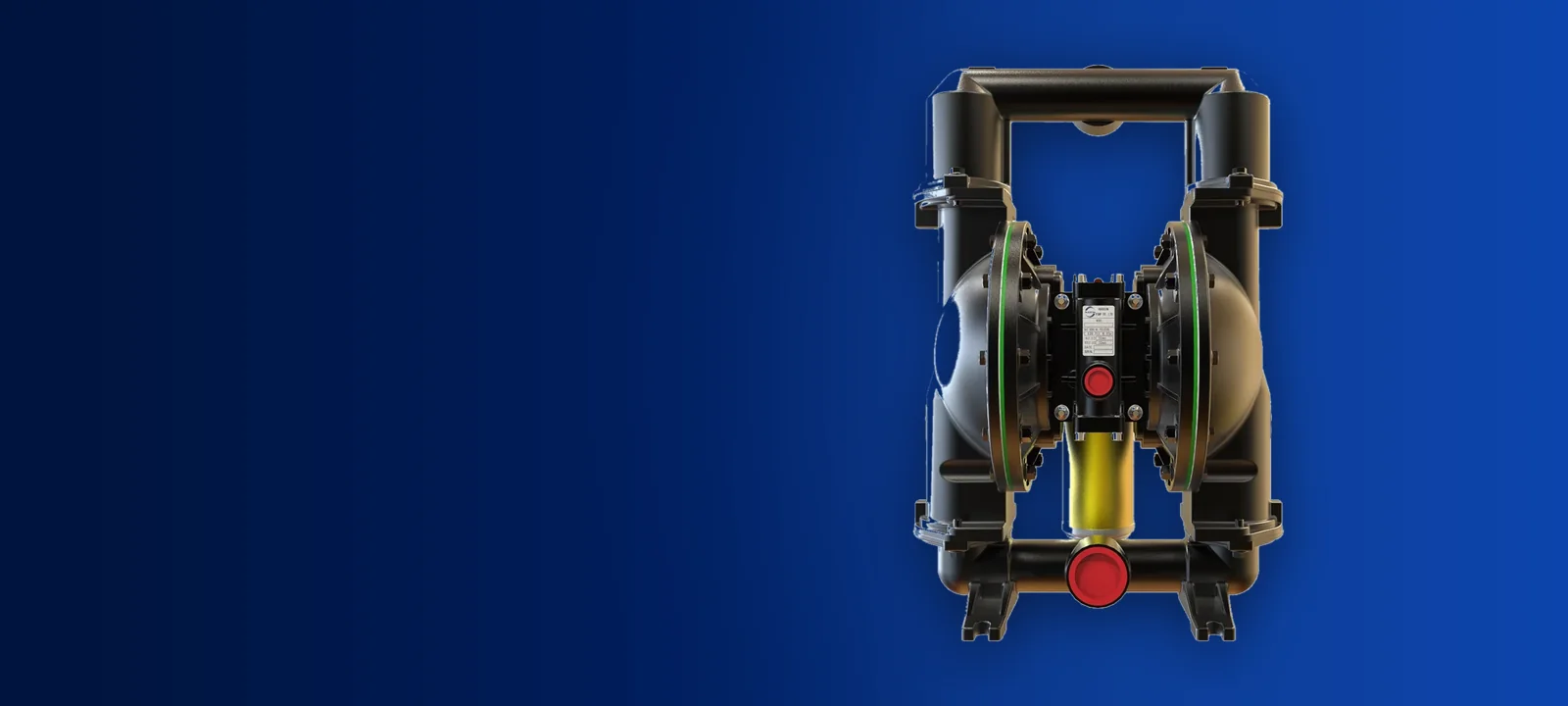
Start With the Fluid Not the Price
Choosing an AODD pump body starts with the fluid, not with the material you have used before. The wetted body sees the same chemical attack as the diaphragms, but it also carries the pressure boundary, the port connections and the wear from solids. A wrong body can look like a pump problem long after the diaphragms are replaced.
Write down the fluid name, concentration, temperature, solids, abrasiveness, cleanliness requirement and whether the pump is portable, fixed or submerged nearby. Then match that list to the material families in the catalogue: aluminum, cast iron, stainless steel and non metallic.
Compatibility is not a single answer. The same fluid can be acceptable in a transfer line but damaging in a pump because the pump adds heat, pressure cycling, shear and small volumes of trapped liquid.
Use the Published Weights to Test Portability
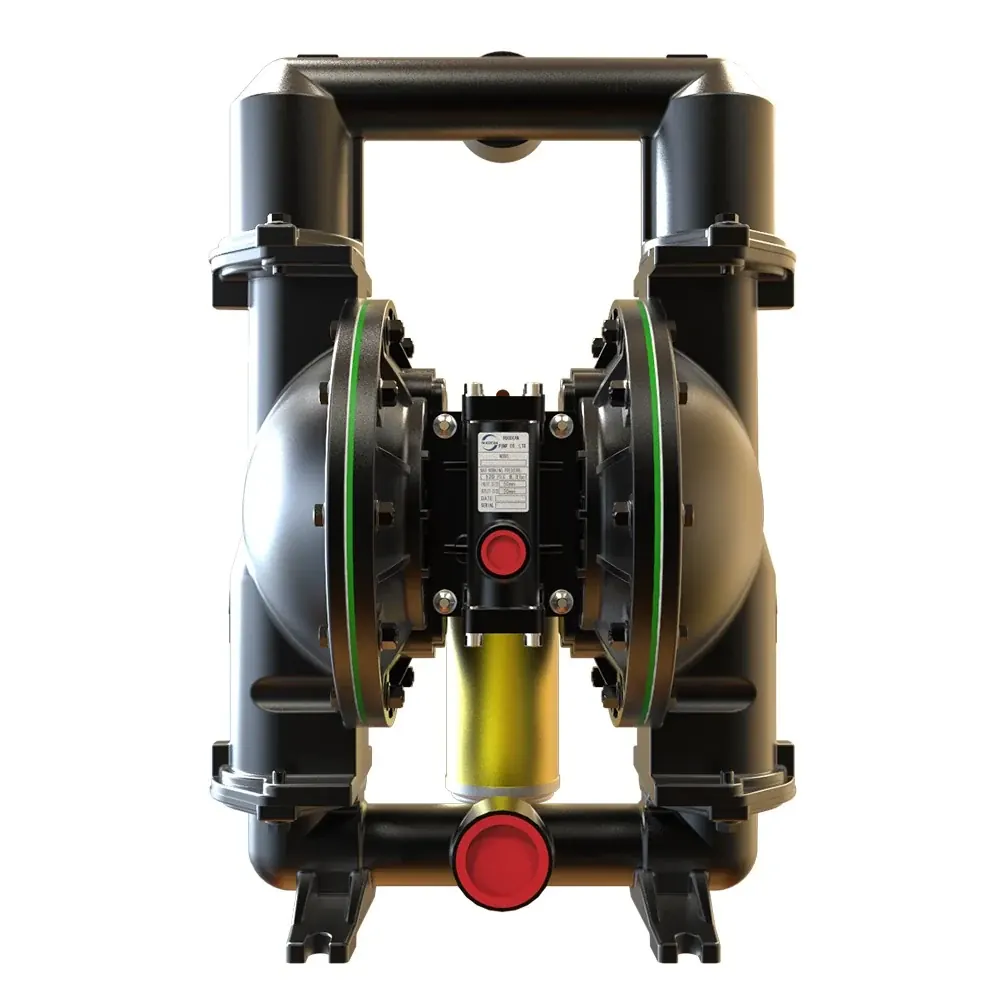
Portability is often the deciding factor when the fluid is not aggressive. For the 2 inch pumps in the catalogue, the published weights are aluminum 29.6 kg, cast iron 56.4 kg and stainless steel 56.9 kg. That difference matters when the pump moves between tanks, rail cars, drums or workstations.
The published performance figures are close for the three metal 2 inch pumps: 651 LPM, 8.3 bar, 6.4 mm solids and 8.3 m suction lift. The non metallic 2 inch pump is catalogued at 548.8 LPM and 8.3 bar.
Use the weight as a design input, not as a marketing point. A pump that is easy to lift is less likely to be dragged by its hose, and a pump that stays where it belongs is less likely to be starved at the suction.
- Aluminum 29.6 kg and 65.2 lbs for the 2 inch pump
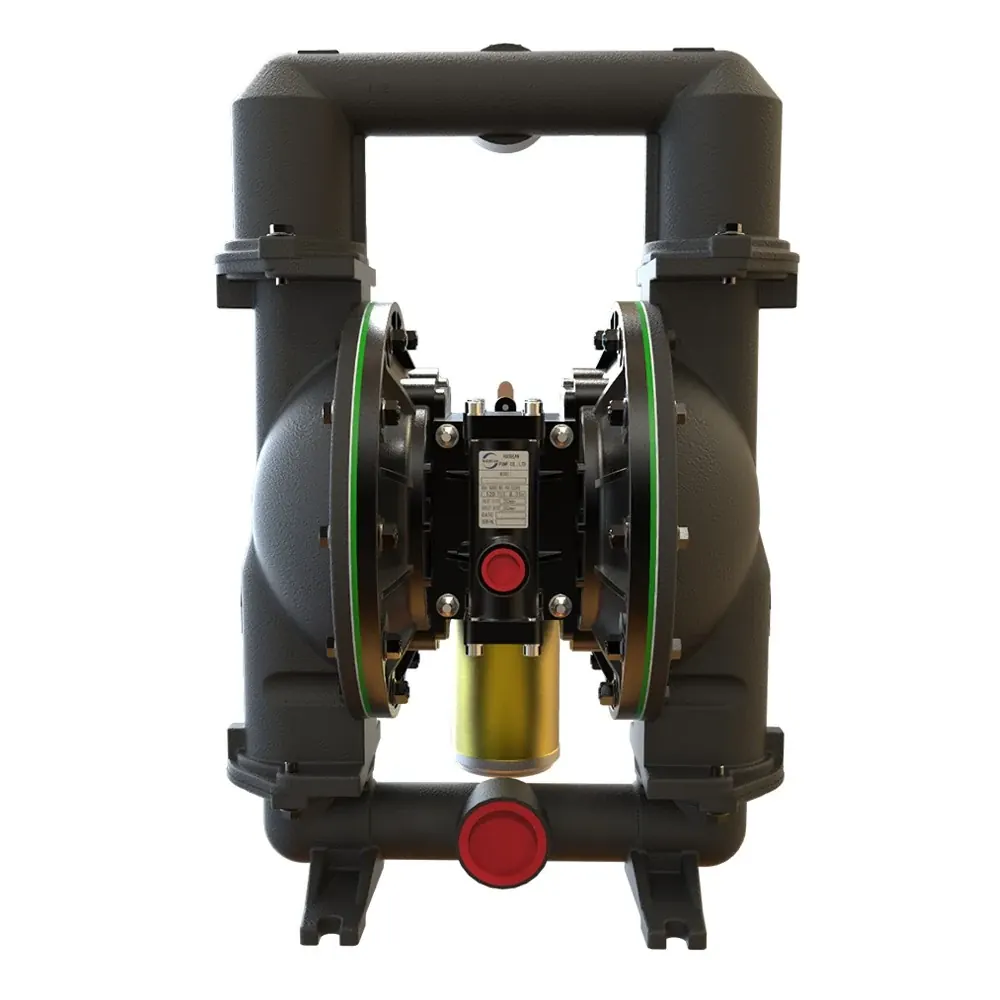
- Cast iron 56.4 kg and 124.3 lbs for the 2 inch pump
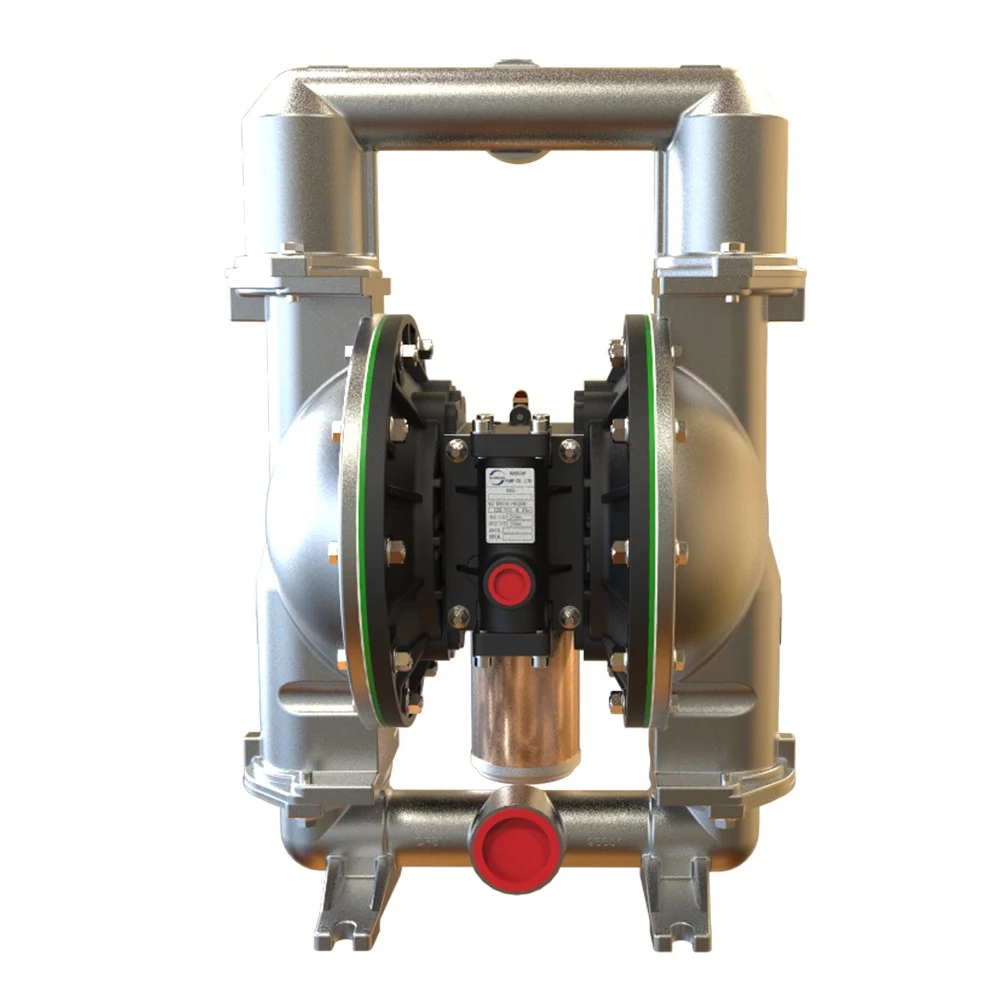
- Stainless steel 56.9 kg and 125.4 lbs for the 2 inch pump
- Non metallic 2 inch pump rated 548.8 LPM at 8.3 bar
Aluminum for Weight and General Duty
Aluminum is the lightest of the published 2 inch metal bodies. The 2 inch aluminum pump is rated at 651 LPM, 8.3 bar, 6.4 mm solids and 8.3 m suction lift, with a published sound level of 80.5 dB(A) at 70 psi and 60 cycles per minute.
Choose aluminum when the duty is general industrial transfer, waste water, oil, cutting fluid, quenching oil, liquid waste, water seepage or similar service, and when the fluid is compatible with the body and internal parts. It is also useful when maintenance teams move the pump between locations.
Do not choose aluminum because it is the cheapest habit. It is not the first choice for acid, alkali, caustic, plating chemistry or many solvent services. If the fluid attacks aluminum, the pump may leak at the port, thin at the chamber or fail between strokes long before the diaphragms reach normal wear.
Cast Iron for Abrasive Wear and Cost Strength
Cast iron gives strength and wear resistance in abrasive, non aggressive service. The 2 inch cast iron pump shares the same published flow, pressure, solids and suction lift as the aluminum and stainless 2 inch pumps: 651 LPM, 8.3 bar, 6.4 mm solids and 8.3 m suction lift.
It weighs 56.4 kg, so it is better suited to a fixed skid, a pump room or a transfer point where the pump is moved rarely. That weight can be an advantage when vibration or hose pull would move a lighter pump, but it is a problem when the pump must be carried to each tank.
Cast iron is a good match for slush, liquid waste, waste water, general transfer and abrasive slurries when corrosion is controlled. It is not the material for clean product, food and medicine, plating, strong acid or strong alkali unless the whole fluid and diaphragm set are proven compatible.
Stainless Steel for Solvents Hot Fluids and Clean Product
Stainless steel is the metal choice when the fluid is a solvent, paint, formulation, hot fluid, clean product or a chemical that cannot be handled by aluminum or cast iron. The 2 inch stainless steel pump is published at 651 LPM, 8.3 bar, 6.4 mm solids and 8.3 m suction lift, with a weight of 56.9 kg and a sound level of 80.5 dB(A) at 70 psi and 60 cycles per minute.
316 stainless steel is the usual starting point when the fluid is a solvent, paint, formulation, hot fluid or clean product. Use stainless when cleanability, hot fluid stability and solvent resistance matter more than weight. It is heavier than aluminum, but it keeps the pressure boundary stable in duties where aluminum would soften or corrode and where non metallic parts may be limited by temperature or mechanical handling.
Stainless is not a universal answer. Chlorides, strong acids, crevice conditions and high temperature can still attack the body, the ball seats or the fasteners. Check the fluid, the diaphragm, the valve parts and the temperature together.
Polypropylene and PVDF for Acid Alkali and Plating
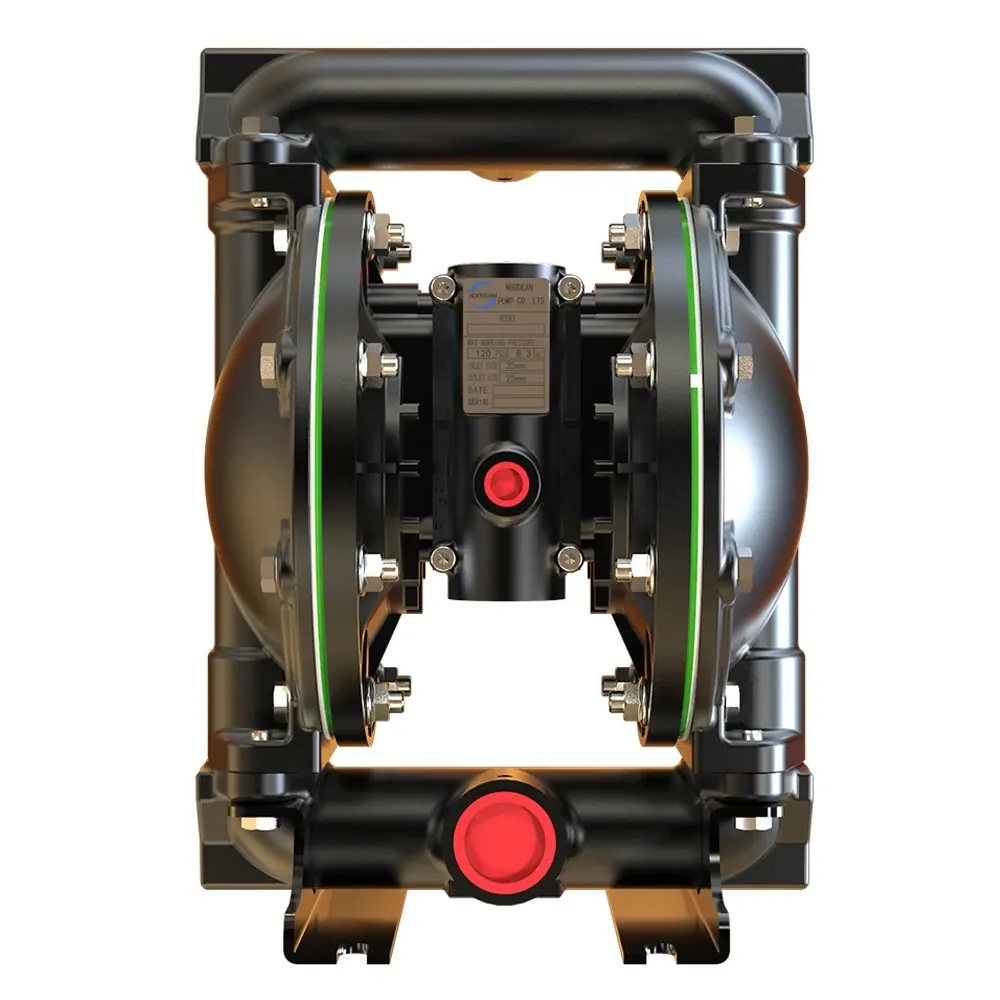
Polypropylene and PVDF are the non metallic body materials to consider for acid, alkali, caustic, electroplate liquid and other plating chemistry. The 2 inch non metallic pump in the catalogue is rated at 548.8 LPM and 8.3 bar, so it is a real transfer option, not just a laboratory part.
Non metallic bodies avoid the metal corrosion path that causes pitting, galling and staining in plating and chemical service. They also reduce the risk of metal contamination in some fluids. The tradeoff is usually lower flow for the same port size, greater sensitivity to hot solvent attack and more careful handling because the body is not as forgiving as metal.
PVDF is generally the more resistant and higher temperature choice of the two, while polypropylene is common for many acid and alkali duties. The exact fluid, concentration and temperature still decide the answer, and the diaphragm and valve materials must be checked at the same time.
Material Decision Rule for the Duty
Use this rule as a first pass, then confirm with the fluid data sheet and the pump model figures.
| Aluminum | General duty, portable service, water, waste water, oil, cutting fluid, quenching oil, liquid waste, water seepage, and compatible non aggressive fluids. |
|---|---|
| Cast iron | Abrasive wear and fixed duty, slush, liquid waste, general transfer, and non aggressive slurries where corrosion is controlled. |
| Stainless steel | Solvent, paint, formulation, hot fluid, clean product, and duties where aluminum or cast iron is attacked. |
| Non metallic | Acid, alkali, caustic, electroplate liquid, plating chemistry, and fluids that require a non metal wetted body. |
| Ask for help | If the fluid is unknown, mixed, hot, crystallising or contains unknown solids, do not guess. Send the service conditions and let the material be checked. |
Check the Duty Before the Material
Before finalising the body, check the duty against the published model figures. The 2 inch metal pumps are rated at 651 LPM and 8.3 bar with 6.4 mm solids and 8.3 m suction lift. The 2 inch non metallic pump is rated at 548.8 LPM and 8.3 bar. The catalogue also lists port sizes from 1 inch to 3 inch, a maximum flow of 897 LPM on the 3 inch metallic pump, a maximum operating pressure of 8.3 bar and a largest solids size of 50 mm on the flap valve pump.
Then check the air supply. A body material cannot fix a pump that is starved of air, restricted at the exhaust or running above its published pressure. If the duty is close to the limit, select the next size rather than forcing the material to compensate.
Finally, decide who will maintain it. Aluminum is easier to move, stainless is easier to clean, cast iron is robust in rough service, and non metallic bodies require careful handling and compatible fasteners. The right material is the one that survives the fluid, fits the duty and can be maintained without improvising.