
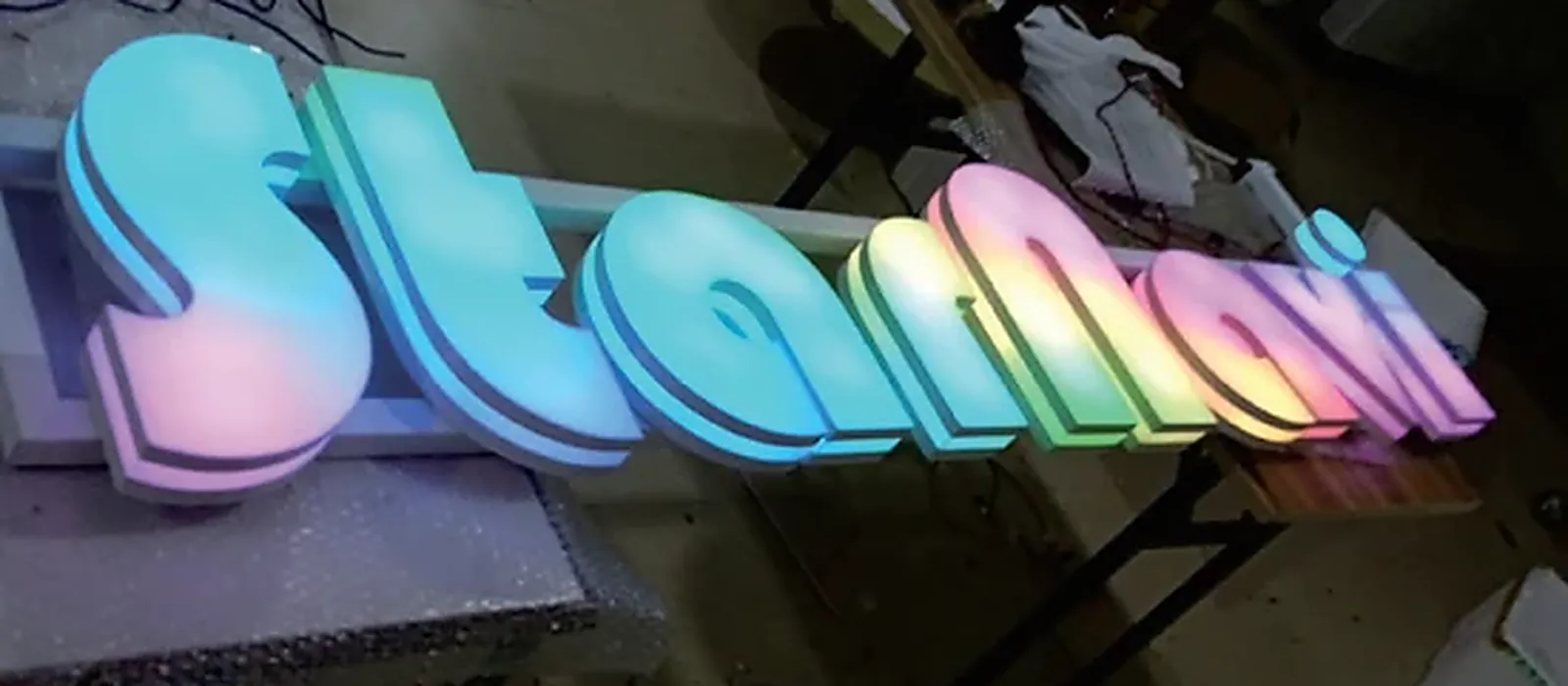
Sign Modules Published With the Depth They Were Designed For
Twenty-five LED sign modules, strips and neon flex from a Shenzhen factory that has built advertising light sources since 2012. Every model publishes its sign depth band, its cascade limit and its IP rating, because those three figures are what decide whether a fascia lights evenly.
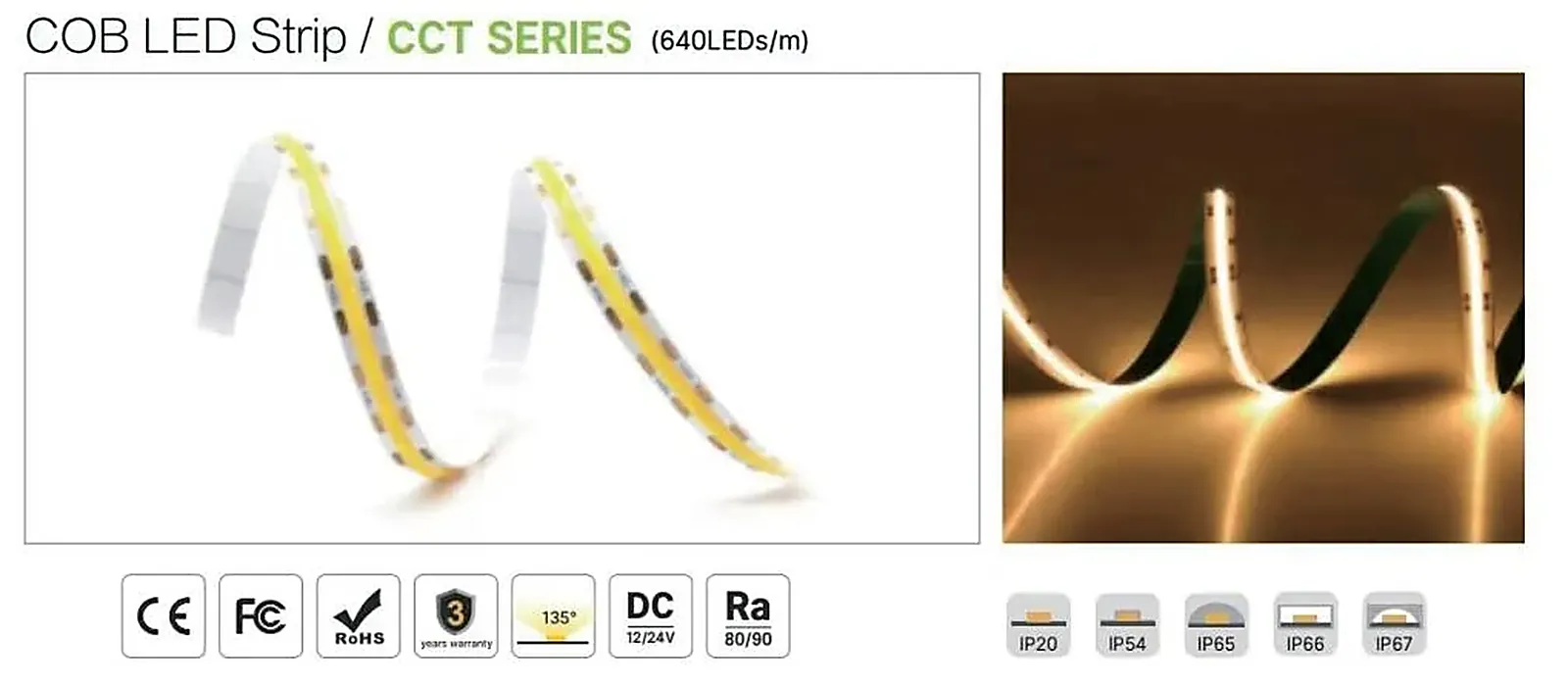
Linear Light Without the Row of Dots
640 emitters a metre under one phosphor line at Ra > 90, a 220 V strip for runs too long for a low-voltage driver, and DMX512 neon flex where the facade has to change colour.
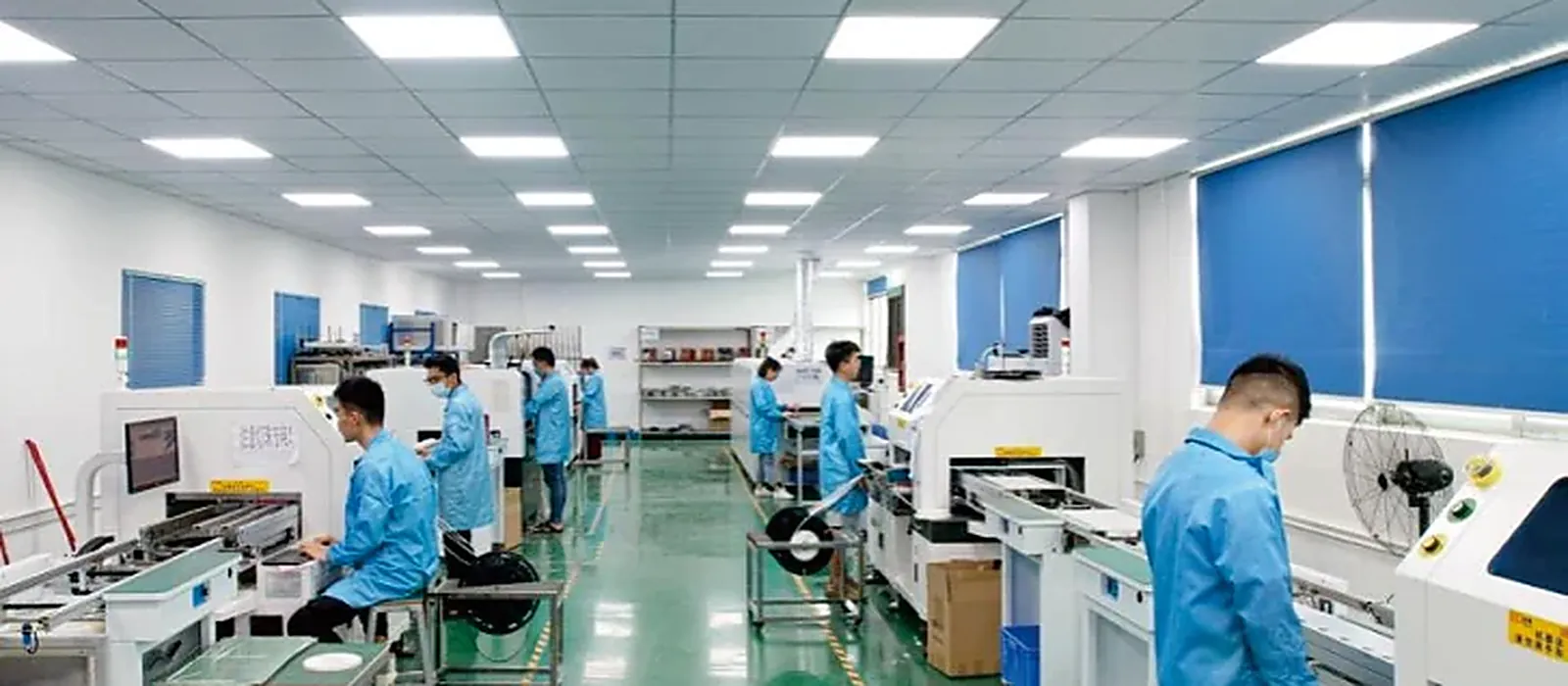
Potted, Aged and Binned Before It Is Packed
Modules are moulded with the optic in place, potted, tested under load and run on the aging rack before packing. CE, RoHS, LVD, UL and an IP68 test report are held against the range.
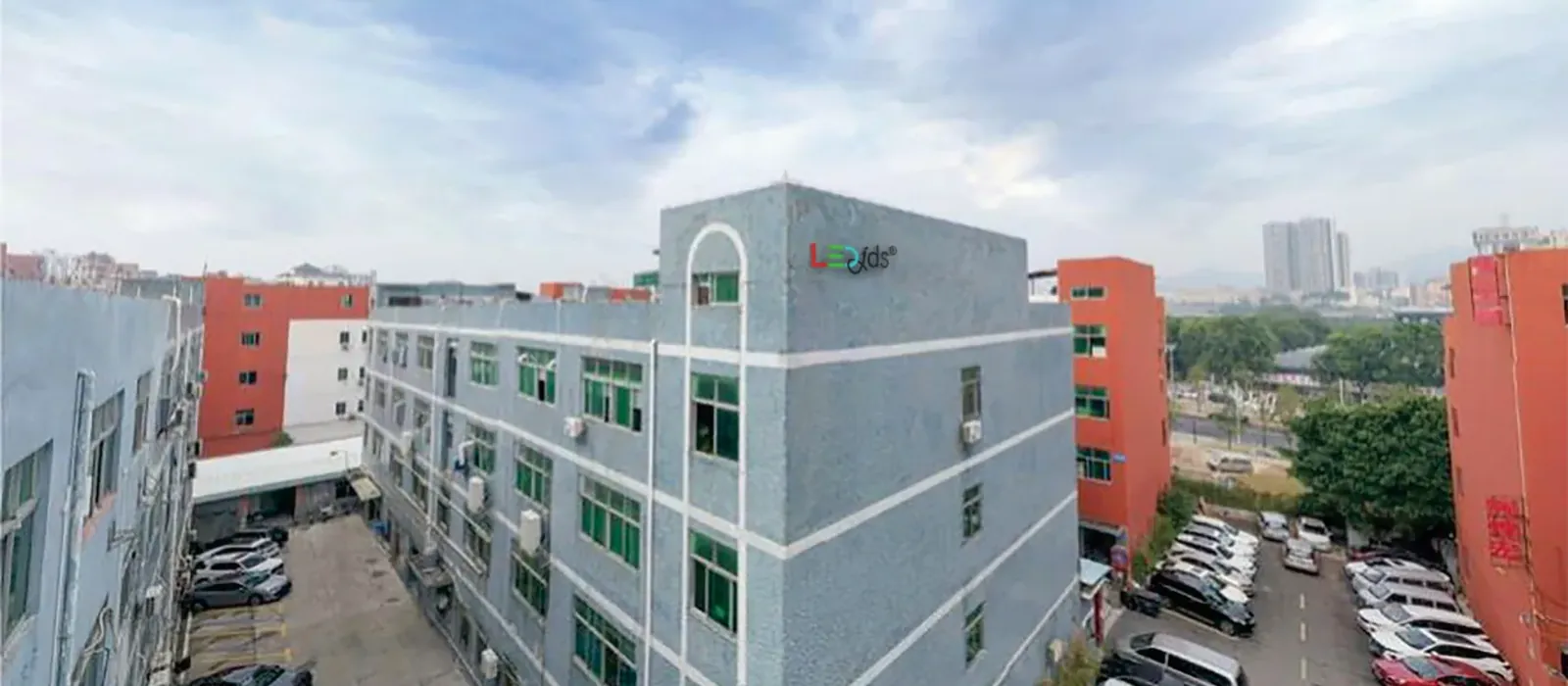
Built in Shenzhen, Shipped to More Than Fifty Countries
The company states that its products are exported to more than fifty countries, with sales networks in Europe, the United States and the Middle East. OEM and ODM work is supported from the same floor.
Seven Module Families Covering Sign Depths From 25 mm To 200 mm
Sealed LED modules for channel letters, three-dimensional luminous characters and light boxes, plus strip and neon flex for linear detail. Seven families covering sign depths from 25 mm to 200 mm.
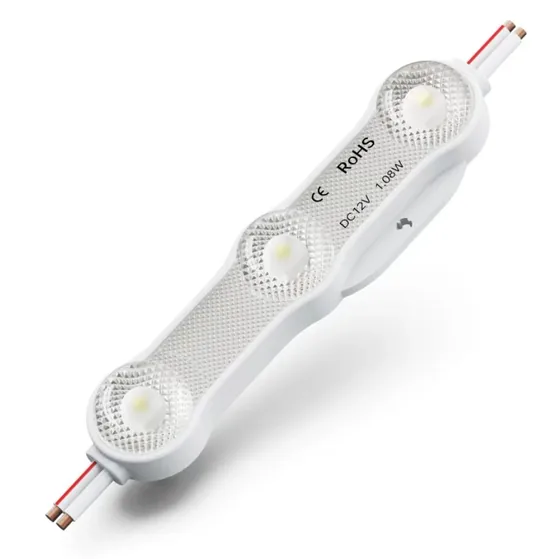
LED Sign Modules
Injection-moulded, potted LED modules for channel letters, 3D luminous characters and light boxes. Every model publishes its module size, the sign depth it is designed for, its beam angle, its IP rating and how many modules may be cascaded before power has to be fed again.
Explore the range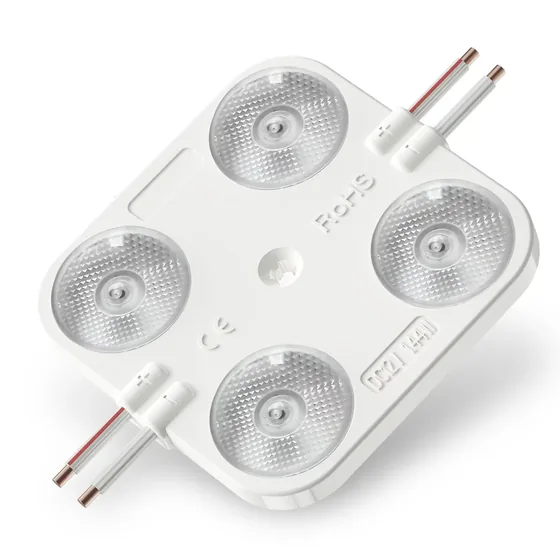
High Power LED Modules
Lens modules rated 1.5 W to 4 W per piece, for large-format channel letters and deep light boxes where a standard module cannot reach the face without hot spots showing through it.
Explore the range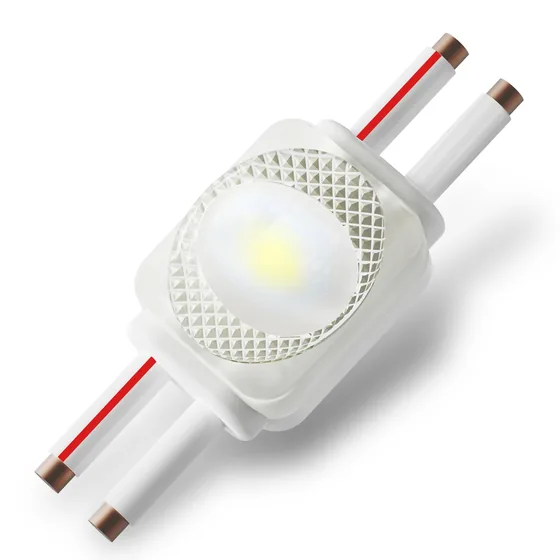
Mini LED Modules
Modules from 12 x 8 x 8.5 mm upward for narrow strokes, small letters and signs with only 30 to 50 mm of internal depth, where a full-size module physically will not fit inside the return.
Explore the range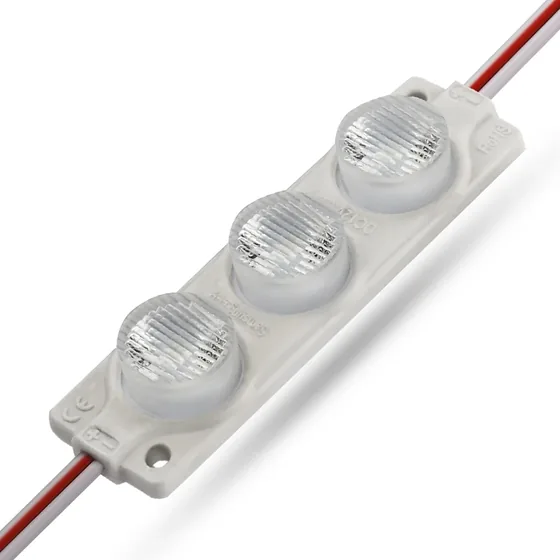
Side-Emitting LED Modules
Side-firing modules with asymmetric 65x10 or 45x20 degree optics, mounted on the inside wall of a light box so the light travels across the face instead of straight at it.
Explore the range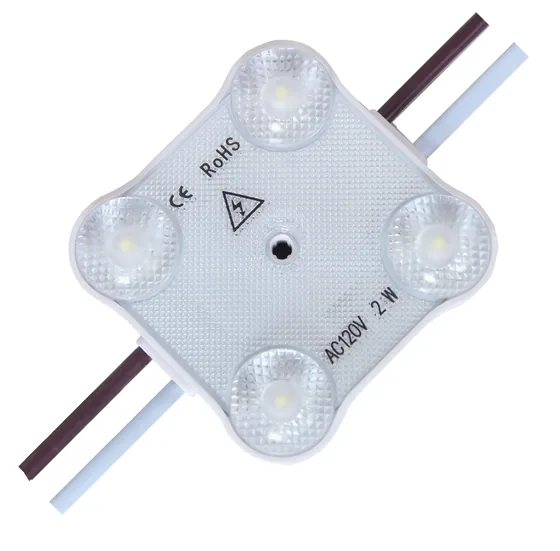
AC LED Modules
Modules driven straight from AC 120 V or AC 220 V with no separate DC power supply in the sign, for installations where there is no room or no access for a driver box.
Explore the range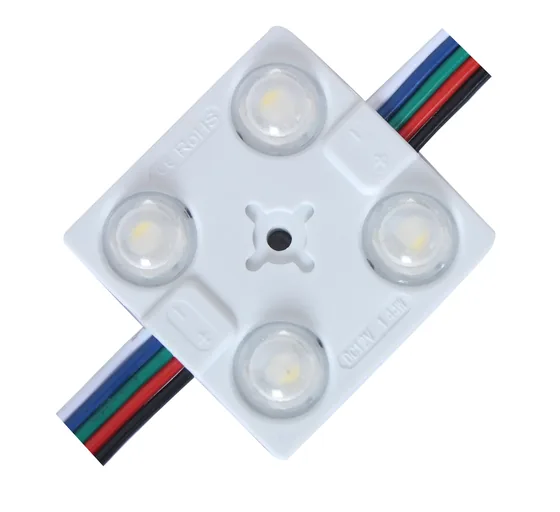
RGB and RGBW Modules
Colour-changing modules in RGB and RGB+W, including a built-in-IC version for addressable effects, for signage and facade work that has to change colour rather than stay one temperature.
Explore the range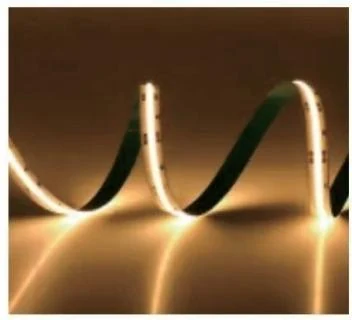
LED Strip and Neon Flex
Flexible strip and neon flex for cove lighting, edge lighting and linear detail: COB CCT, 5050 RGBW, DMX512-addressable neon flex and a 220 V high-voltage strip that runs long lengths without a low-voltage driver.
Explore the rangeEvery Model Publishes The Four Figures That Decide The Job
Sign depth band, cascade limit, beam angle and IP rating - on all 25 products, on one page, nothing paginated. Where the manufacturer's sheet publishes no figure, the page says so instead of filling the gap with an estimate.
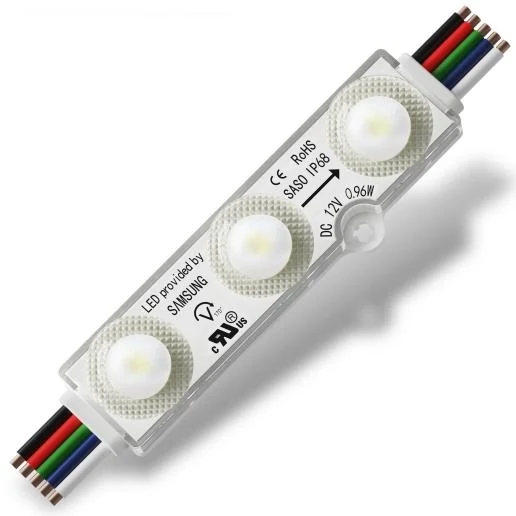
JDS-6515RGB/W
Addressable RGB/RGBW module with a built-in IC, 65 x 15 x 10 mm, IP68, for medium-sized signs 80 to 120 mm deep.
See the specification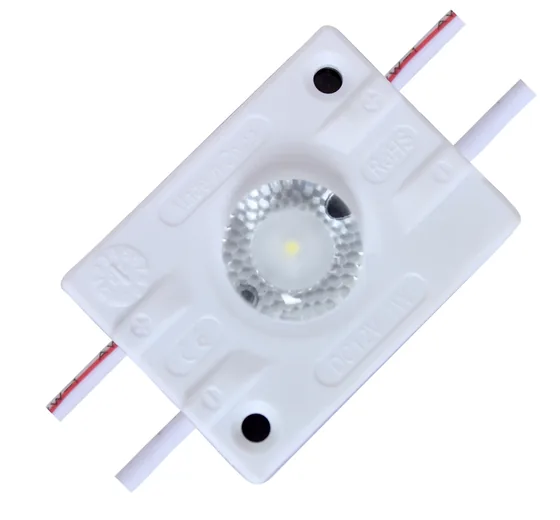
JDS-3828D
Double-sided 1.5 W module at 93 lm/W, IP67, 8 pieces per metre, for signs deeper than 60 mm.
See the specification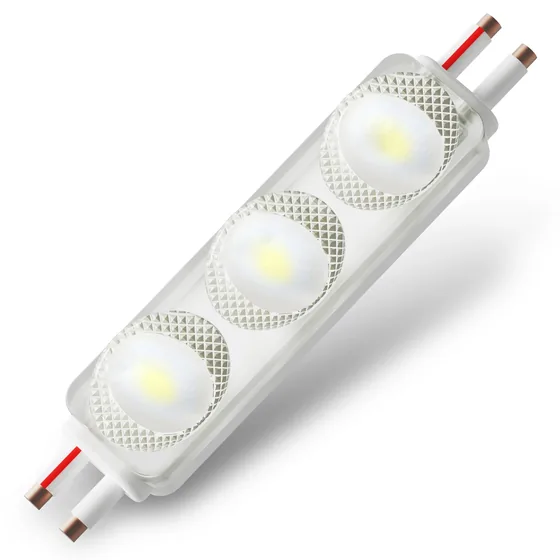
JDS-3208B
208 lm/W mini module, 32 x 8 x 8.5 mm, IP68, 100 modules per double-ended run, for signs 30 to 50 mm deep.
See the specificationJDS-7420V
3 W side-emitting module, 300 lm per piece, IP67, for single-sided boxes 50 to 100 mm and double-sided boxes 60 to 200 mm deep.
See the specification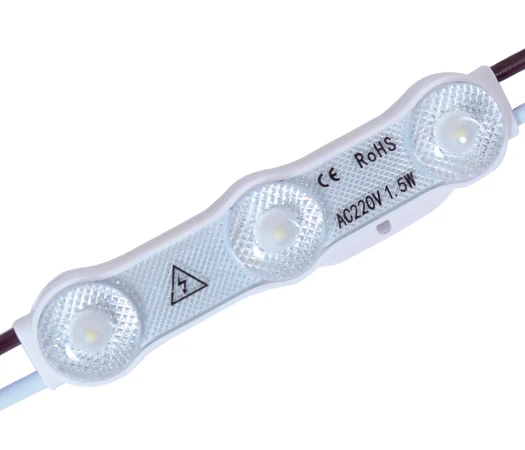
JDS-6616B/AC120V/220V
Mains-driven module at AC 120 V or 220 V, 1.5 W, IP67, no DC driver needed inside the sign.
See the specificationJDS-6515RGB/W
Addressable RGB/RGBW module with a built-in IC, 65 x 15 x 10 mm, IP68, for medium-sized signs 80 to 120 mm deep.
See the specification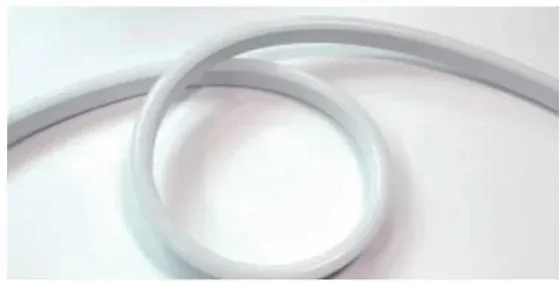
DMX512 Neon Flex Strip, 60 LEDs/m
DMX512-addressable RGBW neon flex, 60 LEDs/m, 24 V, 450 lm/m, cut every 100 mm, 5 m per roll.
See the specificationFour Buyers Who Each Ask A Different First Question
Sign fabricators, light box manufacturers, signage distributors and architectural lighting contractors - four buyers who each ask a different first question.
Channel Letter Fabricators
Workshops cutting returns, welding backs and facing letters, who need the depth band and the cascade limit published before they cut anything.
See what they specifyLight Box Manufacturers
Makers of single- and double-sided illuminated boxes, where the face has to read as one even surface and the depth available is fixed by the frame.
See what they specifySignage Distributors and Wholesalers
Distributors who have to stock a range that answers every depth a fabricator walks in with, and who need the specification to be the same on the box as on the website.
See what they specifyArchitectural and Facade Lighting Contractors
Contractors lighting building facades, coves and linear detail, where the run is long, the access is expensive and the light has to read as a line rather than a row of dots.
See what they specifyA Sign Lights Badly For Three Reasons, All Decided Before It Is Built
A sign lights badly for one of three reasons: the module was specified for the wrong cavity depth, the run was wired past its cascade limit, or moisture reached a body that was never sealed to a stated rating. All three are decided before anything is built, and all three come down to figures a supplier either publishes or does not.
What Usually Goes Wrong
- A module specified on price and lumens, with no published depth band to check it against
- A run wired past its cascade limit, so the far end of the fascia sits visibly darker
- An IP figure quoted for 'the range' and never tied to the model on the order
- Two cartons of the same model that do not match in colour on one sign
- A driver buried in a sealed cavity with no access for the day it fails
What This Manufacturer Publishes Instead
- A published depth band, cascade limit, beam angle and IP rating on every one of the twenty-five products
- Single-ended and double-ended cascade figures, not one vague maximum
- Colour binning stated as 3 SDCM on the models that publish a bin
- Packing quantity, carton weight and carton dimension on the product page
Six Stages From Bare Board To Aged And Packed Module
These are the six stages photographed on the factory's own process board, and the specific field failure each one exists to prevent.
Patch
A misplaced die shows as a dark lens once the face goes on.
SMT placement of the emitters onto the module board, photographed as stage one on the factory's own process board.
Solder wire
A cold joint at the lead is the most common field failure in cascaded modules.
Lead wires are soldered and strain-relieved before the housing is closed.
Injection moulding
A lens bonded on after the fact separates in the heat cycle of a south-facing sign.
The housing and the optic are moulded together, then the cavity is potted.
Testing
A module that only fails under load passes a visual check.
Electrical test under load before the module leaves the line.
Back glue
Tape applied to a contaminated surface releases in the first summer.
3M backing tape is applied to a cleaned housing on the models specified with it.
Aging
Infant mortality in LEDs shows in the first hours, not the first year.
Finished modules are run on the aging rack before packing.
Three Jobs, Photographed, With The Specification Decisions Behind Them
Client names, locations, quantities and contract values are not published by the manufacturer, so none are stated here. What each page describes is what the photograph shows and what the published specification says.
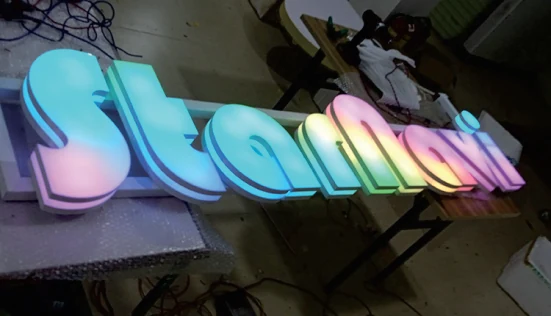
Shallow-Return Shop Fascia Lettering
Fascia lettering on an existing shop front, where the return depth is set by the frame that is already on the building and cannot be changed to suit the module.
Read what was specified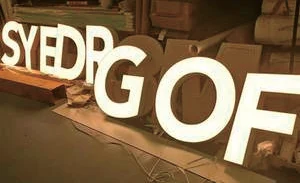
Double-Sided Projecting Light Box
A projecting box that has to be read from both sides, where lighting each face separately doubles the module count, the wiring and the number of things that can fail.
Read what was specified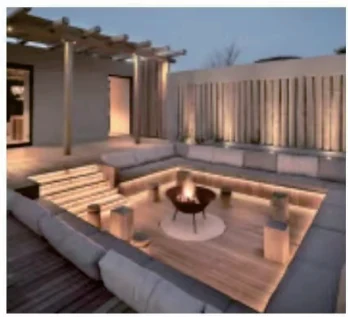
Outdoor Terrace Cove and Linear Detail
Linear detail built into joinery and structure, where the light has to read as a continuous warm line and the runs are long enough that a low-voltage driver would have to sit somewhere unreachable.
Read what was specifiedFour Conversations That Come Up On Almost Every Enquiry
Specifying a Module From the Sign Depth
The published depth band is the first filter, not the last. This is the order the decisions actually have to be made in.
Read the stage by stage guideRetrofitting a Sign With No Room for a Driver
What changes when the module runs straight off mains, and the three things that have to be checked before it can.
Read the stage by stage guideBuilding a Colour-Changing Sign
Where RGB stops and RGBW starts, why a colour sign needs more depth than a white one, and when the control IC has to be inside the module.
Read the stage by stage guideSpecifying Strip and Neon Flex for Linear Detail
Choosing between four strips by the three things that actually decide it: dotting, run length and control.
Read the stage by stage guideSix Guides For People Who Specify Sign Lighting
How the published depth band decides whether a face lights evenly, what IP67 and IP68 do and do not cover, why every product carries a cascade limit, when a light box has to be lit from the edge, what COB construction changes in a cove, and which certification document answers which question. Every figure quoted comes from a specification published on this site.
How to Choose an LED Sign Module by the Depth of the Sign
The published depth band is the one figure that decides whether a face lights evenly. Here is what the band means, why it exists, and the full depth map across all twenty-five products on this site.
Read the guide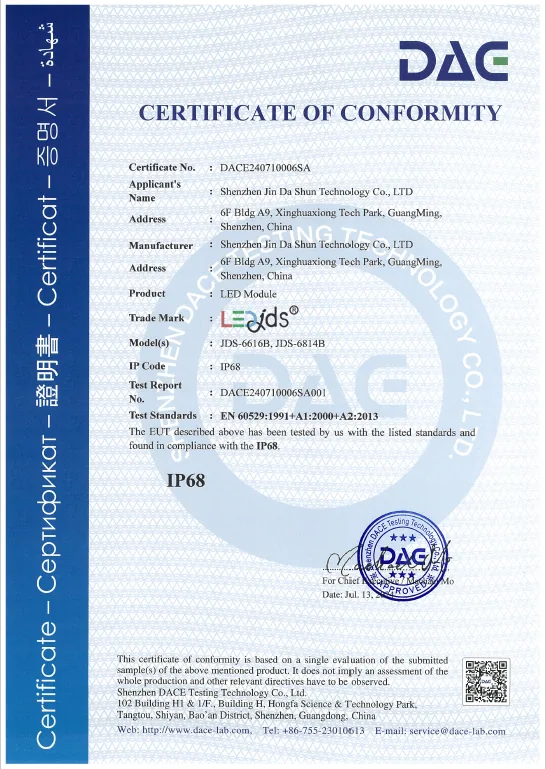
IP67 and IP68 on Sign Modules, and What Neither of Them Covers
Both ratings appear across this range, on specific models rather than on 'the range'. Here is the difference, and the part of the installation that no module rating protects.
Read the guide
Cascade Limits and Voltage Drop in LED Module Runs
Why every product page publishes a maximum number of modules per feed, what happens past it, and how the single-ended and double-ended figures differ.
Read the guideFrequently Asked Questions
How do I choose between twenty-five modules?
What is the difference between the IP67 and IP68 models?
Do the modules need a separate power supply?
What certificates are held?
Is there a minimum order quantity?
Is there an enquiry form on this site?
Tell Us How Deep The Sign Is
Send the internal depth of the cavity, the colour temperature and the quantity. A shortlist with the matching published specifications comes back the same way.