
- Home
- Knowledge Center
- IP67 and IP68 on Sign Modules, and What Neither of Them Covers
IP67 and IP68 on Sign Modules, and What Neither of Them Covers
Both ratings appear across this range, on specific models rather than on 'the range'. Here is the difference, and the part of the installation that no module rating protects.
Which models publish which rating
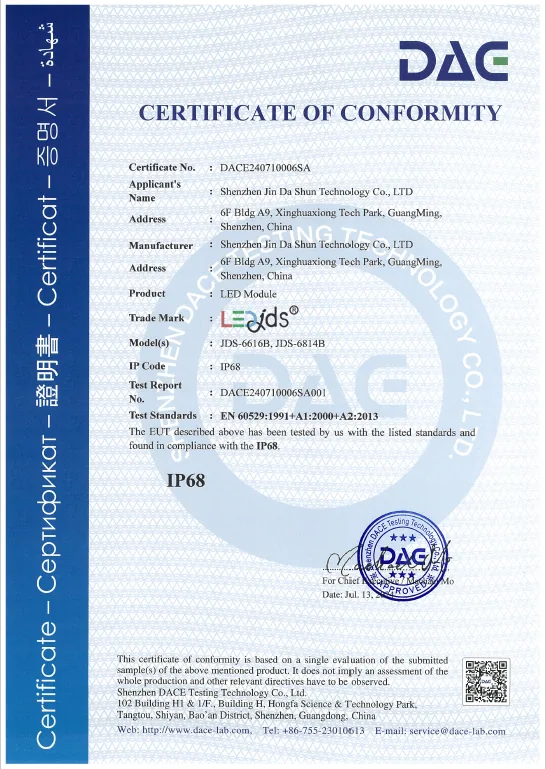
IP68 is published on the 6616B, 4116B, 3939B, 6515B, 6515RGB/W, 3208B, 1208B and 1812B. IP67 is published on the 3828B, 3828D, 3828V, 4035V, 7420V, 7618B, 5118B, 4543B, 2618B, 6615RGBW, 3636RGBW and both AC models. The manufacturer holds a separate IP68 test report, which is one of the documents available on the downloads page.
What the two digits mean
The first digit is solids: 6 on both ratings means dust-tight. The second digit is water. 7 means temporary immersion; 8 means continuous immersion under conditions the manufacturer specifies. For a sign module the practical difference is margin, not immersion: an IP68 body has more of it when a sealed cavity fills with condensation over a winter.
Why signs get wet from the inside
The failure mode people expect is rain getting in. The one that actually happens is warm damp air getting in through a cable entry during the day, then condensing on the coldest surface at night, every night, for years. That is why the module body is potted rather than gasketed, and why the rating on the module matters even in a sign that looks sealed.
What the rating does not cover
The rating applies to the module as it leaves the factory. It does not apply to the joint you make between two modules on site, to the cable entry into the letter, or to a lead wire that has been cut and rejoined. Those are the points that fail, and they fail regardless of whether the module body was rated 67 or 68.
Temperature is the other half of the answer
Sealing keeps water out; the temperature rating says whether the module survives the cycle that pulls water in. The 3828 family publishes the widest window on this site at -40 to +60 C operating. Most of the range publishes -20 to +50 C. For a fascia in direct sun or a sign in a hard winter, that figure deserves as much attention as the IP number.
Products Referenced In This Guide
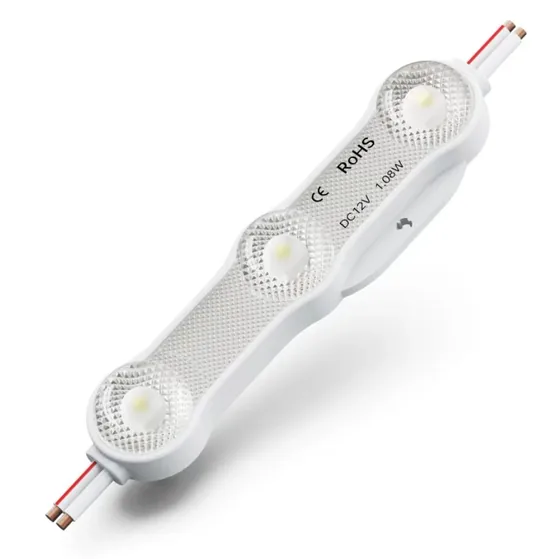
JDS-6616B
Three-lens 66 mm module at 170 lm/W and IP68, for deep channel letters and light boxes 80 to 120 mm deep.
See the specification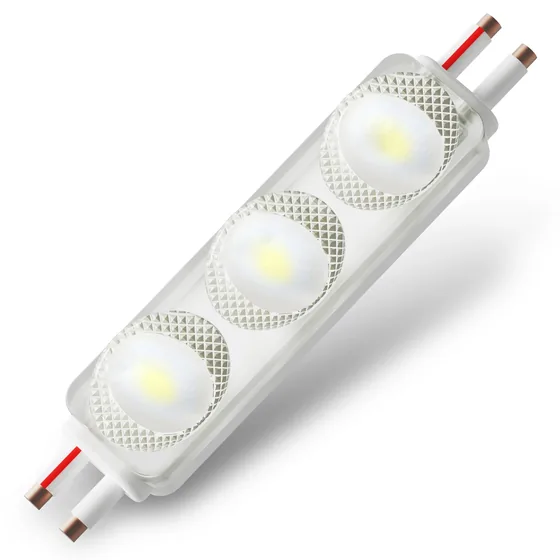
JDS-3208B
208 lm/W mini module, 32 x 8 x 8.5 mm, IP68, 100 modules per double-ended run, for signs 30 to 50 mm deep.
See the specification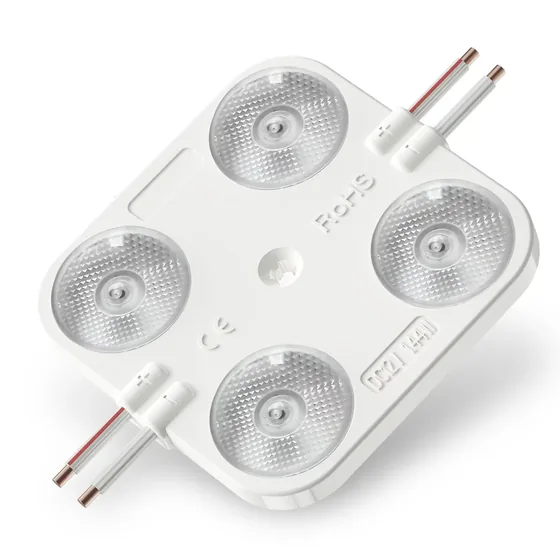
JDS-4543B
Four-lens square module, 480 lm per piece at up to 4 W, IP67, the brightest single module published here.
See the specificationProduct Families Covered
Questions About This Guide
Is IP68 always better than IP67 for a sign?
Does the IP rating cover the power supply?
Put This Into Practice
Send the internal depth of the sign you are working on and a recommendation with the matching published specification comes back.