 Request A Quote
Request A Quote
Request A Quote
Inorganic Salts
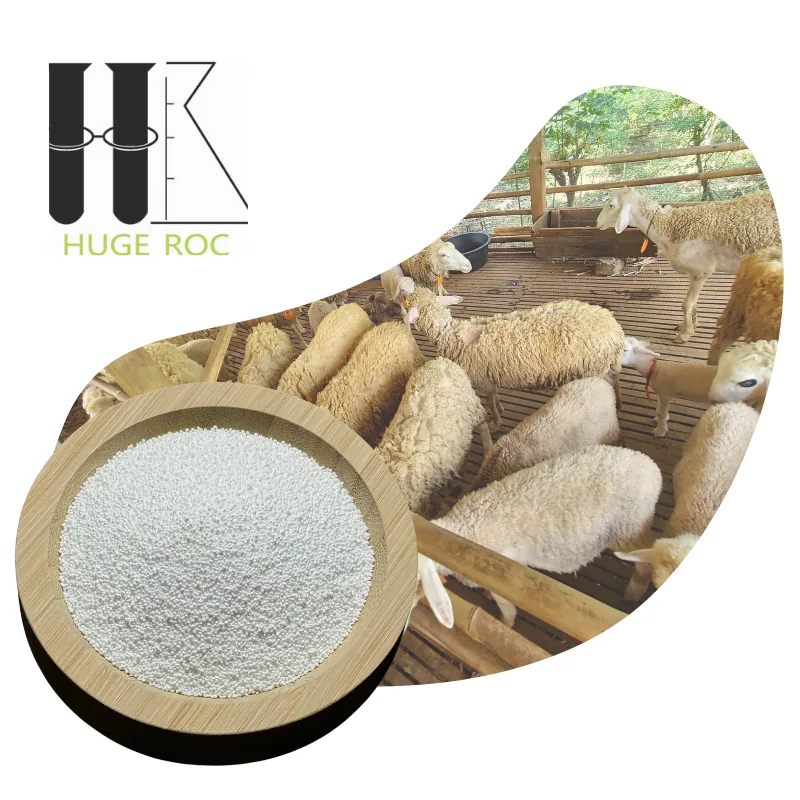
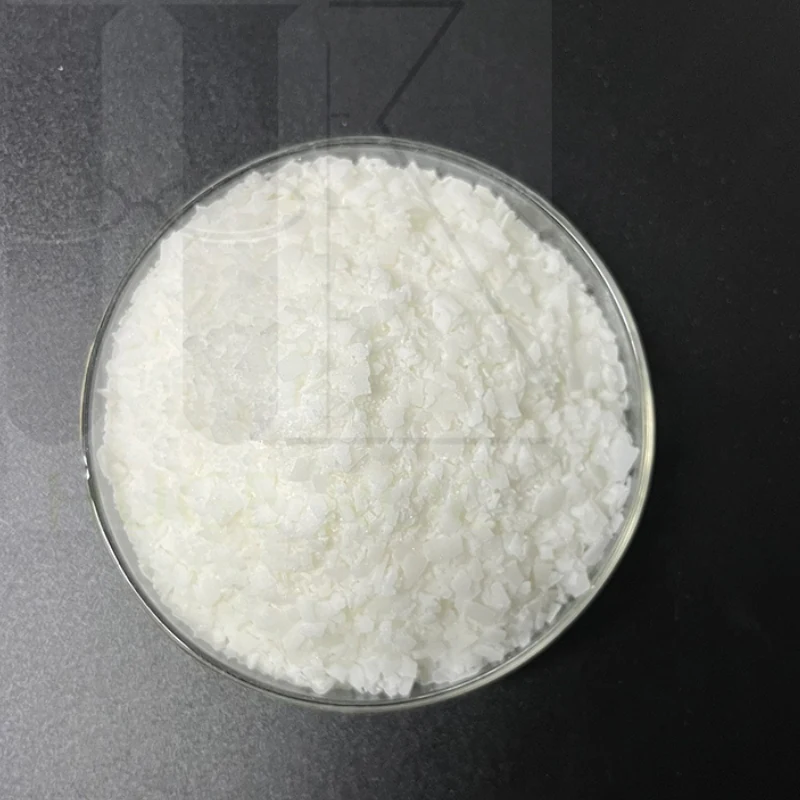
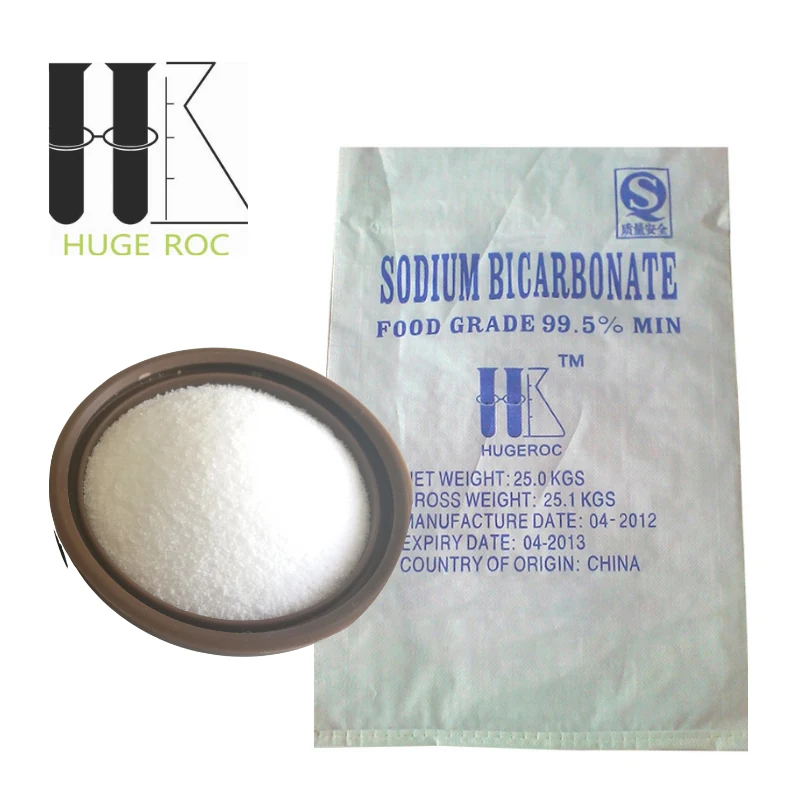
Sodium Bicarbonate, baking soda, NaHCO3, CAS 144-55-8, is a white odourless crystalline powder with a salty taste, easily dissolved in water to a weakly alkaline solution and insoluble in ethanol. The food grade is supplied at 99.0-100.5% against GB 1886.2-2015 from an annual output of 100,000 tons. Beyond baking it has a distinct role in feed, where it buffers rumen acidity, supports calcium metabolism and helps animals shed heat load.
Send the quantity and destination port and you get the grade recommendation, the analytical specification, the packing format and the container loading in one reply.
| Assay | 99.0% - 100.5% |
|---|---|
| Appearance | White crystalline powder, odourless, salty |
| Solubility in water | 8.8% at 15 deg C, 13.86% at 45 deg C |
| Solution character | Weakly alkaline |
| Ethanol solubility | Insoluble |
Ammonium bicarbonate gives a stronger puff and leaves no residue, but releases ammonia. Sodium bicarbonate is gentler, contributes sodium and is safe in products where ammonia odour would be noticed. In biscuit and cake work the two are commonly formulated together.
FAQ
Food grade sodium bicarbonate at 99.0% to 100.5% against quality standard GB 1886.2-2015.
As a leavening agent formulated with ammonium bicarbonate for biscuits and cakes, the addition amount in wheat flour is 20 g/kg.
It supplies sodium to maintain blood sodium concentration, supports calcium metabolism, helps maintain the phosphorus level needed for eggshell formation, and releases CO2 in the digestive tract which carries away heat and helps the animal resist hot conditions.
Easily dissolved in water at 8.8% at 15 deg C and 13.86% at 45 deg C, giving a weakly alkaline solution. It is insoluble in ethanol.
2836300000.
Yearly output is 100,000 tons, so container and bulk quantities are routine.
Related
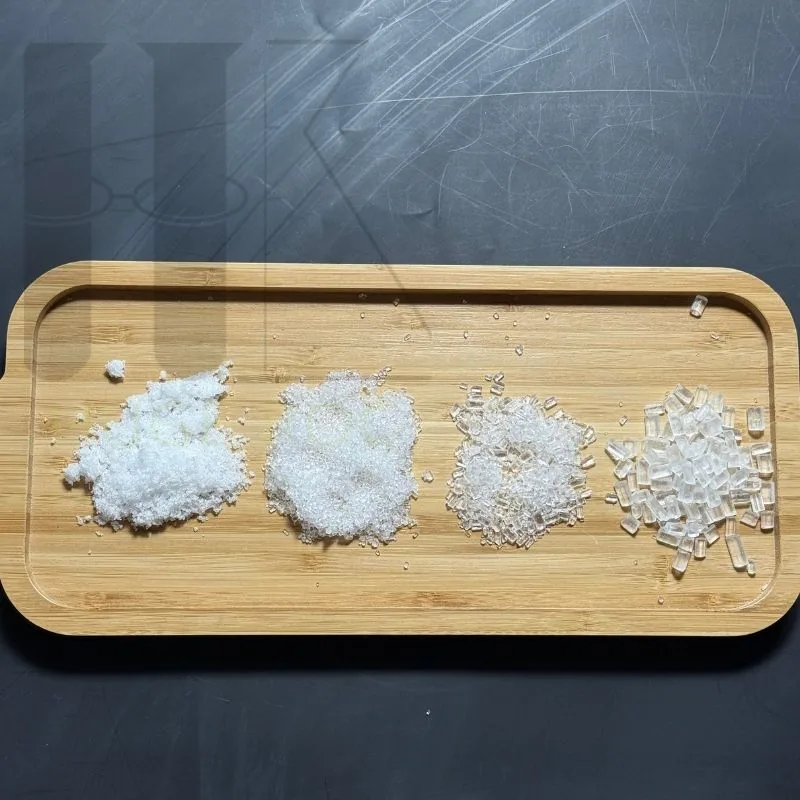
Strong reducibility for dechlorination and reduction duty
View details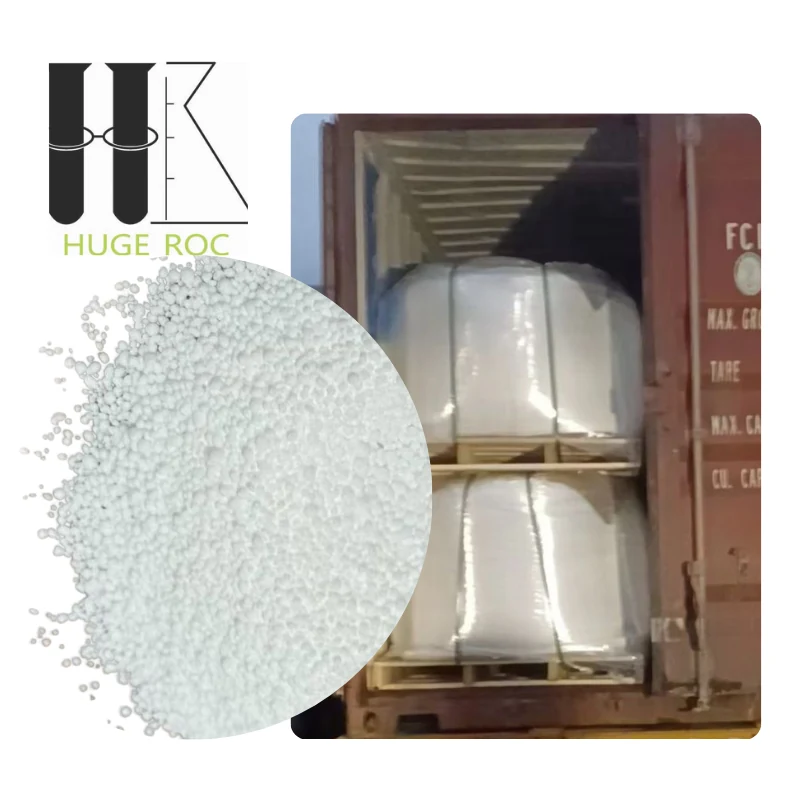
Dual specification, GB 25588-2010 and FCC VII, so one material serves Chinese and FCC-referencing markets
View details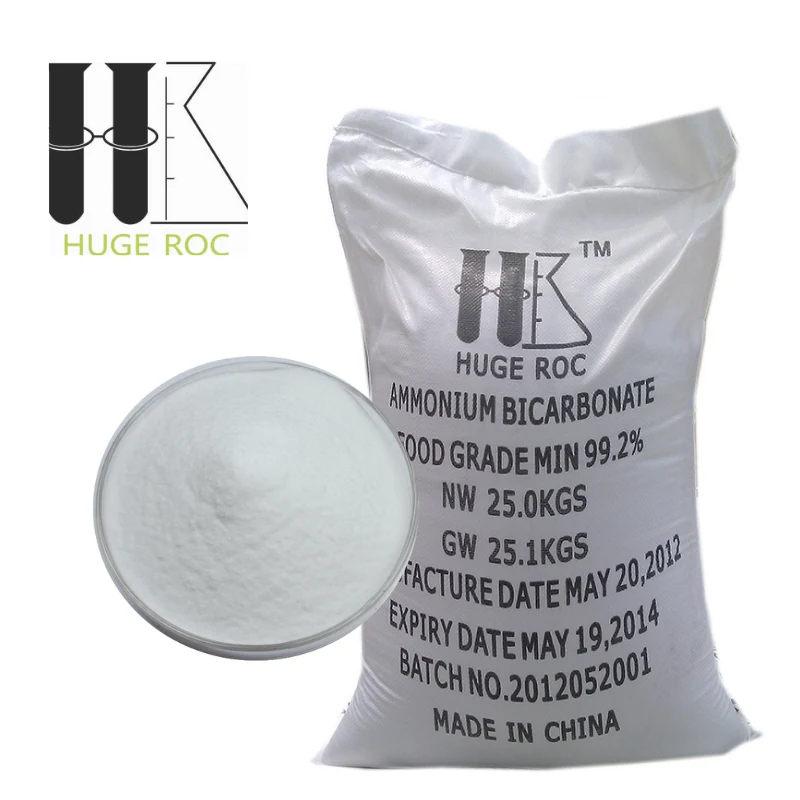
Strong expansion effect, which is why puffed food and puffs rely on it
View details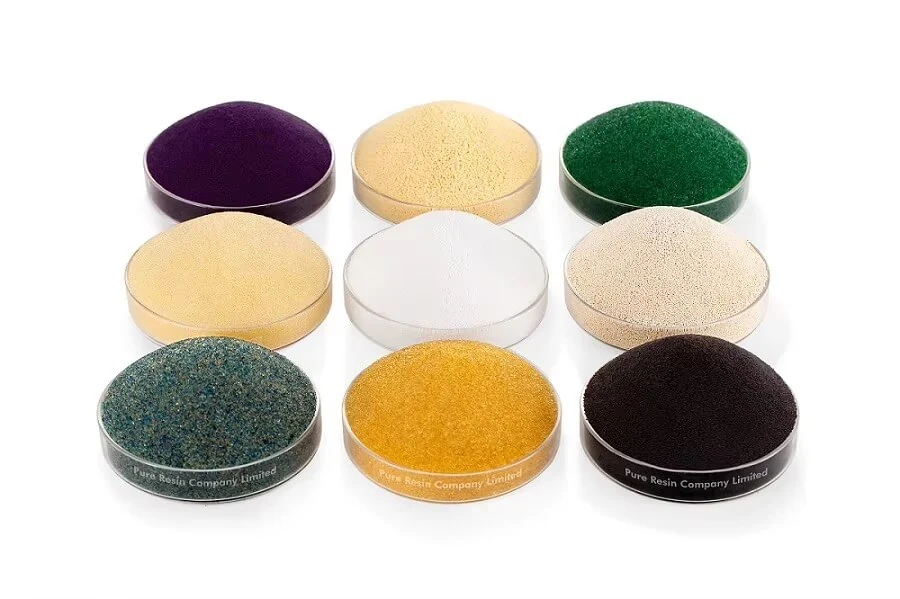
Total exchange capacity 1.9 eq/L min, which sets the throughput a column can deliver between regenerations
View details