What the four quadrants are
Motoring forward, braking forward, motoring reverse, braking reverse. A conventional drive handles the motoring quadrants well and manages braking by dumping energy into a resistor. That works until braking becomes frequent, at which point the resistor bank and its cooling dominate the panel design.
The active front end
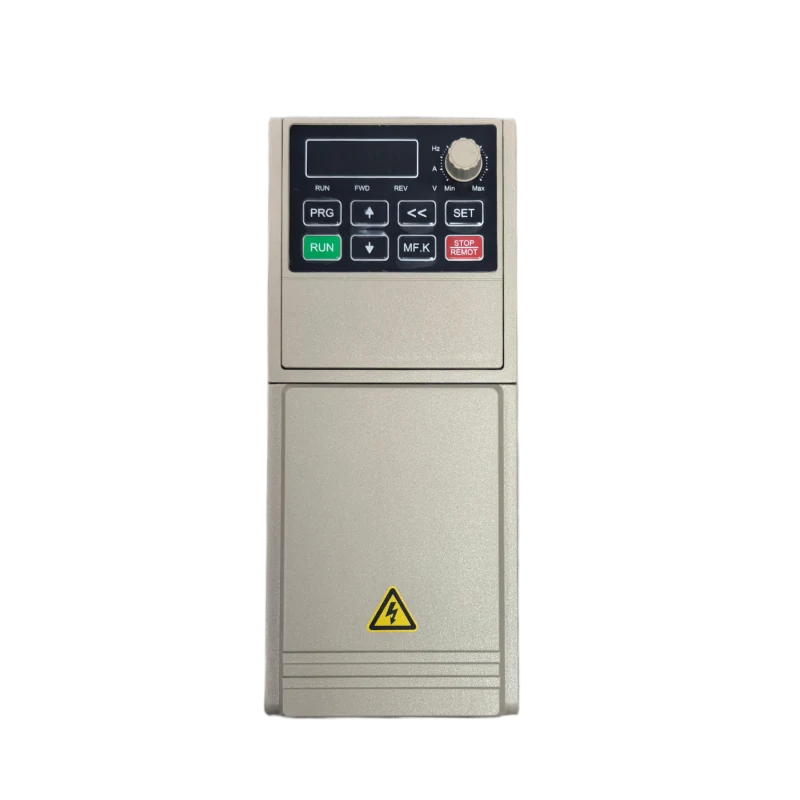
AD1000-AFE replaces the diode bridge with a PWM-controlled IGBT rectifier. Because that stage is bidirectional, energy flowing back from the motor can pass through it to the grid instead of stopping at the DC bus. The stated result is 100% energy recovery of the load's inertial energy.
Power factor as a separate benefit
A diode front end draws a distorted, lagging current. PWM rectification holds the power factor close to 1, which removes the reactive penalty that appears on many industrial tariffs — a saving that applies continuously, not only during braking.
Where it pays back
Potential energy loads: elevators, cranes, hoists — anything that raises a mass and later lowers it. Large inertial loads that decelerate rapidly and often. The AD1000-AFE range covers 0.75 kW to 710 kW at 380 V ±15%, with output frequency from 0.1 Hz to 400 Hz.
What to check before specifying
Grid code compliance for regeneration varies by country, and the braking arrangement depends on your duty cycle. Send the load profile and local grid requirements with the enquiry.