

Hose Connector Types and When to Use Each One
Plain, soft coated, water stop, lock, zinc and metal cap connectors do different jobs. Here is how to place each of them on a retail wall.
The Plain Connector Is the Price Entry
A plain plastic hose connector is the cheapest way to clip a hose to a tool. It works, it is the volume seller, and it is what most customers replace when it eventually splits. Its job on the wall is to hold the opening price point, not to be the product you promote.
Soft Coated Is the Real Mid Range
A soft coated connector carries an over moulded grip on the collar. The practical difference is that it can be twisted open with wet or cold hands. It costs more and it is where most European ranges put their volume, because the customer can feel the difference in the shop.
Water Stop Solves a Behaviour Problem
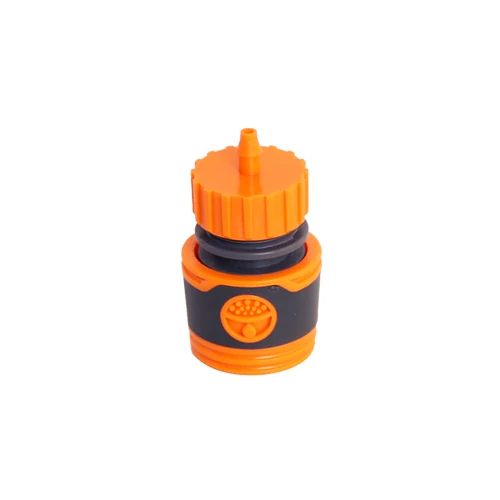
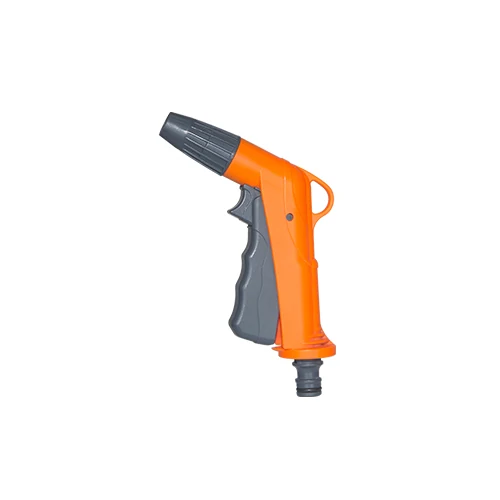
A water stop connector closes the line automatically when the tool is unclipped. Without it, changing from a spray gun to a sprinkler means walking back to the tap. This is the feature that persuades a customer to buy two tools instead of one, so it belongs next to the gun display as well as in the fitting aisle.
Lock Versions Are for Pressure and for Children
Lock connectors add a mechanical catch so the coupling cannot be knocked apart under pressure. In this catalogue the lock variants are coded with a p and are offered in both 1/2 inch and 3/4 inch, with and without water stop.
Zinc and Metal Cap Are the Premium Step
Zinc menders and metal cap connectors give the range a top tier that looks and feels different on the hook without changing the way it fits. They are the right answer when a buyer wants a premium step but does not want to introduce a second, incompatible system.
Families This Article Covers
More From the Knowledge Centre
Garden Hose Sizes Explained for Retail Buyers
Why 1/2 inch, 5/8 inch and 3/4 inch are not interchangeable and how hose size decides every other product on your watering wall.
Buying GuideHow to Choose a Garden Sprinkler by Lawn Shape
Impulse, oscillating and rotating arm sprinklers each suit a different lawn. Match the mechanism to the shape before you compare prices.
Product GuideSpray Gun Patterns Explained
What seven, eight and nine pattern actually means, which settings customers really use, and how to tier a gun wall.
Buying GuideHose Reel and Cart Capacity Explained
Capacity claims only mean something when they name a hose size. Here is how to read them and how to pick between a reel and a cart.
Buying GuideWater Wand Buying Guide for Container Gardens
Fixed or telescopic, shower head or pattern head. How to pick the wand that matches the customer's plants rather than the customer's hose.
ComparisonMechanical Versus Electronic Water Timers
Why a two hour mechanical dial still outsells electronics in a garden aisle, and where each one actually belongs.
Process GuideReading Carton Data and Planning a Container
CBM, pieces per carton, net and gross weight. What each number is for and how to build a watering container that actually fills.
Process GuideRetail Packaging Formats for Garden Watering Products
Blister card, double blister, colour box, tie on card and plastic shrink. What each format costs you in shelf space and in CBM.
Questions About This Topic
How many connector variants does a wall need?
Three is usually enough: a plain entry, a soft coated mid and one premium step in zinc or metal cap. Add water stop as a fourth if you also sell more than one hose end tool.
Do water stop connectors fit the same tools?
Yes. Water stop is a feature inside the same body geometry, so it clips onto the same guns, wands and sprinklers.
Put This Into a Quotation
Send the models you are considering, the volume and the market. We will confirm the specification and the carton data before you price it.