
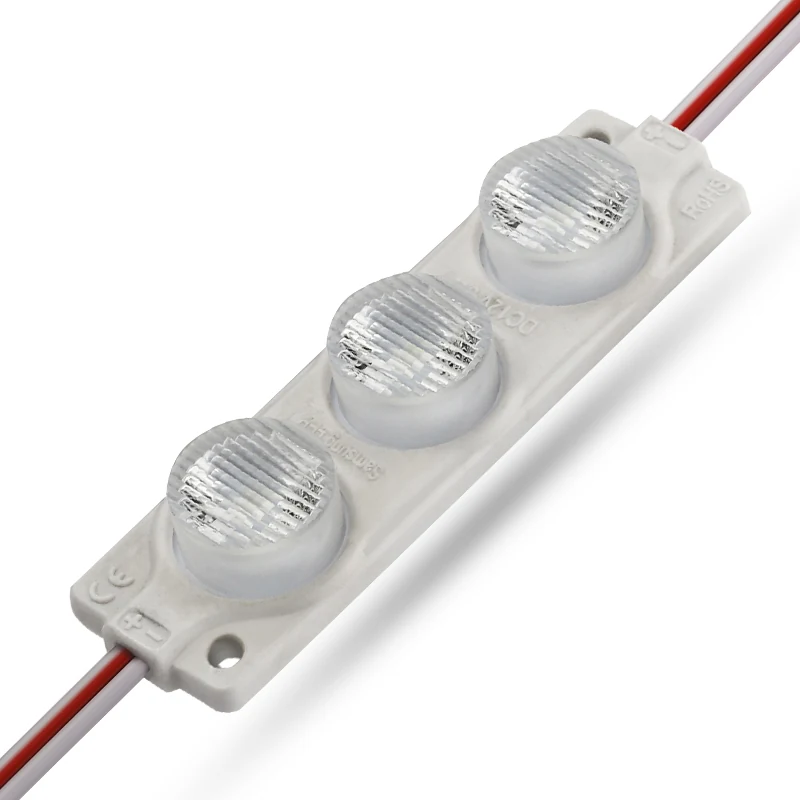
JDS-4035V
120 lm/W side-emitting module at 3 W and 360 lm per piece, IP67, eight pieces per metre.
Product Overview
JDS-4035V is 120 lm/W side-emitting module at 3 W and 360 lm per piece, IP67, eight pieces per metre. The efficiency leader among the side-emitters: same 3 W as the 7420V but 360 lm out of it, at a tighter 8 per metre pitch. The specification below is reproduced from the manufacturer's own published sheet for this model: DC 12 V input, 3 W per piece, IP67 and a published cascade limit of 20 modules single-ended, 50 modules double-ended power feed. Where that sheet publishes no figure, this page says so instead of estimating one.
Key Benefits
- Published efficacy of 120 lm/W, so the wattage behind a given face area can be calculated before the sign is built rather than after.
- IP67 sealing on the module body, which is the rating that decides whether condensation inside a sign cavity ends the job.
- Cascade limit published as 20 modules single-ended, 50 modules double-ended power feed, so the run length and the feed points are known at drawing stage.
- Designed for a sign depth of 50-100 mm single-sided light box, 60-200 mm double-sided light box, which is the single figure that decides whether the face lights evenly or shows hot spots.
- 5 years warranty, stated on the manufacturer's own specification sheet.
At A Glance
- Family
- Bezel-Free Series 4035V
- Category
- Side-Emitting LED Modules
- Model
- JDS-4035V
- Series
- Bezel-Free Series 4035V
- Module density
- Module density 3 pcs/ft, 8 pcs/m
- Input voltage
- DC 12 V
Drawings, Optical Distribution And Application Data
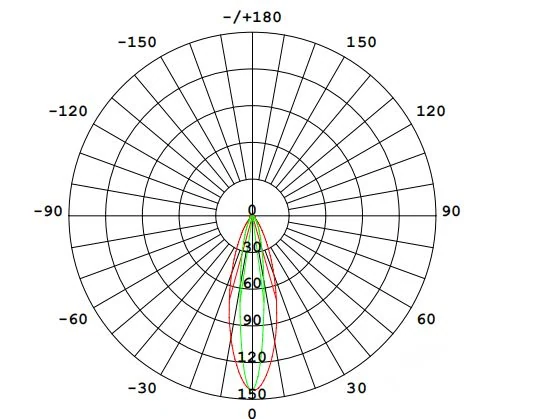
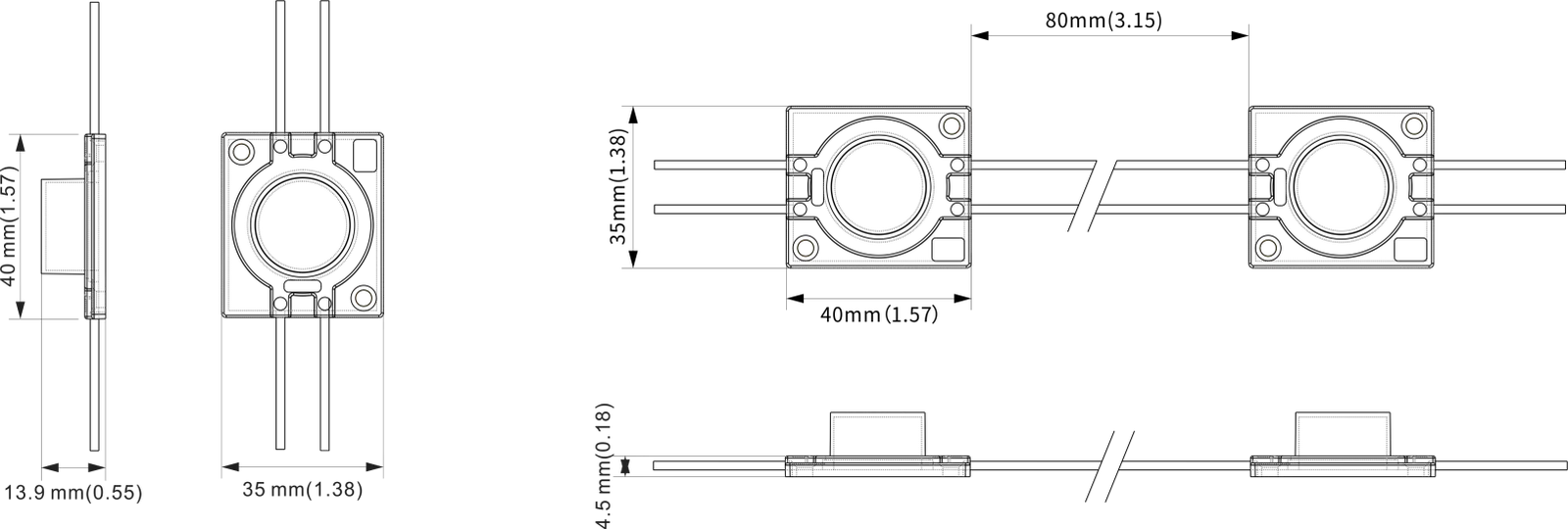
These are the manufacturer's own sheets for this model, reproduced as published: dimensioned drawings, the luminous distribution curve, the module pitch against sign depth, and the packing sequence. Nothing here has been redrawn or reinterpreted.
Who It Is For
- Sign fabricators building channel letters and 3D luminous characters who need the depth figure before they cut the return.
- Light box manufacturers sizing the module pitch against the face material.
- Signage distributors who have to hold a range that covers shallow and deep cavities from one supplier.
- Installers retrofitting an existing fascia where the cavity depth is fixed and the module has to fit it.
Problems It Solves
- A face that shows the module pattern because the module was specified for a different depth than the sign actually has.
- A run that is bright at the feed and dim at the far end because the cascade limit was never published by the supplier.
- Condensation inside a sign cavity reaching an unsealed module body.
- Two batches of the same model that do not match in colour on the same fascia.
Application Scenarios
- Retail fascia lettering on a shop front.
- Illuminated light box panels on a building entrance.
- Three-dimensional luminous characters on a building parapet.
- Advertising plastic characters of the kind this factory has specialised in since 2012.
Technical Features
- Beam angle published as 65x10 deg / 45x20 deg.
- Input DC 12 V.
- Rated 3 W per module.
- Colour binning held to 3 SDCM, so modules from different cartons match on the same sign.
- Operating range -40 to +60 C / -13 to +140 F, storage range -40 to -70 C / -13 to +158 F.
Published Specification
Every row below is reproduced from the manufacturer's published specification for this range. Rows shown in italics are figures the specification does not publish; those are confirmed in writing rather than estimated here.
| Model | JDS-4035V |
| Series | Bezel-Free Series 4035V |
| Module density | Module density 3 pcs/ft, 8 pcs/m |
| Input voltage | DC 12 V |
| Power | 3 W per piece |
| Luminous efficacy | 120 lm/W |
| Luminous flux | 360 +/-3 lm per piece at 10000K, 6500K and 3000K |
| Beam angle | 65x10 deg / 45x20 deg |
| Ingress protection | IP67 |
| Colour binning | 3 SDCM |
| Mounting | 3M back tape |
| Cascade limit | 20 modules single-ended, 50 modules double-ended power feed |
| Colour options | Warm white, white, cool white, red, green, blue, yellow |
| Sign depth designed for | 50-100 mm single-sided light box, 60-200 mm double-sided light box |
| Operating temperature | -40 to +60 C / -13 to +140 F |
| Storage temperature | -40 to -70 C / -13 to +158 F |
| Warranty | 5 years |
| Packing | Packed per the published cascade table |
| Carton weight | Not published |
| Carton dimensions | Not published |
Use Guide
- Check the internal depth of the sign first. This model is published for 50-100 mm single-sided light box, 60-200 mm double-sided light box; outside that band the face either shows the module pattern or loses brightness at the edges.
- Work out the run length from the cascade figure: 20 modules single-ended, 50 modules double-ended power feed. Beyond that, voltage drop starts to dim the far end and power has to be reintroduced.
- Size the power supply from 3 W per module multiplied by the module count, then leave headroom rather than running a driver at its rated ceiling.
- IP67 covers the module. The joints you make on site are not covered by it, so seal every connection to the same standard.
Quality Control
- Modules are potted and sealed before the ingress rating is verified, not after assembly into a sign.
- Colour binning is checked against the published bin so cartons shipped months apart still match on the same fascia.
- Every batch is aged before packing; the aging rack is photographed on the factory's own process board.
- Finished modules are packed in anti-static bags and cartoned to the published quantity so the count on the box matches the count on the order.
Materials
- Injection-moulded housing with the optic moulded in, rather than a lens glued on afterwards.
- Potting compound filling the cavity around the board, which is what carries the IP rating.
- Pre-tinned lead wires on both ends for cascading, cut to the published module pitch.
- 3M backing tape on the models where the specification lists it, for direct mounting to the inside of a return.
Manufacturing Process
- ['Patch', 'A misplaced die shows as a dark lens once the face goes on.', "SMT placement of the emitters onto the module board, photographed as stage one on the factory's own process board."]
- ['Solder wire', 'A cold joint at the lead is the most common field failure in cascaded modules.', 'Lead wires are soldered and strain-relieved before the housing is closed.']
- ['Injection moulding', 'A lens bonded on after the fact separates in the heat cycle of a south-facing sign.', 'The housing and the optic are moulded together, then the cavity is potted.']
- ['Testing', 'A module that only fails under load passes a visual check.', 'Electrical test under load before the module leaves the line.']
- ['Back glue', 'Tape applied to a contaminated surface releases in the first summer.', '3M backing tape is applied to a cleaned housing on the models specified with it.']
- ['Aging', 'Infant mortality in LEDs shows in the first hours, not the first year.', 'Finished modules are run on the aging rack before packing.']
Certification Standards
Production follows CE, RoHS, LVD, IP68 test report, UL. Certificates are sent per product on request rather than posted publicly, because the documents a shipment needs depend on the destination market.
Customisation Options
- Colour temperature selected per order from the published options rather than held as one stock colour.
- Lead wire length and module pitch cut to the sign layout instead of a default spacing.
- OEM and ODM work: the source site states that OEM and ODM are supported for customers in all markets.
- Packing quantity per bag and per carton adjusted to how the modules will be issued on the fabrication floor.
How It Compares With The Alternatives
A technical comparison against other ways of solving the same problem. Nothing here is a performance claim against a named competitor product.
| Against a module sold without a published depth band | The depth band is the figure that decides whether the face lights evenly. This model publishes 50-100 mm single-sided light box, 60-200 mm double-sided light box. A supplier who publishes only lumens is asking you to find that band by building the sign. |
| Against a module with no stated cascade limit | This model publishes 20 modules single-ended, 50 modules double-ended power feed. Without that number the feed points are guessed, and the symptom - a fascia that dims towards one end - looks like a bad batch rather than a wiring decision. |
| Against an IP rating quoted for the range rather than the model | The rating here is IP67, published against this model. Note that it covers the module body as supplied and not the joints made on site. |
| Against another family in this range | See the Side-Emitting LED Modules page for what this family does that the others do not, and the related products below for the nearest alternatives. |
JDS-4035V Questions
What sign depth is JDS-4035V designed for?
How many JDS-4035V modules can run from one feed?
What is the ingress rating?
What is the warranty?
Can it be supplied in a colour temperature that is not listed?
Products Buyers Shortlist Alongside This One
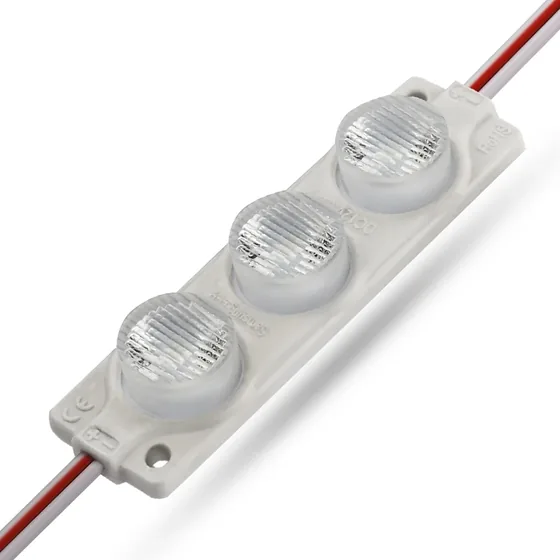
JDS-7420V
3 W side-emitting module, 300 lm per piece, IP67, for single-sided boxes 50 to 100 mm and double-sided boxes 60 to 200 mm deep.
See the specification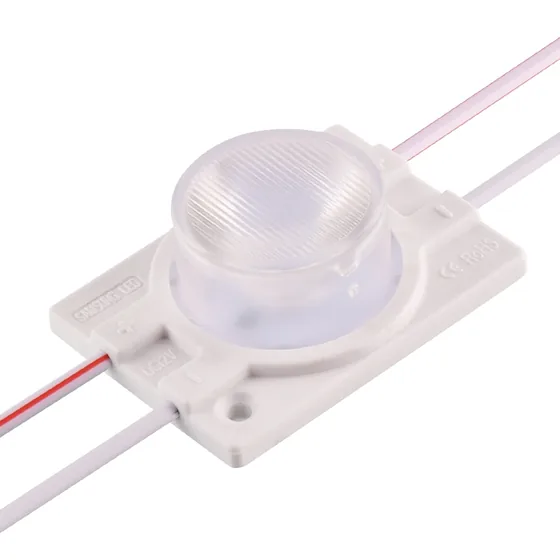
JDS-3828V
1.5 W side-emitting module, 140 lm per piece, IP67, for light boxes where 3 W per piece would over-light the face.
See the specification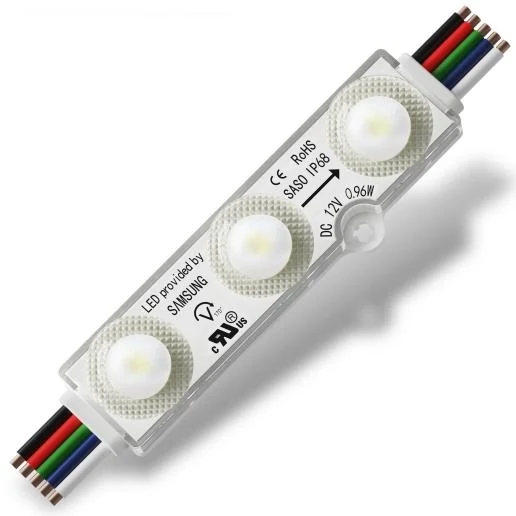
JDS-6515RGB/W
Addressable RGB/RGBW module with a built-in IC, 65 x 15 x 10 mm, IP68, for medium-sized signs 80 to 120 mm deep.
See the specificationGuides That Cover This Product
Where It Has Been Installed
Request JDS-4035V
Send the finished size, the quantity, the mounting and the destination market. A quotation and the full specification come back by email.