Start from the pump, not the panels
For single- or three-phase 220 VAC pumps, the array needs a working voltage (Vmp) of around 310 VDC and an open-circuit voltage (Voc) of around 350 VDC. For three-phase 380 VAC pumps, the figures are about 540 VDC Vmp and 620 VDC Voc. These are the numbers the inverter needs to see, and they do not change with the size of the farm.
Why long series strings are a problem
The usual way to reach 540 VDC is to wire many panels in series. That works in full sun on a clean array. It degrades badly under partial shading, because a string carries the current of its weakest panel, and it constrains where panels can physically go.
What a DC booster changes
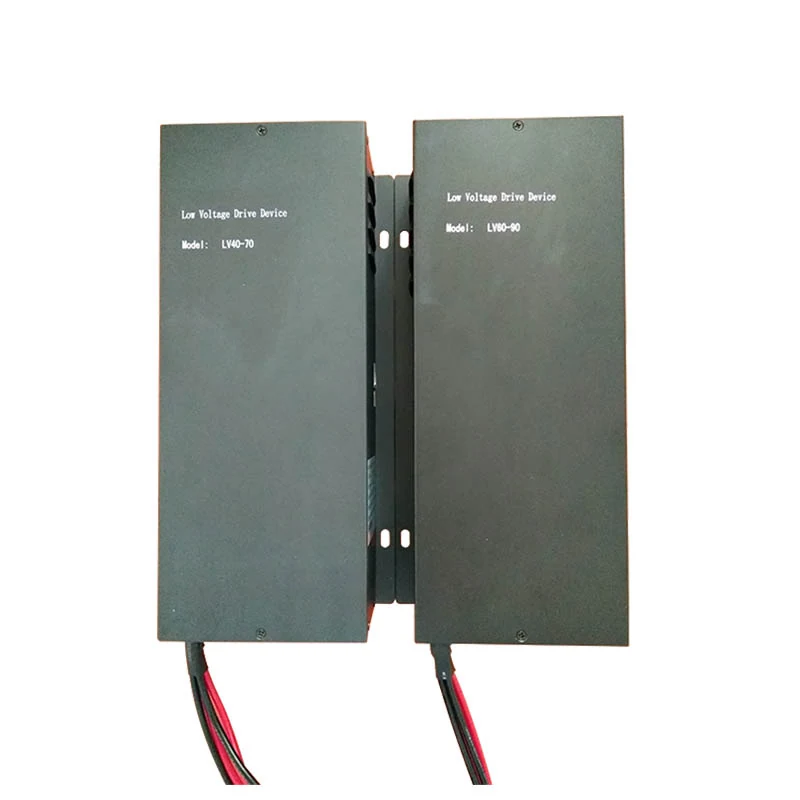
A booster raises a lower array voltage to what the inverter requires. LV40-70 covers 220 V small power pumps; LV60-90 covers 380 V pumps. This relaxes the voltage the array itself must reach, which in turn relaxes the string layout.
Cold mornings raise Voc
Open-circuit voltage rises as cell temperature falls. A string designed to hit 620 VDC Voc at 25 °C will exceed it on a cold clear morning. Leaving that margin in a long string is uncomfortable; boosting a shorter string avoids the question.
Altitude and derating on the AC side
Solar pump inverters are typically rated below 1000 m, derating 1% for every additional 100 m. High-altitude sites — common in exactly the remote regions these systems serve — need that factored into the drive rating, not just the array.