
Guangdong produces a large share of the world's LED lighting — Zhongshan's Guzhen town for decorative and commercial luminaires, Shenzhen for LED strip, modules and drivers, Jiangmen and Foshan for high-bay and industrial fixtures. Prices are low and product ranges enormous, but LED lighting also has a well-known quality problem: two fixtures that look identical can differ by 40% in real light output and by years in lifetime. The differences are almost all inside the product, which is why a structured specification and inspection plan matters more here than in most categories.
Specify what is inside, not just what it looks like
A fixture's lifetime and performance are decided by three components: the LED chips, the driver, and the thermal path between them and the air. Your purchase specification should name each:
- LED package: brand and series (for example Samsung LM301B, Osram Duris, Nichia, Cree, or a named domestic brand such as San'an or Honglitronic), colour temperature, CRI, and binning tolerance (e.g. 3-step MacAdam ellipse).
- Driver: brand and model or at least type (isolated / non-isolated, constant current), power factor, THD, flicker percentage, surge protection (e.g. 2 kV / 4 kV), and dimming protocol (0–10 V, DALI, TRIAC, PWM).
- Housing and heat sink: die-cast or extruded aluminium, weight or fin area, and target LED junction or case temperature at rated power.
- Optics: beam angle, UGR for office lighting, lens material (PC vs PMMA vs glass).
Commercial-lighting suppliers such as YiYo Lighting publish model series for downlights, track and spot fixtures, while strip and neon specialists like Shenzhen Well King Lighting Co., Ltd. and Beauty STC Lighting list flexible strip, neon flex and work-light strip. JDS LED focuses on LED modules for signage and backlighting, and X-LUZ covers solar street lights alongside downlights and track lights. Each category has its own critical parameters, but the principle is the same: name the components.
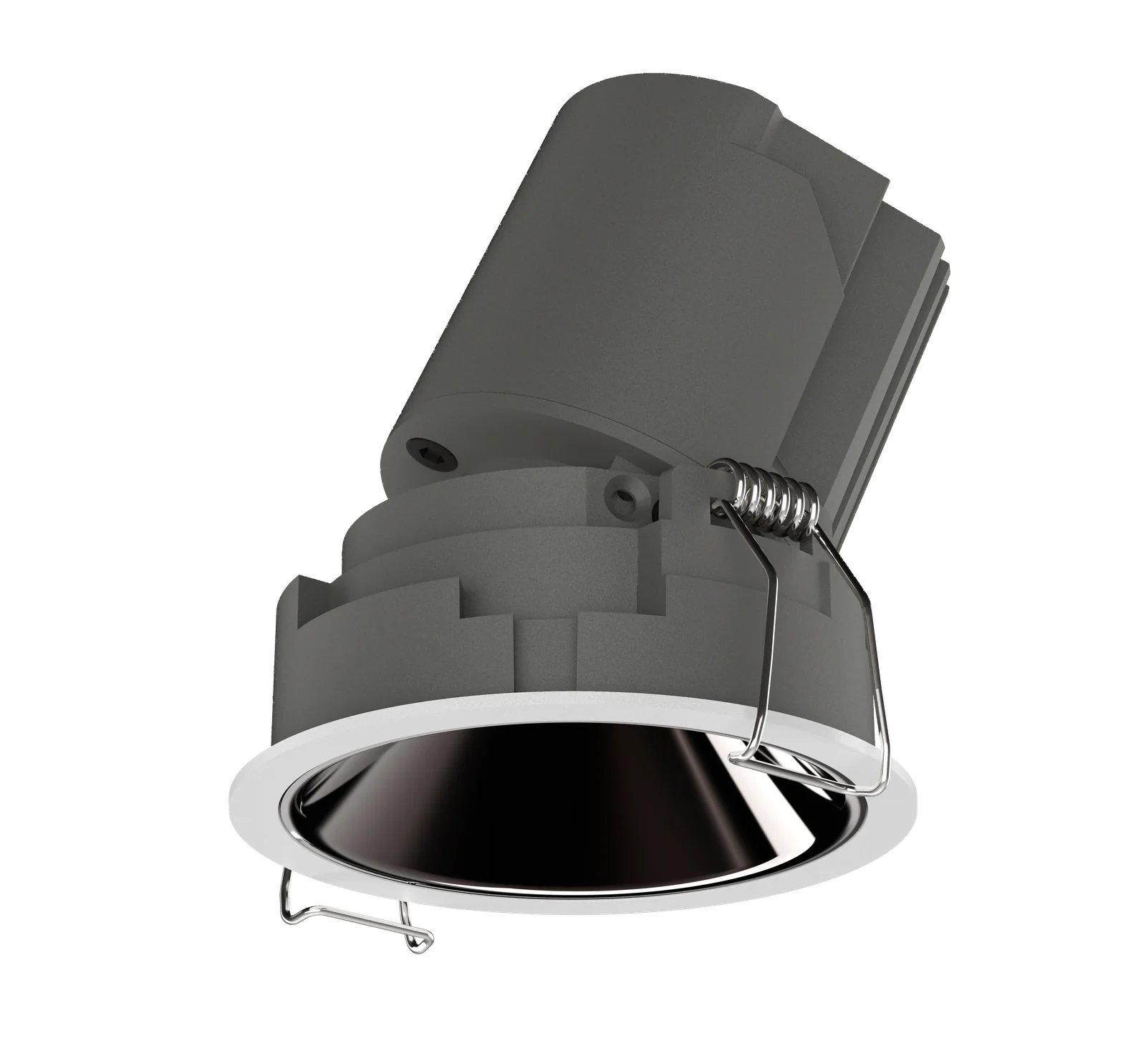
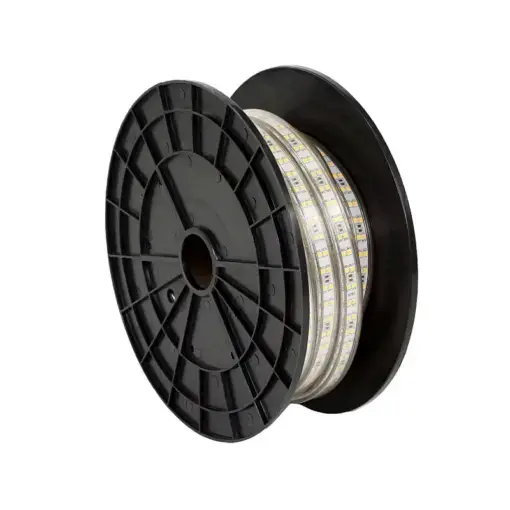
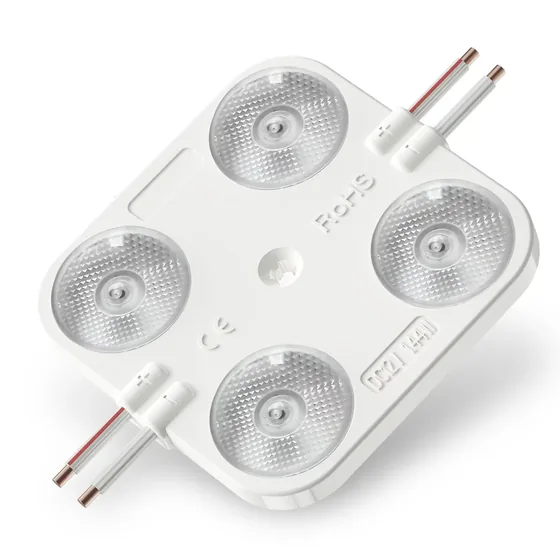
Product photos are taken from the supplier listings on CifyChina and link to each supplier's page. They illustrate the product type discussed; they are not an endorsement of any specific item.
Treat lumen and wattage claims with caution
The most common misrepresentation in LED lighting is overstated output. Watch for:
- "Equivalent" wattage marketing (e.g. "150 W equivalent") instead of actual measured input power.
- Chip lumens instead of fixture lumens. Optics, diffusers and heat reduce output by 10–30%; always ask for luminaire lumens from an integrating-sphere test.
- Inflated efficacy. Efficacy (lm/W) above what the named LED package can deliver after driver and optical losses is a red flag.
Ask for an LM-79 photometric report (or an equivalent integrating-sphere and goniophotometer report) for the exact model, and an LM-80 / TM-21 document for the LED package when a lifetime claim like "50,000 hours" is made. Then verify with your own sample: a basic integrating-sphere test at a local lab is inexpensive compared with a container of under-performing fixtures.
Certifications by market
| Market | Typical requirements |
|---|---|
| European Union / UK | CE (LVD, EMC), RoHS, ErP ecodesign / energy label, UKCA for GB; ENEC mark valued by professional buyers |
| United States / Canada | UL or ETL listing (UL 1598, UL 8750), FCC Part 15, DLC for utility rebates, Energy Star for some residential lamps |
| Australia / New Zealand | RCM, electrical safety registration for in-scope products |
| Gulf states | G-Mark / GSO conformity, SASO / SABER for Saudi Arabia |
| Latin America | INMETRO (Brazil), NOM (Mexico), SEC (Chile) for specific categories |
Always check that the certificate lists the exact model you are buying and that the issuing lab is real. Test reports issued by unknown "certification centres" with a CE logo are common and worthless in a customs dispute.
Burn-in and reliability testing
Ask the supplier how long finished products are burned in before packing. Many factories run 2–4 hours; for commercial projects, 8–24 hours at rated power with on/off cycling catches early driver failures. For outdoor and high-bay products, ask about:
- IP rating tests (IP65/IP66/IP67) — request water-spray or immersion test photos or videos for your batch.
- Thermal testing — thermocouple readings at the LED board after one hour at full power, compared with the LED maker's maximum.
- Surge testing for street lights and outdoor floodlights.
- Salt-spray tests for coastal installations.
For solar street lights, battery capacity is the frequent weak point. See our Importing Lithium Batteries from China guide for what to ask about LiFePO4 cells.
Pre-shipment inspection checklist
Whether you inspect yourself or use a third-party inspector, a practical LED pre-shipment checklist includes:
- Quantity and packaging — carton count, labels, barcodes, drop test on one carton.
- Visual — housing finish, lens clarity, no scratches, correct logo and rating label.
- Function — every sampled unit lights at rated voltage; dimming works across the range; no visible flicker (check with a phone camera in slow-motion mode).
- Electrical — input power and power factor measured with a power meter against the spec (±10% is common tolerance).
- Colour — CCT and CRI measured with a handheld spectrometer; check colour consistency between units side-by-side.
- Hi-pot / insulation test on a sample for mains-powered fixtures.
- Internal check — open one or two units to confirm LED brand, driver model and wiring match the approved sample.
- Strip-specific — measure voltage drop along a full reel, check solder joints and adhesive tape brand, verify copper thickness (2 oz vs 1 oz) and cut points.
Use ISO 2859-1 sampling (General Level II is typical) with clear AQLs for critical, major and minor defects.
Golden samples and change control
Lock the approved sample: seal it, sign it, and keep one unit at the supplier and one in your office. Many lighting quality problems occur on reorders, when the factory changes driver supplier or LED bin to protect margin. Your purchase contract should state that no component may change without written approval, and your inspector should compare production units against the golden sample on every order.
Packaging and logistics
LED fixtures are light but fragile; strip and modules are sensitive to moisture and electrostatic discharge. Specify inner boxes, foam or pulp inserts, anti-static bags for modules, and export cartons that pass a drop test. Custom printed boxes are usually possible from moderate quantities — see Custom Packaging MOQs in China Explained. If your project combines lighting with cabling, read Wire & Cable from China: Detecting CCA and Undersized Conductors; for projects combining lighting with surveillance cameras, see Sourcing CCTV & Security Equipment from China. Our existing guide to Automotive LED Light Bars & Vehicle Lighting from China — A Wholesale Buyer's Guide covers vehicle lighting.
Summary checklist
- Specify LED package, driver, thermal design and optics by name.
- Demand LM-79 for the fixture and LM-80/TM-21 for lifetime claims; verify a sample yourself.
- Match certifications to your market and confirm model coverage.
- Agree burn-in duration and IP/thermal/surge tests in writing.
- Inspect against a golden sample; open units to verify components.
- Enforce component change control on every reorder.
Frequently asked questions
Is it worth paying for branded LED chips? For commercial projects with warranty obligations, usually yes. Named packages come with LM-80 data and consistent binning, and the price difference at fixture level is often only a few percent. For low-cost decorative products, a reputable domestic package can be fine — but get the name in writing either way.
What warranty should a Chinese LED factory offer? Two to three years is common for commercial fixtures, five years for premium projects. What matters more than the headline figure is how claims are handled: replacement stock shipped with the next order, a percentage of spare units included free, or a credit note. Agree this before the first order.
How do I test flicker without a lab? Point a smartphone camera in slow-motion video mode at the fixture, or use a flicker-meter app with an external sensor. Visible banding indicates significant flicker. For professional projects, specify a maximum flicker percentage and ask for the driver's test data.
Have a similar requirement? Send the specification or drawing on WhatsApp and we will match it against the suppliers in the directory.