
Security installers and distributors worldwide buy cameras, recorders and access-control products from China, where Shenzhen, Guangzhou and Hangzhou host the largest manufacturing base. Buyer requests we log range from a full system price list — IP cameras, NVRs, biometric access control, hard drives, monitors, intercoms and cabling for an installer in Zimbabwe — to vehicle mobile DVRs (MDVR) with 4G, GPS and Wi-Fi for a fleet buyer in Thailand. This guide covers what to specify, how to compare offers, and the regulatory issues that have become important in recent years.
IP cameras: the specifications that matter
- Image sensor: size and model (e.g. 1/2.8" or 1/1.8" sensors from major sensor makers). Sensor size affects low-light performance more than megapixel count.
- Resolution and frame rate: 4 MP and 8 MP (4K) are common; check frame rate at full resolution.
- Compression: H.265/H.265+ reduces storage and bandwidth compared with H.264.
- Low light: IR range in metres, colour night-vision technologies, WDR (wide dynamic range) in dB.
- Lens: fixed focal length (2.8 mm, 4 mm, 6 mm) or motorised varifocal.
- Analytics: line crossing, intrusion, face detection, people and vehicle classification — confirm which run on the camera versus the NVR.
- Housing: IP66/IP67 for outdoor, IK10 for vandal resistance.
- Power: PoE (802.3af/at) vs 12 V DC.
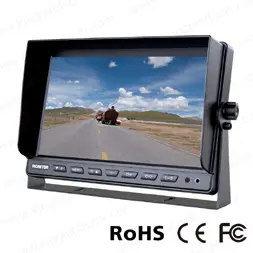
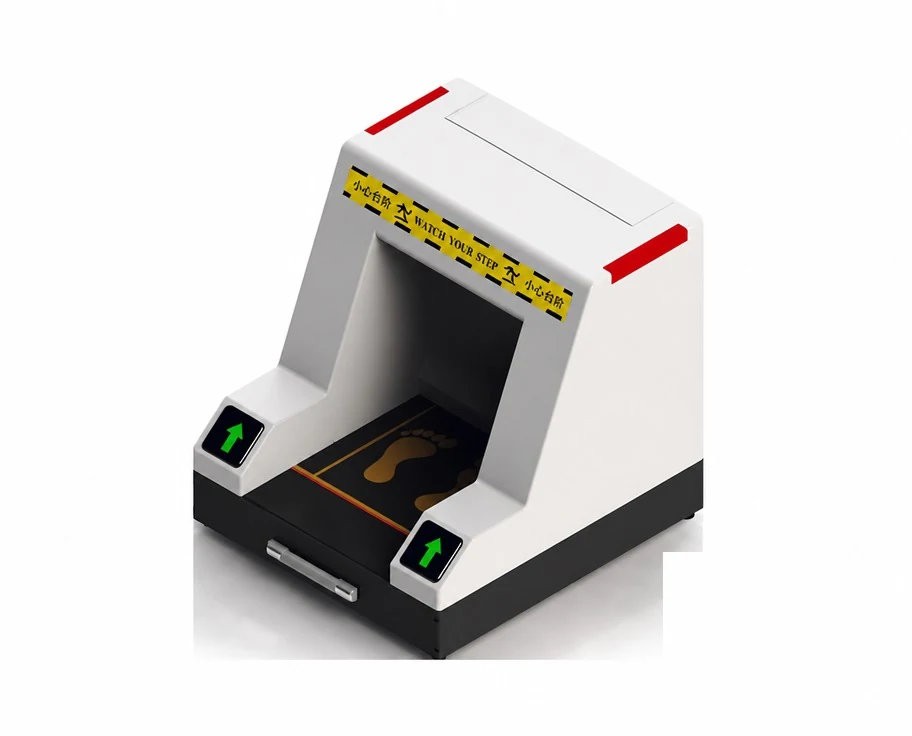
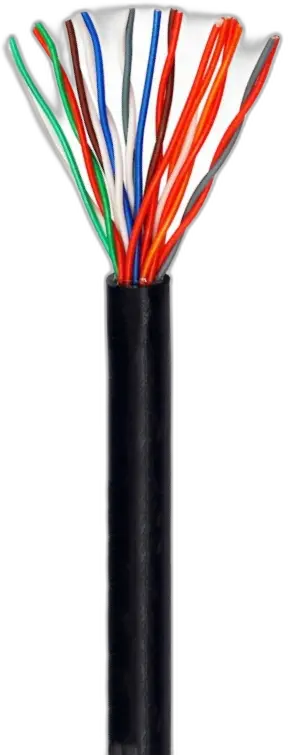
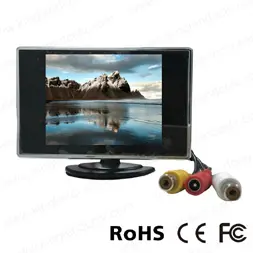
Product photos are taken from the supplier listings on CifyChina and link to each supplier's page. They illustrate the product type discussed; they are not an endorsement of any specific item.
NVRs and storage
- Channel count and incoming bandwidth (Mbps), not just "32 channels".
- Number of HDD bays and maximum capacity per bay; RAID support for larger systems.
- Surveillance-grade hard drives (designed for continuous writing) rather than desktop drives.
- Decoding capability for multi-screen live view.
- Storage calculation: number of cameras × bitrate × hours per day × retention days. Ask the supplier for a storage calculator result for your design.
Interoperability: ONVIF and platforms
If you mix brands, ask for ONVIF Profile S/T/G conformance, and test cameras with your NVR or VMS before volume orders. Many factories ship OEM products based on common platforms; check which mobile app and cloud service your end-users will use, whether the app is available in their country, and who controls the cloud servers.
Cybersecurity and firmware
Cheap cameras with outdated firmware are a real security risk. Ask:
- How are firmware updates delivered, and for how long will the model be supported?
- Are default passwords forced to change at first login?
- Can cloud/P2P features be disabled for installations that must remain local?
- Does the product comply with emerging rules such as the UK PSTI Act (no universal default passwords, vulnerability disclosure policy) or the EU Radio Equipment Directive cybersecurity requirements and the Cyber Resilience Act?
Market restrictions
Some governments restrict certain Chinese video-surveillance brands, especially for government-funded projects — for example the US NDAA Section 889 restrictions and FCC equipment authorisation rules, and restrictions on government sites in the UK and Australia. If your customers include public agencies, verify which brands and chipsets are acceptable before quoting.
Access control, intercom and biometrics
For fingerprint and face-recognition terminals, check user capacity, recognition speed, communication (TCP/IP, RS485, Wiegand), integration with door locks and software, and data-protection implications of storing biometric data (e.g. GDPR in Europe). For intercoms, confirm SIP compatibility and app support.
Mobile DVR and vehicle cameras
Fleet MDVRs need 3G/4G modules approved for the destination networks and frequency bands, GPS, Wi-Fi offload, SD or HDD storage with vibration protection, wide-voltage input (e.g. 8–36 V) and ignition-sensing power management. Kingland Electronics lists car monitors and vehicle camera products along with CCTV; confirm the platform software and whether the vendor hosts the fleet-management server.
Other security products
Specialist products include covert and consumer security cameras — Shenzhen Wowlive Intelligent Technology Co., Ltd. lists home security cameras — and screening equipment such as walk-through metal detectors and X-ray baggage scanners, listed by China Metal Detector & X-Ray. Screening equipment has its own certification and radiation-safety rules.
Cabling and power
Poor cable is a frequent cause of PoE failures. Specify pure copper (not copper-clad aluminium) Cat5e/Cat6 for PoE runs, correct jacket type (indoor PVC/LSZH, outdoor PE), and coaxial or composite cable for analog HD systems. Shenzhen Lanp Cable Co., Ltd. (Lanp Industrial) and Semifcable list communication and LAN cabling; our Wire & Cable from China: Detecting CCA and Undersized Conductors guide explains how to test conductors. For battery backup of NVRs and access control, see Importing Lithium Batteries from China. Perimeter and area lighting often accompanies camera projects — see LED Lighting QC: A Pre-Shipment Inspection Checklist.
Certifications
CE (EMC, LVD, RED for wireless), FCC, RoHS, and local approvals such as ICASA (South Africa), POTRAZ type approval (Zimbabwe) for radio equipment, NTC (Philippines) or NBTC (Thailand) for 4G/Wi-Fi devices. Ask for reports that match the exact model.
Building a distributor range
Most distributors start with a small, well-tested range: two or three camera models (dome, bullet, turret) in 4 MP and 8 MP, matching NVRs in 8/16/32 channels, PoE switches, surveillance HDDs, cable, and a basic access-control terminal. Private label is widely available; if you brand it, you must support it — keep firmware files, manuals and a replacement stock.
A sample-test protocol before your first order
Order two or three units of each candidate camera and one NVR, and test them together for at least a week in conditions similar to your installations:
- Day and night image quality at the same scene, recorded at the bitrate you will actually use. Compare number-plate and face legibility at 5, 10 and 20 metres.
- Low-light and IR performance in a dark car park or yard; check IR reflection problems on housings with a single glass window.
- Bitrate and storage: record 24 hours and measure the storage used per camera with H.265 on and off, so your storage calculations are real rather than theoretical.
- Analytics accuracy: trigger line-crossing and intrusion events deliberately and count false alarms from headlights, rain, insects and swaying trees.
- PoE power draw with IR on, measured at the switch, to size the PoE budget correctly.
- App and remote access from a mobile network in your country; test push notifications and playback speed.
- Firmware update process from the supplier's download portal.
Keep the results in a simple comparison sheet. The camera that wins on paper frequently loses on night-time legibility or false alarms, and those are the issues that generate call-backs for installers.
Pricing and margins for installers
Chinese security equipment price lists are usually tiered by volume. Distributors should compare landed cost against local distributor pricing, including warranty handling and firmware support. Bundling cameras, NVR, HDD and cabling as kits simplifies ordering for smaller installers and improves margins.
Frequently asked questions
Is a price list enough to compare suppliers? No. Compare sensor, compression, analytics, firmware support and app ecosystem; two "4 MP bullets" can be very different products.
What warranty is typical? Often 2 years on cameras and NVRs, with replacement units shipped in the next order.
How do I protect myself on payment? Order samples first, test them on your NVR/VMS, then place a pilot order. See First China Order: Incoterms, Payment Terms and Deposit Protection.
Can I get the firmware and app in my own brand? Many OEM suppliers offer branded firmware splash screens, web interfaces and even white-label mobile apps, usually with a minimum order or a one-time fee. Before choosing a white-label app, ask who operates the cloud servers, where video and account data are stored, and what happens to your customers' access if the relationship ends. For installers serving businesses with data-protection obligations, local-only operation without cloud dependence is often the safer default.
Have a similar requirement? Send the specification or drawing on WhatsApp and we will match it against the suppliers in the directory.