
Cable is one of the most commonly misrepresented products in international trade. Because copper is expensive, there is constant temptation to reduce it: substituting copper-clad aluminium (CCA) or copper-clad steel (CCS) for solid copper, using fewer or thinner strands than the stated cross-section, or thinning insulation. The resulting cable often looks identical — and may work initially — but it runs hotter, drops more voltage, fails PoE loads, and can be a fire hazard.
Chinese cable factories in Zhejiang (Ningbo, Hangzhou), Guangdong (Dongguan, Shenzhen) and Jiangsu produce excellent cable to IEC, UL and other standards. The key is to specify exactly and verify on arrival.
Specify the conductor completely
For every cable, define:
- Conductor material: "bare annealed copper" or "tinned copper", explicitly excluding CCA/CCS unless you want them.
- Cross-section or gauge: mm² (IEC) or AWG (UL). For LAN cable, 24 AWG or 23 AWG solid conductors are typical for Cat5e and Cat6.
- Conductor class: IEC 60228 Class 1 (solid), Class 2 (stranded), Class 5/6 (flexible) — and the maximum DC resistance for the class and size.
- Stranding: number and diameter of strands for flexible cords.
- Insulation and jacket compounds: PVC, XLPE, rubber, LSZH (low smoke zero halogen), PE for outdoor; temperature rating (70 °C, 90 °C, 105 °C).
- Standard and certification: e.g. IEC 60227/60245 for cords, BS 6004 for UK building wire, UL 62 / UL 817 for North American cord sets, TIA-568 for LAN cable performance.
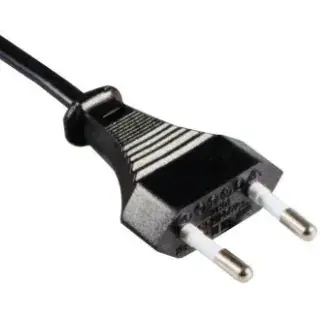
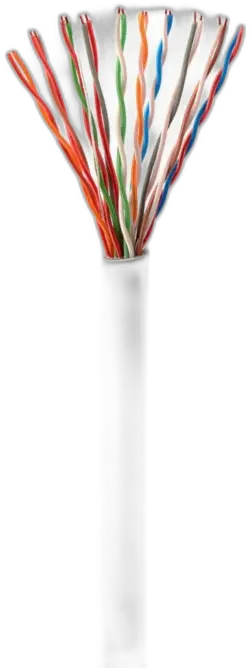
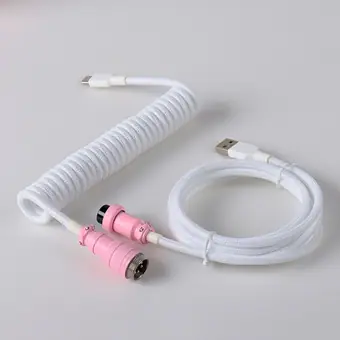
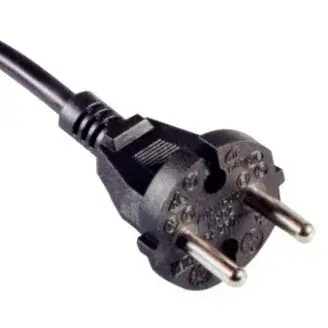
Product photos are taken from the supplier listings on CifyChina and link to each supplier's page. They illustrate the product type discussed; they are not an endorsement of any specific item.
Why CCA is a problem
CCA has roughly 60% of the conductivity of copper, is mechanically weaker, and oxidises at terminations. For LAN cables, TIA and ISO/IEC standards require copper conductors; CCA LAN cable is non-compliant and performs poorly with PoE because of higher resistance and heat. For power wiring, CCA is prohibited or restricted in many building codes. Mislabelled CCA cable sold as copper is a recurring issue in many markets — which is why verification matters.
How to detect CCA and undersized conductors
Simple tests anyone can perform:
- Scrape test: scrape the conductor with a knife. CCA shows a silver-white aluminium core under the copper coating.
- Flame test: copper blackens but holds its shape; aluminium melts quickly.
- Magnet test: copper-clad steel is magnetic; pure copper is not.
- Weight check: weigh a 305 m box of LAN cable or a 100 m coil of wire and compare with expected weight for copper.
- Conductor resistance: measure DC resistance of a known length with a low-resistance ohmmeter and compare with the IEC 60228 maximum (or TIA limits). This is the definitive field test for both CCA and undersizing.
- Measure diameter and count strands with a micrometer, and calculate the actual cross-section.
For larger orders, send samples to an accredited laboratory for full testing to the claimed standard.
Insulation, jackets and fire performance
- Insulation thickness must meet the standard; thin insulation reduces cost and safety.
- Fire performance: in the EU, cables permanently installed in buildings fall under the Construction Products Regulation with Euroclasses (e.g. Eca, Dca-s2,d2,a2, Cca-s1,d1,a1). Many projects require LSZH or specific Euroclasses in escape routes.
- UV and water resistance for outdoor cable: PE jackets for LAN and coaxial cable outdoors; gel-filled or water-blocking for direct burial.
- Flexibility and bend tests for cords that move.
Power cords and plugs
For appliance power cords — Ningbo Jianuo Electronic lists power cords, extension cords, wire harnesses and plug inserts — check the plug certification for each market (BS 1363 with BSI or ASTA for UK, VDE for Germany/EU, UL for US, SAA for Australia, and national marks elsewhere). Certificates should list the cord and plug model. Fuse ratings in UK plugs must match the appliance. Related appliance issues are covered in Sourcing Home Appliances from China.
LAN, coaxial and signal cables
Communication cable listings on CifyChina include Shenzhen Lanp Cable Co., Ltd. (Lanp Industrial) (multipair and LAN cable), Semifcable (coaxial RG59–RG11, LAN Cat5e–Cat7 and power cable), Dongguan LANO Electronic (USB, DC and custom cable assemblies) and Pacific Links International (fibre optic and cable assemblies). For LAN, ask for third-party channel or permanent-link test reports (Fluke-type certification) on production samples, and confirm pure copper conductors. For coaxial cable, specify centre conductor (solid copper vs CCS), braid coverage percentage and material. Camera installations depend heavily on this — see Sourcing CCTV & Security Equipment from China.
Cable for lighting and batteries
LED strip and luminaire wiring must be rated for the current and temperature (LED Lighting QC: A Pre-Shipment Inspection Checklist); battery interconnects and inverter cables need appropriate cross-sections and fine-strand flexible conductors with proper lugs (Importing Lithium Batteries from China).
Contract and inspection
Write into the purchase order: conductor material ("100% bare copper, no CCA/CCS"), cross-section and maximum conductor resistance, insulation thickness, standard, marking on the jacket (manufacturer, type, size, standard, metre marks), and the right to reject any non-conforming lot at the supplier's cost. During inspection, test several coils or boxes from different cartons, not only the top carton.
Reference values that make field checks easy
A few reference numbers help inspectors catch problems without a laboratory:
| Conductor | Standard | Maximum DC resistance at 20 °C |
|---|---|---|
| 1.5 mm² copper, Class 1/2 | IEC 60228 | about 12.1 Ω/km |
| 2.5 mm² copper, Class 1/2 | IEC 60228 | about 7.41 Ω/km |
| 4 mm² copper, Class 1/2 | IEC 60228 | about 4.61 Ω/km |
| 24 AWG solid copper (Cat5e/Cat6 pair conductor) | TIA-568 | about 9.38 Ω per 100 m |
CCA of the same diameter typically measures 50–60% higher. A 305 m box of genuine Cat6 U/UTP copper cable usually weighs noticeably more than a CCA equivalent; record the weight of your approved sample and compare every lot against it.
Where substitution usually happens
- Mid-order changes. The first lot is correct; later lots are not. Test every lot, not just the first.
- Mixed cartons. Correct boxes on top of the pallet, substituted boxes underneath. Sample from different layers.
- Jacket printing that overstates the product — "Cat6 23AWG pure copper" printed on a CCA cable. Printing proves nothing; resistance does.
- Reduced strand counts in flexible cords, which pass a visual check but fail resistance and heat-rise tests.
Choosing a cable supplier
Cable factories specialise: power cord and harness makers, building-wire producers, LAN and coaxial manufacturers, and cable-assembly houses. Ask each candidate which standards it produces to, which certification marks it holds (and for which cable types), whether it draws its own copper rod or buys conductors, and what in-house testing equipment it has — conductor resistance bridges, spark testers, and for LAN cable, network analysers. A factory with its own resistance testing and certification marks has already invested in doing things properly.
Frequently asked questions
Is CCA ever acceptable? For some low-cost signal applications or where explicitly specified, yes — but it must be labelled honestly and never used where standards require copper.
How do I know the length is correct? Check metre markings at start and end of the reel, and weigh the reel against the expected weight.
Do I need testing for every order? Test every new supplier and new product thoroughly; for repeat orders, spot-check resistance and weight on each lot.
What about aluminium conductor cable for power distribution? Solid aluminium and aluminium-alloy conductors are legitimate for certain power cables when designed and certified as such, with appropriate terminations. The problem is not aluminium itself but undisclosed substitution — cable sold as copper that is not. Specify the conductor you want and verify that you received it.
Have a similar requirement? Send the specification or drawing on WhatsApp and we will match it against the suppliers in the directory.