
China dominates global lithium battery manufacturing, from cells to finished packs for solar storage, telecom backup, e-bikes, golf carts, forklifts and consumer electronics. Prices have fallen sharply, and buyers now routinely import 48 V LiFePO4 rack batteries, 12 V drop-in replacements for lead-acid, and wall-mounted home storage units. But batteries are also dangerous goods, subject to strict transport rules and a growing set of safety and sustainability regulations. The difference between a good and a bad battery is mostly invisible from the outside.
Cells: where quality starts
Every pack is built from cells, and the cell source is the single most important question to ask:
- Chemistry: LiFePO4 (LFP) for stationary storage and many e-mobility uses — safer, longer cycle life, lower energy density. NMC for applications where weight matters.
- Format: prismatic (common in storage), cylindrical (18650, 21700, 32700), or pouch.
- Cell brand and grade: Tier-1 cell makers (CATL, EVE, BYD, CALB, Gotion, REPT, Hithium and others) sell Grade A cells with full traceability. Grade B cells — downgraded for capacity or internal resistance — and recycled or refurbished cells are widely sold as "Grade A". Ask for the cell model, the cell maker's datasheet and, for larger orders, cell QR-code traceability.
- Matching: cells in a pack should be matched for capacity and internal resistance; ask how the factory sorts cells.
Suppliers on CifyChina in this category include Sunder Battery, which lists Ni-MH and LiFePO4 batteries, ZP Lithium / LVWO Group and Lovsun Solar Energy, which list lithium storage batteries and solar storage systems, and Sike Power, which lists LiFePO4 12 V/24 V, powerwall and rack batteries. Our existing guide to LiFePO4 Energy Storage Battery Systems from China — Residential, Commercial & Utility ESS Wholesale Buyer's Guide goes deeper into storage systems.
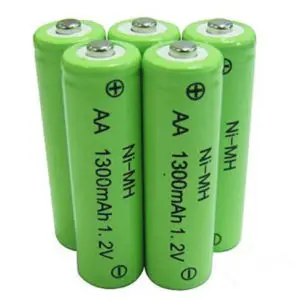
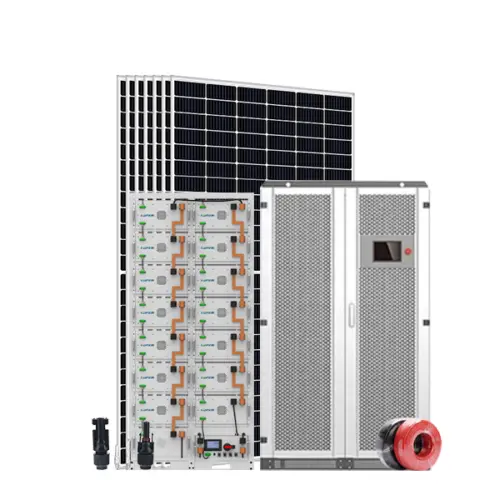
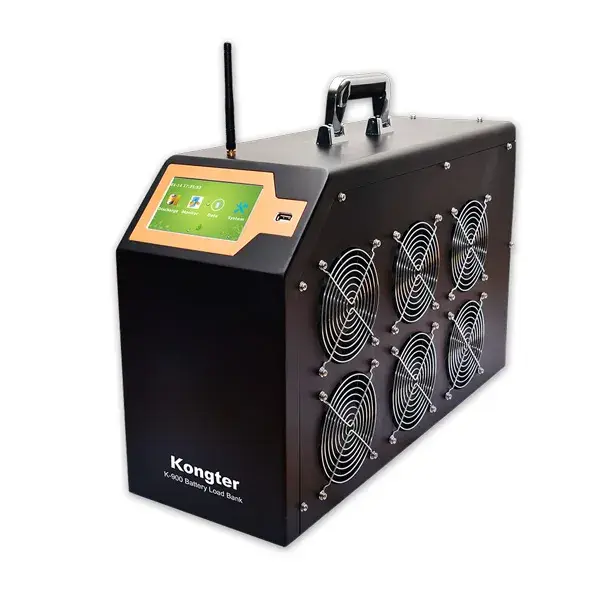
Product photos are taken from the supplier listings on CifyChina and link to each supplier's page. They illustrate the product type discussed; they are not an endorsement of any specific item.
The battery management system (BMS)
The BMS protects cells against over-charge, over-discharge, over-current, short circuit and temperature extremes, and balances cells. Specify:
- Continuous and peak discharge current, and charge current.
- Balancing type (passive or active) and balancing current.
- Low-temperature charge protection (critical for LFP below 0 °C).
- Communication: CAN or RS485 protocols compatible with your inverter brand; Bluetooth monitoring for smaller packs.
- Parallel capability and maximum number of packs in parallel.
Inverter compatibility is one of the most common problems in solar storage imports — ask the supplier for a compatibility list and test with your inverter before ordering volume.
Certifications and documents
| Document | Purpose |
|---|---|
| UN38.3 test summary | Required for transport of lithium batteries by any mode |
| MSDS / SDS | Safety data sheet, required by carriers and customs |
| IEC 62619 | Safety for industrial/stationary lithium batteries |
| IEC 62133 | Safety for portable batteries |
| UL 1973 / UL 9540 / UL 9540A | North American stationary storage safety and fire-propagation testing |
| CE (EMC, LVD where applicable) | EU market access for battery systems with electronics |
| EU Battery Regulation (EU) 2023/1542 | Labelling, carbon footprint, due diligence and battery passport requirements phasing in |
Check that the UN38.3 report covers the exact model and capacity you are buying — suppliers sometimes provide a report for a different pack.
Shipping rules
Lithium batteries are Class 9 dangerous goods:
- UN 3480 for batteries shipped alone; UN 3481 for batteries packed with or contained in equipment.
- Sea freight requires dangerous-goods declaration, proper labelling and a forwarder experienced in DG cargo; not all shipping lines accept them on all routes.
- Air freight is heavily restricted for standalone lithium-ion batteries (state of charge limited to 30% under IATA rules), and large batteries often cannot fly at all.
- Packaging must meet UN specifications for the relevant packing instruction.
Budget extra time and cost for DG shipping; it is one of the most frequently underestimated items in battery imports. The same applies to battery-powered vehicles, discussed in Importing Electric Vehicles from China.
Testing a sample
Before a volume order, test samples:
- Capacity test: full charge, then discharge at a standard rate (e.g. 0.2C or 0.5C) to cut-off, measuring delivered amp-hours and watt-hours. Test equipment makers such as Kongter list battery testers, DC load banks and data loggers for this purpose.
- Internal resistance of the pack and, if accessible, cell-voltage spread after charge and after rest.
- BMS function: over-charge and over-discharge cut-off points, temperature protection, communication with your inverter or charger.
- Teardown of one sample to verify cell brand, cell count, wiring gauge, busbars and fixing.
Warranty and cycle-life claims
Claims such as "6,000 cycles" need context: depth of discharge, charge rate, temperature and end-of-life definition (usually 70–80% of initial capacity). Get the warranty in writing with years and/or throughput (MWh), what counts as a defect, and how replacements are supplied. For distributors, negotiating a small percentage of spare units or spare BMS boards per shipment simplifies after-sales.
Applications with special needs
- Solar street lights and outdoor products: temperature range and IP rating — see LED Lighting QC: A Pre-Shipment Inspection Checklist.
- Security and CCTV backup: small LFP packs for NVRs and cameras — see Sourcing CCTV & Security Equipment from China.
- Lead-acid replacements: check dimensions, terminal types and charger compatibility.
Reading a battery datasheet critically
Datasheets from different suppliers are often not comparable. Check:
- Nominal vs usable energy: a 51.2 V 100 Ah pack has 5.12 kWh nominal energy; usable energy depends on the depth of discharge the BMS allows.
- Rated vs peak current: peak ratings may last only seconds.
- Cycle life conditions: 25 °C, 0.5C, 80% DoD is common; high temperature shortens life dramatically.
- Operating temperature: charge and discharge ranges differ; LFP typically cannot charge below 0 °C without heating.
- Self-discharge and storage recommendations, which matter for stock held in warehouses.
- Weight: an unusually light pack for its capacity deserves a teardown.
Warehousing and stock rotation
Store lithium batteries at partial state of charge (typically 30–60%), in a cool, dry area, with fire-safety measures appropriate to the quantity. Rotate stock and recharge long-stored batteries according to the manufacturer's instructions; deeply discharged packs may be permanently damaged or locked by the BMS. Insurance providers and local fire codes increasingly set rules for battery storage — check before you import large quantities.
Choosing between a cell maker, a pack assembler and a trader
Large cell manufacturers rarely sell small quantities of finished packs directly; most packs are built by pack assemblers who buy cells and BMS boards and design the enclosure. Traders resell packs from several assemblers. For consistent quality, prefer an assembler that names its cell sources, shows its cell-sorting and welding processes, and can provide batch traceability. Ask for a factory video showing cell grading, laser or spot welding of busbars, BMS installation and end-of-line testing — these are the processes that determine pack quality.
Frequently asked questions
Why do prices for "the same" battery differ so much? Mostly because of cell grade and brand, BMS quality and real capacity. A low price often means Grade B or recycled cells or overstated capacity.
Can I ship batteries by courier? Small consumer batteries can travel by express under strict rules; large storage batteries normally ship by sea as dangerous goods.
What payment terms are typical? Deposit plus balance before shipment. For large storage projects, consider an inspection clause tied to the balance payment — see First China Order: Incoterms, Payment Terms and Deposit Protection.
Have a similar requirement? Send the specification or drawing on WhatsApp and we will match it against the suppliers in the directory.