
FT0214 Weather Station Wind Gauge
The FT0214 is a wireless weather station console that receives data from an outdoor wind gauge and up to eight thermo-hygrometer sensors over a 433MHz link. It displays indoor and outdoor temperature and humidity, wind speed and direction, wind gust, wind chill, dew point, and su
What This Model Is For
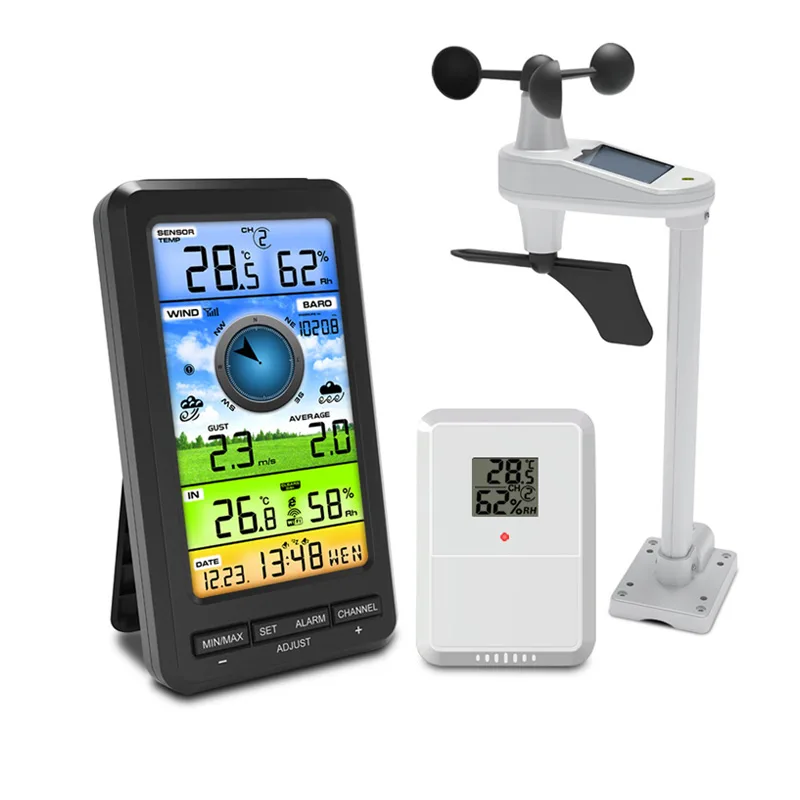
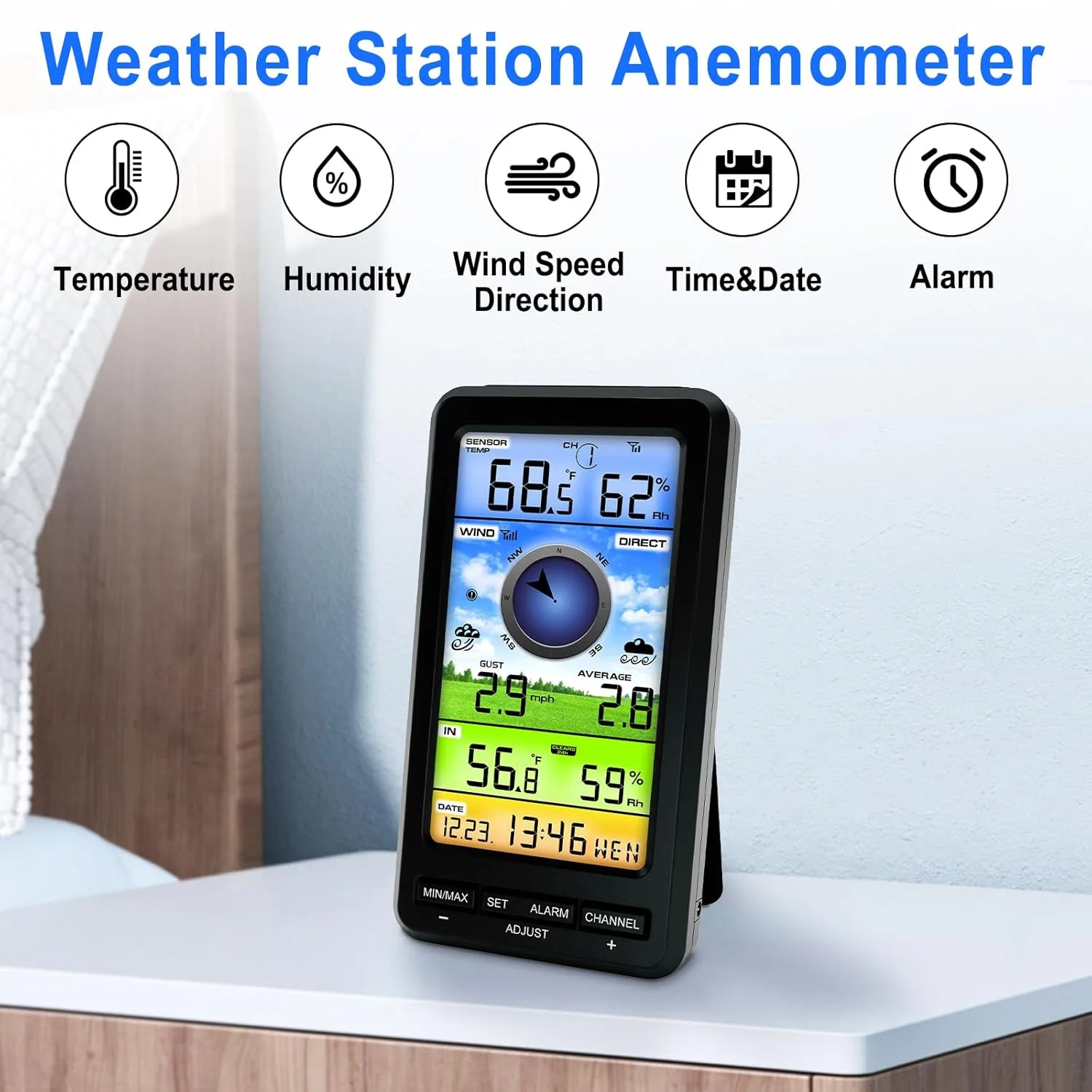
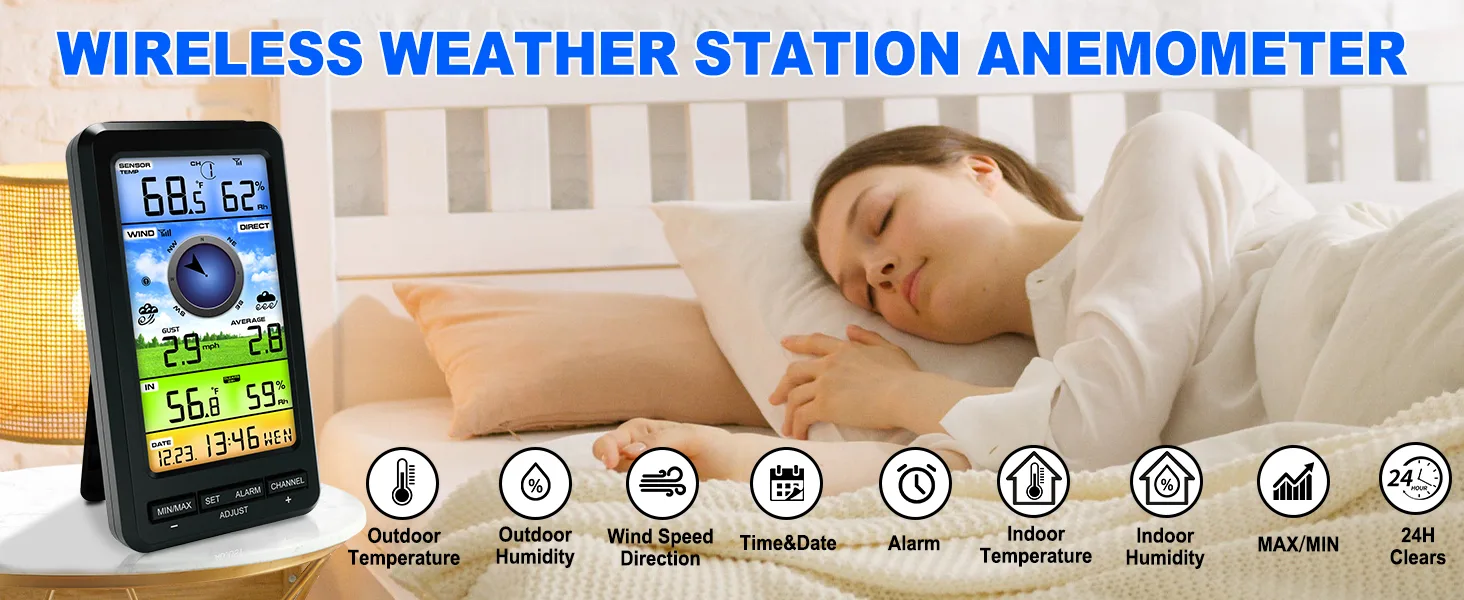
The FT0214 is a wireless weather station console that receives data from an outdoor wind gauge and up to eight thermo-hygrometer sensors over a 433MHz link. It displays indoor and outdoor temperature and humidity, wind speed and direction, wind gust, wind chill, dew point, and supports high and low alarms. The console features a bright backlight and includes an alarm clock and calendar. It is designed for brands needing a complete, ready-to-sell weather station with minimal integration effort.
- One console handles wind and up to eight temperature and humidity sensors, reducing the need for multiple devices
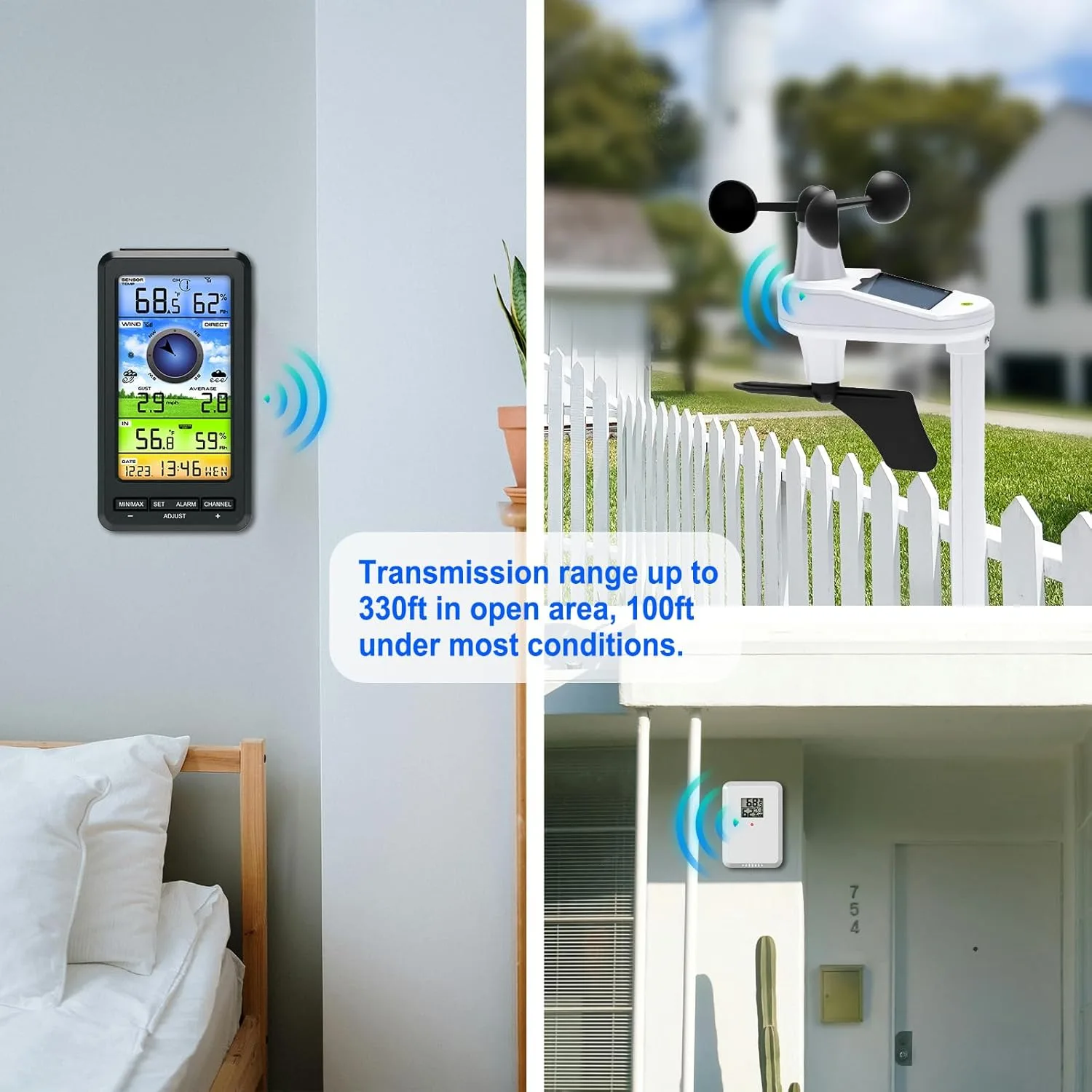
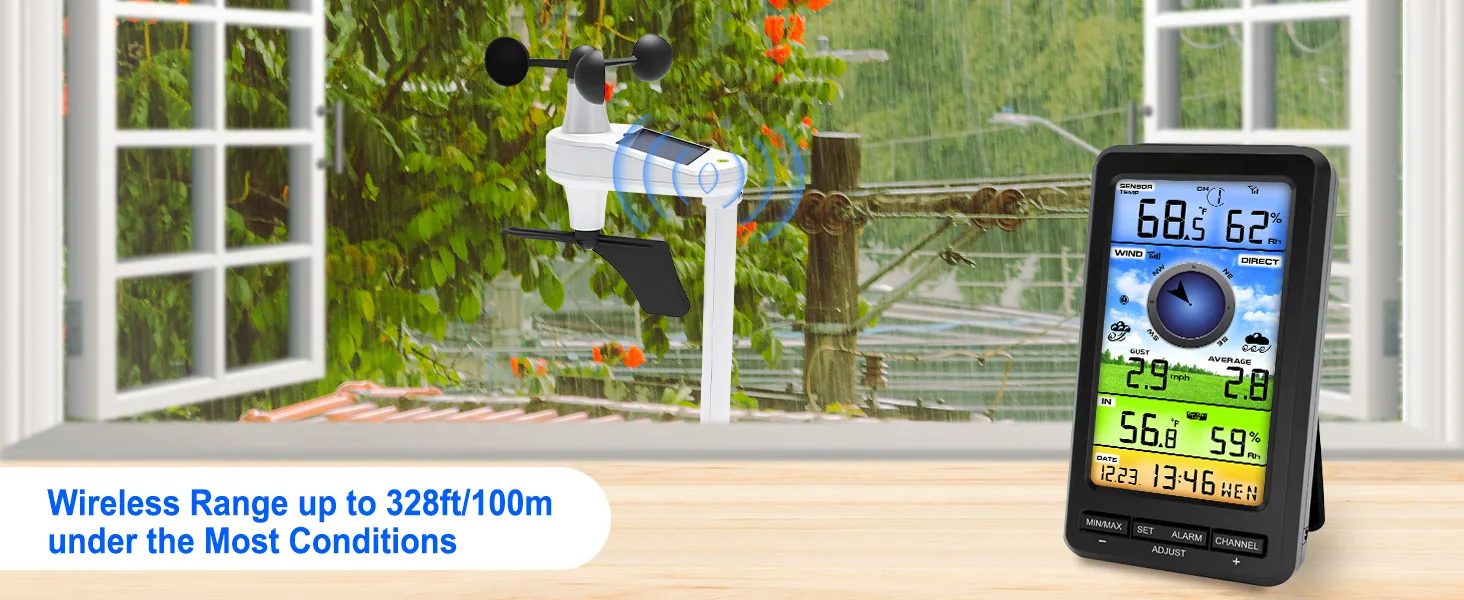
- 433MHz wireless link reaches 100m in open air, suitable for most residential and garden sites
- 16 second wind update interval captures gusts without averaging them out
- Dip switches allow easy channel setup for multiple sensors without software
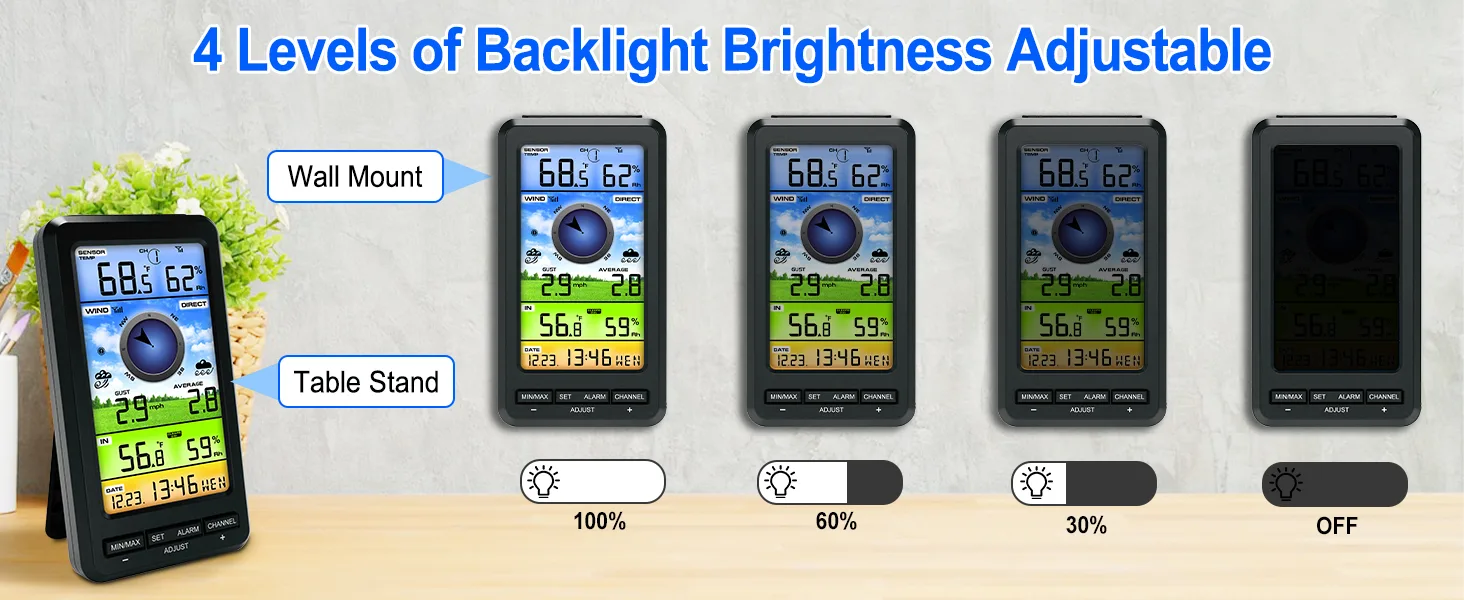
- Bright backlight improves readability in low light conditions
Product Images
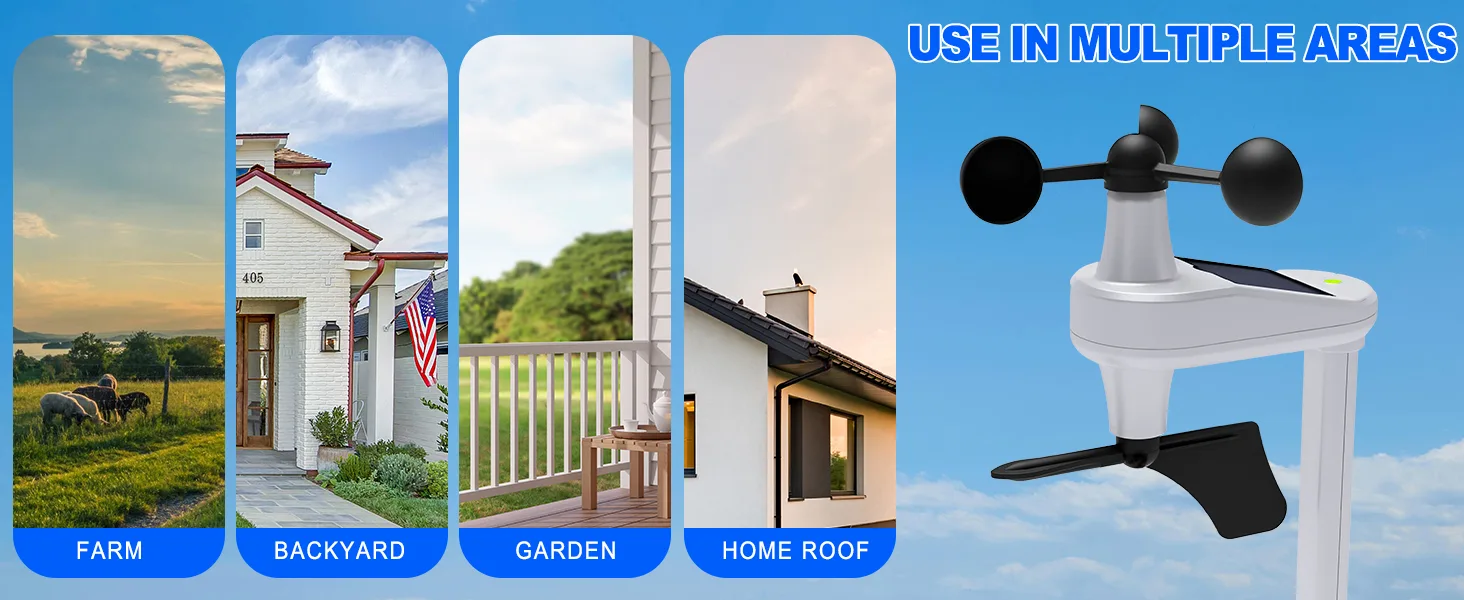
Where It Is Used
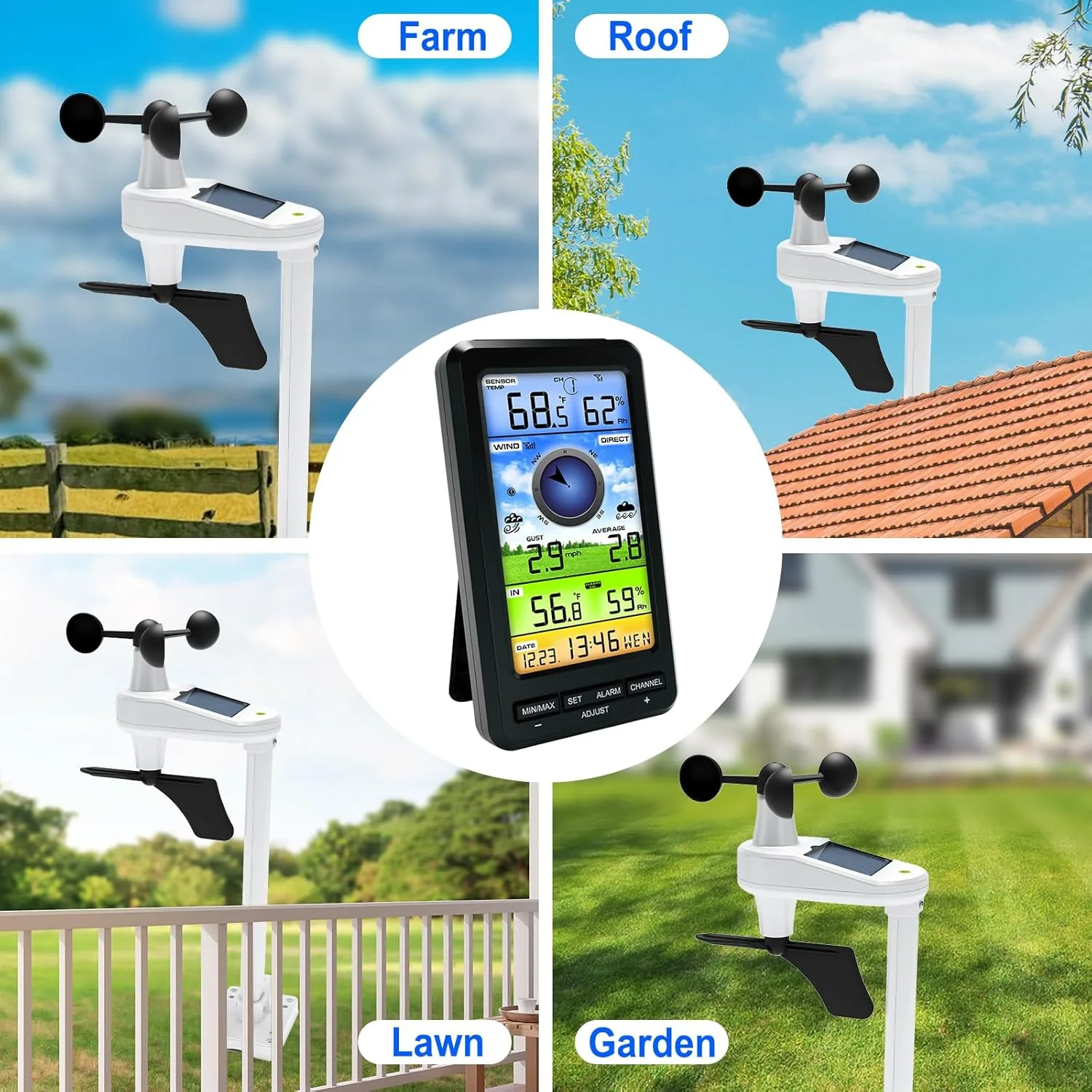
- Rooftop and garden weather stations sold under a distributor's own brand
- Agricultural monitoring where wind gusts affect irrigation and spraying decisions
- Marina and leisure facility displays for boaters and pool operators
- Schools and visitor centres needing a real-time weather display with alarms
- HVAC and building services monitoring for indoor-outdoor climate comparison
Who It Is For
- Consumer electronics brands launching an own-label weather station without an in-house RF team
- Distributors replacing a weather station that failed after one winter due to poor outdoor performance
- Agricultural equipment suppliers bundling weather data with irrigation or greenhouse controls
- Integrators who need a battery-powered station because running cables is not feasible
Problems It Solves
- Weather stations that only report average wind speed and miss critical gusts
- Sensors that fail in rain, humidity, or vibration due to poor sealing or component ageing
- Multiple consoles needed when adding wind or extra sensors, increasing cost and complexity
- RF links that drop out beyond 30m, requiring a gateway or cabling
- Lack of wind chill and dew point data in basic weather displays
Technical Features
- Receives wind speed and direction from a wireless wind gauge over 433MHz
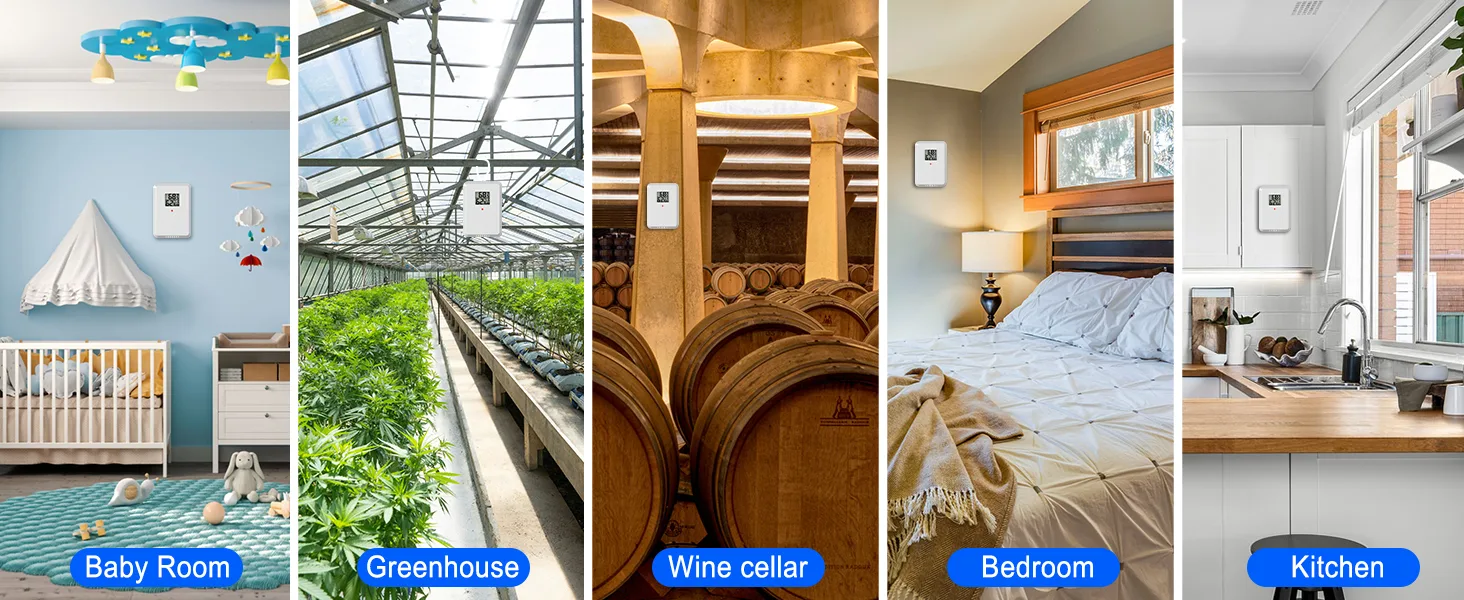
- Supports up to eight temperature and humidity sensors via dip switch channel selection
- Displays wind speed, direction, gust, wind chill, and dew point in real time
- Indoor and outdoor temperature and humidity readings with separate accuracy claims
- High and low alarms for temperature, humidity, and wind speed
- Alarm clock and calendar function for daily use
- Bright backlight for visibility in dim lighting
- Dip switches for sensor channel setup without software configuration
Specifications
Values taken from our own product documentation. Anything we cannot verify is marked rather than estimated.
| Wind Speed Range | 0 to 50 m/s |
|---|---|
| Wind Speed Accuracy | 2 to 10 m/s: plus or minus 0.3 m/s; 10 to 50 m/s: plus or minus 10 percent |
| Wind Direction | 0 to 360 degrees, plus or minus 10 degrees |
| Wind Sensor Transmission Interval | 16 s |
| T/H Sensor Transmission Interval | 60 s |
| Transmission Range | 100 m open area, around 30 m under most conditions |
| Transmission Frequency | 433 MHz |
| Indoor Temperature Range | 0 to +60 degrees C, plus or minus 1 degree C |
| Outdoor Temperature Range | -40 to +60 degrees C, plus or minus 1 degree C |
| Indoor Humidity Range | 10 to 99 percent RH, plus or minus 5 percent |
| Outdoor Humidity Range | 10 to 99 percent RH, plus or minus 5 percent |
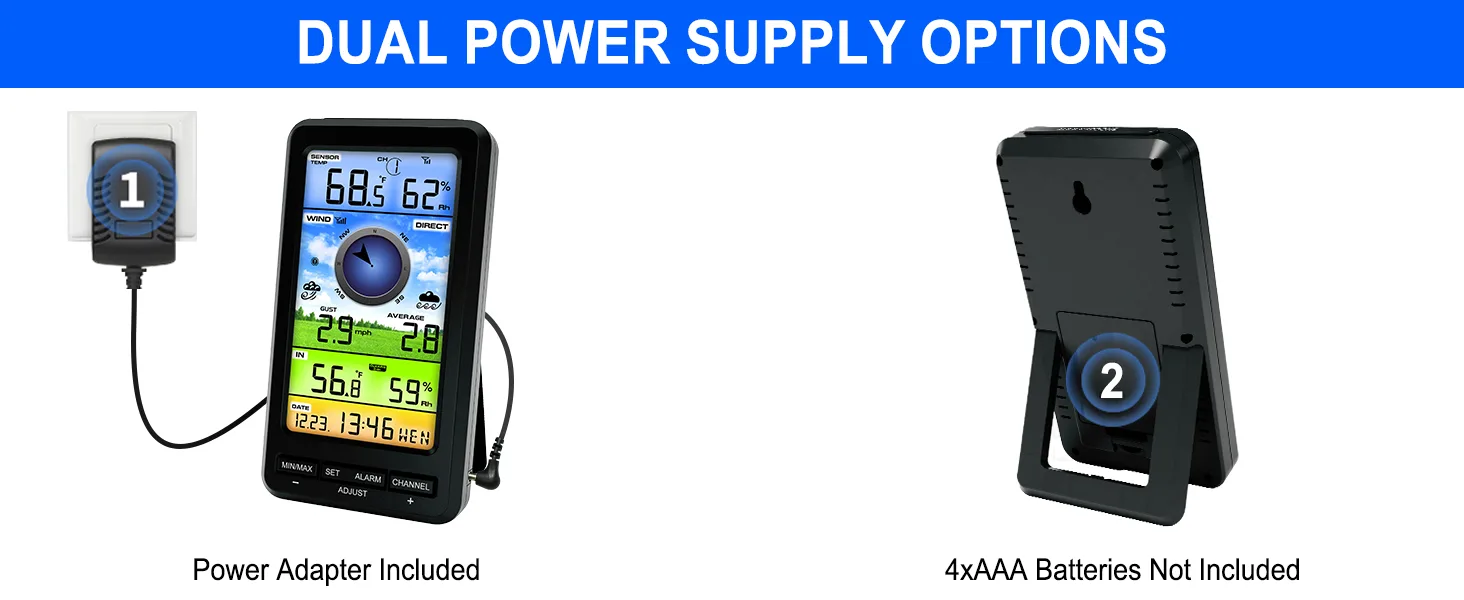
| Power - Console | 4 x AA 1.5V alkaline or lithium batteries, not included |
| Power - Wind Sensor | 4 x AAA 1.5V alkaline or lithium batteries, not included |
| Power - Thermo-Hygrometer Sensor | 2 x AAA 1.5V alkaline or lithium batteries, not included |
| Power - Adaptor | 6V to 500mA |
Materials and Construction
- Moulded plastic housing for the console and outdoor sensors
- Weather sealed battery compartment sized for 4 x AA cells in the console
- Weather sealed battery compartment sized for 4 x AAA cells in the wind sensor
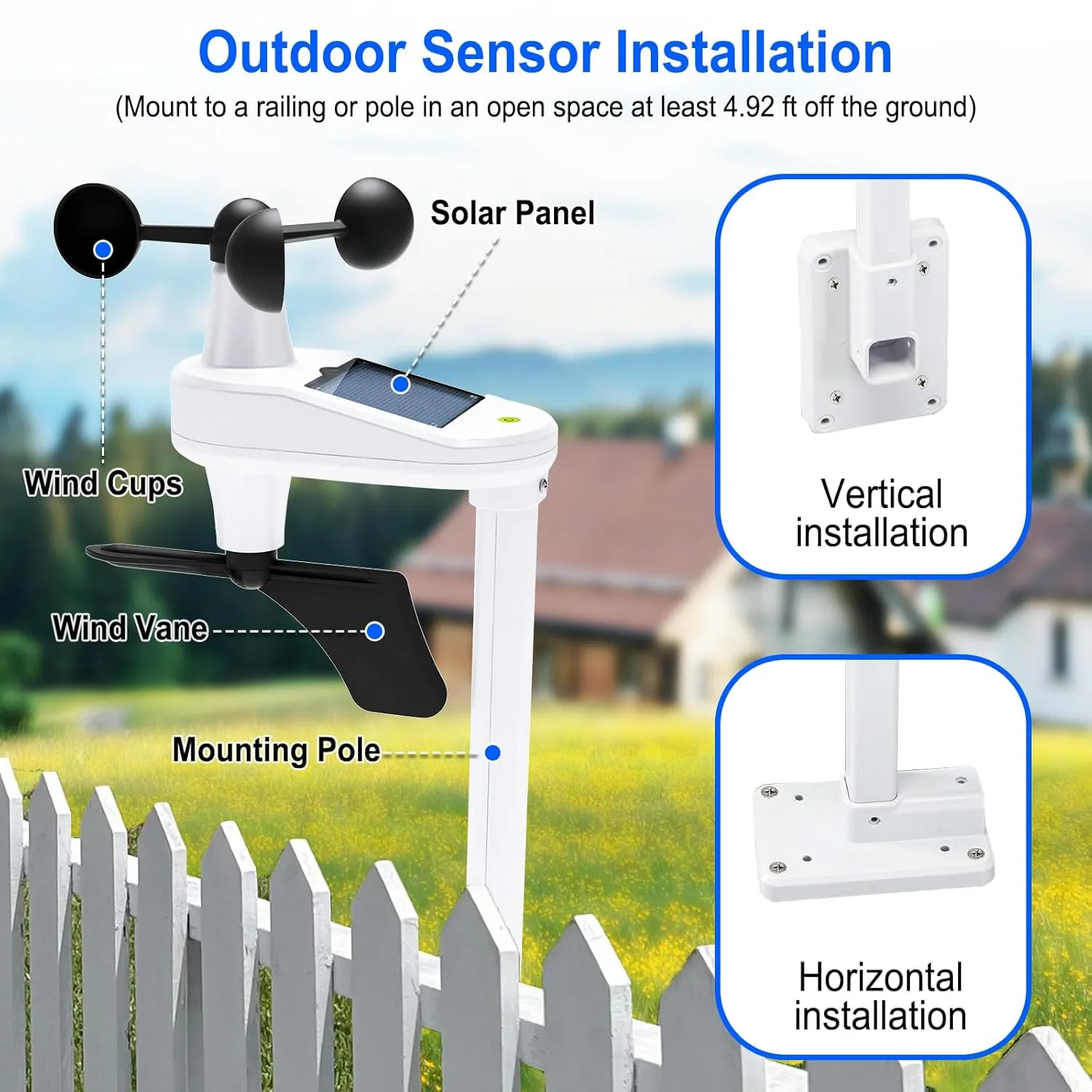
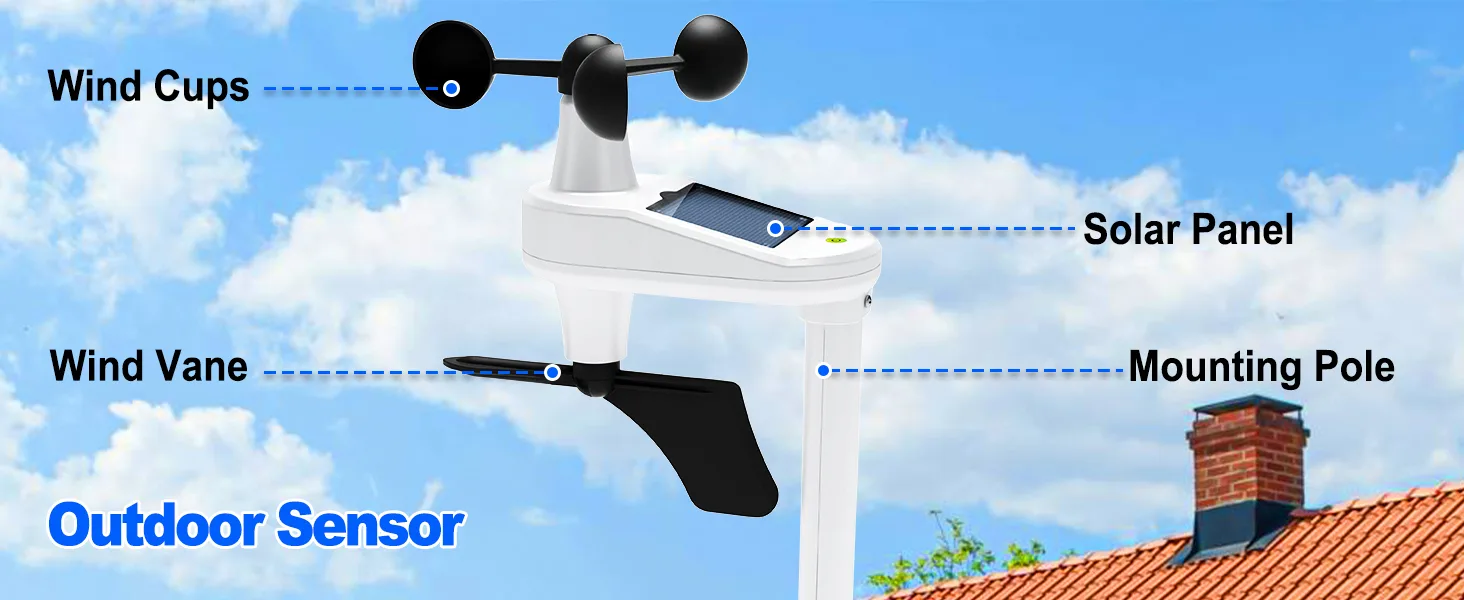
- Integrated solar panel on the wind sensor body
How It Is Made
Console and sensor sub-assemblies are populated and soldered on our own assembly line
Outdoor sensor housings are sealed and tested on rainfall and waterproof test equipment
Every unit undergoes final ageing testing before leaving the factory
Console and sensor PCBs are assembled in dedicated production lines
Quality Control
- Rainfall and waterproof testing on assembled outdoor units
- Constant temperature and humidity chamber runs to verify performance across -40 to +60 degrees C
- Vibration testing to simulate transport and mast mounting stress
- Smog ageing to assess long-term housing and seal integrity
- Final ageing test on every unit before packing
Customisation Options
- Own-label printing and retail packaging on request
- Console firmware configured to match a customer's existing sensor protocol
- Alternative battery types (lithium or alkaline) specified per sensor
- User manual and quick start guide provided in the destination language
Compared With the Alternatives
vs Separate wind and temperature/humidity consoles
One console reduces cost and complexity, but limits sensor count to eight if using dip switches
vs Wired weather stations
No cable run required, but battery life is shorter than with solar assist
vs LoRa-based weather stations
433MHz is lower cost and sufficient for a single site; LoRa is better for large or multi-site deployments
Use Guide
- Mount the wind sensor clear of obstructions, ideally 2m above the nearest object
- Align the direction marking to true north before securing the mast clamp
- Use lithium batteries in the wind sensor for cold climates or long-term deployment
- Set dip switches on each sensor before pairing with the console
- Check the wind gauge bearing and clear debris at the start of each season
FT0214 Weather Station Wind Gauge Questions
What is the real range between the console and the wind sensor
100m in open air. Through walls, foliage, or a roof, expect around 30m, which covers a typical house and garden.
How often does the wind sensor update
Every 16 seconds, which captures gusts without averaging them out.
Does the solar panel charge the batteries
No. The solar panel powers the sensor during daylight, reducing battery drain. The AAA cells are for night and low-light operation.
Can I add more than eight sensors
The console supports up to eight temperature and humidity sensors via dip switches. Adding more requires a different console or gateway.
What is the lead time and minimum order
Email [email protected] with your target ship date and quantity. We will confirm lead time and MOQ by return email.
Which certifications does it carry
TBC. Ask us for the current certificate set for your destination market before placing the order.
Related Products
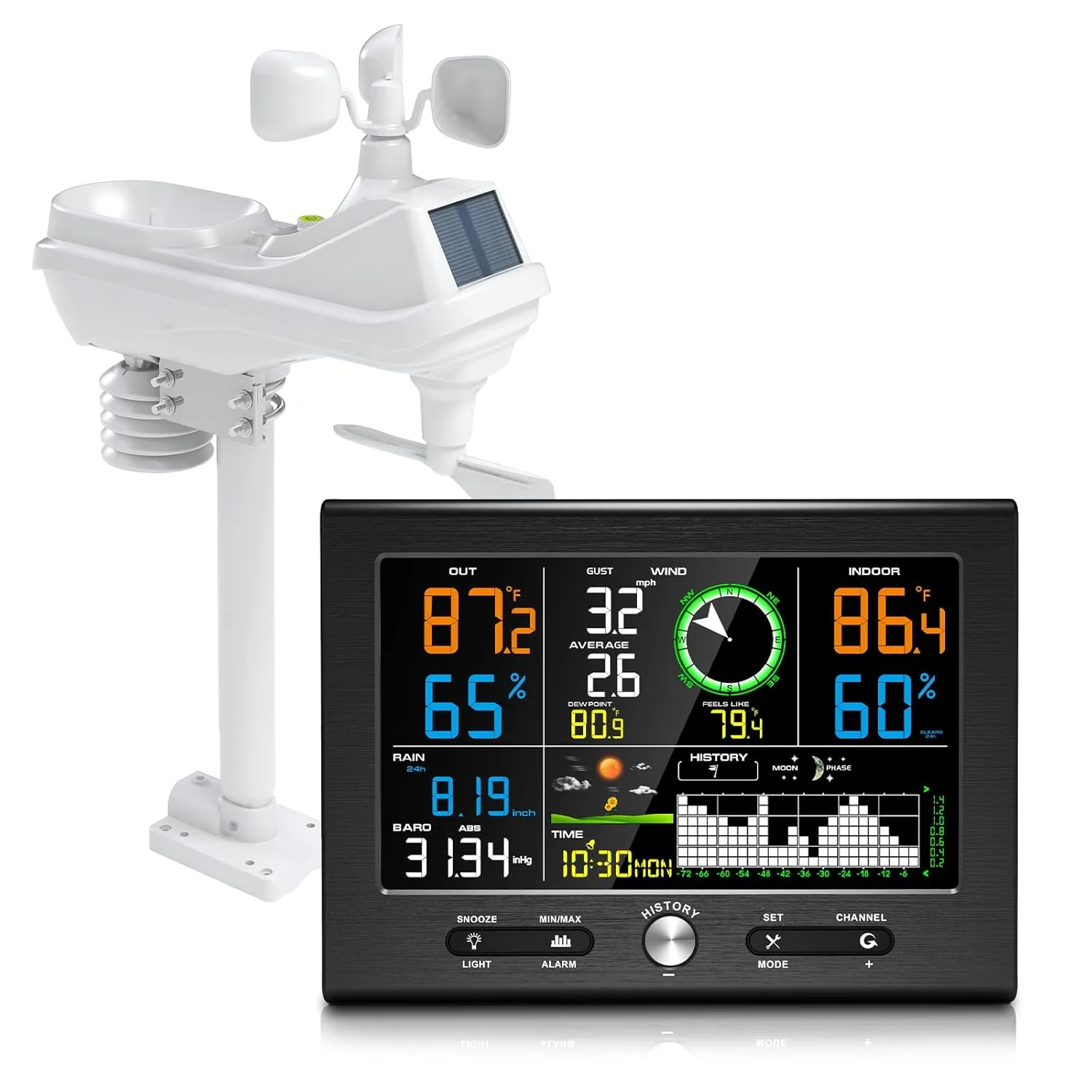
FT037B Weather Station
Integrated outdoor sensor with 433MHz RF avoids separate wiring and site cabling
View Specifications →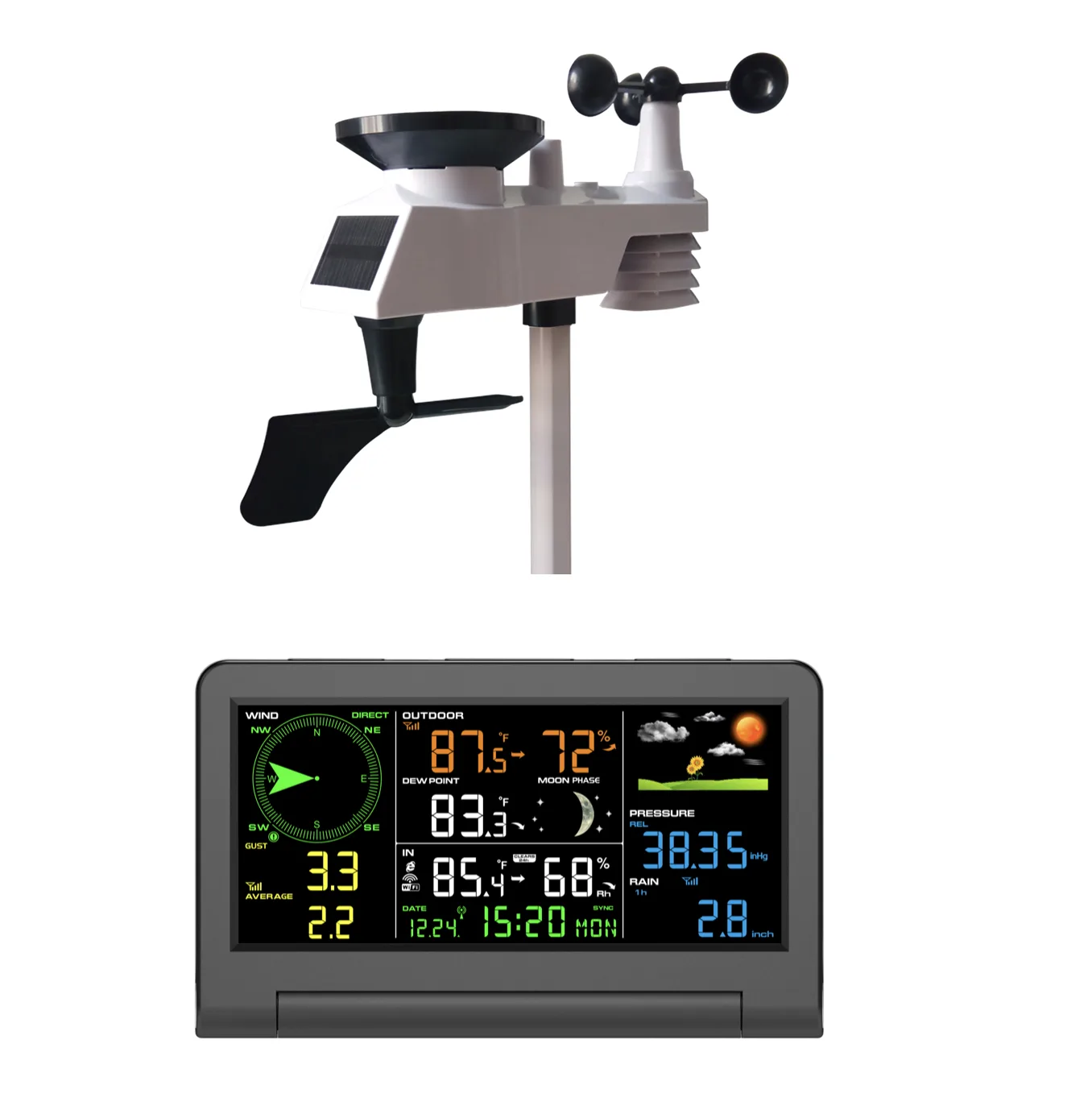
FT0350 RF Weather Station
One outdoor sensor with integrated solar panel reduces battery drain and extends operational life
View Specifications →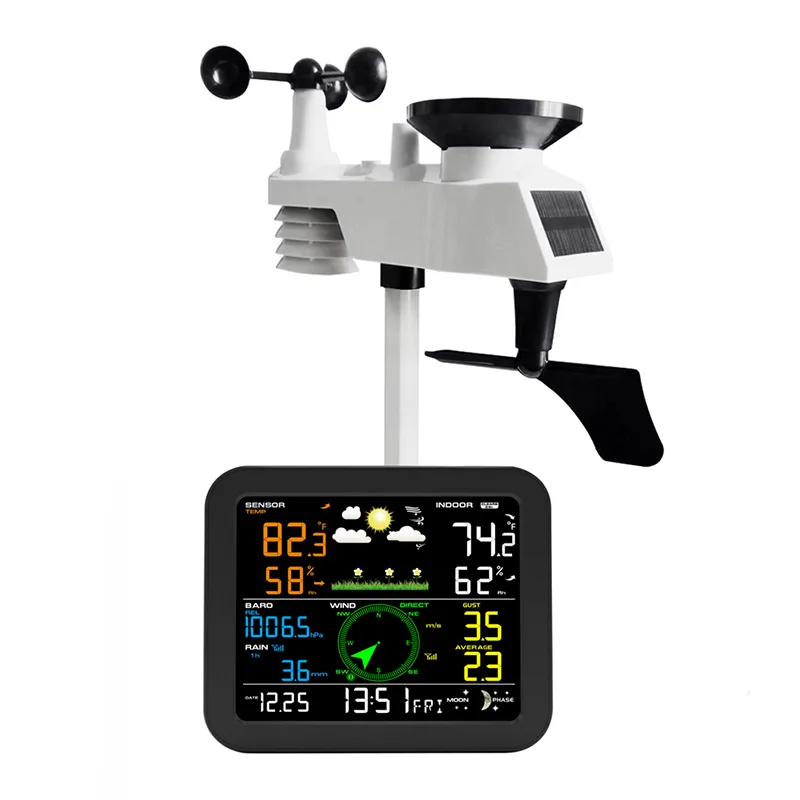
FT0342 RF Weather Station
Integrated outdoor sensor with solar assist reduces battery replacement frequency
View Specifications →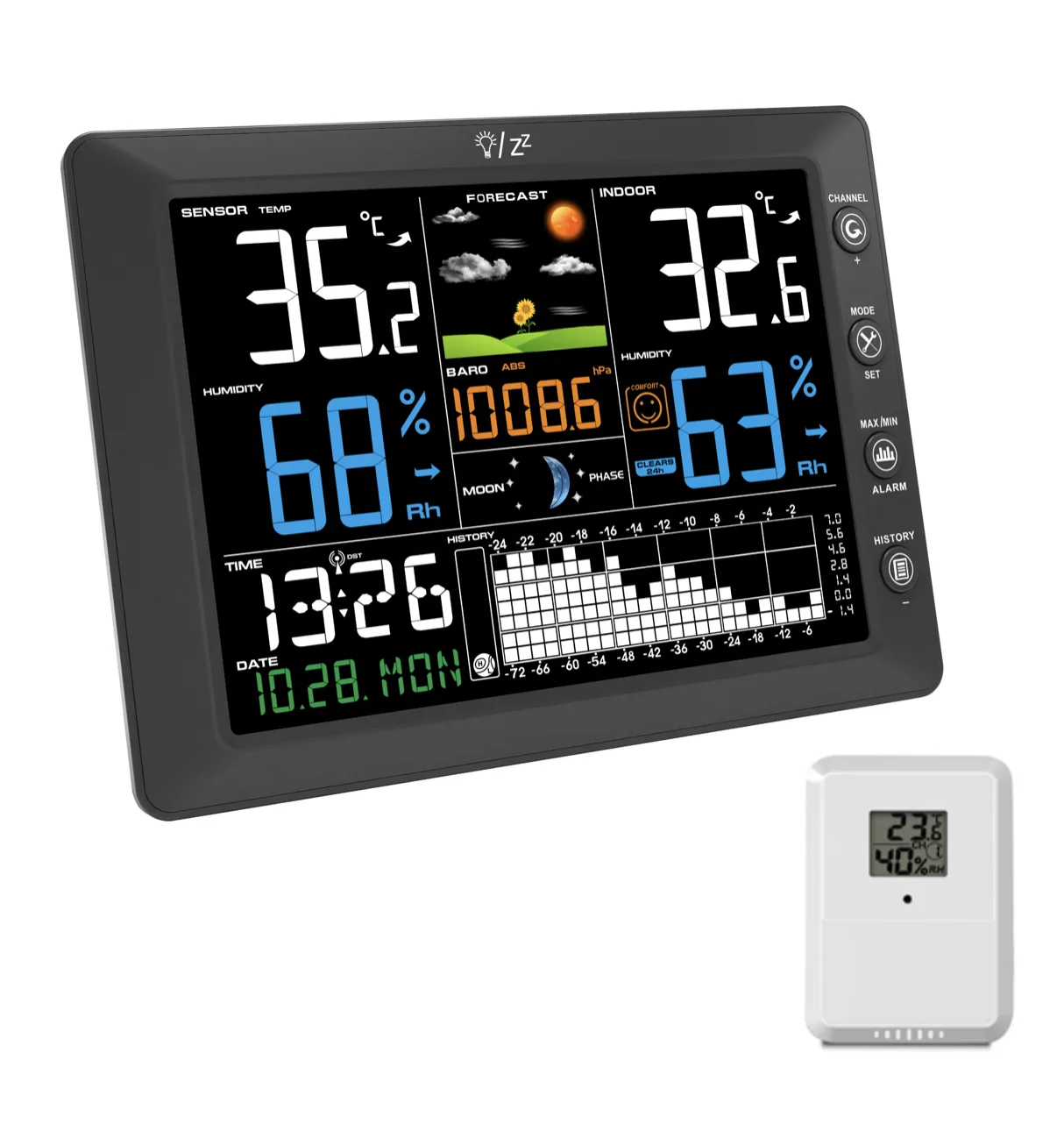
FT-0818 RF Weather Station
433MHz radio link reaches 100 meters in open air without a gateway or cabling
View Specifications →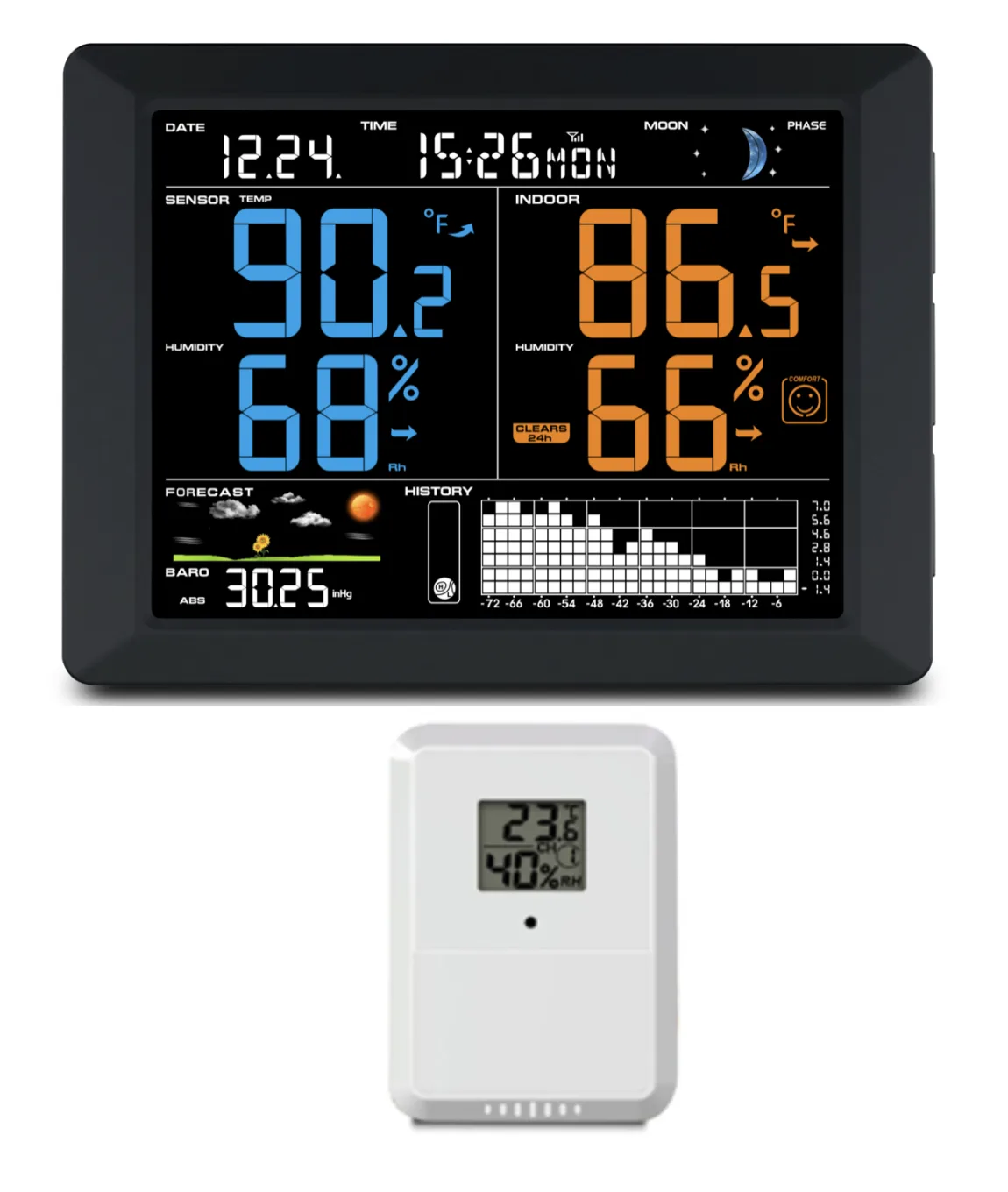
FT-0814 RF Weather Station
433MHz transmission reaches 100 meters in open air, covering most residential and garden sites
View Specifications →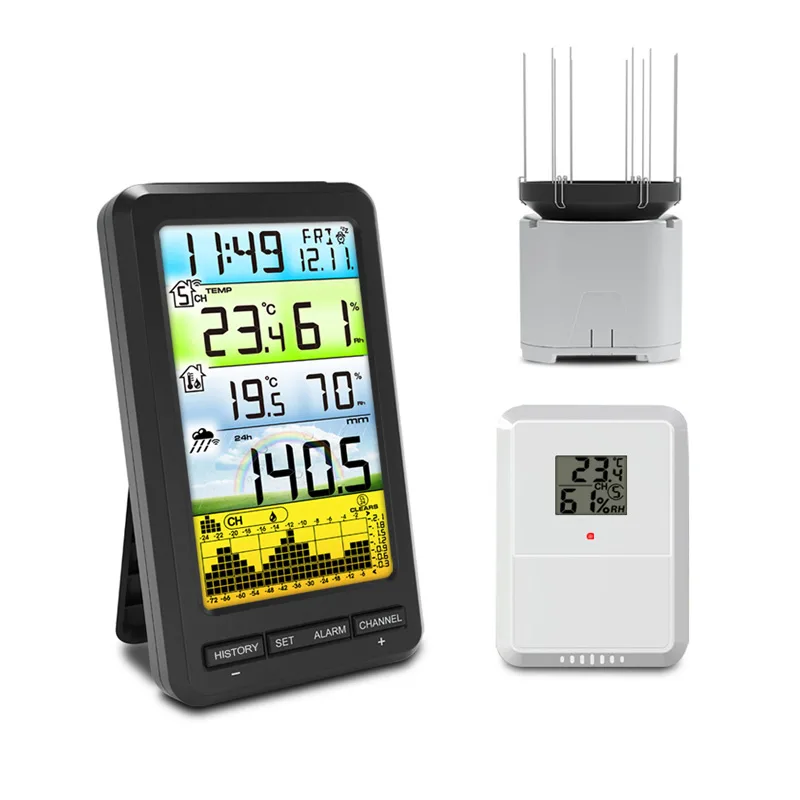
FT0207 Wireless Weather Station Rain Gauge
Rainfall volume up to 9999 mm with 0.3 mm resolution below 1000 mm
View Specifications →Request a Quote for the FT0214 Weather Station Wind Gauge
Tell us the quantity, the destination market and whether you need own-label printing. We will confirm pricing, pairing and lead time in writing.