
For steel pipe, plate, bar, fittings, stainless and nickel alloys, the mill test certificate (MTC, also called a mill test report or inspection certificate) is the document that says what the material is. It records the chemical composition and mechanical properties of a specific heat of steel. If the certificate is wrong or fake, everything built from that material inherits the risk — pressure vessels, structural frames, oil and gas piping, food-processing equipment.
Chinese mills and stockists supply large volumes of excellent material with genuine certificates. But retyped, edited and "generic" certificates also circulate, particularly through traders. This guide explains how to read an MTC and how to verify it.
EN 10204 document types
Most international steel orders reference EN 10204, which defines four inspection document types:
| Type | Issued by | Content | Validation |
|---|---|---|---|
| 2.1 Declaration of compliance | Manufacturer | Statement that product complies, no test results | Manufacturer |
| 2.2 Test report | Manufacturer | Results from non-specific inspection (typical values) | Manufacturer |
| 3.1 Inspection certificate | Manufacturer | Results of specific tests on the delivered product | Manufacturer's authorised inspector, independent of production |
| 3.2 Inspection certificate | Manufacturer + purchaser's or third-party inspector | Specific test results | Both manufacturer and independent inspector sign |
For pressure equipment, structural steel and critical applications, 3.1 is the normal minimum; 3.2 is required by some specifications (for example certain oil and gas, nuclear or offshore projects) and must be arranged before production, because the independent inspector must witness testing.
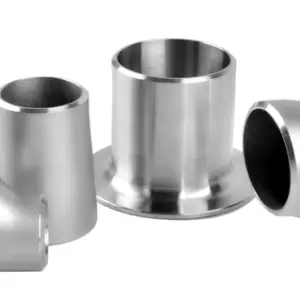
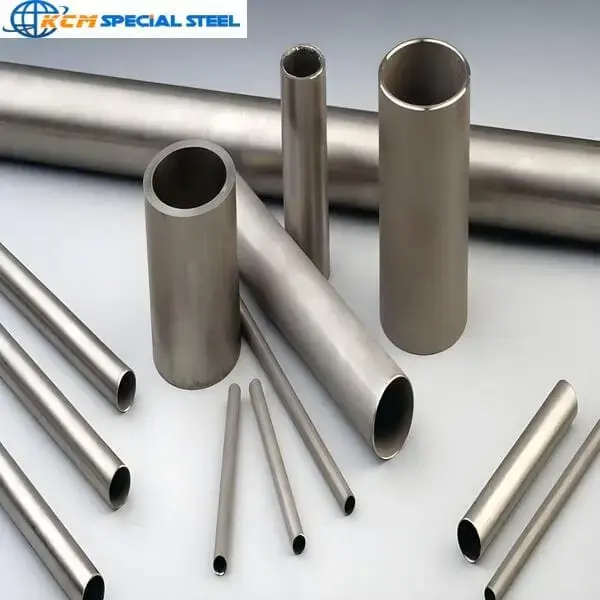
Product photos are taken from the supplier listings on CifyChina and link to each supplier's page. They illustrate the product type discussed; they are not an endorsement of any specific item.
What a genuine 3.1 certificate contains
- Mill name, address and logo; certificate number and date.
- Purchaser, order number and product description.
- Product standard and grade (e.g. ASTM A312 TP316L, EN 10216-5 1.4404, ASTM A106 Gr. B, EN 10025-2 S355J2).
- Heat number (melt number) and, for pipe and plate, lot or piece numbers.
- Dimensions and quantity (pieces, length, weight).
- Chemical composition from ladle and/or product analysis, element by element.
- Mechanical properties: yield strength, tensile strength, elongation, hardness, impact (Charpy) values at stated temperature.
- Additional tests: hydrostatic test, non-destructive testing (ultrasonic, eddy current), intergranular corrosion test for stainless, flattening/flaring tests for tube, ferrite content for duplex.
- Heat-treatment condition (solution annealed, normalised, quenched and tempered).
- Statement of compliance and signature of the authorised inspection representative, often with a mill stamp.
Signs a certificate may be fake or edited
- Values that are "too perfect": identical chemical results across many heats, or mechanical values that sit precisely at typical mid-range numbers.
- Chemistry outside the grade or unusual combinations — for example 316L with molybdenum below 2.0% or carbon above 0.030%.
- Inconsistent fonts, alignment or logos, signs of text pasted onto a scanned template.
- Heat numbers that don't appear on the material. Steel pipe, plate and bar are marked (stencilled, stamped or labelled) with heat numbers; they must match the certificate.
- A trader's letterhead replacing the mill's, with no original mill certificate attached. Stockists may issue their own documents, but they should attach the original mill certificate.
- Quantities on the certificate that don't match your order (a small order covered by a certificate for a much larger heat is normal; a certificate listing sizes you didn't order is not necessarily wrong, but check).
Verification steps
- Ask for the original mill certificate, not only the supplier's own document, and ask which mill produced the material.
- Contact the mill directly where possible to confirm the certificate number and heat. Large Chinese mills (for example Baosteel, TISCO, Tsingshan, Jiuli for stainless pipe) have quality departments that can confirm authenticity.
- Match marking to certificate on arrival or during pre-shipment inspection: heat numbers, grade, size and standard on every piece or bundle.
- Positive material identification (PMI): a handheld XRF analyser confirms alloying elements (Cr, Ni, Mo, Cu, etc.) in seconds. It cannot measure carbon accurately; optical emission spectroscopy (OES) can.
- Independent testing: for critical materials, send samples to an accredited lab for chemical and mechanical testing.
- Third-party inspection: agencies can witness testing at the mill and issue 3.2 certificates if arranged in advance.
Special points by material
- Duplex and super-duplex stainless (2205, 2507): ferrite content, impact values at low temperature, and ASTM G48 pitting corrosion tests are often specified. KCM Special Steel lists duplex, nickel alloy pipe, fittings and flanges.
- Ductile iron pipe and fittings: standards such as ISO 2531 / EN 545, with coating and lining specifications. Shandong Jialu lists ductile iron pipe and fittings along with tinplate.
- Specialty metals (titanium, nickel, refractory metals): certificates should reference ASTM/AMS standards and include full chemistry. HLMET CO., LTD. is a specialty metals listing.
- Electrical steels and foils: magnetic properties (core loss, permeability) and thickness tolerance matter as much as chemistry. Luoyang Xinzhaohe Aluminum lists aluminium and related strip for transformers; see also our guide to Silicon Steel & Copper Foil for Transformers from China — A Specialist Materials Buyer's Guide.
- General steel stock: Senko Steel is another steel listing to include in comparisons.
Contract language that helps
- "Material shall be supplied with original EN 10204 3.1 mill certificates. Heat numbers shall be permanently marked on each piece and correspond to the certificate."
- "Buyer reserves the right to perform PMI and independent testing. Non-conforming material shall be replaced at supplier's cost including freight."
- "Substitution of mill or grade without written approval is not permitted."
Linking to downstream products
Mill certificates matter for machined parts (How to Vet a CNC Machining Supplier in China), pressure-retaining valve bodies (Valves & Hydraulics from China: Pressure Testing and Documentation), high-strength fasteners (Buying Fasteners from China: Grades, Coatings and Testing) and façade substructures (Façade Cladding, Windows & Tiles from China: Fire Ratings and Specs). In each case, ask the component manufacturer to pass through the raw-material certificate linked to your parts.
Practical inspection routine on arrival
- Unpack a sample of bundles or pieces from different parts of the shipment.
- Read and photograph markings; compare heat numbers, sizes and grades with the certificate.
- Measure dimensions — outside diameter, wall thickness, plate thickness — with calibrated tools.
- Run PMI on several pieces per heat.
- Check surface condition, straightness and end finish.
- Quarantine anything that does not match until resolved.
When the supplier is a stockist
Much steel exported from China is sold by stockists and traders who hold inventory from several mills. This is normal and often the only practical way to buy small quantities of many sizes. Ask the stockist to identify the mill for each item, to supply the mill's original certificates, and to guarantee that material will not be re-marked. Reputable stockists keep heat-number records for their inventory and can show you the original mill markings on the material in their warehouse. Be cautious with stockists that cannot name the mill, supply only their own letterhead certificate, or offer a price well below the mill price for the same grade and size — re-certified or re-stencilled material is a known risk in the trade.
Frequently asked questions
Is a 2.2 test report enough? For non-critical applications it may be. For pressure, structural or safety-related use, require 3.1.
Can a stockist issue a 3.1 certificate? The 3.1 certificate is issued by the manufacturer. A stockist can provide a copy of the mill's 3.1 plus its own traceability statement.
Does XRF prove the grade? It confirms the main alloying elements and catches most mix-ups, but not carbon or all mechanical properties. Combine PMI with certificate review and, when needed, lab testing.
Have a similar requirement? Send the specification or drawing on WhatsApp and we will match it against the suppliers in the directory.