
Fasteners look like commodities, but a bolt is a precisely defined engineering component. The same M10 hex bolt can be ordered in property class 4.8 or 12.9, with electro-zinc or hot-dip galvanising, to DIN 933 or ISO 4017 — and each combination performs very differently. Chinese fastener clusters in Haiyan (Zhejiang), Yongnian (Hebei), Ningbo, Dongguan and Jiaxing supply much of the world, from construction screws to high-tensile structural bolts. Buying well depends on specifying the standard, the grade, the coating and the tests.
Start with the standard
Always quote the product standard, which defines dimensions and tolerances:
- Metric: ISO and DIN standards (e.g. ISO 4017 / DIN 933 hex bolts fully threaded, ISO 4014 / DIN 931 partially threaded, ISO 4032 / DIN 934 nuts, DIN 125 / ISO 7089 washers, DIN 127 spring washers, DIN 9021 large washers).
- Inch: ASME B18.2.1 (bolts and screws), ASME B18.2.2 (nuts), with SAE J429 or ASTM grades.
- Screws: DIN 7981/7982 tapping screws, DIN 7504 self-drilling screws, chipboard and drywall screws usually to manufacturer or regional standards.
- Anchors: often to ETA (European Technical Assessment) approvals for structural use.
Listings like Winton show catalogue items by DIN number (for example DIN 127 spring washers and DIN 9021 flat washers), which makes quoting easier. Zinsn and Haiyan Ehons Industrial list self-tapping, chipboard, drywall and wood screws, Beyond Fastener focuses on stainless steel fasteners, and Ningbo Anchors lists wedge anchors and the machines to make them. See also our existing guide to Self-Drilling Screws & Industrial Fasteners from China — A B2B Wholesale Buyer's Guide.
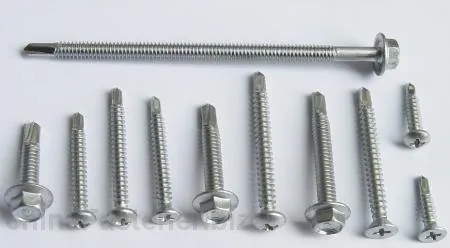
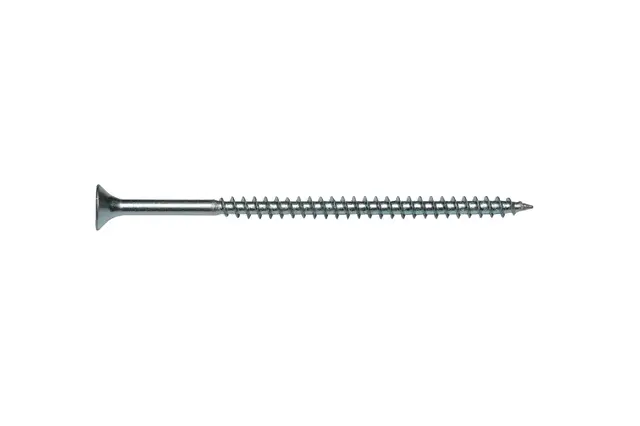
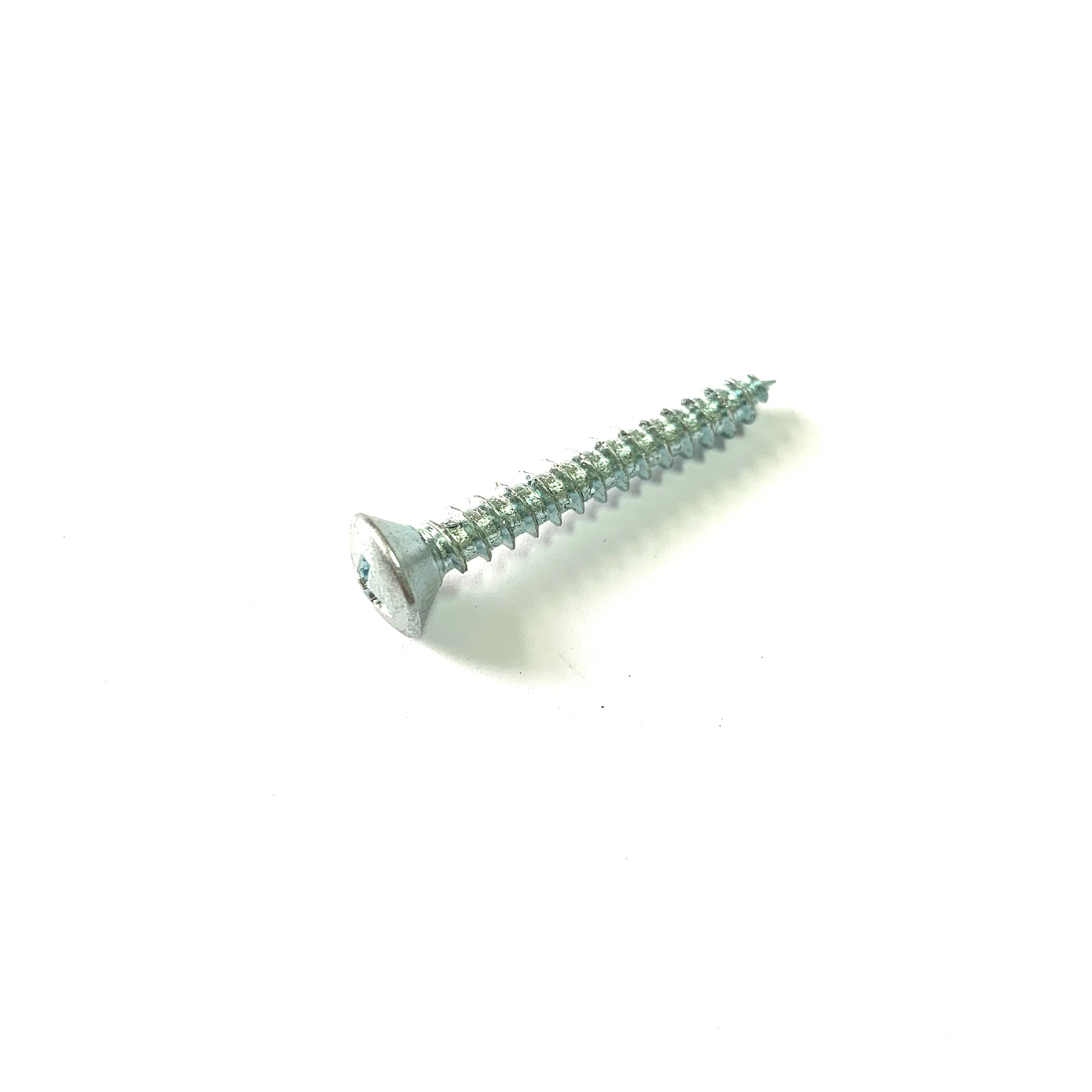
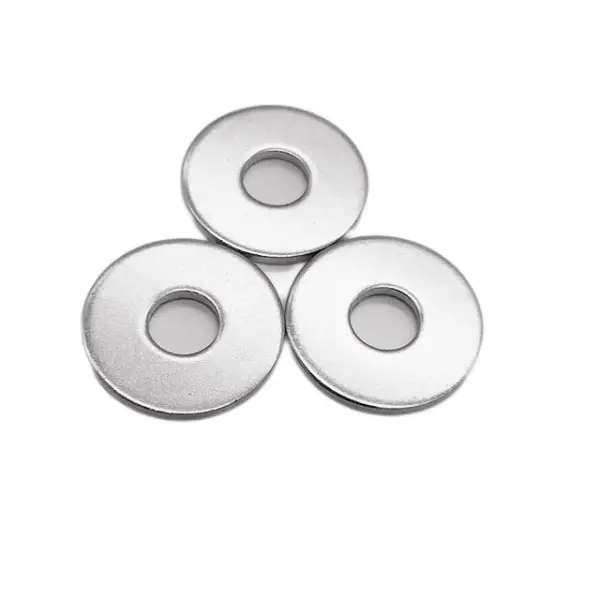
Product photos are taken from the supplier listings on CifyChina and link to each supplier's page. They illustrate the product type discussed; they are not an endorsement of any specific item.
Property classes and material grades
| Type | Common grades | What it means |
|---|---|---|
| Carbon steel bolts (metric) | 4.8, 8.8, 10.9, 12.9 (ISO 898-1) | First number × 100 = nominal tensile strength in MPa; 8.8 and above are quenched and tempered |
| Carbon steel nuts | Class 8, 10, 12 (ISO 898-2) | Match to bolt class |
| Inch bolts | SAE Grade 2, 5, 8 | Grade 5 ≈ 8.8; Grade 8 ≈ 10.9 |
| Stainless | A2 (304), A4 (316), class 70 or 80 (ISO 3506) | A4 for marine and chloride exposure |
| Structural | ASTM A325/A490 or F3125; EN 14399 HV/HR sets | Require specific testing and marking |
High-strength bolts must carry head markings with the property class and the manufacturer's identification mark. Missing markings on 8.8 or higher bolts are a red flag.
Coatings: corrosion resistance vs risk
- Electro-zinc plating (clear/blue, yellow): thin, economical, typically 5–12 µm. Salt-spray resistance to white rust is short (often 24–72 hours) unless passivation and sealers are specified.
- Zinc-nickel and zinc-flake (Dacromet/Geomet-type): high corrosion resistance (often 480–1,000 hours salt spray), no hydrogen embrittlement risk from the coating process. Popular in automotive and construction.
- Hot-dip galvanising (HDG): thick (typically 45–85 µm) for outdoor structural use; threads must be oversized or tapped after galvanising.
- Black oxide, phosphate: minimal corrosion protection; common for drywall screws and indoor use.
- Mechanical galvanising for some high-strength applications.
Hydrogen embrittlement is the hidden risk: high-strength fasteners (hardness above roughly 32 HRC, i.e. class 10.9 and 12.9) that are electroplated can fail suddenly after installation unless baked promptly after plating. For these grades, specify zinc-flake coating or require documented baking per ISO 4042.
State the coating, the thickness and the salt-spray requirement (for example "zinc flake, 720 h neutral salt spray to red rust per ISO 9227") rather than just "zinc".
Testing to require
For each lot, typical tests include:
- Dimensional checks against the standard, including thread gauges (6g/6H for metric).
- Hardness (Rockwell or Vickers) and, for high-strength grades, tensile and proof-load tests on full-size bolts.
- Coating thickness (magnetic or XRF gauge) and salt-spray test reports.
- Chemical composition from the wire-rod mill certificate — see Verifying Mill Test Certificates for Steel from China.
- Torque-tension or friction coefficient tests for structural sets and automotive applications.
- Drill-drive tests for self-drilling screws (drilling time through a specified steel thickness).
Ask for an inspection certificate per EN 10204 3.1 per lot, with lot numbers printed on the cartons.
Packaging and labelling
Fasteners are heavy and cartons fail easily. Specify double-wall cartons, maximum carton weight (often 20–25 kg), pallets with strapping and corner protection, and labels with standard, size, grade, coating, quantity and lot number. For retail, small boxes and blister packs are possible but raise MOQs.
Trade rules
Some markets apply anti-dumping duties on certain Chinese steel fasteners; the EU, for example, reinstated anti-dumping measures on certain iron or steel fasteners from China in 2022. Check your tariff code and any trade remedies before ordering — the duty can outweigh the price advantage. Origin fraud (transshipment through third countries) is prosecuted; buy from genuine manufacturers and keep origin documents.
Inspection checklist
- Verify head markings and manufacturer marks.
- Measure dimensions and thread fit on a statistical sample.
- Check hardness on a sample from each size.
- Measure coating thickness; check for bare spots, blistering or excess coating in threads.
- Confirm carton labels match contents; weigh cartons.
- Review lot certificates against the purchase order.
If fasteners are part of a machined assembly, combine this with the How to Vet a CNC Machining Supplier in China checklist. For façade and roofing screws, see Façade Cladding, Windows & Tiles from China: Fire Ratings and Specs.
Writing a fastener purchase specification
A complete line item on a fastener purchase order reads something like: "Hex head bolt ISO 4017, M12 × 50, property class 8.8, zinc flake coated to ISO 10683 with 720 h NSS to red rust, head marked 8.8 + manufacturer mark, supplied with EN 10204 3.1 certificate per lot, packed 25 kg cartons on fumigated pallets." Compare that with "M12×50 bolt zinc" — the second version invites every supplier to quote a different product.
For distributors buying hundreds of lines, build a master specification sheet once — standards, grades, coatings, testing, packaging and labelling — and attach it to every RFQ and purchase order. It saves repeated negotiation and gives your inspector a clear checklist.
Common failure modes seen by importers
- Decarburisation and wrong heat treatment on high-strength bolts, leading to low hardness or brittle heads.
- Thread galling on stainless fasteners assembled without lubricant — specify anti-galling treatment or advise users.
- White rust on electro-zinc parts after sea freight in humid containers; specify passivation, sealers and VCI packaging.
- Self-drilling screws that fail to drill the specified steel thickness because of poor point hardening.
- Wrong head markings or missing lot traceability, which prevents root-cause analysis when failures occur.
Sourcing strategy
Distributors commonly split sourcing: high-volume standard lines from large specialised factories, and small-volume special items from traders who consolidate. Keep critical and high-strength items with manufacturers who can show heat-treatment and testing records.
Frequently asked questions
What MOQ should I expect? For standard sizes, factories often sell by weight (for example 500 kg–1 ton per size) or by carton. Special coatings, lengths or head styles raise MOQs.
Are Chinese 10.9 bolts reliable? From competent manufacturers with proper heat treatment and testing, yes. Insist on proof-load test data and correct head markings, and avoid electroplated 10.9 and 12.9 without baking records.
Can I mix sizes in one order? Yes; mixed-size orders are normal for distributors. Keep each size as a separately labelled lot.
Is stainless always better than zinc-coated carbon steel? Not always. Stainless A2 or A4 resists corrosion well but has lower strength than high-grade carbon steel, can gall during assembly, and can cause galvanic corrosion when in contact with aluminium or galvanised steel without isolation. Choose the material for the environment, load and adjacent materials, not by default.
Have a similar requirement? Send the specification or drawing on WhatsApp and we will match it against the suppliers in the directory.