
China manufactures most of the world's home appliances — both for global brands and under factories' own brands. Guangdong (Foshan's Shunde district, Zhongshan, Zhuhai), Zhejiang (Ningbo, Cixi) and Anhui (Hefei) are the main clusters. Buyers include retailers building a private-label range, distributors in emerging markets, and project buyers furnishing apartments or hotels. One inquiry in our 2026 log, from a buyer in Iraq, covered refrigerators, washing machines, dryers, microwaves and electric cookers for a project, with specific questions about after-sales repair — which, as this guide explains, is exactly the right question to ask first.
OEM, ODM or brand?
- OEM/private label: you choose an existing factory model and customise logo, colour, control panel language and packaging. MOQs are moderate; tooling costs are low.
- ODM with modifications: changes to cosmetics, features or capacity; more development time and sometimes tooling.
- Branded products: Chinese brands sold through official export channels, with their own warranty network in some countries.
For most importers, OEM on a proven platform is the lowest-risk route. Kitchen-appliance specialists like Tophome Electric Appliance Co., Ltd. list juicers and small kitchen appliances; DELKO International GmbH lists humidifiers, aroma diffusers and personal care appliances; Highend Home Appliance lists air purifiers and ozone generators; and A-COOKER covers commercial kitchen equipment — see our guide to Commercial Kitchen & Restaurant Equipment from China — A B2B Wholesale Buyer's Guide. For cold rooms and refrigeration projects, HOWCOOL Refrigeration (Beijing Howcool) lists cold-storage solutions.
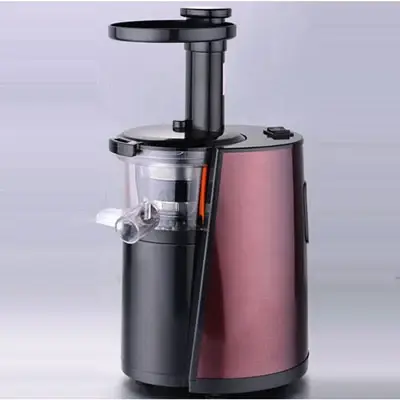

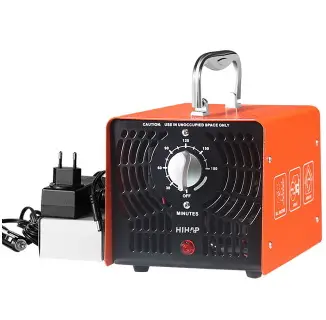

Product photos are taken from the supplier listings on CifyChina and link to each supplier's page. They illustrate the product type discussed; they are not an endorsement of any specific item.
Match the electrical and market variant
Appliances must match the destination grid and habits:
- Voltage and frequency: 220–240 V / 50 Hz for most of Europe, Africa, the Middle East and Asia; 110–120 V / 60 Hz for North America; 220 V / 60 Hz in some markets (e.g. parts of Latin America, Korea, Saudi Arabia). Compressors and motors must be designed for the right frequency.
- Plug type and cord: Type G for UK, Gulf states and parts of Africa; Type C/F for Europe; Type I for Australia; and so on. Cord gauge and plug certification matter — see Wire & Cable from China: Detecting CCA and Undersized Conductors.
- Climate class for refrigerators: tropical (T) or subtropical (ST) for hot climates; a temperate-class fridge struggles at 43 °C ambient.
- Voltage tolerance: in markets with unstable supply, wide-voltage compressors or built-in stabilisers reduce failures.
- Language and labelling: control panels, manuals and energy labels in local languages.
Certifications and energy rules
| Market | Typical requirements |
|---|---|
| EU | CE (LVD, EMC, RED for connected products), RoHS, WEEE registration, energy labelling and ecodesign; EPREL database registration for labelled products |
| UK | UKCA or CE (transitional), energy labelling |
| US / Canada | UL/ETL/CSA safety listing, FCC, DOE efficiency standards, Energy Star (optional) |
| Gulf states | G-Mark, energy efficiency labels (e.g. ESMA in UAE, SASO in Saudi Arabia) |
| Iraq and many other markets | Pre-shipment conformity programmes (e.g. COC schemes) with test reports |
| Australia / NZ | RCM, MEPS energy registration |
Ask for test reports (IEC 60335 series for household appliance safety) for the exact model and variant, and check who holds the certificate — a factory's certificate may not transfer to your brand without re-issue.
Refrigerants and environmental rules
Refrigerators and air conditioners use refrigerants regulated in many countries. R600a (isobutane) is standard in household fridges; air conditioners increasingly use R32 or R290. Some markets restrict high-GWP refrigerants or require specific handling documentation. Confirm refrigerant type, charge and labelling.
Spare parts and after-sales
After-sales is the decisive factor for appliances. Before ordering, agree:
- Warranty terms: period (commonly 12–24 months), whether the factory supplies free parts, and what percentage of spare units or parts ships with each order (often 1–2%).
- Parts list and pricing: compressors, motors, control boards, thermostats, door seals, drain pumps, magnetrons, heating elements.
- Parts availability period: how many years after the last production run parts will be available. EU rules now require spare parts availability for several appliance categories for many years.
- Service documentation: service manuals, wiring diagrams, error-code lists and training videos.
- Local repair partners: who will perform repairs in your market.
For project buyers shipping to multiple destinations, confirm that parts can be shipped to each country and that warranty processes work there.
Quality checks
A pre-shipment inspection for appliances typically includes: function tests on sampled units at the destination voltage, safety tests (hi-pot, earth continuity, leakage current), cosmetic checks, accessory and manual completeness, labelling (rating plate, energy label, certification marks), and carton drop tests. For refrigerators, include a cooling performance test; for washing machines, a full cycle with water.
Packaging and logistics
Large appliances are volume-heavy. Container loading plans determine landed cost; ask for loading quantities per 40HQ for each model. Use foam corners, top caps and strong cartons with stacking marks. For branded retail packaging, see Custom Packaging MOQs in China Explained.
Combining appliances with furniture
Hotel, apartment and hospitality projects often combine appliances with furniture. Coordinating suppliers and shipping in one programme saves cost; see Sourcing Sofas & Furniture from China. For payment terms, see First China Order: Incoterms, Payment Terms and Deposit Protection.
Comparing factory offers
When several factories quote the same appliance type, compare on a single sheet:
- Core components: compressor brand and model for refrigerators and air conditioners; motor type (inverter/direct-drive vs belt) for washing machines; magnetron brand for microwaves.
- Energy class and consumption backed by a test report for the exact model.
- Capacity: litres (net, not gross) for refrigerators, kg for washers and dryers, litres for microwaves and ovens.
- Warranty and free spare parts percentage.
- Certificates held and whether they can be issued in your brand.
- MOQ per model and colour, and container loading quantity.
- Lead time and peak-season capacity.
Gross versus net capacity is a common source of confusion — a refrigerator advertised by gross volume can hold noticeably less than a competitor advertised by net storage volume. Ask for net figures.
Pilot orders
For a new range, place a pilot order of a mixed container with a limited number of models. Monitor returns and service calls for three to six months before expanding. Record every failure with serial number and symptom — this data is the strongest basis for negotiating quality improvements and warranty support with the factory.
Documentation to keep for every model
For each model you import, keep a file with the test reports and certificates, the approved sample photos, the bill of materials for key components, the service manual, the parts list with prices, and the energy registration where required. Market surveillance authorities can request technical documentation for years after a product is placed on the market, and having it organised also speeds up service and warranty work.
Frequently asked questions
What MOQs apply for private-label appliances? For small appliances, often a few hundred to 1,000 units per model; for large appliances, commonly one container of mixed models, with minimums per model and colour.
Can I mix models in one container? Yes, mixed containers are common. Keep in mind that each model may carry its own MOQ.
Should I buy extended warranty from the factory? Negotiate spare-parts supply and a free-parts percentage instead of an abstract warranty. Parts in your warehouse are more useful than a promise.
Do I need my own test reports if the factory already has them? Often you can use the factory's reports if the certificate holder allows it and the model is identical. For your own brand, many certification bodies require a certificate issued in your name or a multiple-listing arrangement. Clarify this before production to avoid delays at customs or market surveillance.
Have a similar requirement? Send the specification or drawing on WhatsApp and we will match it against the suppliers in the directory.