
Welding equipment is a steady import category for hardware distributors, construction suppliers and industrial wholesalers, particularly in Africa, the Middle East, South Asia and Latin America. China manufactures the full range: portable inverter welders, MIG/MAG and TIG machines, plasma cutters, engine-driven welder-generators, electrodes, solid and flux-cored wire, and the personal protective equipment that goes with them. One of the inquiries in our 2026 log came from a Nigerian import wholesaler asking for catalogues, prices and continuous supply of portable welding machines — a typical profile for this category.
The opportunity is real, but welding products have clear technical specifications that are easy to overstate. This guide shows how to read them and how to structure a distributor-level supply relationship.
Welding machines: read the specification, not the label
The most abused figure on a cheap welding machine is the rated current. A small inverter labelled "MMA-400" may be unable to weld continuously at anything like 400 A. What matters is:
- Rated output current at a stated duty cycle — for example 200 A at 60% duty cycle at 40 °C ambient, per IEC 60974-1. Duty cycle is the percentage of a 10-minute period the machine can weld at that current without overheating.
- Input voltage and tolerance — single-phase 220–240 V machines for workshops; three-phase 380–415 V for industrial use. In markets with unstable grids, wide input tolerance and generator compatibility are important.
- Open-circuit voltage and electrode range — which electrode diameters the machine can run reliably.
- Power factor correction (PFC) on premium inverters, which helps on generators and long extension cables.
- IGBT vs MOSFET power modules — IGBT designs are common in more robust machines.
Ask for the IEC 60974-1 test report for the exact model and weigh a sample: machines with suspiciously low weight for their claimed output frequently have undersized transformers and heat sinks.
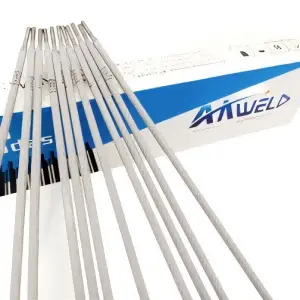
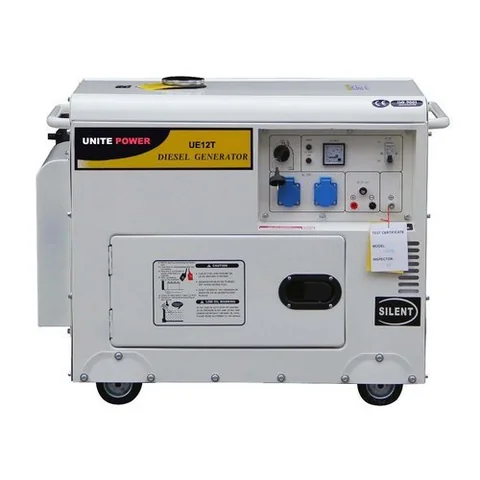
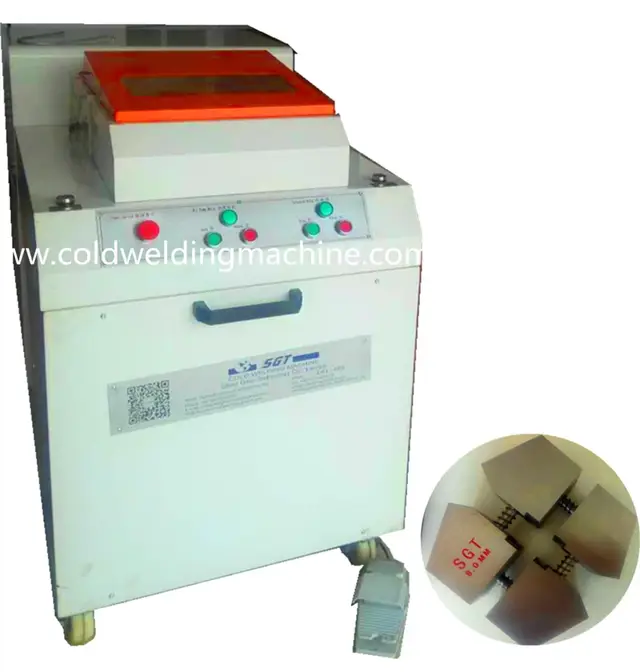

Product photos are taken from the supplier listings on CifyChina and link to each supplier's page. They illustrate the product type discussed; they are not an endorsement of any specific item.
Engine-driven welders and generator sets
For sites without mains power, engine-driven welder-generators combine welding output with auxiliary power. Unite Power lists diesel, gas and welding generator sets among its products. Check engine brand, fuel consumption, welding output and duty cycle, auxiliary power rating, noise level, and whether the alternator is copper-wound. Our guide to Factory Acceptance Testing for Machinery from China explains how to run a load test before shipment.
Specialist welding equipment
Not all welding is arc welding. Cold pressure welding joins non-ferrous wires (copper, aluminium) without heat and is used in wire drawing and cable plants; SGT Cold Welding lists hydraulic and portable cold welders with matching dies. For these machines, confirm the wire diameter range, material combinations and die availability.
Consumables: classification is everything
Electrodes and wires are specified by internationally recognised classifications — use them in your order:
| Consumable | Common classifications | Notes |
|---|---|---|
| Mild steel stick electrodes | AWS A5.1 E6013, E7018; ISO 2560 | E6013 for general work; E7018 low-hydrogen for structural |
| Stainless electrodes | AWS A5.4 E308L-16, E316L-16 | Match base metal |
| Solid MIG wire | AWS A5.18 ER70S-6; ISO 14341 | Copper-coated or uncoated |
| Flux-cored wire | AWS A5.20 E71T-1, E71T-GS | Gas-shielded or self-shielded |
| TIG rods | AWS A5.18 ER70S-2; A5.9 ER308L | Cut lengths, packaging per kg |
AKWELD (ARCFORT) lists welding electrodes and wire among its consumables range. For distributors, key checks include:
- Chemical composition and mechanical properties — ask for a certificate per batch (tensile strength, elongation, impact values for low-hydrogen electrodes).
- Moisture protection for low-hydrogen electrodes: vacuum-sealed or hermetic tins, with re-baking instructions.
- Spool and packaging standards — spool type (D200, D300, K300), net weight accuracy, carton and pallet strength.
- Approvals — classification-society approvals (DNV, ABS, BV, LR) are required for shipbuilding and some structural work.
Test a sample batch at a local welding school or lab: arc stability, spatter, slag removal and bead appearance tell you a lot quickly.
Welding PPE
Distributors usually sell helmets, gloves, jackets and eyewear alongside machines. Check standards by market: EN 175 and EN 379 for welding helmets and auto-darkening filters in Europe, ANSI Z87.1 for eye protection in the US, EN 12477 for welding gloves, and EN ISO 11611 for protective clothing. Yixisafety lists safety glasses and goggles. For auto-darkening helmets, verify switching time, shade range, optical class and battery type.
Building a distributor range
A practical starting range for a distributor combines:
- Two or three inverter MMA machines (entry, mid and professional duty).
- One MIG and one TIG model for workshops.
- Fast-moving electrodes (E6013 in 2.5/3.2/4.0 mm; E7018 in 3.2/4.0 mm).
- MIG wire in the common diameters (0.8/1.0/1.2 mm).
- Consumable parts: electrode holders, earth clamps, torch tips, nozzles.
- PPE: helmets, gloves, eyewear.
Mixed containers are common; plan weight carefully because electrodes and wire are dense.
Private label and after-sales
Many Chinese welding factories supply private-label machines with custom front panels, colours and packaging from moderate quantities. If you go private label, you own the after-sales experience. Negotiate:
- Warranty period (12 months is typical for inverters) and the process for claims.
- A spare-parts kit per container: PCBs, IGBT modules, fans, switches, cable connectors — typically 1–3% of order value.
- Service manuals and circuit diagrams for your technicians.
- Training by video for common faults.
Quality control
For machines, a pre-shipment inspection should include a load test at rated current and duty cycle on a sample, insulation resistance and hi-pot tests, checks of cable cross-sections and connector ratings, and a drop test on packed cartons. For consumables, check labelling, net weights, packaging integrity and batch certificates. Related steel and fastener topics are covered in Verifying Mill Test Certificates for Steel from China and Buying Fasteners from China: Grades, Coatings and Testing.
Comparing welding machine offers
Put quotes for similar machines into one table: rated current and duty cycle at 40 °C, input voltage range, weight, power module type, included accessories (cable lengths and cross-sections, electrode holder, earth clamp, torch), certification, warranty and spare-parts terms. Cable cross-sections are an easy place to cut cost — a 16 mm² welding cable on a machine that needs 25 mm² will overheat.
Market entry tips for new distributors
Start with a range that suits the dominant work in your market — in many African and Middle Eastern markets that means robust single-phase MMA inverters that tolerate generator power and voltage swings, plus E6013 electrodes for general fabrication. Build credibility with local fabricators by demonstrating machines at their workshops; welders trust what they can test. Keep a small repair bench and stock of common spare parts from day one: fast turnaround on repairs is what separates a lasting welding brand from a one-container experiment. Finally, track which models return for repair most often and share that data with your supplier when negotiating the next order.
Frequently asked questions
Why are some Chinese welders so cheap? Usually because rated current is overstated, components are undersized, or aluminium windings replace copper. Compare duty cycle at stated current and weight, and test a sample under load.
Do I need certification to sell welding machines? In the EU and UK, CE/UKCA marking with IEC 60974-1 and EMC compliance is required. Many other markets require national conformity certificates; check with your importer or customs broker.
What payment terms are normal for distributors? First orders typically use a deposit plus balance before shipment. As volume grows, distributors negotiate balance against bill-of-lading copy or letters of credit — see First China Order: Incoterms, Payment Terms and Deposit Protection.
Have a similar requirement? Send the specification or drawing on WhatsApp and we will match it against the suppliers in the directory.