
China is the world's largest producer of human hair products. Xuchang in Henan province processes a large share of the world's raw human hair into bundles and wigs, Qingdao in Shandong is known for hand-tied lace wigs and men's hair systems, and Guangzhou hosts many trading companies and salons that supply export buyers. The industry also has a reputation problem: terms like "virgin", "Remy" and "100% human hair" are used loosely, and quality can vary enormously between two products with identical photos.
This guide explains the vocabulary, the specifications that matter, and how to evaluate a factory before a first order. CifyChina's own inquiry cases include buyers from Canada, Jamaica and Serbia looking for human hair wholesale and lace wigs, and the same questions recur.
Hair terms that actually mean something
- Human hair vs synthetic vs blended. Synthetic fibres (such as Kanekalon or heat-resistant fibre) are cheaper and pre-styled; human hair can be coloured and heat-styled. Blends mix both. Ask for a burn test on a sample: human hair smells like burning protein and turns to ash; synthetic fibre melts into beads.
- Remy (cuticle-aligned). The cuticle layer is kept and all strands run root-to-tip in the same direction, which reduces tangling. Non-Remy hair is collected loose and usually has the cuticle stripped chemically and coated with silicone, which looks shiny at first but tangles after washing.
- Virgin hair. Hair that has never been chemically processed (no dye, perm or bleach). Genuine virgin hair in light colours is rare and expensive; most blonde hair is lightened.
- Double drawn vs single drawn. Double drawn hair has shorter strands removed so ends are fuller; it costs more.
- Origin. Indian temple hair, Chinese, Vietnamese, Burmese, Brazilian-style and European hair differ in texture and thickness. Many market labels describe a texture rather than a true origin — ask the factory directly.
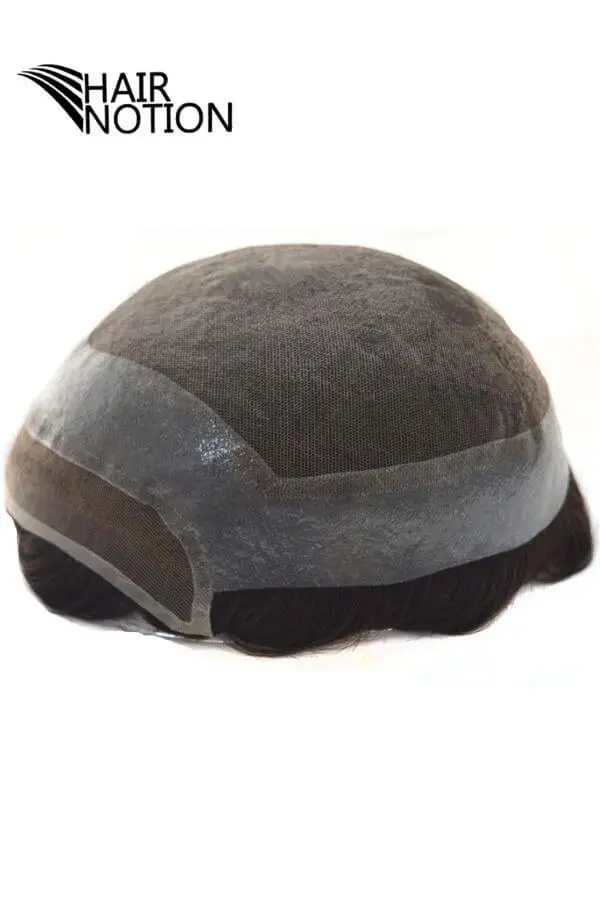
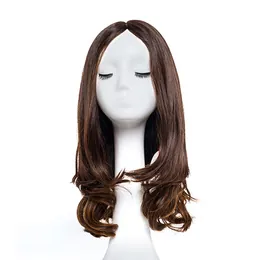
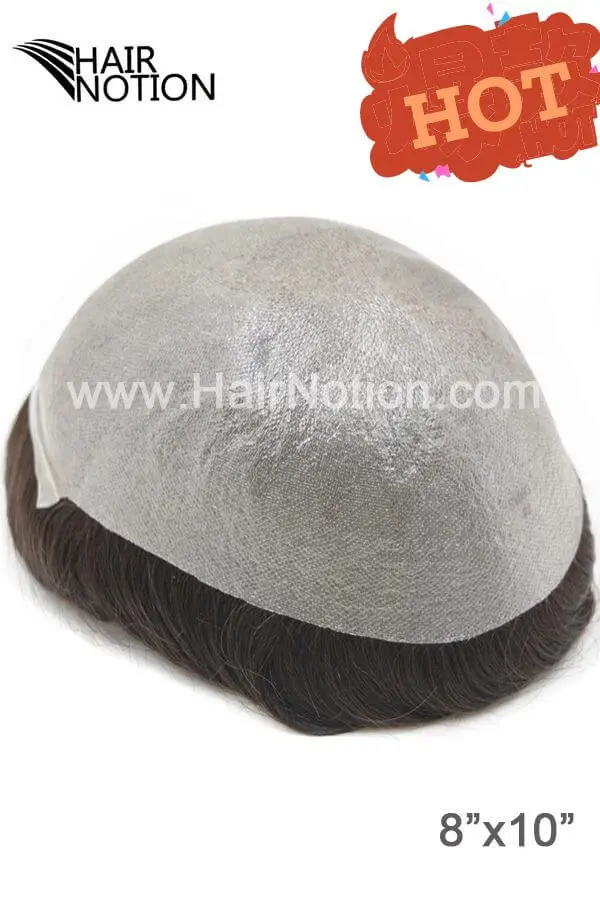
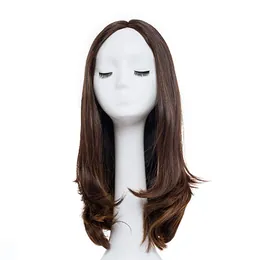
Product photos are taken from the supplier listings on CifyChina and link to each supplier's page. They illustrate the product type discussed; they are not an endorsement of any specific item.
Base construction for wigs and hair systems
For wigs and men's hair systems (toupees), the base determines comfort, realism and durability:
| Base type | Characteristics | Typical lifespan |
|---|---|---|
| French or Swiss lace | Breathable, very natural hairline; delicate | Shorter, especially Swiss lace |
| Thin skin (PU / poly) | Easy to attach and clean; realistic scalp look; less breathable | Depends on thickness (0.03–0.10 mm) |
| Monofilament | Durable, natural parting | Longer |
| Combination bases | Lace front with skin or mono sides/back | Balanced |
Men's hair-system specialists such as HairNotion list products by base type — lace toupees, ultra-thin skin systems of around 0.04–0.06 mm, mono bases and Afro-texture systems — which is the level of detail you want in a catalogue. Our existing guides to Men's Hair Systems from China — A Wholesale Buyer's Guide (Base Types, Hair Specs, Prices) and Afro & Textured Hair Systems from China — A Wholesale Buyer's Guide for African / Caribbean / African-American Markets go deeper into those products. Show-Ing Hair is another Qingdao listing for toupees and hair systems, while MorningStar presents a range of women's wigs. For styling tools that retailers often sell alongside wigs, Shenzhen Qumei Technology Co., Ltd. lists hair styling devices.
The specification sheet
A professional order specifies, per SKU:
- Hair type and grade (e.g. Remy human hair, cuticle aligned, double drawn).
- Length (inches), texture (straight, body wave, deep wave, kinky curly) and curl pattern.
- Colour, using a standard ring (1, 1B, 2, 4 ... 613) or matching to a supplied sample; percentage of grey if needed.
- Density (e.g. 130%, 150%, 180% for wigs; light-medium for hair systems).
- Base type, size and shape (templates for custom hair systems), hairline style and knot treatment (bleached knots).
- Cap construction and adjustable straps for wigs.
Without these, factories quote very different products and comparison becomes impossible.
Sampling and testing
Order samples from two or three factories and test them the same way:
- Wash test. Wash three to five times with ordinary shampoo; check tangling, shedding and whether shine disappears (a sign of silicone coating).
- Shedding test. Run a comb through repeatedly and count lost strands; pull gently at knots.
- Heat test. Style with a flat iron at a moderate temperature; human hair should tolerate it without melting.
- Colour check. Compare against your colour ring in daylight; check for colour transfer on a white towel after washing.
- Base check. Examine lace or skin for uneven knotting, visible glue marks and weak edges.
Keep an approved sample from each factory as the reference for mass production.
Evaluating the factory
- Ask for a video of production: sorting and drawing hair, ventilating (hand-tying) lace, and quality inspection. Hand-tied products are labour-intensive; a factory claiming very short lead times for large quantities of hand-tied units is likely buying from workshops.
- Ask about raw material sourcing and how they separate Remy from non-Remy hair.
- Check consistency between orders by ordering a second small batch before scaling up.
- Confirm capacity in units per month for your specific construction.
Common problems and how to prevent them
- Colour drift between orders. Hair dyed in different batches varies. Ask the factory to keep a colour reference swatch from your approved order and to match every reorder against it.
- Density lower than ordered. Density is easy to reduce silently. Weigh hair systems and wigs on arrival and compare with the approved sample's weight.
- Lace tearing at the front. Often caused by overly fine lace or knots tied too close to the edge. Specify lace type and ask for a reinforced perimeter where appropriate.
- Mixed lengths in bundles. Measure a sample of bundles from every carton; agree an acceptable tolerance (for example plus or minus half an inch).
- Silicone-coated non-Remy hair sold as Remy. The wash test exposes it; insist on testing samples from the actual production lot, not only the pre-order sample.
Compliance notes for importers
Human hair products are generally low-regulation goods, but importers should still check labelling rules (fibre content, country of origin), any restrictions on dyes and chemical treatments in cosmetics-adjacent products, and customs classification — human hair wigs and toupees usually fall under HS heading 6704, while raw or processed hair bundles may fall under 0501 or 6703. Getting the classification right avoids delays and unexpected duty.
Private label and packaging
Most hair factories offer private-label packaging: branded boxes, satin bags, hang tags and labels. MOQs for printed boxes typically start around a few hundred units — see Custom Packaging MOQs in China Explained. Include care instructions and fibre content on labels, which several markets require; our Textile & Apparel Compliance for China Sourcing guide covers labelling rules that also apply to many hair accessories.
Pricing and payment
Human hair is priced mainly by length, grade and weight; wigs add labour for the cap construction. Longer lengths rise steeply in price because long hair is scarce. For first orders, expect a deposit (often 30–50%) with the balance before shipment, and air express shipping for smaller quantities. See First China Order: Incoterms, Payment Terms and Deposit Protection for payment protection options.
Frequently asked questions
Why is "virgin" hair so cheap from some sellers? Because it usually is not virgin. Truly unprocessed hair of long length is scarce. Test samples and question prices that are far below the market.
What lead time should I expect? Stock bundles and machine-made wigs can ship within days. Hand-tied lace wigs and custom hair systems commonly take several weeks, depending on the construction and order size.
Can a factory match my existing product exactly? Most can if you send a physical sample plus base template, density and colour references. Expect one or two rounds of samples before the match is right.
Have a similar requirement? Send the specification or drawing on WhatsApp and we will match it against the suppliers in the directory.