
Aftermarket auto parts are one of China's largest export categories, and they are also one of the most fragmented. Ruian and Wenzhou in Zhejiang specialise in auto electrical parts and filters; Guangzhou's Baiyun district is a trading hub for European and Japanese car parts; Hebei produces seals, gaskets and rubber parts; Shandong and Hubei build truck components. A distributor in Africa, the Middle East or Latin America can find almost any part here — but the difference between a profitable container and a warehouse full of returns comes down to how the order is specified.
Build the parts list around OE numbers
The single most useful thing you can send a Chinese auto-parts supplier is a clean list of original equipment (OE) numbers with quantities. A description like "front shock absorber, Toyota Hilux" can match a dozen different parts depending on model year, drive type and market. An OE number removes that ambiguity.
A good RFQ list contains, for each line:
- OE number (and any superseded numbers you know of).
- Vehicle make, model, year range, engine code and drive configuration.
- Quantity, and whether you accept a mixed brand or need one consistent brand.
- Position (front/rear, left/right) where relevant.
- Your target quality tier (see below).
- Any photographs of the old part, especially for connectors, bushings and mounting points.
Suppliers such as Guangzhou Hong Modi Auto Parts list parts by OE reference on their catalogues (for example oil filter housings and cooling components for European engines), while Kingrun Auto focuses on aftermarket-fit chassis and driveline parts. Our existing buyer's guides for Aftermarket-Fit Auto Parts from China — KRA Wholesale Buyer's Guide and European Car Suspension Parts from China — A Distributor's Sourcing Guide go deep into those two product families.
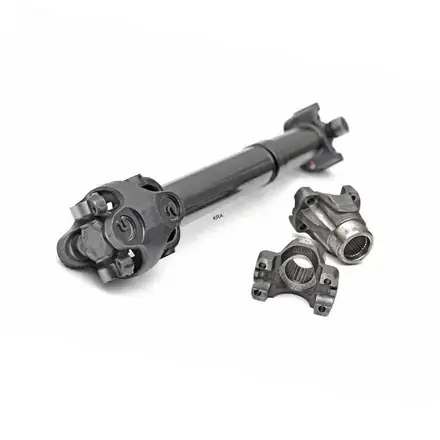
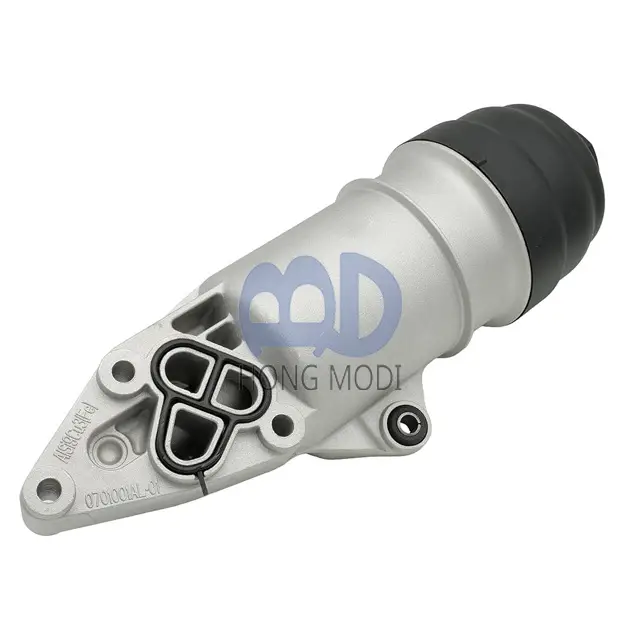
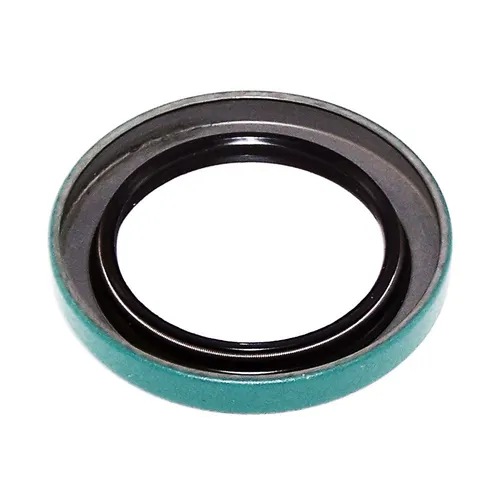
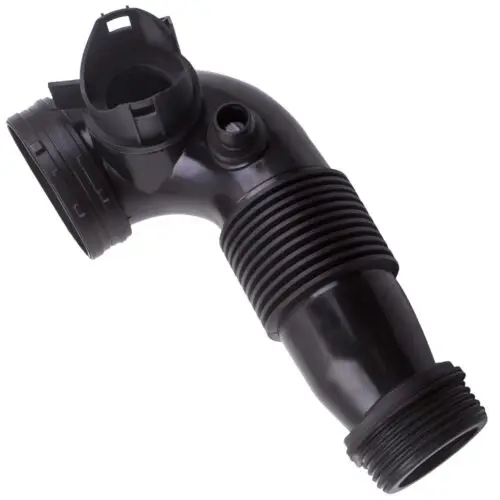
Product photos are taken from the supplier listings on CifyChina and link to each supplier's page. They illustrate the product type discussed; they are not an endorsement of any specific item.
Understand quality tiers before you compare prices
The same OE number can be quoted at prices that differ by a factor of five, because Chinese factories produce to several quality tiers:
| Tier | What it usually means | Typical buyers |
|---|---|---|
| OE-supplier grade | Made on the same lines or to the same spec as parts supplied to vehicle makers; full testing | Premium distributors, fleet operators |
| Premium aftermarket | Own-brand parts with documented material and endurance testing; IATF 16949 plants | Established distributors, workshops with warranty exposure |
| Standard aftermarket | Correct fit, acceptable materials, limited testing | Price-sensitive retail, older vehicle parc |
| Economy / "market grade" | Cosmetic match; cheaper rubber, thinner steel, simplified internals | Very price-driven markets; high return risk |
None of these tiers is wrong in itself. The problem arises when a buyer compares an economy-grade quote from one supplier to a premium quote from another and orders on price alone. Always state the tier you want and ask each supplier to confirm it in writing.
Verify fitment before volume
Even with correct OE numbers, fitment errors happen — typically due to regional variants, facelift changes or catalogue mistakes. For each new part family:
- Order samples of the fastest-moving 10–20 SKUs and test-fit them on vehicles in your market.
- Check critical dimensions against the original part: bolt pitch, connector shape, hose diameter, bushing size.
- For electrical parts such as alternators, starters and sensors from specialists like CHINO Auto Parts, bench-test output and check connector pin-outs.
- For wheel spacers, adapters, lug nuts and bolts — parts listed by Mama Wheel Co., Ltd. — verify thread pitch, seat type (conical, ball, flat) and hub-centric bore. These are safety-critical; a wrong seat type can loosen a wheel.
Materials and testing by part family
- Rubber and seals (Brave Auto Parts lists oil seals, valve stem seals and gaskets): ask for the compound — NBR, HNBR, FKM (Viton-type), silicone — and its temperature range. An FKM valve-stem seal quoted at an NBR price is a warning.
- Hoses (Hunan Woojin Autoparts Com., Ltd. lists air intake hoses among its range): ask for burst pressure, reinforcement type and ozone-resistance testing.
- Suspension and steering: ask for salt-spray hours on coated parts, ball-joint pull-out force and bushing hardness (Shore A).
- Brake parts: friction material formulation class, R90 or equivalent approval where your market requires it, and disc metallurgy.
Labelling, packaging and branding
Decide early whether you want parts in the supplier's brand, neutral packaging, or your own private label. Private label is common even at modest volumes — many suppliers will print your boxes from around 100–300 pieces per SKU. Check:
- Each box shows the part number, cross-reference numbers, and a barcode your warehouse system can read.
- No counterfeit OE branding. Parts may reference OE numbers for fitment, but boxes and parts must not carry the vehicle maker's logo unless genuinely supplied by the OE. Customs in the EU, Gulf states and several African markets seize counterfeit-branded parts.
- Inner protection suits the part: VCI bags for machined steel, foam for sensors, rigid cartons for radiators and condensers.
Factory or trader?
In auto parts, many exporters are traders consolidating from dozens of factories. For a distributor buying 300 SKUs, a competent trader can be the right partner — one invoice, one container, one point of contact. The questions to ask:
- Which part families do you manufacture, and which do you source?
- Can you show IATF 16949 or ISO 9001 certificates for the manufacturing plants, not just the trading company?
- Who performs pre-shipment inspection on sourced items, and what is the return policy for wrong or defective parts?
A trader that honestly answers these questions is often more useful than a single-product factory that cannot fill the rest of your container.
Logistics and landed cost
Auto parts are dense and mixed, so container planning matters. Heavy items (brake discs, drums, suspension arms) fill weight limits long before volume limits, while light items (hoses, filters, plastic trim) do the opposite. Mixing them in one container improves the landed cost per unit. Our guide to First China Order: Incoterms, Payment Terms and Deposit Protection explains how to choose between FOB and CIF when you are consolidating from several suppliers.
If your business also imports vehicles, read our guide to Importing Electric Vehicles from China; spare-parts availability for Chinese brands is one of the first questions dealers in new markets face. For lighting upgrades that often sit alongside parts orders, see LED Lighting QC: A Pre-Shipment Inspection Checklist.
Summary checklist
- Send OE numbers, vehicle data, quantities and photos — not descriptions.
- State your quality tier and get it confirmed in writing for each line.
- Sample and test-fit the top SKUs before volume.
- Ask for material and test data per part family, especially safety parts.
- Private label is fine; counterfeit OE branding is not.
- Clarify manufacturer versus trader, certifications and return policy.
- Plan the container mix for weight and volume.
Frequently asked questions
Can I mix parts from several Chinese suppliers in one container? Yes. Most distributors do. Either appoint one supplier or a freight forwarder in China to consolidate, or buy on EXW/FCA terms and let your forwarder collect from each factory. Consolidation works best when every supplier labels cartons with your part numbers and a shipping mark agreed in advance.
What minimum order quantities should I expect? For catalogue parts already in production, many suppliers accept 20–100 pieces per SKU, with a minimum order value per shipment. For parts that need new tooling — a less common bushing, a specific hose shape — MOQs rise and a tooling charge may apply. Ask for both the MOQ and the tooling cost before you commit.
How do I handle warranty claims? Agree in writing on a defect rate threshold and a remedy — replacement parts in the next shipment or a credit note are most common. Keep photos, the part number, batch code and a short failure description for every claim. Suppliers respond faster to organised, evidence-based claims than to general complaints.
Have a similar requirement? Send the specification or drawing on WhatsApp and we will match it against the suppliers in the directory.